
In an industry where technology is rapidly reshaping how creative work is produced, Guild Creatives is taking a deliberately craft-led approach to post-production. Founded by Terry Obiora and Tom Rose, the London-based studio was built around an artist-led philosophy and a direct-to-artist model, bringing senior creative expertise closer to the brief and the client. Its work spans retouching, CGI, artworking, motion VFX and generative AI, with an emphasis on maintaining quality, clarity and creative judgement as production becomes faster and more complex.
From adapting to remote production during COVID-19 to working on large-scale campaigns for brands including Sky and DWP, Guild Creatives has grown by keeping its structure lean while expanding its creative capabilities. In this interview, the founders discuss the challenges of growing a post-production studio without diluting its craft, how AI is being used as a supporting tool rather than a replacement for artists, the importance of experimentation and professional development, and why the future of the creative industry should be faster without becoming less considered.
How was your company born and where are you based?
 Founders Terry and Tom had worked for many years across the prominent post houses and agencies in London and beyond. We wanted to approach the market differently with an artist-led philosophy. Our conception coincided with COVID-19, with one of the only positives of that time being the need for hybrid workflows. This shift was a baptism of fire, but has given us strength and resilience in the market.
What was the biggest challenge to the growth of your company?
The biggest challenge has been growing without diluting the thing that made the studio valuable in the first place: senior-led craft. In post-production, scale can easily add layers, slow decisions and separate clients from the people actually solving the creative problem.
We have been careful to grow in a way that protects quality and keeps the workflow lean. That has meant building a core team and trusted network of specialists, bringing people in around the needs of each brief, and staying close to the work ourselves.
Growth for us has never been about becoming a large, generalist production line. It has been about increasing capability while keeping the bespoke level of detail, judgement and creative care on every project.
Which was the first huge success that you can remember?
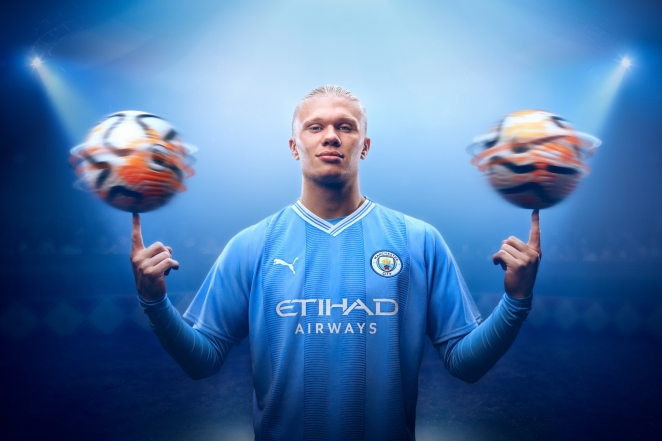
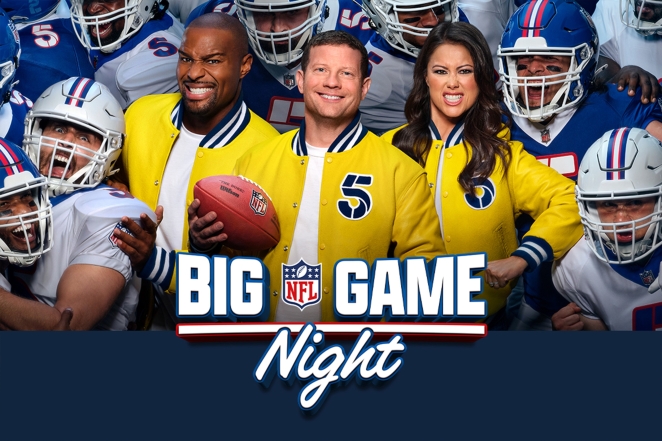
Hard question! There has been some huge success with completing large rollouts and campaigns like "Sky — Sports Greatest Show on Earth" and "5 — Big Game Night", but we think our biggest success is enjoying the clients we work with and growing each year in challenging times where the industry feels to be at a crossroads.
What's the biggest opportunity for you and your company in the next year?
 The biggest opportunity is the continued convergence of craft, technology and speed. Clients need more content, across more formats, often with tighter timelines, but the expectation for quality has not dropped. That creates a real opportunity for studios that can combine experienced creative judgement with efficient production workflows.
For us, the next year is about continuing to develop an integrated offering across retouching, CGI, key art, artworking, motion VFX and generative AI. AI is part of that, but as a supporting tool rather than a replacement for craft. Used properly, it can improve flexibility, accelerate exploration and help solve production challenges. The value still comes from experienced artists knowing when, where and how to ethically use it.
Can you explain your team's creative process? What makes it unique?
Our creative process starts with understanding the purpose of the campaign. Before we get into technique, we look at the brief, the audience, the media, the assets available, the schedule and the practical constraints. From there we build a route that protects the creative intent while making the production process as clear and efficient as possible.
What makes the process unique is that it is led by people who are still hands-on. The same senior artists who shape the approach are involved in the decisions throughout the project. That means creative judgement and technical execution stay connected. We can move between retouching, CGI, artworking, VFX and AI-supported development depending on what the brief actually needs, rather than forcing every project through a fixed process.
How does your team remain inspired and motivated?
As a team we regularly do outings, whether to galleries or industry events. We also keep a keen eye on photographers' commissions, Behance and trends in culture which filter through into the advertising world.
Motivation also comes from staying close to the craft. We are interested in the detail: the light, the composition, the finish, the tiny decisions that make an image feel believable. As a team, we share references, test new tools and talk openly about better ways to approach the work. The culture is collaborative rather than hierarchical. Good ideas can come from anywhere, and seeing those ideas make it into the final image is what keeps everyone invested.
How has COVID-19 affected your company?
 COVID-19 affected the company in a very direct way because Guild Creatives was born around the same period that the industry was changing how it worked. Productions paused, teams became remote, and clients needed partners who could be flexible, responsive and comfortable collaborating at distance.
In some ways, it accelerated the way we wanted to work anyway. We built systems around clear communication, remote review, efficient delivery and a highly scalable team. It also reinforced the value of being lean. Without unnecessary layers, we could adapt quickly and keep projects moving. The lesson was that resilience comes from clarity: clear roles, clear communication, and a team that can solve problems whilst maintaining the integrity of the craft.
Which agencies do you gain inspiration from? Do you have any heroes in the industry?
We take inspiration from studios, agencies, photographers and artists alike who combine strong ideas with a high level of execution, delivering to the same standard, campaign after campaign. In our world, the best work is not only visually impressive; it is purposeful, considered and delivers on the brief. We are drawn to people who can make the complex feel simple and who understand the relationship between concept, production and the finished piece.
Our heroes are often the artists who work alongside the names on the door. Retouchers, CGI artists, art directors, designers and producers who obsess over the detail and still keep the bigger idea intact. That balance between craft and clarity is what we appreciate the most.
What is one tip that you would give to other agencies looking to grow?
Grow around the value you genuinely bring, not around what you think an agency or studio is supposed to look like. It is easy to add services, people and processes before the proposition is clear. For us, the strongest growth has come from understanding what clients come to us for: senior-led post-production, practical creative problem-solving and a direct route to high-quality delivery.
Once that is clear, you can build around it. Bring in specialists where they add value, develop workflows that remove friction, and stay honest about what you do best. Growth should make the work better and the client experience clearer.
How do you go about finding new clients/business? (Pitching, work with retainers, etc.)
New business comes through a mix of repeat relationships, referrals, direct conversations and visibility of the work. Because our model is based on trust and senior involvement, a lot of our growth comes from clients who have worked with us before and know how we approach a project.
We work directly with brands, agencies and photographers, and clients engage us at different stages of a campaign. Some come to us with a defined post-production brief; others involve us earlier for creative development, feasibility or production planning. We are comfortable working on both project-based campaigns and longer-running relationships. The important thing is that the scope, timeline and ambition are clear enough for us to build the right team and workflow around the job.
When those elements align, the work tends to speak for itself and clients tend to come back.
What's your one big hope for the future of the industry?
 Our hope is that the industry continues to value craft while embracing new tools intelligently. The speed of change is exciting, particularly around AI, automation and real-time production, but technology should not flatten the work or remove people and their judgement from the process.
The best future is one where artists have better tools, clients have more flexible ways to make ambitious work, and the final output is still led by taste, experience and care. We would like to see more transparency around the process, more respect for specialist skill, and more thoughtful collaboration between brands, agencies, photographers and post-production teams. Faster should not mean less considered. It should mean better routes to strong ideas.
Can you share a defining moment in your company's journey that shaped its identity or direction?
A defining moment was choosing to build the studio around a direct-to-artist model rather than a traditional layered structure. That decision shaped everything: how we communicate, how we price, how we scale and how we protect the quality of the work.
It came from years of seeing how effective post-production can be when the right people are in the room early. A senior artist can often spot a production issue, a creative opportunity or a more efficient delivery route before it becomes a problem. By keeping that expertise close to the client and the brief, we created a studio that is flexible, practical and craft-led. That is still the core of our identity and how we approach our work.
How do you foster a culture of innovation and experimentation within your team?
Innovation for us is practical. It is not about chasing every new tool; it is about testing what genuinely improves the work, the process or the options available to a client. Internally, we make time to explore new techniques, whether that is in CGI, compositing, motion, automation or AI-supported workflows, but we always bring it back to the brief.
Experimentation works best when it is connected to experience. A new tool only becomes valuable when an artist understands its limits, knows how to control the output and can integrate it into a professional workflow. That is why we encourage curiosity while keeping experienced leads involved at every stage. The aim is better creative solutions, not novelty for its own sake.
What measures do you take to ensure diversity and inclusion are prioritised within your company?
Diversity is part of Guild's DNA rather than a policy we have bolted on. The two of us come from different backgrounds ourselves, and we built the studio in London — one of the most diverse, globally connected cities in the world. The talent we draw on reflects that. Our network of artists, producers and specialists spans different backgrounds, perspectives and ways of thinking, and we want to keep it that way: varied viewpoints make the work stronger, particularly when campaigns need to speak to varied audiences.
Day to day, inclusion shows up in how we work rather than what we publish. We aim for a culture where people are listened to, valued and brought in for their expertise — visible in how briefs are discussed, how teams collaborate and whether people feel able to contribute. As a small studio we do not pretend to have a diversity department, but we know this is an area that needs ongoing attention rather than a one-off statement, and that suits how we work anyway: deliberately, and with care.
Can you describe a project that challenged your team creatively and how you overcame any obstacles?
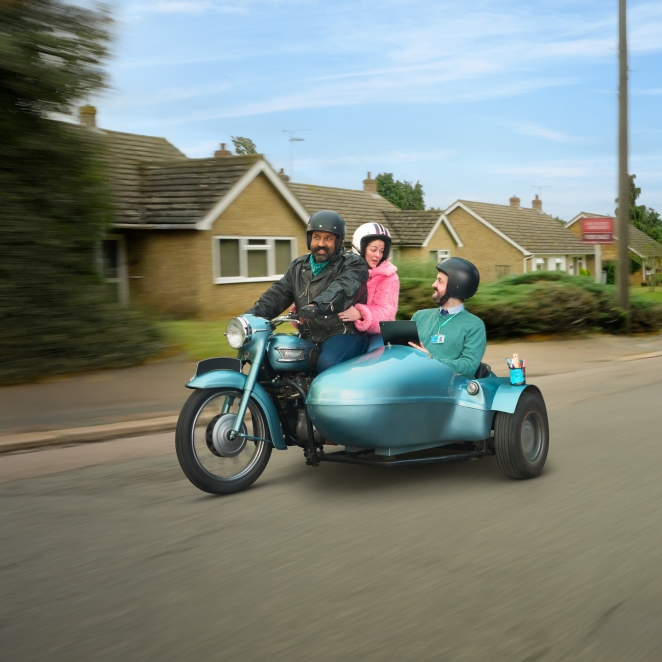
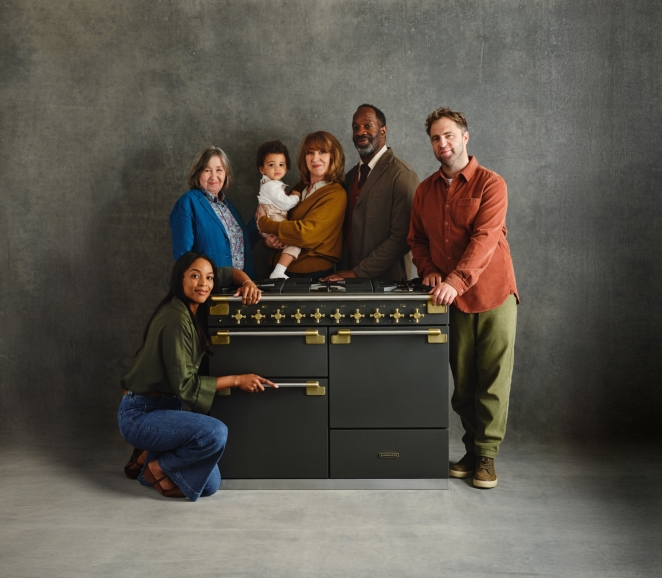
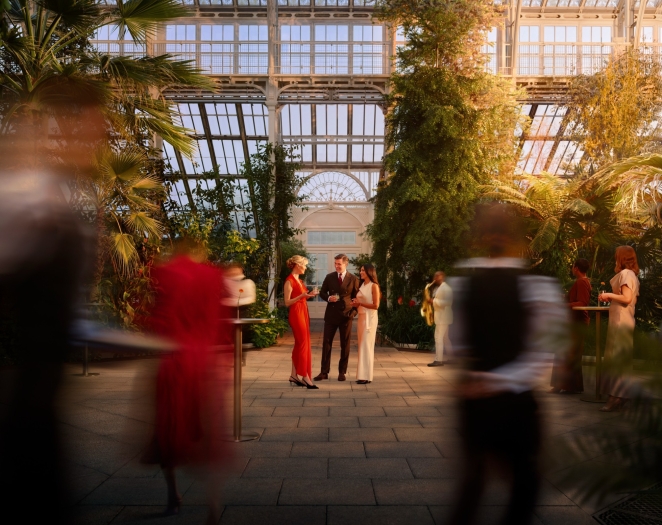 Projects that combine multiple disciplines are often the most creatively challenging. A campaign might need retouching, CGI, artworking and motion considerations to feel like one cohesive visual world, while also meeting tight delivery requirements across print and digital formats. A great example of this would be our recent DWP "Tell DWP if your circumstances change" campaign.
The way we overcame the challenge was by building the workflow around the end result from the start. We identified where creative decisions needed to be made, where technical control was required, and where efficiencies could be built in without compromising the image and campaign. Having senior artists close to the process helped because the creative and technical decisions needed to happen together. The challenge is rarely just making one beautiful asset; it is making the whole campaign feel consistent, controlled and production-ready.
How do you balance maintaining your company's unique creative voice while meeting the diverse needs of clients?
We do not see our creative voice as a fixed visual style that has to be applied to every client. Our voice is more about the way we work: clarity, craft, problem-solving and attention to detail. That allows us to adapt to very different brands and campaign worlds without losing what makes the studio valuable.
Each brief has its own tone, audience and visual language. Our job is to understand that and then apply the right level of technical and creative judgement to make the work stronger. Sometimes that means being invisible and refining an image until it feels effortless. Other times it means helping shape a more distinctive visual approach.
What strategies do you employ to adapt to changes and trends in the industry while staying true to your company's values?
We stay close to changes in the industry by testing tools, following how brands and agencies are using new formats, and staying active across different types of campaign work. Trends matter, but only when they are relevant to the brief. We are careful not to let the tool lead the idea.
Our values are constant: experienced artists, clear communication, strong craft and practical creative solutions. New technology, including generative AI, is assessed against those values. Does it improve quality? Does it make exploration more flexible? Does it help solve a production challenge? Can it be used responsibly and controlled properly? If the answer is yes, we integrate it. If not, we leave it alone. The goal is always the best possible work, not the fastest route through it.
Can you share a memorable client success story that exemplifies your company's approach and impact?
A memorable one is Sky's "The Greatest Show on Earth" — a large, multi-format campaign where the client needed more than image finishing. They needed a partner who could bring consistency, control and pace to the whole delivery process: over 50 key visuals, displayed across close to 1,000 sites in the UK.
Given the scale, we took a systematic approach from the outset, asking what needed to stay consistent, where the images demanded the most craft, how assets would adapt across formats, and how to keep approvals moving. Joining up creative judgement and production across design concepting, artworking and retouching meant Sky's biggest print and digital campaign to date was delivered on time and on budget.
In what ways do you invest in the professional development and growth of your team members?
 Professional development is built into the way we work. Because projects are led by experienced artists, there is a lot of day-to-day learning through collaboration, review and problem-solving. We share techniques, talk through decisions and expose the team to different kinds of briefs so people keep developing both technical skill and creative judgement.
We also encourage exploration of new tools and workflows. In post-production, development cannot be separated from practice; you learn by testing, applying and refining. Whether the focus is CGI, retouching, motion, artworking or AI-supported production, the aim is to help people become better problem-solvers, not just faster operators. Strong craft comes from curiosity, repetition and good feedback.
How do you approach sustainability and ethical practices within your company's operations and projects?
Sustainability and ethical practice are part of how we think about production choices. Post-production can reduce the need for reshoots, extend the value of existing assets and create flexible routes to campaign delivery through CGI, retouching, compositing and careful artworking. CGI in particular can remove whole layers of logistics — a product no longer needs to be flown to an international location for a shoot when it can be built and placed digitally. When used well, these tools make production more efficient and avoid unnecessary waste.
We apply the same thinking to how we work day to day. The team works remotely, which removes the daily commute and keeps our footprint small. And with AI-supported workflows, we are conscious that every generation has a real cost in energy and water, so we use these tools with intent rather than burning through iterations for the sake of it. We want the work to be polished and effective, but also responsible and appropriate to the brand, audience and context.
Can you discuss a time when your company had to pivot or innovate in response to unforeseen challenges, and what lessons did you learn from that experience?
The clearest pivot was adapting to a more remote, flexible production landscape. Instead of seeing that as a limitation, we built workflows that made collaboration clear and efficient, even when teams were not physically together. Remote review, clear versioning, structured feedback and a trusted specialist network became central to how we worked.
The lesson was that flexibility only works when the foundations are strong. You need clear communication, experienced people making decisions, and a workflow that can absorb change without becoming chaotic. It also reinforced the value of being lean. When the team is close to the work and the process is well organised, you can respond quickly without compromising quality.
Do you have any websites, books or resources that you would recommend?
If we are honest, we are more visual than literary — the books in the studio are photography books. Julia Fullerton-Batten, William Eggleston, Gregory Crewdson and Martin Parr all sit on the shelf, and they get pulled out for reference more often than anything about industry or process. We also try to get out of the studio to see work in person, whether that is photography exhibitions or awards like the AOP. Seeing finished work at scale, printed and lit properly, teaches you things a screen never will.
As for practical resources, two tools have genuinely shaped how we work. We have used Claude to write scripts that automate parts of our workflow, from post-production tasks to file collation and organisation — small pieces of automation that would have been impossible or taken an age to do manually. Last but not least, Dropbox has been the bedrock of the studio: housing, managing and sharing huge volumes of data across the team is what has made remote working possible, from our first project through to the scale we work at today.