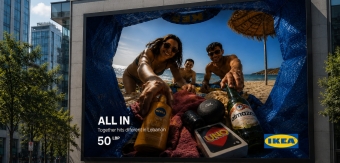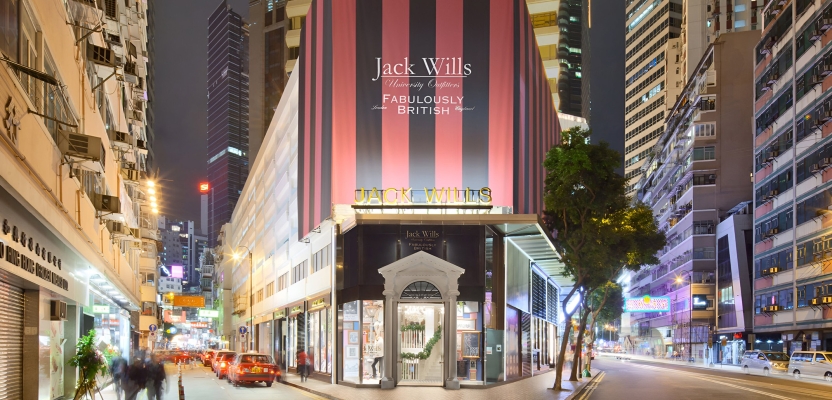

Barry Chan is an interior designer and founder of Anonym Collective, a global network of freelance designers and consultants. With experience spanning retail, hospitality and commercial interior design, he has built a reputation for creating spaces that balance creativity, customer experience and business objectives.
In this interview, Barry discusses his journey from product design to commercial interiors, shares his approach to problem-solving and design strategy, and explores how technology is reshaping the creative industries. He also offers practical advice for aspiring designers and explains why understanding people remains at the heart of exceptional design.
How did you first get into the industry?
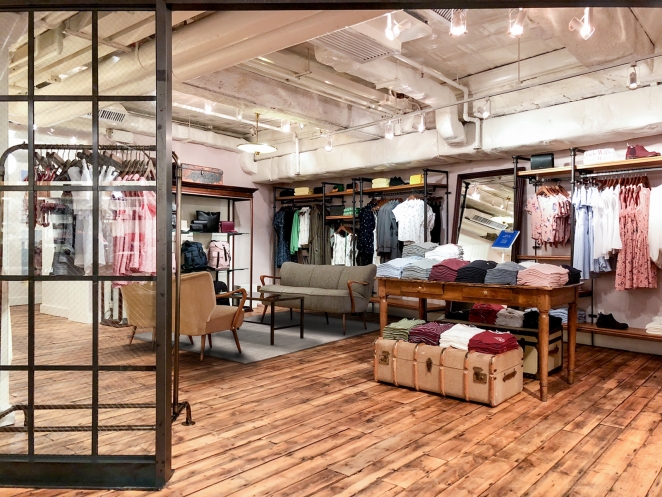
I was studying product design at university and did a work placement designing furniture and DJ booths at a design and build studio (even though I really knew nothing about furniture design at the time, and even less about DJ booths). From there I went from a crash course in commercial furniture design to designing nightclubs and bars. Even today, I’d rank it as probably the toughest year I’ve had in the industry, but I learned a lot there and it gave me the confidence to pursue a career in interior design rather than product design.
Where are you based now and who do you work for?
I set up a designer’s network; Anonym Collective. We’re a small collective of freelancers and consultants who work together on an ad-hoc basis when we have projects that require more than a single skill-set. I’m personally based in the midlands in the UK, but our members have been based in many different parts of the world.
What is your personal background and what role did it play in your career?
I grew up in a working class neighbourhood in Birmingham. If you knew Birmingham’s reputation at the time then you’d know it was once the industrial heartland of the UK. Hard work in factories was the norm and I think being surrounded by this kind of environment as a child shapes how you look at the world; I’m very practical and I ground my ideas in reality. My parents later owned their own business and I got an early education in real-world commerce and ROI which I’ve carried over into my professional work as a commercial designer.
If you weren’t in your current industry, what would you be doing?
When it came to choosing a degree to study for, I was split between Product Design and Journalism. I was a pretty good writer and I especially loved the process of analysing ideas to build arguments to challenge and debate. Having recently looked back at my old History and Politics coursework, I think it’s fair to say that choosing design was the right choice in the end.
Can you explain your creative process? What makes it unique?
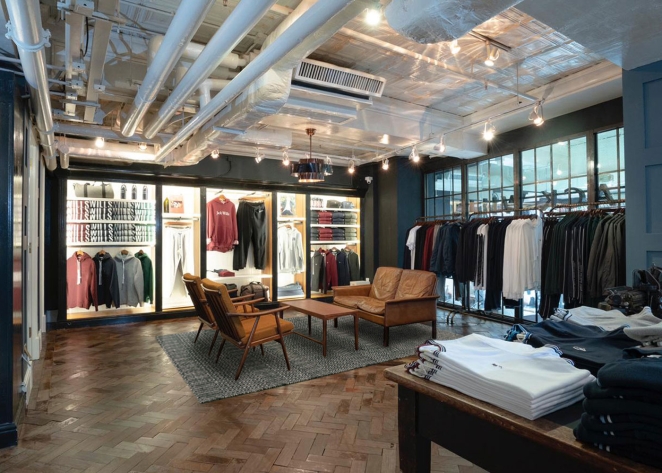
A lot of the time, someone will approach me with a new project and their brief would boil down to “make it look better”, but this alone isn’t enough when it comes to commercial design. I believe that the aim of any project is to solve a problem, whether the client knows it or not, so my process will always start with dissecting the project to reveal these problems and then create a structure to solve them. The real creativity comes in the way that problems are solved within the limits of time and budget; even if the problem is simple, the best solution might not be. I don’t believe that creativity just comes from a “flash of inspiration”, it’s 90% hard work.
How would you describe your style?
I work with a lot of established brands so you would rarely see my own personal colour choices or material combinations on show so, in light of this, I would describe my style as ‘architectural’. I’m primarily interested in shape and space to communicate brand principles and to guide customers around a store or location – its the gateway to designing for business. Although customer strategy varies from brand to brand, I’ll always look to use the architectural space to guide me on the most instinctive customer flow, focussing on customer experience highlights and pause points to control the natural circulation of people.
Which individuals do you gain inspiration from? Do you have any heroes in the industry?
I don’t have any heroes in industry, really, but I do draw inspiration from people who I’ve worked with. I won’t name them here because they might read this and I wouldn’t want to embarrass them!
What tips would you give to aspiring creatives looking for work?
When you’re starting out, don’t think about the money. Don’t be concerned about the low salary or the low fee because your priority should be to simply start working in the industry, do some work that you can learn and progress from, and really start to understand whether this is a career that you want to pursue. It’s not always an easy industry to work in and many designers transition into other sectors (account management, production, or pitching and sales for example) once they’ve been exposed to the wider business.
What tips would you give to other professionals to get more clients?
I’m not sure whether I’d be a great person to ask in all honesty! I’ve never had a grand strategy for marketing and getting more clients – I’m just a designer. About 80% of all my clients have come through recommendations from previous clients and general word of mouth so, outside of employing a sales director, I think the best thing you can do is just do good work, always do the best thing for your clients, and never cut corners no matter the fee. Be very old school, build trust, be easy to work with and clients will come back to work with you again.
Can you share a memorable experience from your career journey that shaped your approach to creativity?
I worked on the in-store concept for Soap & Glory when they were pitching for investment from Boots (Boots eventually bought the whole company). This was many years ago and I was struggling to find any sort of inspiration. My boss at the time made me step away from the computer, lock myself in the board room and spend 2 days just filling a couple of sketchbooks with as many rough ideas as I could, even if I didn’t think they were particularly good.
I filled 3 pages. It was quite pathetic.
It’s an incredibly tough and frustrating exercise but it taught me a lot about how I personally approach “being creative” and accountability. I’ve had a number of designers who’ve worked under me do this same exercise and everyone hates it because it exposes your weaknesses, but everyone learns from it.
What kind of tools/kit/software could you not do without?
Aside from the usual software (CAD, Photoshop, Blender….. Google) my most important tool is the notepad that I always have with me. Don’t just rely on email and technology to track your work or schedule. You should always write everything down.
What’s your secret to staying inspired and motivated?
I just enjoy looking at nice things and I want to help people create nice things. I get inspired by many of the client-owners I work with who get excited about their projects and I still get a kick out of seeing my drawings become real, tangible objects and spaces that people actually choose to use and visit.
What’s the work achievement you’re most proud of?
When I was starting out, I dreamed about working all over the world. Since then, I’ve been fortunate enough to have designed stores and developed projects across every inhabited continent, (except Oceania - hopefully one day soon) and worked with some exceptional people along the way.
As someone with experience in the industry, what trends do you foresee shaping the future of creativity?
I see a more conscious return to designing for in-person interactions and a move away from technology led solutions. Technology is a tool, not a solution, and although many designers still haven’t made this distinction, we all feel it as consumers when asking for help from a touchscreen.
Although industry and big business will push the use of technology and AI as the norm, I think consumers will drive a small but powerful trend back towards person-to-person service, and creative industries will need to be able to pivot back towards this eventually.
What do you think sets apart truly exceptional creatives from the rest of the pack?
All exceptional creatives are experts in other people. To be truly exceptional you must be able to put your ego aside, put yourself into the end user’s shoes at every stage of the process and design for them rather than yourself.
This would mean that your ideas and methods must work for the business, they must work for production, they must work for the installers and they must work for the customer.
How do you think technology has influenced the creative industries and how have you adapted to these changes?
Advancement in technology has improved the quality and output of everything. In many cases, daily tools we use as creatives have become so powerful and efficient that a single person can potentially create studio quality work without needing a whole team in tow.
These advantages are what we’ve leveraged to become more efficient and flexible for our clients. We can be more predictable with budgets and deadlines, and we’re able to work with specialists and suppliers regardless of where they are in the world.
Any websites, books or resources you would recommend?
A subscription to Frame Magazine is useful for interior designers. If you don’t need the physical magazine then Frame’s website (frameweb.com) and their newsletters are really good resources too.
Colossal (thisiscolossal.com) is a great website packed with a varied collection of art, design and craft features which are always interesting, even if they aren’t directly connected to your area of design.
I would also have to recommend my own website (barrychan.co.uk) where I’m hosting a growing library of downloadable CAD files from my older projects. Real-world examples are crucial for young designers to learn joinery detailing from but, from what I can see, nobody else is willing to share this level of information online, so I thought I’d just do it myself.