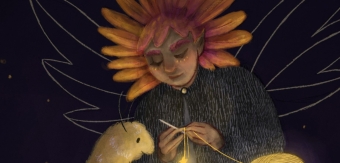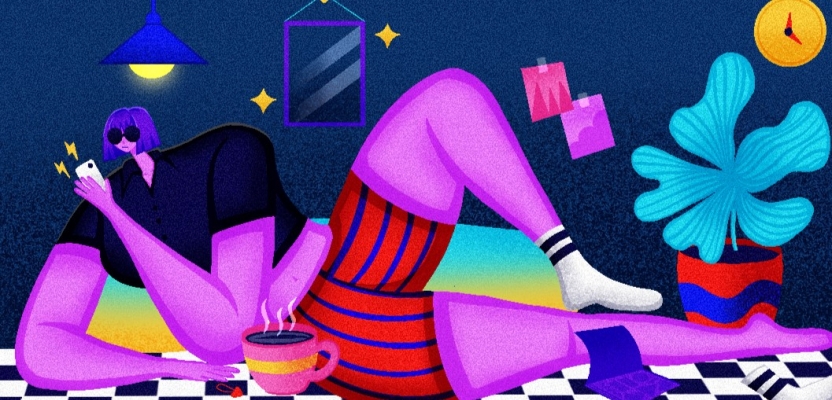
Aurelia Karina is an Indonesian visual designer and illustrator whose vibrant colours, grainy textures and distinctive disproportionate characters bring a playful yet thoughtful perspective to contemporary illustration. Best known for her ongoing Fatty Human Series, her work explores themes of nature, nostalgia, everyday life and human emotions, combining whimsical visual storytelling with a deeply personal artistic identity. With her illustrations featured in more than 14 exhibitions and 10 international publications across eight countries, Aurelia has steadily built recognition for a style that is unmistakably her own.
After beginning her career in graphic design, Aurelia rediscovered her passion for drawing through digital illustration, eventually making the decision to leave the corporate world at the end of 2025 and pursue illustration full-time. In this interview, she discusses her journey into the creative industry, the experiences and influences that shaped her artistic voice, and the creative process behind her work. She also shares her thoughts on building an authentic creative portfolio, staying inspired, adapting to generative AI and why artists deserve fair compensation for their work.
How did you first get into the industry?
 Drawing was my childhood hobby and an escape, but I stopped doing it for a while after enrolling in the Visual Communication Design course. I then started my career as a graphic designer, working in various environments from a full-time office to remote work for overseas companies. However, my true passion for illustration began after I came across Procreate artwork online, and I was really amazed and, admittedly, a bit envious. I bought my first iPad in 2022 and started drawing again—this time digitally, not for clients, but for myself. That eventually led to my "Fatty Human Series," which opened doors to international exhibitions and publications. At the end of 2025, I decided to leave the corporate world entirely and focus on being a full-time illustrator and creating content on my Instagram.
Where are you based now and who do you work for?
I’m based in Indonesia and currently working as an individual illustrator and visual designer. Previously, I have worked with clients from marketing and advertising agencies, media production houses, and publishing company. I also collaborated with brands through open calls while building my personal brand through my ongoing ”Fatty Human Series."
What is your personal background and what role did it play in your career?
I'm a naturally introverted person who grew up in a somewhat toxic environment, which made me very observant and sensitive to emotions. That background shaped my artistic voice. Instead of seeing my introversion as a weakness, I channel it into my art—creating vibrant, whimsical, and disproportionate characters that speak what I often can't say out loud and serve as self-expression. I intentionally chose a vibrant, contrasting color palette and disproportionate human form to make my artwork stand out and to represent the other side of me that isn't always visible.
If you weren’t in your current industry, what would you be doing?
 I'd probably work 9-to-5 in the office, or maybe work in a clerical job. I might be doing literature, research, or analytical stuff as well. I have no exact idea of what I would do if I weren't a designer/illustrator because I've always been passionate about creative things.
Since I was in school, I have had no interest in subjects related to math, economics, history, or science. When I was 9, I remember drawing myself as a nurse for a school assignment just because it intrigued me, but after that I lost interest entirely. From that day, I continued with my hobby of drawing and have lived my life as a designer/illustrator until today.
Can you explain your creative process? What makes it unique?
My process is a balance of intuition and intention. I usually start with a feeling or a theme, then sketch the concept loosely on my iPad. I don't force perfection; sometimes I intentionally change the theme in between the process, usually after I come across a better idea, and I let the characters unfold naturally. What makes it unique is my signature grainy texture, bold color palettes, and the intentional use of disproportionate bodies for both male and female characters. I want viewers to feel warmth and joy when they see my artwork, whatever the themes are.
How would you describe your style?
Vibrant, whimsical, and slightly retro-ish. My style is defined by bold colors, grainy textures, and disproportionate human forms known as the "Fatty Human Series." It's playful yet sophisticated, often exploring different themes, from nature, nostalgia, and life to introversion and shades of feeling.
Which individuals do you gain inspiration from? Do you have any heroes in the industry?
I'm heavily inspired by modern Japanese illustrators and, specifically, plus-size yoga videos my mom introduced me to in 2018; she used to show me the videos for inspiration and to encourage a healthier lifestyle.
In the early days, when I was still using traditional tools, I drew inspiration from the videos for my characters' drawing styles because I wanted to create something different and unique that did not adhere to social standards. I drew some yoga poses using Copic and posted them on Instagram. From there, the character’s story developed from simple yoga poses to nature, daily life, and human personality.
I also admire fellow independent artists who stay true to their unique voices rather than following trends. I follow artists who are unique in their own way; each of them has different and distinctive styles, like traditional, black and white, 3D, surrealism, corporate, and so many more!
What tips would you give to aspiring creatives looking for work?
 Don't force yourself to create art during bad times—it only affects your artwork's quality. Don't try to fit into “popular styles“ for the sake of following trends or gaining more followers; not every style is suitable for you. Your uniqueness and how your art stands out from the rest are your greatest assets. Build a portfolio that reflects who you truly are as a creative designer/artist/illustrator; choose only the best artwork to show. If you are creating content on social media, be consistent with your posting, and don't be afraid to say "no" to projects that don't align with your values. The right opportunities will come when you are authentic, and your uniqueness makes you stand out from the rest.
Can you share a memorable experience from your career journey that shaped your approach to creativity?
My decision to leave my corporate job was the turning point. For years, I felt stuck in companies with poor management that didn’t give me creative freedom or appreciate my introverted self, and it slowly drained me. Over time, I realized I had lost interest in the work I had done for a living (graphic design). When I finally decided to focus full-time on my illustration, everything changed. It taught me that creativity thrives not under pressure, but when I choose myself and protect my energy from people/things that constantly bring me down. I’m finally able to take control of creative direction and create artwork that genuinely feels like me.
What kind of tools/kit/software could you not do without?
My iPad and Procreate are my lifesavers. I also rely on Adobe Creative Suite and Affinity Designer on my MacBook for graphic design-based artwork. For managing my graphic design projects in the past, I used a few project management apps like Notion, Slack, and Asana because of the requirements from companies I used to work at. They were great apps, especially if you were working on multiple projects at the same time.
For illustration projects and content, I rarely use any apps, as I prefer to write them down in a to-do list to make it easier to remember and, for me, who don’t really like to be tied to a strict schedule, to feel more flexible and have the freedom to manage things on my own. Communication with companies and brands usually happened through email or Zoom when meetings were needed.
What’s your secret to staying inspired and motivated?
 I take breaks in between, get some rest, step away from screens, and let my mind wander. Inspiration usually comes when I'm not forcing it—sometimes it happens spontaneously during a quiet walk, daydreaming, or a power nap. Nowadays, I rarely look for inspiration online because it kind of makes me feel insecure about my own artwork and start comparing it with others. But I know researching is still mandatory, especially for studying different art styles, market trends, and marketing strategies, which would further help my work progress.
What’s the work achievement you’re most proud of?
I'm incredibly proud of my artworks for being featured in 14+ exhibitions and 10+ international publications across 8 countries. More recently, my piece "Cosmic Playground" was nominated for the 2027 Best of the Net Anthology by Twisted Tongue Press, and my work was featured on Creativepool's Talent Homepage. But on a personal level, my proudest achievement is simply having the courage to leave the comfort zone (my corporate job), bet on myself as an artist, and start consistently creating content to build my personal branding and gain recognition.
What do you think sets apart truly exceptional creatives from the rest of the pack?
Consistency, perseverance, and openness. Technical skill can be learned, but the ability to be honest and brave enough to share your true self, adapt to changes, have the willingness to learn from criticism, and be consistent enough to keep showing up even when it's hard is rare. Exceptional creatives are those who keep trying to grow, learn, and stay true to themselves.
How do you think technology has influenced the creative industries and how have you adapted to these changes?
 Nowadays, with the rapid growth of generative AI, it has made it easier to produce images and videos, but it has also made human-made art more precious. I’m not afraid of its capabilities and possibility to take over our jobs; instead, I've adapted by focusing on what AI can't replicate: my personal story, styles, hand-drawn textures, and unique voice. I use AI as a tool and assistant, not a replacement for the software I use to create my art. For instance, when I started brainstorming before sketching out my ideas, I used AI to create a concept draft. When I got curious about how my artwork would look on certain platforms, I used AI to generate a mockup. Or to set automated reminders for app subscriptions, I use AI agent tools.
What is the one thing that you would change about the industry?
I would change the culture of unpaid work/project and "exposure" as currency. Artists deserve fair compensation for the time, skill, and effort they put into their artworks. I wish more platforms and clients understood that paying artists fairly isn't a favor—it's a necessity. We can’t live on exposure and 'audiences' alone. And I wish more artists were brave enough to reject offers that feel unfair, exploit their skills, and lack reciprocity.
After beginning her career in graphic design, Aurelia rediscovered her passion for drawing through digital illustration, eventually making the decision to leave the corporate world at the end of 2025 and pursue illustration full-time. In this interview, she discusses her journey into the creative industry, the experiences and influences that shaped her artistic voice, and the creative process behind her work. She also shares her thoughts on building an authentic creative portfolio, staying inspired, adapting to generative AI and why artists deserve fair compensation for their work.