

It’s been a tumultuous start to the year for brands and advertisers on social media. Meta entered their own Wild West, eradicating content moderation policies and forcing misinformation monitoring into the hands of the consumer. And while the testing of ads on Threads has caused some initial excitement - mainly due to its explosive early adoption - brands concerned about safety should assess how they can capitalise on safer, more principled alternatives.
I spoke to Stephanie Himoff, Executive Vice President of Global Publishers at Teads (formerly Outbrain), to get her views on whether Threads will become a successful advertising channel and where else brands can be spending their ad dollars to reach a broad digital audience.
What was your initial reaction to Meta’s decision to introduce ads on Threads, and do you believe this move will be well-received by users and brands alike if it officially rolls out?
I certainly wasn’t surprised by Meta’s move to launch ads on Threads - albeit a small-scale initial test. This is a classic walled garden playbook reacting to a drop in active users (in 2023, Threads lost more than 80% of its daily active users), by looking at ways to monetise remaining audiences and generate revenue.
The announcement caused some initial excitement - mainly due to its explosive early adoption. And with X facing increasing controversy, there was a prime opportunity for Threads to step in as a replacement ad platform.
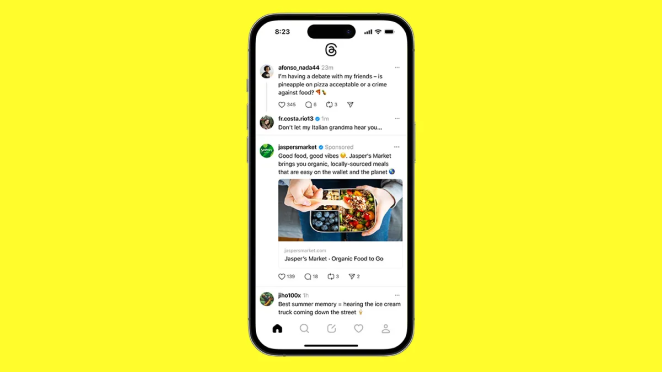
If rolled out more broadly, we will see some brands test the waters, especially those with budget to burn, but others may hesitate given Meta’s recent rollback on brand safety measures and content fact-checking.
But ads are only as good as their return on investment, and in a market where efficiency still rules, all eyes will be on Threads’ ability to execute valuable ads and exhibit sophisticated targeting and measurement for brands.
From your perspective, what factors will determine whether ads on Threads become a successful new advertising channel for Meta?
The success of ads on Threads will depend on three things:
- How effective brand safety controls will be, particularly as Meta rolls back on its content fact checking. Meta has introduced AI-powered brand safety controls to offer peace of mind to advertisers when it comes to ad placements. The tool will reportedly allow businesses to control the types of content their ads appear next to - to ensure alignment with brand values and wider marketing strategies. How these tools roll out in the long term will determine brands’ confidence in advertising on the platform.
- How seamlessly they integrate into the Threads experience for the long run. Ads must be well-targeted, engaging, and fully integrated into the user journey. Content must appear in a native format that matches the look and feel of the platform rather than obviously standing out as an ad.
- With limited organic data, Threads needs to demonstrate how effectively ads capture and sustain user engagement. If brands can’t measure whether ads are truly being seen, understood, and driving meaningful interaction, justifying ad spend becomes a tough sell.
If Threads’ ad platform rolls out in the UK, what specific considerations should UK-based brands and advertisers keep in mind when planning their campaigns?
Brand compliance with local advertising standards and data protection regulations is non-negotiable in the UK market. And when implementing campaigns, creative messaging should speak directly to UK consumers, leveraging regional nuances to drive genuine engagement.
Nearly 60% of Brits’ time is spent on the open internet
UK brands also need to strike the right balance between walled gardens and the open internet - currently representing a $175 billion opportunity for brands. Nearly 60% of Brits’ time is spent on the open internet, yet only 30% of ad budgets follow. Threads is a new opportunity, but brands concerned about safety should consider whether their investment is better placed where they get broader reach, transparency, and more control over their ad placements.
Could this development revive broader interest in social media advertising, or do you foresee brands diversifying their budgets toward other digital channels instead?
Recent events like Meta’s rollback on fact-checking and the US’ U-turn on a TikTok ban have made the social media landscape feel like a roller coaster, leaving brands nervous about where to put their ad dollars.
As brands consolidate their partnerships to reduce risk, many are ready to pull the plug on underperforming channels and quickly reallocate budgets to more promising platforms.
The open internet is emerging as a compelling alternative, offering trusted surrounding content, incremental reach, stability, and full-funnel results that traditional walled gardens have struggled to deliver.
And with the acceleration of AI improving campaign performance and a rise in formats like native advertising and social-style vertical videos, open internet publisher sites are reshaping how ad campaigns are managed and optimised by using advanced contextual signals and predicting outcomes with data that is privacy-centric by design.
What unique opportunities and challenges does Threads present for advertisers—particularly in terms of audience reach, ad formats, or creative storytelling?
Meta’s deep pockets allow Threads to experiment with new ad formats aimed at meeting brand objectives. Although history shows that even benchmark-setting walled gardens aren't immune to trust and measurement challenges.
As a relatively new platform, Threads can be a bit of a wild card, with performance that might swing unexpectedly. Brands could find themselves dealing with the uncertainty of an unstable environment, and there’s also a risk that advertisers become guinea pigs for experimental campaigns, where trial and error might be the norm rather than the exception.

One of the biggest hurdles for Threads, and walled gardens in general, is audience passivity. Unlike the open internet, where users actively engage with content, social platforms encourage quick, mindless scrolling, making it harder for advertisers to make an impact.
Our Value of Traditional News Report reinforces this, showing that traditional news engages users for 35% longer, with article engagement driving 20% higher ad attention. The difference comes down to intent - on the open internet, users seek out content with a discovery mindset, creating a more receptive space. Walled gardens, built for passive scrolling, will always struggle to replicate this level of meaningful interaction.
How do you see Meta’s recent reversal of fact-checkers affecting brands’ confidence in advertising on Threads, and what steps can brands take to protect their image?
Meta’s rollback on fact-checking was clearly a political play rather than a move to protect advertisers. It puts brands in a tough position, forcing them to navigate a platform where misinformation risks are higher than ever.
Brands who choose to advertise on Threads need to be sharp and demand more from Meta’s teams. That means pushing for URL-level reporting, pressing account managers for real transparency, and not just taking assurances at face value.
This isn’t the time for blind trust. Advertisers should be asking tough questions, requesting screenshots, and critically assessing where their ads are running before committing budget.
Looking ahead, how might the introduction of ads on Threads influence wider social media marketing strategies, and what can brands do now to prepare for potential shifts in the digital advertising landscape?
Brand safety will remain a hot topic in advertising and marketing, especially with the current administration’s stance on content moderation. CMOs making decisions about media choices for their advertising need to consider what the safest environments for their brands are. The changes that are currently taking place mean reputable news sites are going to become safe havens for brands putting safety at the top of their agendas.
Brand safety will remain a hot topic in advertising and marketing
Brands should be taking a test-and-learn approach, experimenting with new platforms while strengthening investments in more stable digital environments that offer trusted content, measurable results, and better control over ad placement.