
Lately, there have been so many creative people who have upped sticks and moved to another country in search of careers they deem more fulfilling. Be it searching for greener pastures or simply feeling trapped in the country of their birth, many designers, writers, artists, photographers, and musicians each year swap tinned beans and toast for a more fruitful existence elsewhere. And it’s not just job-seeking, in a digital age where working remotely is an option, relocation for creatives is a common reality for a multitude of reasons. And this movement towards a more open attitude towards relocation for creatives implies some underlying cultural or attitudinal changes in the balance between career and life, as well as in how creatives prioritise their own needs.
Things have changed. A whole load. Most people consider a few basic things core to the human experience: a sense of home, a deep connection to the people you love, and a sense of belonging to a community where you have opportunity and presence. And these things are changing, too. Where once many of us makers needed to be in particular places to follow our creative callings, that is no longer the case for many of us, thanks to incredible change over the last 20 years. We can now afford to consider anything that matters to us in our lives when deciding where to call home. We can do this even though none of us really knows what the future holds.
Moving Strategy: A New Chapter for Creative Careers
Relocating for career advancement isn’t a decision made on a whim. For creative professionals, it’s a calculated and thoughtful move that requires careful planning and consideration. The motivations for relocating vary, but they generally center on pursuing better opportunities, accessing vibrant communities, and escaping environments that may feel restrictive or uninspiring. This is especially true as the world moves toward more flexible, decentralized work structures that allow individuals to work remotely, often in the comfort of their chosen environments.
Many creative professionals now approach relocation with a clear strategy. This strategy often involves determining which city or region aligns best with their personal and professional goals. The decision is rarely just about finding a cheaper place to live or jumping on the latest trend. Rather, it’s a holistic approach that considers factors such as industry proximity, network strength, community involvement, cost of living, and the location's overall creative atmosphere.
Cities with emerging creative sectors, for example, may offer lower living costs and fewer people competing for the same opportunities, giving professionals a better chance to thrive.
Additionally, the nature of creative work often involves a significant amount of personal belongings, including equipment, art supplies, furniture, and personal items. As such, relocating can be daunting, especially for those moving long distances or across borders. This is where having the right support system in place can make all the difference. Many professionals are enlisting the help of moving professionals to assist with the logistics of their transition. With the expertise of a trusted moving company, creatives can focus more on setting up their new workspace and diving into their craft. At the same time, professionals handle the heavy lifting, literally and figuratively.
Creative Hubs: A Magnet for Talent
Cities like New York, Los Angeles, and Portland have long been known as creative hubs for artists and creatives looking to live, work, and show their projects. Each city offers a different combination of factors that attract talent: an established arts community, a strong economy with plenty of job opportunities, and an infrastructure of galleries, museums, and other cultural institutions. However, the creative hub of a city is more than just the sum of its parts, and the interactions among its elements are what really drive the development of innovative and often highly successful creative projects.
It’s become almost a cliché to write about the decline of urban centers as hubs for creative professionals. But the reality is that the explosion of digital tools and virtual collaboration has led more and more people to leave these places in search of other opportunities. The misconception is that to be creative, one has to be in one of the established creative hubs such as San Francisco, New York, or Los Angeles. But with modern communication tools and social networks, it is now possible to live in smaller cities, towns, or even rural areas and still maintain access to global networks and markets. And the benefits of moving to a new place aren’t lost on these creatives; they get to enjoy a more relaxed pace of life and more space to call their own, while continuing to advance their careers.
Recently, we read that more and more artists are leaving behind the expensive cities of New York and Los Angeles and heading to more affordable cities such as Austin or Portland to make their art more accessible to the public. But what about the international artist? What country would make them feel welcome, allow them to live and work affordably, and surround them with like-minded creatives?
Cost of Living and Quality of Life: The Hidden Benefits
The high cost of living in creative hubs has long been a topic of discussion regarding affordability for emerging creators. We all know it can be difficult to afford to live and work in cities like New York and San Francisco. A creative may work hard for low pay to call one of these cities home while also saving money for other living expenses, in the hopes of building up their portfolio and network. Meanwhile, rent and food costs take up most of their income, leaving limited time and energy for learning, self-improvement, and creative development.
Moving to a smaller, cheaper place has been a reality check for many. There is just so much more time for exploration and creativity because everything is so much cheaper. No longer having to spend so much time and money just trying to make ends meet allows more time and money for personal development, traveling to new places to expand horizons, and trying out different forms of art.
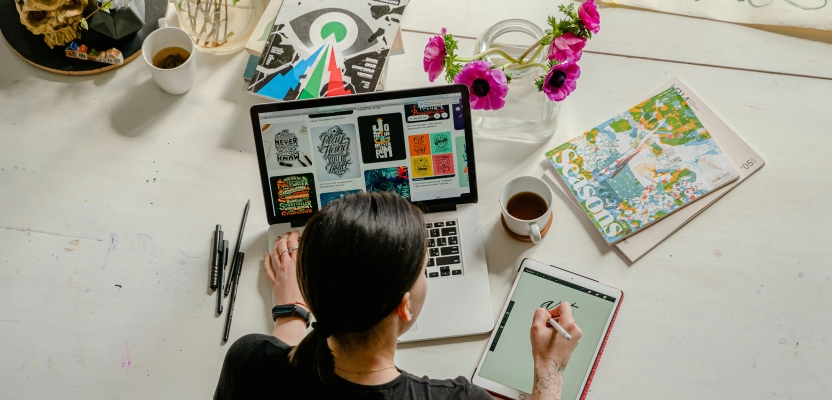
Digital nomadism and remote work improve the quality of life for creatives in many ways. The long journey to and from work is often replaced by a shorter trip to the coffee shop or coworking space down the road, and there is less time spent on mundane tasks and less distraction from everyday chores and schedules. Many artists and creatives choose to relocate for the opportunity to have a better work and personal life, and this option is made possible by technology.
The Influence of Remote Work
The COVID-19 pandemic significantly reshaped how we live and work, especially in creative industries like the arts. Before the pandemic, many artists and designers were largely confined to specific locations, whether in major cities or creative hubs, to collaborate and engage with clients. However, remote work and the increasing use of cloud technology enabled a paradigm shift, allowing artists to collaborate and create from almost anywhere in the world.
In the United States, this shift was especially pronounced. With the rise of remote work, artists were no longer tied to traditional office spaces or specific geographic locations. This enabled creatives to reach clients across the globe, from New York to Tokyo, without having to be physically present in the same city. The flexibility of working remotely not only removed geographical constraints but also offered greater freedom in lifestyle and creative exploration.
Moreover, the virtual nature of work means that artists can engage with other creatives from diverse backgrounds, expanding their networks and collaborating without in-person meetings. This has not only affected individual artists but also the overall arts sector, which is now more globalized, collaborative, and flexible than ever before.
The traditional demands of location, time commitment, and presence in a certain place have shifted. Now, creative professionals can decide for themselves when and where they work, and how they maintain a balanced lifestyle while still producing high-quality work for clients around the world. The pandemic has sparked a shift in mindset, empowering creative individuals to work on their own terms and in environments that fuel their creativity.
Building the Career You Want
For many creatives, moving is an opportunity to take the wheel of their career and life. When a creative moves to a new place, they not only create a new home but also set themselves up for success. Whether they’re chasing after new opportunities, creative environments, or simply a different way of life, creatives are making a huge impact on the way people think about careers.
Once upon a time, relocation was considered a drastic measure that an artist or creative should contemplate only after exhausting all other options. Now, it is becoming clear that relocation is a thoughtful and strategic option, a real choice. In this new age of connectivity, choice, and possibility, an artist or creative person has more choices than ever before. Relocating for artistic, professional, or personal reasons is one way creative people can reframe and redefine success in their own terms. And, more importantly, build successful careers that they can truly be proud of.