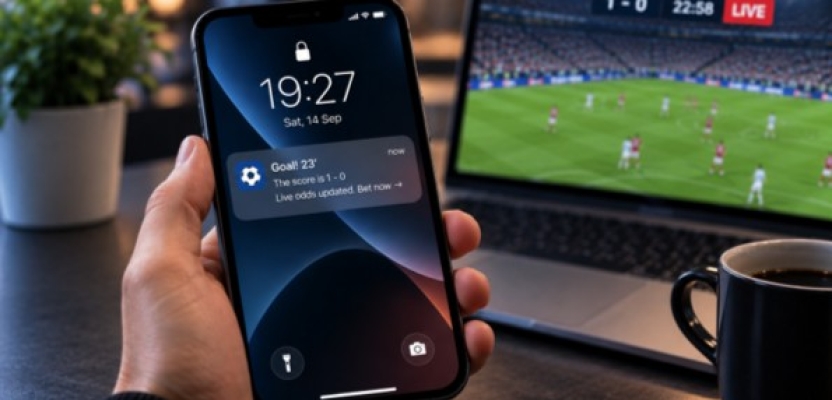

Most consumer apps treat the lock screen as leftover marketing space. Betting apps cannot afford to. A live price may exist for only seconds. If the alert arrives after the market has rebuilt, the message is already stale.
That makes push UX part of the product, not just promotion. For businesses connected through a partner 1xbet setup, the same principle applies to app traffic: the value of a notification depends on whether it brings the user back to the exact match, market or account state they were already interested in.
The wider mobile picture is noisy. UX benchmarks in 2026 put the average user at about 46 push notifications a day. Personalized messages can lift engagement by more than 200 percent compared with generic blasts, while just two to five unfocused alerts a week can be enough for nearly half of recipients to opt out.
Permission Works Better After a Value Moment
iOS still gives an app one clean chance to show the system prompt. Asking on first launch often produces a cold refusal.
Industry averages sit around the mid-50s percent on iOS and much higher on Android, which is why an overall opt-in figure near 67 percent hides a large platform gap.
Betting apps often wait until the user has done something meaningful: made a first deposit, saved a selection or opened a live match. At that point, “tell me when this match starts” already makes sense.
Soft-ask screens that explain what the notification will contain before the native prompt have reported two-to-three-times better opt-in than a blind system sheet.
Creative and productivity apps can use the same sequence. Ask after a first export, client share or comment thread. “Notify me when the file is approved” follows the same logic as “notify me when second-half markets open.”
The Best Push Is an Event, Not a Slogan
Useful betting notifications are transactional. They map to a clock, a price or an account event.
Trigger Who should get it Where the tap should land
T−60 to kick-off Users following that fixture That match’s coupon
First goal / red card Live-alert opt-ins or open slips Repriced in-play market
Cash-out available Holders of that slip The open bet
Settlement The account that placed it Balance / settled ticket
Line move Users who pinned the price The same market at current odds
Deep linking is the real UX work. Opening the home screen after an “odds have moved” alert wastes the channel’s main advantage.
Rich notifications that include score, price or one clear action have shown lifts of around 56 percent versus plain text. Copy also stays short because the lock screen is already crowded.
In-play betting now carries more than half of sportsbook handle in major markets. Median bet acceptance on leading live stacks sits near 1.4 seconds. A push that cannot reach the right screen quickly enough becomes decoration rather than utility.
Channels Matter More Than Broadcasts
Android notification channels and iOS Focus settings let users separate essential alerts from marketing.
Betting apps that keep notification permissions active often split kick-off, settlement and account events from promotional messages. The user can mute one without losing the other.
Frequency should follow real events rather than a fixed campaign calendar. A Saturday with four followed teams may justify four alerts. A quiet Tuesday may justify none.
Preference centres help with that. Users can choose specific leagues, cash-out alerts or settled-ticket updates instead of accepting every message.
Creative apps already have equivalent events: comment posted, version approved, deadline approaching. Those belong in a transactional channel. A generic newsletter does not.
What Other Apps Can Take From Betting UX
Three habits travel well:
-
explain the outcome before asking for notification permission;
-
make every tap open the exact object mentioned;
-
track disablement and uninstall rate, not only opens.
That last point matters. A 20 percent tap rate can still be a poor result if the same campaign drives users to switch notifications off.
Betting apps did not invent push notifications. They had to make them more specific because live markets expire quickly.
That is the useful lesson for any app team. If a message cannot name the event, arrive at the right moment and open the right screen, it is not helping the user. It is simply one more item in the pile of 46.