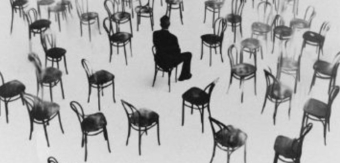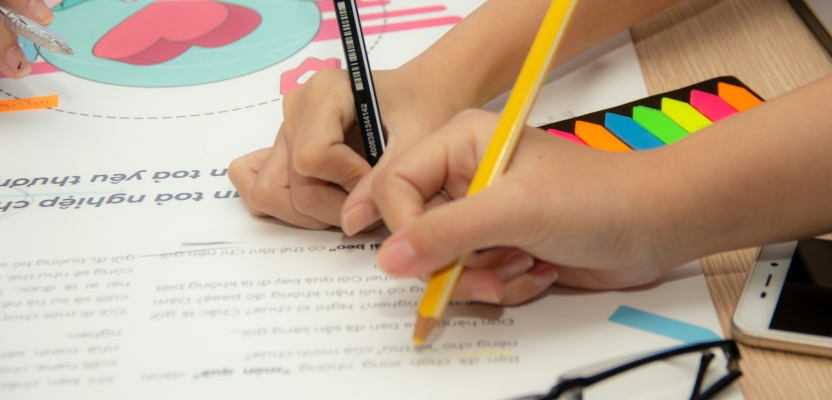

There's a moment most students recognize. You're working on something alone, staring at a half-finished draft or a concept that won't quite come together. Then someone else looks at it - a classmate, a peer, even a writing partner - and suddenly you see it differently. That moment is where creative collaboration begins.
It's not about dividing tasks or getting things done faster. It's about what happens when different ways of thinking collide around the same problem. Some of the most interesting student work - in design, writing, film, architecture - comes out of that kind of productive friction.
What Makes Collaboration "Creative" in the First Place
Most group projects in school are coordination exercises. Someone does the research, someone makes the slides, someone presents. That's not collaboration - that's task delegation.
Creative collaboration looks different. It is a real exchange: the thought of one person is modified by what is spoken by another. A manuscript gets better not because it was torn apart, but because it was sculpted by several points of view into something none of them would have written alone.
The best evidence you’re in a real creative partnership is when you can’t trace an idea back to a single individual.There is real interchange involved. One person's idea is changed by what another person says. A manuscript gets better not because it was torn apart, but because it was sculpted by several points of view into something none of them would have written alone.
The clearest indicator you’re in a real creative collaboration is when you can’t trace an idea back to a single individual.
The Role of Writing in Creative Collaboration
Writing sits at the center of almost every creative collaboration in education, whether students notice it or not.
Pitches, proposals, briefs, reflections, analysis - even in visual or performance-based disciplines, writing is how ideas get clarified and communicated. A group that can articulate its thinking clearly will always outperform a group with a stronger concept but weaker communication.
This is why so many students invest time in finding quality guidance for their written work. Not to bypass thinking, but to raise the standard of how their thinking is expressed. Writers who specialize in well-researched, logically structured content can model exactly what high-standard content output looks like in practice. That's the value behind a well-chosen essay writing service with top experts - not a shortcut, but a reference point. Platforms that connect students with subject-matter specialists, maintain transparent service policies, and offer consistent quality give students something concrete to learn from and compare against. Many include free citation tools and plagiarism checkers as part of the package, which adds real utility to the day-to-day.
Getting familiar with what well-executed written work looks like - structurally, tonally, argumentatively - sharpens your own instincts over time.
Three Ways Creative Collaboration Develops Stronger Writers
Here's something that rarely gets mentioned: collaborative creative work directly improves individual writing. Not as a side effect - as a core outcome.
You learn to write for an audience. When your words need to communicate to a group, you stop writing for yourself. Vague ideas get pushed to become specific. Assumptions become arguments. That shift alone transforms writing quality.
Feedback becomes part of the process. Solo writers tend to edit in isolation. Collaborative writers get used to sharing early drafts, responding to questions, and revising based on real reactions - not imagined ones. That's a more accurate feedback loop.
You develop range. Working alongside people with different strengths - visual thinkers, analytical readers, narrative writers - exposes you to approaches you wouldn't have tried on your own. Your own voice gets richer for it.
Common Friction Points (and What to Do About Them)
When the group has too many ideas
This sounds like a good problem, but unfocused brainstorming leads to unfocused work. Set a time limit on ideation, then vote or discuss to narrow down. Creativity benefits from constraints.
When one person dominates
A loud voice isn't always the clearest thinker. Build in structured turns - whether in discussion or in written contributions. Async collaboration (shared documents, comments, threads) often surfaces quieter voices better than live meetings.
When the writing quality is uneven
This is the most common tension in collaborative writing projects. Different members have different levels of written fluency. The solution isn't to let one person do all the writing - it's to agree on tone, structure, and standards early, and to revise collectively. A style guide, even a simple one, makes a noticeable difference.
Solo vs. Collaborative Work - A Practical Comparison
Dimension Solo Work Collaborative Work
Speed Faster early on Picks up as roles settle
Depth Deeper in one area Broader across perspectives
Writing quality Consistent voice Stronger ideas, needs alignment
Risk Blind spots go unchallenged Friction surfaces problems early
Best for Focused analysis, personal essays Complex projects, multi-format work
Neither mode is superior. The most capable students learn to move between them - knowing when to go deep alone and when to bring others into pressure-test their thinking.
What Stays With You
The habits creative collaboration builds don't disappear after a project ends. Learning to give constructive feedback, to stand up for an idea without being defensive, to alter something you were committed to because a better version developed - these things stick.
Students who are committed to working on collaborative creative projects tend to communicate better, write more polished work and adjust more rapidly to professional settings. It’s not that teamwork is some magical skill, but that it creates a type of intellectual honesty that you might avoid when you work alone.
Next time a collective project is frustrating, ask yourself: what is the friction revealing? Most of the time it’s indicating something that needs to be fixed.