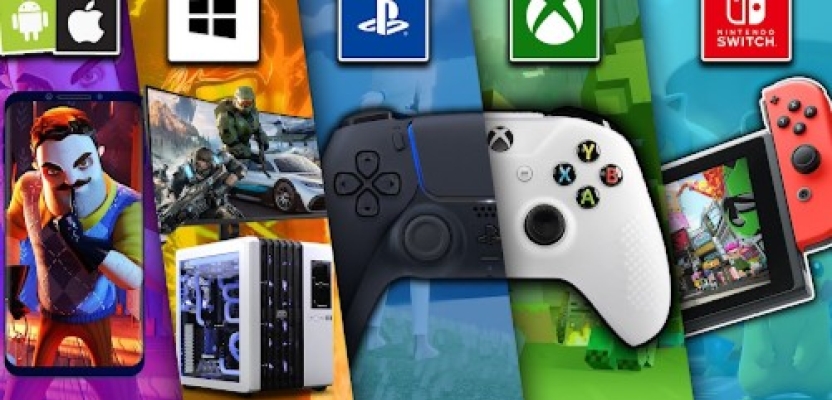

In 2025, cross-platform play is no longer an experiment. It is now a standard feature in most competitive online games. Players on PC, console, and mobile can face each other in the same matches. The change is reshaping the online gaming industry. It also affects how people spend money, how communities grow, and how companies design future titles. Platforms like 1xBet IE online follow these shifts closely, as cross-platform access influences both engagement and long-term growth in iGaming.
The Road to Cross-Platform Standardization
Not too long ago, specific gaming platforms each had exclusive games, and users did not engage with one another. Console players, including those with PlayStation and Xbox, did not interact, while PC and mobile gamers were completely isolated. Players were required to own the same hardware to compete, and closed systems prevented collaboration, resulting in a highly fragmented gaming ecosystem.
The use of technology to enable cross-play changed the gaming world for the better. The clear gaming systems for account merging and game progress locking facilitate fair competition. In 2023, a handful of titles offer cross-play, and by 2025, the industry standard for virtually all competitive multiplayer titles will include this feature. So long as there are players with closed systems, devices will only be used for brand differentiation.
Benefits for Players and Communities
Players are the biggest beneficiaries of cross-play. It creates tremendous flexibility, wherein players can quickly find opponents and it streamlines matchmaking even in niche game modes. It augments game balance as skill-based matchmaking has a larger pool of players to analyze.
Consoles no longer compartmentalize players. A mobile gamer can now play with PC users and players in a family can game together even if they don’t own the same console. These connections foster player loyalty and better engagement.
Streamers can now target a larger audience as games are equally accessible, and esports events are more inclusive as they attract players across different platforms. The sponsored community feels galvanized and increases participation dramatically.
Economic Impact on the Industry
Economic models can be impacted by cross-platform play. More spendable income becomes available, as users can afford to play from different devices. A console gamer, for instance, may switch to mobile during a commute. Such users readily engage in cross-device purchases, such as skins and battle passes, which contributes to a model's repeat spend. Such repeat spend serves as a model's foundation, economically speaking.
Cross-platform titles experience a growth in revenue from cross-platform microtransactions. Revenue growth from cross-platform titles, as opposed to single-platform titles, is estimated at 20-30%. Revenue from A- and B-grade advertisements, as well as sponsors, which positively correlate with revenue from cross-platform titles, also increase. More lucrative sponsorships in esports as well as increased audience viewership stem from sponsorships driven by lucrative media rights tied to esports.
That is also a significant trend for the iGaming industry. Integrated games that cross different platforms ensure user retention for longer periods of time.
Challenges of Full Cross-Platform Play
Inevitably, there remain challenges. The balance problem is not new. PC players are advantaged with peripherals and higher frame rates, leaving mobile users at a disadvantage. While adding aim assist or matchmaking filters can minimize the problem, the issue of balance continues to spark debate.
-
Cross-device security risks grow with connection multiplicity. Cheating and unsanctioned play increase.
-
Anti-cheat systems are just one security issue. Capture systems that monitor play, detect unsanctioned behavior, and enforce punitive measures must be fast and accurate.
Server systems designed to support more than one game must accommodate high traffic loads. Account linking requires strong data protection. Regulations around privacy and payments vary by region, adding complexity.
Esports and Competitive Integrity
Esports has embraced cross-platform play, yet carefully. For some tournaments, all devices are permitted. For others, fairness dictates restricting to one platform. The mixed-device events are drawing more viewers, but top-level championships will require more rigid cross-play rules.
The professional players are also practicing on a mix of devices to adapt. Some teams are trying to have flexible rosters that cross mobile or console divisions. There will be no true open esports until the technology closes the gaps.
Influence on Game Design
Meeting cross-platform standards affects the nature of designs. To ensure compatibility designs, resources must be altered for seamless operation, which includes graphic settings, control adjustments of various input devices, and completion of the underlying objectives. For remote gaming, cloud gaming technology will assist in offloading the heavy game processes.
User interfaces and game menu designs offer increased flexibility, especially with modern consoles and smartphones accommodating the same game with different, yet scalable, windows. Systems of game progression more evenly reward play regardless of platform, maintaining the essence of the game on each device.
Developers provide more unified game experiences with coordinated game updates. This significantly reduces confusion as game patches proliferate simultaneously across all platforms. Such balanced resource allocation across various channels boosts engagement and the game’s overall coherence.
Future Trends in Cross-Platform Play
Cross-platform capabilities will continuously expand. More cloud gaming means the only needed change will be the gaming hardware. Players will be able to access and play from smart TVs, VR headsets, and web browsers. The "device" will be an obsolete term.
AI will be introduced into matchmaking systems to assess cross-platform skills, further refining balance to improve the gaming experience. Players will be able to own cross-game digital assets. Players will be able to own cross-game digital assets. Social features will further extend to include cross-platform communication, guilds, and events. These will become the expected standard.
By 2030, most people will not think about what cross-platform even means. The only remaining question will be about the global implementation of fairness, performance, and security.