

Hiring an illustrator should be one of the more enjoyable creative decisions a business gets to make.
You’re choosing the person who might give a campaign its visual personality, turn a complicated subject into something immediately understandable or create the character that audiences remember long after they’ve forgotten the headline, product specifications and carefully approved call to action.
Then you open 47 portfolios and realise that almost everybody is extremely good at drawing things.
Some specialise in delicate editorial line work. Others create bold graphic worlds, cinematic concept art, expressive characters, intricate maps, technical cutaways, fashion images, hand-painted textures or glossy three-dimensional scenes. Several appear capable of rendering light more convincingly than light itself.
The challenge isn’t finding an illustrator whose work you like. It’s finding the right illustrator for the particular job, audience, medium, process and commercial arrangement in front of you.
Those aren’t the same thing.
An outstanding illustrator isn’t simply a supplier of attractive images. They’re a visual thinker. They interpret ideas, decide what deserves emphasis, remove information that doesn’t help and use composition, colour, character, metaphor and style to communicate something words or photography can’t express as effectively.
That makes hiring one partly an aesthetic decision, partly a strategic decision and partly a production decision. It also involves rights, licensing, feedback, deadlines and the mildly dispiriting discovery that “we just need one illustration” can eventually mean a key visual, 16 social crops, six animated elements, three international adaptations and a version in which the character looks “more delighted, but still premium”.
Whether you’re commissioning a freelancer for one project or recruiting an illustrator permanently, these are the ten things that should shape the decision.
1. A Portfolio Relevant to the Actual Job

Yi Hui Chin
The portfolio is the obvious place to begin. The mistake is assuming that “excellent illustration” is a single category.
Illustration covers an enormous range of disciplines. Editorial illustration needs to interpret ideas quickly and often respond to current events. Children’s publishing demands character consistency, narrative progression and an understanding of different reading ages. Advertising illustration may need to become a flexible campaign system across dozens of formats. Medical and technical work values accuracy that a more expressive commission may deliberately abandon.
Packaging, fashion, storyboarding, comics, maps, information graphics, surface pattern, portraiture, concept art and live illustration all require different combinations of craft, judgement and production knowledge.
Start by defining what the job actually needs.
What is being illustrated? Who is it for? Where will it appear? What must the image communicate? Does it need to explain, persuade, entertain, reassure, provoke or simply make a page considerably less depressing?
Then review portfolios for evidence connected to that task.
If you need a series of educational illustrations for young children, beautiful single-image fashion work doesn’t prove that somebody can maintain a recognisable character across 30 scenes. If you’re commissioning a front-page editorial response to a breaking political story, a meticulous photorealist who usually requires four weeks may not be the obvious solution, however impressive the shading.
Relevance doesn’t mean the illustrator must already have worked for an identical client. Sector experience can help, particularly in regulated or highly technical fields, but it shouldn’t become a substitute for examining the work itself.
Look at the underlying problem the illustrator solved. Somebody who has never illustrated financial technology may still be extremely good at turning abstract systems into clear visual metaphors. An artist without a famous children’s publisher in their portfolio may demonstrate exceptional narrative skill through a self-initiated comic or picture-book project.
Our guide to what makes a digital portfolio stand out argues that strong portfolios provide context, clarify the creator’s role and show how the work responded to a brief. Apply the same principle here.
Don’t ask only, “Do I like this image?”
Ask, “What does this image prove that the illustrator could do for us?”
2. Strong Ideas Behind the Images
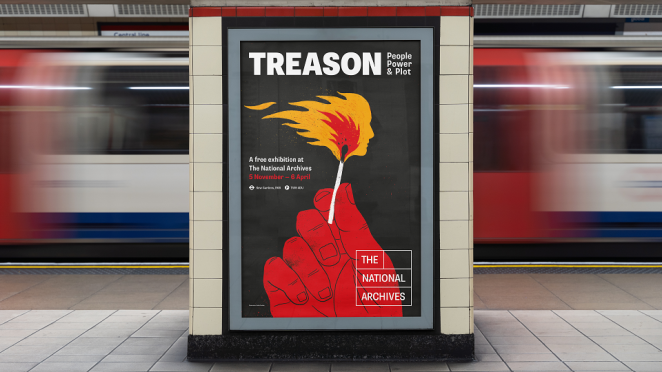
Cosmo Jameson
Craft attracts attention. Ideas create value.
An illustrator may possess a gorgeous palette, immaculate line and the ability to render a human hand without turning it into an alarming bundle of sausages. Those are meaningful skills. They don’t necessarily prove that the person can find the right visual idea for your brief.
The best commercial illustration isn’t merely decorative. It interprets.
An editorial illustrator might turn an article about digital burnout into one sharply observed visual metaphor. A brand illustrator may create a distinctive world that communicates a company’s warmth, irreverence or technical intelligence without relying on another paragraph of positioning language. An information illustrator can make a process understandable by showing relationships rather than simply embellishing the facts.
Look for conceptual range inside the portfolio. Do the ideas change with the subject, or does every commission involve placing a small person beside an enormous household object? Is humour being used because it serves the message or because humour is the only gear available? Can the illustrator handle emotion, ambiguity, complexity and restraint as well as spectacle?
Read any accompanying case studies. The strongest should explain the brief, audience, constraint, interpretation and result without constructing an elaborate mythology around the selection of blue.
Ask the illustrator to talk through two or three pieces. What was the communication problem? Which ideas were rejected? Why did this approach become the final one? What did they choose not to show?
You’re listening for evidence of visual reasoning.
A strong illustrator can explain the idea in plain English. They can describe why the image works rather than falling back on “it just felt right”. Instinct matters enormously in creative work, but professional instinct becomes more useful when it can survive a conversation with an art director, editor or client.
This is also where self-initiated work can be revealing. Commercial portfolios are shaped by commissioners, brand guidelines and the compromises of collaborative production. Personal projects show what an illustrator notices when nobody has told them what to notice.
They may reveal humour, curiosity, political interest, cultural knowledge or a type of storytelling that hasn’t yet found the appropriate commercial brief.
Don’t dismiss that work because nobody paid for it. Sometimes it provides the clearest evidence of what could happen when somebody finally does.
3. A Distinctive Visual Voice That Suits the Brief

Javier Medellin Puyou
Style is often the reason an illustrator gets hired.
It may be the quality of the line, treatment of texture, use of colour, approach to anatomy, emotional atmosphere or particular balance between realism and abstraction. Whatever creates it, the work feels recognisably theirs.
That distinctiveness matters because clients generally commission illustration when they want something that doesn’t look generic. Photography can document a real scene. Stock imagery can fill a rectangular space by lunchtime. Generative tools can produce an enormous quantity of plausible visual material.
An illustrator earns their value by making decisions those alternatives wouldn’t make.
However, a strong style must still suit the brief.
Don’t hire the illustrator whose work you find most beautiful and assume beauty will automatically become relevant. A melancholy, textured approach that would make a literary book cover magnificent may be entirely wrong for an energetic children’s activity app. A charmingly naive style could humanise a financial-services campaign or unintentionally make a serious medical subject feel trivial.
Evaluate style against audience, message and context.
What emotions does the work create? Does it feel contemporary without depending completely on a short-lived visual trend? Can the illustrator work within your brand palette or existing design system without losing what makes their work distinctive? Will the images remain recognisable when cropped, reduced, animated or surrounded by copy?
You should also decide how much flexibility the project requires.
For a single high-profile commission, you may want the illustrator’s established style almost untouched. If you’re hiring somebody permanently or building a long-term brand system, adaptability becomes more important. Look for consistency of judgement across different subjects rather than demanding that every project look identical.
Be wary of commissioning somebody to imitate another living illustrator.
References are useful for communicating mood, composition, energy or production technique. “Make it exactly like this person’s work” is neither a serious creative brief nor an especially dignified way to begin a professional relationship.
The Association of Illustrators’ Code of Conduct says illustrators shouldn’t copy another artist’s work or imitate their style, while recognising that influence is a normal part of creative practice. A good illustrator will help you identify the qualities you’re responding to and develop an original solution.
Hire a visual voice because you want what that person can bring, not because you want a cheaper echo of somebody else.
4. The Ability to Understand and Improve a Brief
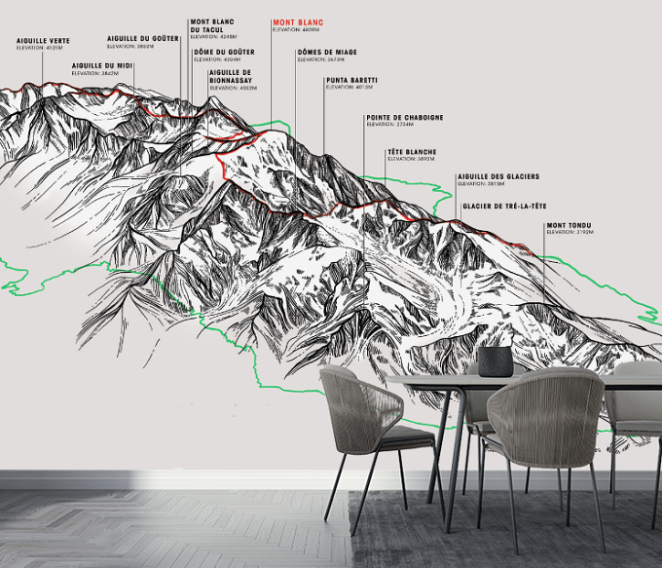
Diane Shearer
Illustrators are sometimes treated as though they begin working only after every important creative decision has been made.
The client develops the concept, the designer decides the composition, the marketer chooses the audience and the illustrator is invited to make the predetermined answer look lovely.
That can be a spectacular waste of the illustrator.
The best illustrators don’t merely execute a brief. They interrogate it.
They ask what the image needs to achieve, not only what it needs to contain. They notice when the proposed visual contradicts the intended message. They identify practical problems before those problems acquire deadlines and invoice numbers.
Pay attention to the questions an illustrator asks during the first conversation.
Do they want to understand the audience, context, tone and hierarchy? Do they ask where the work will appear and how it might be adapted? Are they curious about the surrounding copy, design system and approval process? Do they challenge unclear or incompatible expectations respectfully?
Weak questioning can reveal a production-only mindset. Endless questioning can reveal that the person requires a six-week philosophical inquiry before drawing a bicycle. You’re looking for focused curiosity: enough to understand the real problem and expose missing information without turning the brief into an archaeological excavation.
The quality of the brief remains the commissioner’s responsibility too.
Provide the message, audience, deliverables, formats, references, mandatory elements, schedule, budget and intended usage. Explain what is fixed and where the illustrator has freedom. Identify who will approve the work and consolidate feedback.
If you show references, explain what you like about them. It might be the warmth, simplicity, composition or relationship between image and typography. Without that explanation, “something like this” can mean anything from “use a similarly limited palette” to “please reconstruct this other artist’s career with small changes”.
Ask shortlisted illustrators how they would begin. You don’t need free finished concepts. You need to understand their approach to research, roughs, interpretation and approval.
For permanent roles, a small skills-based assessment can provide useful evidence if the portfolio leaves an important question unresolved. Keep it hypothetical, relevant and proportionate. Tell candidates what you’re assessing, give everybody the same task and pay them if the exercise requires substantial time or creates anything commercially usable.
Our guide to assessing creative candidates makes the broader point: realistic tasks can help employers understand process and judgement, but sprawling unpaid challenges mostly test who can afford to donate a weekend.
5. Technical Skills Appropriate to the Final Use

Toby Tinsley
An illustration doesn’t exist only as a beautiful image on the illustrator’s screen.
It has to survive production.
That could mean becoming a full-bleed magazine spread, enormous outdoor poster, tiny app icon, repeating textile pattern, animated social asset, set of packaging panels or diagram in a technical manual. Each requires different preparation and technical understanding.
The right skills depend on the commission, so define the destination before judging the route.
For print, you may need artwork at a particular size, resolution and colour profile with bleed, separations or layered files. Packaging may require an understanding of cutter guides, finishes, spot colours and how artwork wraps around physical structure. Digital products need illustrations that remain clear across screen sizes and don’t create an unreasonable performance burden.
Animation requires more than asking whether the illustrator can make things move. Artwork may need to be constructed in layers, characters rigged, transitions anticipated and compositions designed for several aspect ratios. If a separate animator is involved, the illustrator must be comfortable creating files somebody else can interpret without opening a folder called FINAL_reallyfinal_use-this-oneand praying.
Technical or medical illustration adds another layer. Accuracy, annotation, research and specialist review may matter as much as expressive craft. An image can be visually impressive and still fail if the valve, bone, machine component or safety procedure is wrong.
Ask for examples delivered in the relevant medium. Find out which software and analogue processes the illustrator uses, but don’t confuse tool matching with competence. Somebody can create production-ready vector artwork without using the package your team happens to prefer. The important question is whether the files can enter your workflow safely.
Clarify deliverables before commissioning:
- Final dimensions and orientations
- Print, digital or both
- Colour requirements
- Static, animated or adaptable assets
- Layered, vector or flattened files
- Number of crops, variants and language versions
- Source-file expectations
- Any accessibility or legibility requirements
Source files shouldn’t be treated as an automatic free extra. They may contain working material, licensed elements or reusable processes beyond the final deliverable. If you need editable artwork for future adaptations, discuss it and include it in the agreement.
Technical fluency isn’t the exciting part of hiring an illustrator. It becomes extremely exciting when the campaign is due tomorrow and every file works.
6. Consistency Across a Series, System or Campaign

Camille Delannoy
A portfolio can hide an important difference between creating one excellent image and building a coherent body of them.
Many illustration projects involve a system.
A children’s book may need the same characters to remain recognisable across different poses, outfits, emotions and lighting conditions. A brand system might require dozens of scenes that feel related without becoming monotonous. An editorial commission could turn into a regular column. A product may need icons, spot illustrations, hero images and motion assets that all belong to the same visual world.
Look for evidence of sustained consistency.
Can the illustrator maintain proportions, palette, texture and character details? Can they vary composition and energy while preserving a recognisable language? Have they solved the awkward secondary scenes as convincingly as the glamorous hero image?
This matters because portfolios naturally favour the best standalone pieces. The cover receives attention; the 27th interior image of somebody opening a cupboard does not. Yet large commissions are often won or lost in those less spectacular moments.
Ask to see complete series rather than only selected highlights. For publishing work, examine multiple spreads. For brand projects, look at how the style operates across channels and formats. For character illustration, inspect expression sheets, turnarounds or sequential scenes where available.
Consistency shouldn’t mean mechanical repetition.
Strong illustrators understand which elements create recognition and which can flex. They might preserve character shapes and line treatment while varying perspective, density and colour. They can expand a world without making every image feel as though it was created by duplicating the previous file and moving a plant.
If you’re hiring permanently, consider whether the illustrator can contribute to a visual system rather than only reproduce one personal style. In-house work may involve supporting several brands, designers or product teams. The ability to absorb art direction and develop new languages becomes essential.
For a freelance commission, the calculation may be different. A highly recognisable specialist can be exactly what the project needs. The question isn’t whether one model is superior. It’s whether the illustrator’s consistency and range match the scale of the work you’re asking them to produce.
7. Commercial and Audience Judgement

Martin Reznik
Illustration is art, but commercial illustration has a job.
It may need to sell, explain, position, distinguish, reassure or attract attention. It exists within a brand, publication, product or campaign whose success can’t be measured entirely by whether the marketing director wants to frame it.
Look for illustrators who understand that context without becoming creatively timid.
Can they explain how their image supports the message? Do they consider where a headline, logo or interface element needs to sit? Can they adapt their level of detail to the speed and distance at which the audience will encounter the work?
An intricate illustration may reward somebody studying a book cover but collapse on a mobile advert. A clever editorial metaphor can enrich an opinion piece while being dangerously ambiguous in public-health communication. An exuberant character style might give a food brand tremendous warmth and make a bereavement service appear to have made several surprising decisions.
Audience judgement also includes representation.
If the work depicts people, cultures, health, disability, age, gender or community, how does the illustrator research and make those choices? Do the characters feel observed, individual and appropriate, or assembled from an old library of visual shorthand?
Nobody arrives culturally omniscient. The stronger sign is a willingness to research, listen, use informed references and respond when somebody identifies a problem. Where a commission concerns a community outside the illustrator’s experience, consider whether cultural consultants, readers or collaborators should be part of the process.
Commercial judgement includes brand distinctiveness too.
Can the illustrator work with the organisation’s assets without merely placing existing brand colours on generic work? Do they understand competitors and category conventions? Can they create something recognisable enough to belong to the brand and surprising enough to be worth commissioning?
Ask candidates to discuss a project in which the first idea changed because of audience, channel or commercial constraints. Listen for the difference between compromise and judgement.
The best illustrators don’t treat practical requirements as pollution entering a pure artistic process. They use constraints to make the idea more precise.
8. Communication, Collaboration and Response to Feedback

Anastasia Beltyukova
Illustrators are sometimes commissioned because their work appears deeply personal. The client wants that particular sensibility, not a design-by-committee average.
The work still has to survive contact with other people.
Commissioning usually involves an art director, designer, editor, account team, brand manager and at least one stakeholder who joins during final approval and asks whether the sun can be moved slightly to the left.
You need an illustrator who can collaborate without surrendering every meaningful decision.
Look at how they communicate before the project begins. Are emails clear? Do they confirm their understanding of the brief? Can they explain availability, process and requirements without making the conversation unnecessarily mysterious?
Ask how they normally structure a commission. Most projects benefit from agreed stages: briefing, research, initial concepts, roughs, developed artwork and final delivery. The number of stages will vary, but the principle is valuable. Early approval prevents somebody spending three days perfecting a direction the client fundamentally misunderstood.
Discuss feedback directly.
How does the illustrator prefer to receive it? Who will consolidate comments? What happens if stakeholders disagree? Which changes are included, and when does a change become additional work?
The illustrator should be able to distinguish between feedback that improves the work, feedback that reflects a legitimate business constraint and feedback that would weaken the idea. They should defend decisions clearly without treating every question as an attack on their artistic soul.
Clients have responsibilities here too.
Feedback should be specific, consolidated and connected to the brief. “Make it pop” has survived far longer than its informational value justifies. Explain what isn’t working and why. Is the hierarchy unclear? Does the character feel too young? Is the emotional tone wrong? Has an important product feature disappeared?
Avoid prescribing a visual solution before describing the problem. “Make the logo 40% larger” is a solution. “The brand isn’t sufficiently visible at thumbnail size” is a problem the illustrator and designer can solve together.
For permanent hires, ask for examples of disagreement. When did feedback materially improve their work? When did they defend an idea, and what evidence did they use? When have they changed direction after discovering the brief was wrong?
You’re not looking for obedience. You’re looking for somebody who can protect the quality of the work while remaining part of the team producing it.
9. Reliability and Professional Production Discipline

Tom Connell
Reliability isn’t the glamorous part of an illustrator’s portfolio. It is frequently the reason they get commissioned again.
Creative projects depend on sequences. The designer can’t complete the layout until the rough is approved. The animator needs the layered artwork. The printer needs final files. The campaign has a launch date that remains stubbornly attached to the calendar regardless of whether inspiration had a difficult Wednesday.
Look for signs that the illustrator understands those dependencies.
Do they provide a realistic schedule? Have they allowed time for feedback and final production? Can they explain their current availability honestly? Do they flag risks early rather than waiting until the deadline has developed its own emergency meeting?
References and recommendations can help, particularly for long, complex or business-critical projects. Ask previous clients about communication, accuracy, responsiveness and whether the illustrator delivered what was agreed. “Their work was beautiful” is pleasant. “They warned us about a production problem, proposed a solution and delivered two days early” is useful.
An established illustrator should also have a basic professional infrastructure: clear estimates, invoices, file-transfer methods, backups and some way of recording decisions. You aren’t auditing their stationery cupboard. You’re checking that the commission won’t be held together entirely by memory and optimism.
Agents can be valuable here.
An illustrator’s representative may handle availability, fees, licensing and schedules while the artist concentrates on the work. If somebody is represented, respect that relationship and communicate through the agreed route. Attempting to bypass an agent to obtain a lower fee is unlikely to begin the atmosphere of trust you were hoping to create.
For permanent roles, reliability takes a slightly different form. Look at how the candidate manages overlapping briefs, estimates effort, communicates changing priorities and hands work to other disciplines. Ask how they maintain quality when the task is necessary but less creatively exciting than the hero campaign.
Nobody should be expected to accept impossible timelines as evidence of commitment. In fact, an illustrator who questions an unrealistic schedule may be demonstrating considerably more professionalism than somebody who promises everything and begins negotiating with sleep.
The goal isn’t to hire somebody who never encounters problems.
It’s to hire somebody who tells you while the problem can still be solved.
10. A Professional Understanding of Fees, Licensing and Copyright

Feifei Ruan
Illustration pricing can confuse clients because they assume they’re buying an image in the same way they might buy a desk.
Usually, they’re commissioning the creation of artwork and purchasing permission to use it in particular ways.
That distinction matters.
In the UK, a self-employed creator will generally own the intellectual property in commissioned work unless a contract transfers those rights. The government’s guidance on intellectual property for self-employed people confirms that commissioned work doesn’t automatically belong to the client simply because the client paid for it.
The illustrator will commonly grant a licence covering the intended use.
A quote depends on how and where the work will be used, for how long and across which territory. A one-time UK editorial illustration is a different commercial proposition from a global advertising campaign used across packaging, outdoor media, television, social platforms and merchandise for five years.
This isn’t an illustrator inventing complexity to make the invoice more exciting. The extent of the usage affects the value of the work and the artist’s ability to license or create related work elsewhere.
Before asking for a quote, define:
- The number and type of illustrations
- Where they will appear
- The countries or territories involved
- How long the licence is required
- Whether the use is exclusive
- Whether animation, adaptation or third-party use is expected
- Whether the work may appear on products for sale
- Whether the illustrator can show it in their portfolio and when
- Whether original physical artwork or source files are required
If you know the budget, share it. A serious illustrator can explain what is achievable, adjust the scope or decline quickly. Concealing the budget often produces several rounds of a very slow game in which everybody pretends the number doesn’t exist.
Don’t ask for worldwide, perpetual, all-media ownership by default.
Sometimes a full assignment or extensive buyout is commercially necessary. If it is, explain why and expect the fee to reflect the value of the rights. Most projects need a narrower licence. Buying every conceivable right for 70 years because the image might one day appear on a branded moon base is rarely an efficient use of anybody’s budget.
The contract should also cover fees, payment dates, delivery, revision rounds, expenses, cancellation, rejection, credit, warranties, confidentiality and what happens when the scope changes.
Portfolio use should be explicit. The illustrator may retain copyright but still be unable to publish confidential work before launch. Agree when the project can be shown, how the client should be named and whether any unreleased development material must remain private.
AI now belongs in this conversation too.
Ask whether generative tools will be used and for what purpose. The answer may be no. It may involve limited assistance with research, reference organisation, texture or production. It may form a larger part of the process. What matters is that both parties understand the method, rights, confidentiality requirements and client policy before work begins.
Don’t upload an illustrator’s roughs, portfolio or final artwork into a generative system without permission. Don’t use the completed commission to produce unlimited new variations outside the agreed licence. Don’t request that the illustrator imitates another identifiable artist through AI or any other means.
The UK government’s 2026 report on copyright and artificial intelligence underlines how unsettled and commercially significant questions around training data, licensing, outputs and creative rights remain. The safest commissioning approach is transparency, written agreement and respect for the value being created.
A professional illustrator won’t be embarrassed to discuss money or rights.
Neither should a professional client.
How to Compare Several Strong Illustrators
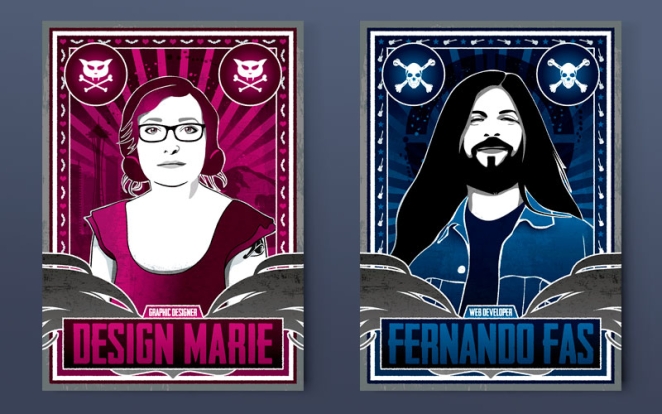
Design Marie
The hardest hiring decisions rarely involve one obviously brilliant portfolio surrounded by nine folders of clip art.
They involve several strong illustrators offering different advantages.
One may have the closest visual style. Another may show better conceptual thinking. A third understands the sector and production requirements so thoroughly that the project feels safer in their hands. The correct choice depends on what the commission values most.
Create the criteria before choosing the favourite.
Score each illustrator against the same requirements: relevance, concept, style, technical delivery, consistency, audience judgement, collaboration, availability and commercial terms. Weight those requirements according to the project.
For a single editorial commission, conceptual speed and fit may dominate. For a 40-page children’s book, character consistency, narrative ability and schedule become critical. For a permanent in-house position, collaboration, adaptability and the ability to operate across several types of brief may matter more than possessing one perfectly matched style.
Reviewers should assess the work independently before discussing it. Otherwise, the most senior or enthusiastic person can establish the official opinion before anybody else has worked out what they think.
Require evidence behind conclusions.
“Their work feels more premium” should lead to “Which visual choices create that impression, and does it matter to the audience?”
“They’re not versatile enough” should lead to “Which part of the role requires a range their portfolio doesn’t demonstrate?”
“They seem difficult” should lead to “Which behaviour produced that concern?”
Taste will always play a role. Illustration is visual, emotional and culturally specific. The goal isn’t to remove judgement. It’s to stop personal preference quietly disguising itself as an objective hiring criterion.
Ask whether the work solves the problem before asking whether you’d hang it above your sofa.
Using Creativepool to Find and Hire an Illustrator

Khoo Siew May
Creativepool allows employers to search specifically for illustrators and narrow results using factors including location, experience, skills, sector background, clients and awards.
That makes it useful whether you already know the style you need or want to explore how different illustrators might interpret the brief.
Start with the work rather than the ranking alone. Open complete profiles, inspect portfolios and look for the evidence discussed throughout this article. Is the relevant discipline present? Are projects explained? Is the illustrator’s contribution clear? Can you see series, process, client context and finished applications rather than isolated images floating attractively in space?
Search terms should reflect the job. “Illustrator” may be enough for broad discovery, but specialist terms such as digital illustrator, character designer, technical illustrator, storyboard artist, surface pattern designer or 2D artist can reveal more relevant candidates.
If you’re looking for a freelancer, you can advertise a studiogig through Creativepool and invite applications for a defined commission. For a permanent role, Creativepool’s talent-attraction options provide a route to advertise the position to the creative community.
Write the brief with enough detail for illustrators to assess the opportunity properly. Include the objective, audience, deliverables, schedule, location requirements, budget or salary range and intended usage. If the style remains open, say so. If it needs to work within an existing visual system, show the relevant context.
Don’t ask applicants to create finished speculative artwork. Their existing portfolio, case studies, recommendations and conversation should provide most of the evidence you need. If a paid assessment becomes necessary for a permanent shortlist, keep it consistent, contained and closely related to the real work.
Creativepool can help you discover the talent and bring professional context around the portfolio. It can’t decide which visual language your project needs.
That part remains yours.
Hire the Illustrator, Not the Illustration

Charis Tsevis
The best illustrator for a project isn’t necessarily the person with the most famous clients, fashionable style or technically astonishing image at the top of their portfolio.
It’s the person whose work, thinking and professional approach give you the strongest reason to believe they can solve this particular visual problem.
Look for relevant evidence. Examine the ideas behind the finish. Decide whether the style suits the audience rather than simply matching your taste. Understand how the illustrator interprets briefs, handles feedback, prepares files, maintains consistency and manages deadlines.
Then have a proper conversation about budget, usage and rights before the first rough appears.
Illustration can do things other forms of communication can’t. It can make the invisible visible, create a world that never existed, compress an argument into one image or give a brand a personality no stock library could supply.
That value doesn’t come only from being able to draw.
It comes from knowing what to draw, what to leave out, how to make the image work and how to deliver it inside the gloriously inconvenient conditions of a real commercial project.
Hire for that entire capability.
You’ll get much more than a prettier rectangle.