
There was a time when brands could convince themselves that reach was enough. Buy the media, borrow the attention, let the platforms do the heavy lifting, and call it a strategy. That era is ending.
What matters now is not simply how many people can see you, but how many people you can reach again, recognise properly, learn from legitimately, and convert without asking a third party for permission. Direct audience ownership is becoming commercially critical because distribution is fragmenting, platform rules are shifting, privacy expectations are rising, and AI is starting to sit between brands and customers as yet another layer of mediation.
Marketers can feel the gears changing already: Adobe reports that 79% of senior executives plan to increase investment in customer data and analytics, and 80% expect to increase spending on new technology. McKinsey’s 2025 and 2025–26 marketing analysis lands in the same place: high-quality first-party data and consented identity are now foundational to both effective personalisation and useful AI deployment.
That shift is bigger than martech, and more urgent than another deck about “customer centricity”. It is a commercial reset. The brands that build direct relationships through owned media, membership, loyalty, CRM, newsletters, apps, communities and content ecosystems are creating something far more durable than campaign awareness. They are creating addressable demand, portable identity, better measurement, and stronger resilience when platforms wobble.
In other words, they are replacing borrowed access with something closer to an asset. That is why the old distinction between “brand building” and “performance” feels increasingly flimsy: when a customer willingly gives you permission, preferences, purchase history, and attention inside an environment you control, branding and performance start working from the same operating system.
Why Direct Audience Ownership Is Becoming a Business Priority
Formula E Operations Ltd
If this sounds dramatic, look at what is happening to the businesses that have lived closest to platform dependency. Reuters Institute’s 2026 research shows publishers with strong direct traffic can still see a path to long-term profitability, while those more dependent on intermediated traffic remain more exposed.
In the same body of research, publishers expect traffic from search engines to fall by more than 40% over the next three years, following sharp declines in referrals from social media; aggregate Chartbeat data cited by Reuters shows Google organic search traffic to more than 2,500 sites fell by a third globally between November 2024 and November 2025. That is publishing rather than FMCG, retail or finance, of course, but the strategic lesson is universal: if a business model depends too heavily on traffic or access controlled by other platforms, that business has less agency over its own economics.
The problem is not simply that platforms change. The problem is that they change in several directions at once. Discovery is fragmenting across search, social, video, creators, aggregators and AI chatbots.
Reuters’ Digital News Report found six major networks with weekly news reach of 10% or more in 2025, versus only two a decade earlier, with younger audiences increasingly moving across Instagram and TikTok.
Its 2026 young audiences study goes further, arguing that direct relationships with audiences have weakened as younger people encounter content more incidentally on social and video networks; that kind of exposure may expand reach, but it also weakens brand recall and differentiation. Again, this is media research, but it maps neatly onto brand marketing: attention is abundant, but memory and loyalty are not.
Then there is the infrastructure layer. Even the browser and ad-tech roadmap has become less predictable than many marketers assumed. In October 2025, Google said Chrome would maintain its current approach to third-party cookie choice and announced that several Privacy Sandbox technologies, including Topics and Protected Audience, would be retired because of low adoption and ecosystem feedback.
Whether you think that outcome is good, bad or merely exhausting, the message to brands is the same: no one should be building their commercial future on the assumption that external identity and targeting infrastructure will become simpler, more stable or more dependable.
The smartest response is not panic; it is to strengthen the assets you control. That instinct is already visible in spend patterns. The UK’s digital ad market reached £40.5 billion in 2025, with retail media up 18% to £3.8 billion as advertisers prioritised closed-loop measurement and first-party data environments. Follow the money and the market is telling you what matters.
This is why direct audience ownership has moved from marketing theory to board-level business priority. When external distribution gets noisier, privacy gets stricter, search gets more zero-click, and AI becomes another filter between question and answer, the commercial premium shifts towards brands that know who their customers are, can reach them with permission, and can prove what happens next.
The first-party relationship is no longer a nice strategic add-on. It is becoming the mechanism that makes the rest of marketing less fragile.
Why Owned Media Matters More Than Ever
Dawn Creative
Let’s make one distinction absolutely clear, because too many marketing plans still blur it. Owned media is not just “content you post online”. It’s media unique to your brand that you control, including your website and content you can publish for free.
That difference is the difference between a property and a tenancy. A brand website, app, newsletter, membership hub, customer portal, community area, event database or SMS list can all become part of owned media. A social profile can be useful, but the rules of access do not belong to you.
That matters because owned media delivers something increasingly scarce: control over context. On a third-party platform, your brand sits inside someone else’s interface, recommendation engine, commercial priorities and moderation rules. On an owned channel, you decide what the experience looks like, how data is handled, what the next action is, and how value is created.
Owned media keeps generating ROI as long as the asset remains live, while brand-owned channels provide a unique opportunity to show what your business authentically stands for and to nurture affinity and engagement. Consumers buying directly from brands generally cite authenticity and a secure website as leading considerations. That is not a trivial point. In a market full of synthetic imagery, duplicated recommendations and recombined search results, the branded environment itself becomes a signal of legitimacy.
Owned media also turns creativity into infrastructure. A brilliant campaign on a borrowed platform can generate attention for a week. A brilliant editorial series, member proposition, customer hub, email format, podcast, product education ecosystem or community mechanic on owned channels can generate repeatable demand for years.
That is why the best owned media does not feel like a dump of branded assets. It feels like a publishing system with a point of view, a utility layer and a habit loop. It gives people a reason to come back that is stronger than “we have a brand”. Used properly, owned media stops being a support channel and starts becoming the place where your audience experiences your brand most fully.
As Simon Manchipp, founder of SomeOne and a regular Creativepool contributor, puts it:
“As JayZ said in Can I live, ‘We don't lease, we buy the whole car, as you should’. Never build a castle on rented land. If a nerd can change a line of code and instantly wipe out your entire audience you don’t really have an audience, you have a lease. Own the relationship.”
It is difficult to improve on that. And crucially, “own the relationship” does not mean “abandon the platforms”. It means use paid and shared environments for discovery, then lead people back into spaces where attention becomes permission, behaviour becomes insight, and relevance becomes repeatable. That is when owned media stops being a content bucket and starts becoming a commercial engine.
How First-Party Data Gives Brands Greater Commercial Control
Fuselab Creative
The value of first party data is often explained in the driest possible way, as though the real prize is a tidier dashboard. It is not. The real value of first party data is commercial control. McKinsey argues that high-quality first-party data and consented identity now provide the signals modern AI, measurement and personalisation systems need.
Making the same case from a different angle: real-time data management allows brands to understand responses immediately and determine which channels and messages resonate most effectively in the moment. In plain English, first-party data makes a brand less dependent on guesswork. It gives marketers a live read on who is engaging, what they care about, where they are in the journey, and how to respond in a way that is timely rather than generic.
This is particularly important because consumers increasingly expect relevance, but not at any cost. McKinsey’s widely cited personalisation research still holds: 71% of consumers expect personalised interactions, and 76% feel frustrated when that does not happen. Yet Adobe’s more recent data shows the trust equation has sharpened. According to its 2026 analysis, 57% of consumers and 50% of B2B buyers prefer to remain anonymous across interactions, but 43% of consumers would share personal information in return for specific product recommendations and 46% of B2B buyers would share information for value-added experiences.
Only 23% of consumers, by contrast, would share that information simply for relevant ads. That is the strategic clue. People are not rejecting data exchange wholesale; they are rejecting lazy value exchange. They will participate when the payoff is obvious, useful and respectful.
That is why first-party data should not be framed as a workaround for signal loss. It should be framed as the evidence layer of a better relationship. First-party data is valuable because it powers better personalisation, stronger measurement and smarter media activation. But it only compounds in value when it is paired with governance, transparency and an experience good enough to justify the exchange. Otherwise, the data gets dirtier, the permissions get shakier, and the relationship gets thinner.
There is another reason first-party data matters more now: AI has raised the ceiling on what brands can do with it. Generative AI is lowering the cost of producing and orchestrating personalised experiences at scale, but only when the underlying data foundation is strong. In other words, AI does not remove the need for audience ownership; it intensifies it.
The brands with weak signal, fragmented identity and patchy consent will generate more automation and more noise. The brands with coherent first-party data will generate more relevant choices, faster. That is the difference between automation that flatters a dashboard and automation that actually improves marketing performance.
What the Strongest Brands Are Building Already
If all of this still feels abstract, the best examples are hiding in plain sight.
Starbucks
Goldstein
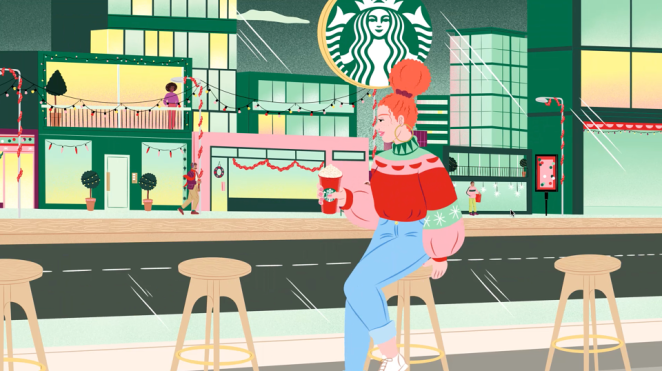
Starbucks is not treating loyalty as a nice little CRM flourish around the edges of the business. In the UK, the company said Starbucks Rewards sales rose 45% in fiscal 2025, accounting for 42% of total UK sales, while active membership grew 41% to 2.4 million. Mobile Order & Pay orders in the UK also increased 28% year on year.
In the US, Starbucks said Rewards drove nearly 60% of company-operated revenue in fiscal 2025, and in January 2026 it redesigned the programme around tiers, exclusive experiences and more personalised value for what it described as 35.5 million active members. That is not just a points scheme. That is a direct relationship architecture tied to spend, behaviour, identity and repeat purchase.
Sephora
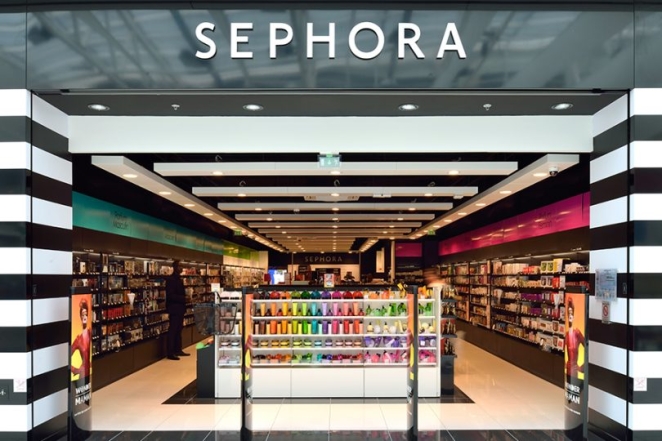
Sephora has built something similarly powerful, only with a different emotional texture. Its 2025 Beauty Insider update referred to more than 40 million Beauty Insider members in the US and Canada, while its March 2026 launch of an app inside ChatGPT said Sephora’s global beauty community now counts more than 80 million active members worldwide. The strategically important detail is not only scale. It is portability.
Because Sephora owns a rich loyalty and identity layer, it can take member benefits, profile preferences and rewards into emerging interfaces rather than starting from scratch every time consumer behaviour moves. In its ChatGPT app, customers can use loyalty rewards, member benefits and account-linked preferences to receive more useful recommendations. That is what audience ownership looks like in the AI era: not retreating from new channels, but entering them with a relationship already intact.
LEGO

The LEGO Group
LEGO provides another instructive example. When it launched LEGO Insiders, it replaced the previous VIP programme with a single account and membership environment designed to bring adult LEGO accounts into one place, making it easier for members to earn and spend points, access exclusive offers and participate in community.
By itself, that does not prove a straight line from programme design to profit. But place it alongside LEGO’s 2025 results and the pattern becomes more interesting: the company reported record performance in 2025, with revenue up 12% to DKK 83.5 billion, consumer sales up 16%, and operating profit up 18%. The point is not that loyalty alone delivered that outcome. The point is that one of the world’s strongest brands continues to invest in direct membership infrastructure at the same time as it scales product innovation, retail execution and digital technology. The strongest brands are not choosing between brand world and customer data. They are building both.
These examples matter because they show what audience building looks like when it grows up. It is not a scramble for followers. It is a system. It combines utility, identity, incentives, content, service and measurable behaviour. It gives brands a better read on lifetime value, a stronger platform for personalisation, and a more stable way to create demand without resetting from zero every quarter.
It also reveals a broader truth: the most successful direct relationships are rarely built on “content” alone. They are built on an exchange customers can actually feel — speed, perks, exclusives, community, convenience, relevance, recognition, access or expertise. The owned relationship works when it gives people a reason to choose it on purpose.
Audience Engagement Alone Is No Longer Enough
Sleek Events
This is where a lot of brands still get seduced by the wrong metrics. Audience engagement strategy has become one of the most overused phrases in marketing, partly because it sounds unquestionably good. But engagement with what, exactly, and on whose terms? A post that gets shared 40,000 times can be useful. A video that racks up impressive completion rates can be useful. A creator partnership that sparks culture can be useful.
None of those things, on their own, means the brand now has an audience it can reach again. If the interaction happens in a third-party environment with little identity capture, limited attribution, weak brand memory and no pathway into a direct relationship, then what the brand has earned is rented attention, not owned demand.
Reuters’ work on young audiences is especially revealing here. It finds that when younger people encounter content on social and video networks, they often do so incidentally while there for other reasons, making them less likely to remember the source brand. The same report warns that indirect distribution may expand reach and engagement while weakening brand recall and differentiation.
Its broader 2026 work on video shows growth happening on TikTok and Instagram while usage on publisher websites is declining. That is a media case study, but it should ring alarms for every brand leaning heavily on creator-led, video-first or social-native growth. Reach can improve while ownership erodes. You can become more visible and less memorable at the same time.
The smartest brands now design engagement as a bridge, not a destination. The social post should lead somewhere. The creator collaboration should unlock something. The video should not just “perform”; it should convert attention into a more direct relationship.
If it brings a customer onto the email list, into the app, into a loyalty programme, into a members-only drop, into a useful account area, or into a content habit the brand can continue to serve, then the engagement has done commercial work. If it vanishes into platform metrics alone, it has mostly done platform work.
How Brands Can Build an Audience They Actually Own
B&B Studio
The first step in audience building is not technology. It is proposition
People do not hand over their details, their preferences, or their repeat attention because a brand wants “better CRM”. They do it because the brand offers something worth returning for: better service, more relevant recommendations, editorial value, member-only access, loyalty rewards, expert guidance, faster purchase, easier replenishment, community, or a genuine sense of being known. So, the opening question for any brand is brutally simple: what is the reason a customer should want a direct relationship with us at all?
The second step is permissions done properly
This sounds dull, until it gets expensive. The ICO’s direct marketing guidance is explicit: organisations should plan direct marketing before they start because it is hard and costly to retrofit compliance later, and direct marketing by email, text and similar channels will often require specific consent. The ICO also stresses the need for clear opt-ins, accurate records of what people agreed to, and data protection by design. Commercially, this matters for more than legal hygiene. Clean permissions make lists healthier, segmentation sharper and trust easier to maintain. Bad permissions do the opposite. Even Mailchimp’s basic email guidance starts with the same principle: obtain explicit consent before adding people to an email list. The modern owned audience is not a pile of half-valid contacts. It is a permission asset.
The third step is identity unification
Customer data platforms can organise data from multiple channels into unified customer profiles, allowing brands to recognise customers across touchpoints and act on insights in real time. Salesforce’s data shows that most marketers are already using first-party data, but very few are fully satisfied with their unification capabilities. That gap is where a lot of audience strategy quietly fails. A brand may have website traffic, app activity, loyalty members, email subscribers and purchase history, but if those data sources are disconnected, the customer experience still feels fragmented. The point of a direct audience is not merely to capture data in multiple places. It is to make the relationship legible enough to serve the customer better and market more intelligently.
The fourth step is to build repeatable owned formats, not one-off campaigns
That could mean a weekly editorial newsletter with a distinct point of view, a membership scheme with real perks, a product education series, a gated insights hub, app-first utility, events, community drops, or a customer account area that is genuinely useful after purchase. What matters is consistency and compounding. LEGO Insiders consolidates identity, rewards and community. Starbucks turns loyalty into repeat behaviour and revenue. Sephora uses membership to carry benefits into new interfaces. Very different sectors, same playbook: make the direct relationship valuable enough that customers choose it again, then build systems that learn and improve over time.
The fifth step is creative discipline
A brand that wants to move people from rented reach to owned relationship needs to design for conversion without becoming transactional in tone. Not every social post needs a hard sell, but the whole ecosystem should make the route back obvious. newsletters should be easy to join; member benefits should be desirable; account creation should unlock something tangible; editorial and product experiences should reward return visits. This is where audience building becomes a creative problem again, in the best sense. The task is not just to capture contacts. It is to make the brand’s direct world feel more useful, more distinctive and more rewarding than the feed outside it.
The Commercial Cost of Waiting Too Long

United Communications group
The most dangerous response to all this is to assume there is still plenty of time. There probably is, if the goal is merely to start a newsletter or tidy up a CRM. There is not, if the goal is to build a meaningful direct audience before platform dependency becomes a serious drag on growth.
The cost of waiting is not only lost efficiency. It is lost learning time. Every quarter a brand spends without meaningful first-party relationship-building is another quarter in which it learns less about its customers than it could have done, and depends more on rented access than it should.
There is also a margin story here. Brands without strong owned channels tend to pay more, more often, to reacquire people they have already met. They are less able to sequence messages, less able to suppress waste, less able to activate loyalty, and less able to personalise responsibly at scale. They may still generate bursts of growth, but those bursts are harder to compound.
Meanwhile, the brands with better audience ownership gain advantages that are not always obvious in a campaign report: lower dependency on volatile referrals, more resilient retention, stronger merchandising, better media efficiency, cleaner experimentation and more portable customer identity when new channels emerge.
That last point matters more than ever as AI interfaces become a bigger layer in discovery. If a brand owns the relationship, it can take it into the next interface. If it does not, it starts every new wave from scratch. Sephora’s move into ChatGPT with member-linked benefits is a neat glimpse of that future.
None of this means brands should become anti-platform purists. Paid social, creators, search, retail media, influencer ecosystems and third-party partnerships will remain essential. But their role is changing. They are increasingly acquisition and amplification layers, not the place where the entire relationship should live.
The long game is to turn borrowed attention into owned connection, and owned connection into measurable commercial advantage. That is why direct audience ownership is becoming commercially critical. It is not because marketers have fallen in love with databases. It is because in a market shaped by privacy, fragmentation, AI and volatility, the brands that own the relationship are the brands most likely to keep owning the outcome.
And that, really, is the core argument. Owned media is no longer a supporting actor. First party data is no longer a compliance-friendly substitute for third-party tracking. Audience building is no longer a vanity play for DTC brands and publishers with newsletters. It is a strategic necessity for any business that wants more control over growth, more confidence in measurement, and more resilience when the next platform shift arrives.
The brands that understand this will not stop using the rented land. They will simply stop mistaking it for home.