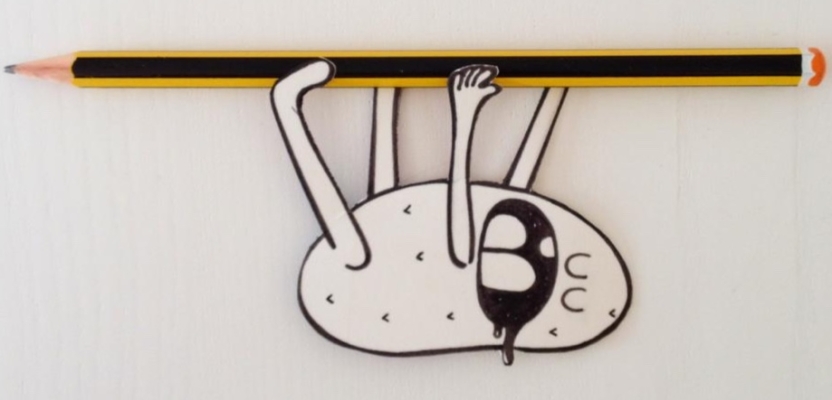

In an age when “busy” has become a badge of honour and the immortal “side hustle” is something to boast about rather than shy away from, the notion of doing nothing can feel heretical. Yet, behind our ceaseless meetings, our endless to-do lists and our screens ablaze with notifications, a quiet revolution is taking shape among the most inventive minds: the art of strategic idleness.
Far from indulgent, this practice harnesses the brain’s hidden power to cultivate fresh insights, solve thorny problems, and rekindle the spark of innovation that fuels every breakthrough. For creatives who live and breathe originality, embracing purposeful downtime may be the secret weapon you didn’t know you had.
The Neuroscience of Letting Go
At first glance, scheduling time to stare out the window or to wander city streets unencumbered by deadlines seems dangerously close to procrastination. Yet neuroscience has revealed that when we set a problem aside, our brains don’t switch off; they shift gears.
In these moments of repose, the Default Mode Network (a group of brain regions associated with daydreaming, autobiographical memory, and future planning) begins to weave together disparate threads of thought, pulling from past experiences, half-formed ideas, and fragments of inspiration. Meanwhile, the frontoparietal control network quietly negotiates which of these stray notions are worth elevating into conscious awareness. It is within the liminal space between mind-wandering and focused reflection that the “aha” moment is born.
Lessons from History’s Innovators
Creative visionaries through the ages have intuitively understood this process. Albert Einstein famously took long walks in the countryside, imagining himself riding light beams until the theory of relativity crystallized in his mind. Charles Darwin’s “Sandwalk,” a simple path around his garden, was less a daily exercise regimen than a ritual of meandering thought—enabling him to wrestle subconsciously with the puzzle of evolution.
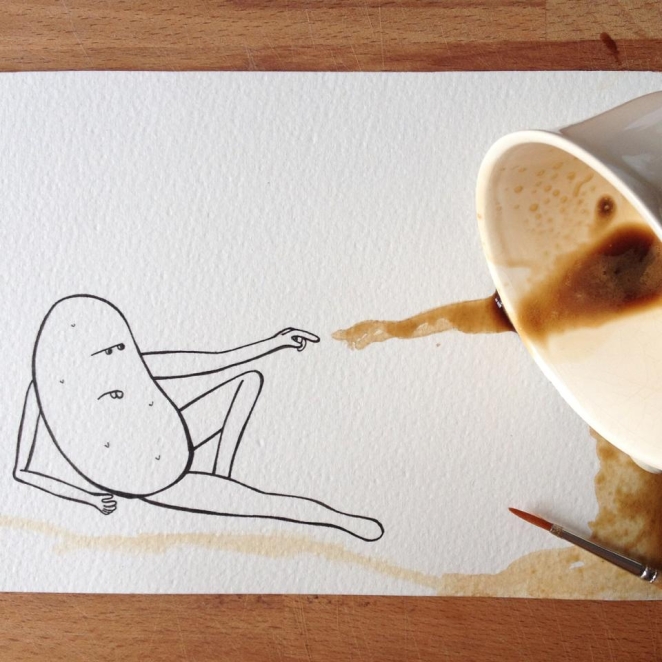
In jazz clubs, musicians riff ad libitum not just for the thrill of the moment, but because improvisation taps directly into that fertile overlap of spontaneous and controlled thinking. Each note emerges from the amalgam of memory, skill, and whimsy that only a relaxed, open mind can produce.
Modern Applications in Creative Practice
For those building brands, crafting campaigns, or designing immersive experiences, the implications are profound. Rather than viewing ideas as the product of heroic, all-nighters fuelled by coffee and adrenaline, imagine creativity as a cycle: intense focus, followed by strategic withdrawal, then re-entry armed with newfound perspective.
Agencies such as IDEO have institutionalized this rhythm in their design sprints, embedding incubation phases between ideation and prototype reviews to ensure that concepts don’t calcify prematurely. Freelancers and small studios can adopt lighter versions of the same model, simply by calendaring “creative cooldowns” that are treated with the same seriousness as client calls.
Embedding Idleness into Your Workflow
Turning downtime into a disciplined tool takes more than goodwill; it requires structure. Start by treating idleness as an R&D expense. Block out regular intervals (ten minutes every two hours, or a half-hour at mid-morning and late afternoon) during which you step away from the screen. Resist the urge to replace real rest with passive scrolling. Instead, cultivate low-stakes activities: doodle free-form in a sketchbook, step outside for fresh air, or close your eyes and let your thoughts drift. Keep a “daydream journal” nearby to capture the odd phrase, the image that flickered across your mind, or the passing analogy—the raw material from which ideas are forged later.
Pair up with a colleague and exchange briefs or personal projects, then steal away for independent breaks. Reconvene afterward to share unexpected insights and mash up divergent perspectives. You’ll find that even when tackling similar problems, two brains incubate in wildly different ways—one through rhythmic walking, another through scribbled concept maps, a third via ambient music playlists. By cross-pollinating these methods, you’ll cultivate a richer creative palette for your own work.
Cultivating a Community of Pause
Within the Creativepool community, the ethos of strategic idleness can flourish in myriad ways. Picture a virtual “Incubation Lounge” where members share snapshots of their retreats—a cozy corner of a home office, a favourite park bench, a booth in a café that inspires reverie. By tagging which downtime ritual led to breakthrough thinking, creative professionals spark conversations that cross disciplines and geographies.
An art director in London might describe sketching abstract shapes while listening to ambient music, which led to a bold typographic layout for a museum exhibit; a motion-graphics designer in São Paulo could recount how a twenty-minute bike ride yielded the perfect metaphor for client branding. These collective stories become a living repository of downtime tactics, a crowdsourced experiment in incubation that amplifies every participant’s practice.
Leading by Example
For studio leaders and managers, setting the tone is crucial. A culture that honours downtime must model it from the top. Begin meetings with a two-minute pause for everyone to breathe and reset. Encourage team members to log their “incubation wins” (moments where stepping away unlocked a solution) and celebrate these as loudly as campaign launches. When setting deadlines, build in breathing room between ideation and delivery to accommodate the subconscious reflections that polish good ideas into great ones.
Educating stakeholders on the value of idleness becomes part of the challenge. Sharing concise explainers that illustrate how short, non-billable breaks accelerate problem-solving can shift mindsets. Case studies documenting a reduction in revision cycles or a jump in concept originality resonate far more than abstract neuroscience. As more teams in the community publish their results, a positive feedback loop emerges: proof begets adoption, which yields further proof.
Embracing Idleness as Innovation’s Bedrock
At its heart, strategic idleness is an invitation to reimagine the creative mind not as a machine grinding relentlessly toward outcomes, but as an ecosystem in which focused work and restful drift coexist in dynamic balance. The most transformative insights often emerge when we least expect them while savouring the sunlight through a window, listening to birdsong on a park bench, or tracing the contours of a coffee cup rim. These moments of suspension are not voids to be filled; they are fertile ground where creativity germinates.
So, the next time you feel compelled to keep pushing (when email pings beckon and meeting invites accumulate) remember that doing nothing may be the smartest thing you can do. In the spirited world of creative industries, where novelty is the currency of significance, your most valuable invention might just be the decision to pause. Embrace strategic idleness as a core part of your practice and watch as the seeds of your next great idea take root in the stillness you once feared.