
As the many thousands of employees scattered across WPP’s pantheon of agencies returned to work after the Christmas break this year, they were greeted by a memo from head honcho Mark Read titled “Winning Together”. Ironically, that memo came worryingly close to tearing the company apart from the inside.
The memo stated that “From the beginning of April this year, the expectation across WPP will be that most of us spend an average of four days a week in the office,” effectively ending the culture of hybrid working that has become commonplace in creative circles over the last decade. It’s an incredibly divisive move that follows major corporation such as Amazon, JP Morgan and PwC and a general culture (in the US at least) of helicopter management that appears to be chainsawing its way through the corporate world in the wake of Trump’s return to office.
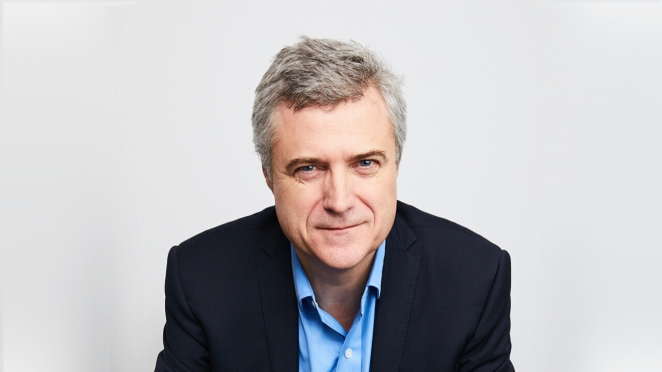
Mark Read
According to a recent survey, 80% of CEOs now predict that hybrid arrangements will vanish and be completely replaced by full-time, in-office work by 2027, So, this isn’t a trend; it’s a tectonic shift in how business leaders believe productivity, culture, and client engagement will work in the second quarter of the 21st century. But for creatives—whose craft thrives on flexibility, serendipity, and the freedom to work in environments that spark inspiration—this mandate raises a burning question: What does the potential end of hybrid work mean for us, and should we roll with the punches or punch back?
Rekindling That Office 'Magic'
In boardrooms from New York to Tokyo, CEOs are increasingly choosing to adopt the “We do our best work when we are together in person” mantra. Read’s memo emphasized that physical proximity drives stronger employee engagement, improved client satisfaction, and better financial performance and it’s telling that these were all opinions rather than facts; opinions that capture a nostalgic yearning for the pre-pandemic office experience that so many of us have learned to forget.
The problem is, the kind of directives being dreamt up by CEOs like Read might be painted in the colours of tradition and efficiency but often mask an underlying desire for control—a longing to recreate the “magic” of the office, even if that magic is more about executive nostalgia than empirical productivity.
The Creative Conundrum
Creativity isn’t a mechanical process that merely clicks into place reliably when bodies fill a room and people start talking at each other. It’s an alchemy of diverse experiences and a subtle dance between structured collaboration and the freedom to wander and wonder. Remote work has not only proven that creative teams can be just as productive outside the confines of a physical office—it’s often enhanced their capacity to think differently.
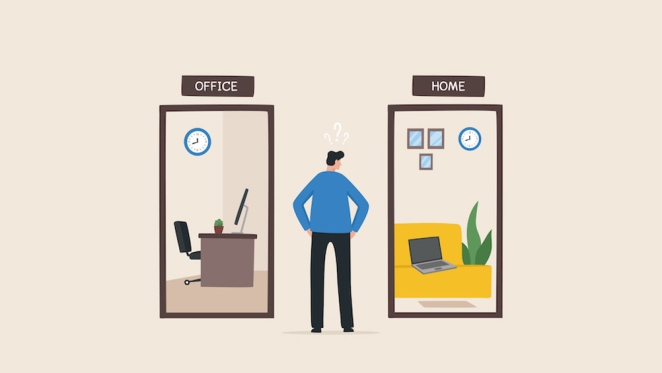
During the pandemic, many agencies discovered that flexible work models allowed their teams to draw inspiration from a variety of settings, reduce the draining toll of long commutes, and strike a healthier work-life balance. Whether it was the quiet solitude of a home office or the unexpected spark of inspiration found during a midday walk, creatives found that autonomy was a catalyst for innovation. Campaigns launched during these years often bore the mark of diverse perspectives—a richness that can be diluted when every team member is forced into the same predictable environment day after day.
Studies have even suggested that many creative roles benefit enormously from the very freedom that hybrid work models afford. In an environment where ideas are fluid and inspiration can come from anywhere, the rigid boundaries of a five-day-a-week office mandate risk stifling the unique thought processes that drive breakthrough creative work.
The Clash of Corporate and Creative Cultures
The push for full-time office attendance is steeped in a yearning for the “good old days” when CEOs and senior leaders roamed bustling halls, and every meeting was a chance for impromptu collaboration. Yet the reality for many creative professionals is far removed from that idealized past. For a generation that has come to value flexibility and autonomy, the corporate insistence on physical presence can feel like a relic of a bygone era.
Critics argue that the data supporting full-time office mandates is, at best, inconclusive. While some research points to improved communication and immediate feedback in face-to-face settings, many more studies overwhelming highlight the benefits of remote work—higher job satisfaction, increased productivity, and the enhanced creativity that comes with a more relaxed and malleable mindset. When creatives are allowed to choose the environments that best suit their personal rhythms, they naturally produce work that is more innovative and authentic.
Employee Backlash
The disconnect between executive expectations and the realities of creative work has already sparked significant employee dissent. At WPP, an online petition urging CEO Mark Read to reconsider the four-day office rule has gathered thousands of signatures—many from verified employees who express genuine concerns over work-life balance, long commutes, and the erosion of the flexible work culture that they helped build during the pandemic.
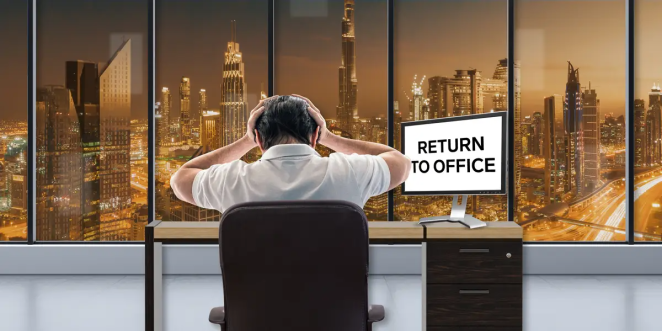
Consider the story of one WPP creative (unnamed, for obvious reasons), who, after years of thriving on a hybrid model, found the new mandate particularly challenging. With a two-hour round-trip commute and family responsibilities that demand flexibility, the shift toward a rigid schedule not only threatened to disrupt his creative flow but also jeopardized his overall wellbeing. His sentiment echoes that of countless others who have experienced firsthand the benefits of remote work—benefits that extend beyond mere productivity metrics to encompass mental health, personal time, and the freedom to pursue inspiration wherever it strikes.
The clash between the old guard and a new generation of workers is becoming ever more pronounced, with surveys revealing that younger employees and digital natives are far less inclined to embrace the five-day office model.
Reimagining the Office
For creative leaders, the challenge now is not simply to resist the corporate tide but to redefine it—to craft a future of work that harmonizes the benefits of in-person collaboration with the liberating aspects of remote flexibility. Imagine an office that is not a prison of 9-to-5 monotony, but rather a dynamic creative hub designed to inspire and energize.
Visionary agencies are already experimenting with reimagined workspaces that blur the lines between collaboration zones and private retreats. Flexible office designs—think open-plan creative lounges paired with quiet focus pods—can offer the best of both worlds. When a team gathers in a purpose-built creative studio, the energy is palpable; ideas are exchanged in a flurry of sketches, brainstorming sessions, and spontaneous digital collaborations. Yet, when the task demands deep concentration, the option to retreat to a quiet space (or even work remotely) is invaluable.
Technology offers a powerful ally in this reimagining. Advanced collaboration tools, virtual whiteboards, and digital brainstorming platforms can capture the spontaneity of in-person interactions while allowing for the seamless integration of remote talent. In a world where creativity knows no boundaries, the physical office can evolve into a flexible canvas—one that adapts to the unique needs of each project, team, and individual.
Creative leaders must also champion policies that acknowledge the diverse lifestyles and responsibilities of their teams. Whether it’s through flexible scheduling, remote-first options, or a hybrid model that truly values the input of every team member, the goal should be to foster an environment where creativity can flourish without the constraints of outdated norms.
A Manifesto for Creative Leaders
Ultimately, the buck stops here with the creative business leaders who set the rules. They have the power—and the responsibility—to ensure that the evolution of work is not dictated solely by a regressive nostalgia for an old office model that doesn’t make sense to modern workers, but is instead shaped by the dynamic, diverse needs of the creative community.

This is a rallying cry for creative leaders everywhere: Let’s design a future where the office is not an obligation, but an opportunity—a place where the collision of ideas is celebrated, where mentorship and spontaneity coexist with personal freedom, and where innovation is measured not by physical presence but by the quality of the creative output.
For those who lead creative teams, consider this a call to action to negotiate a new social contract with your employees, one that balances tradition with innovation, structure with freedom, and management with trust. By doing so, we can ensure that the creative spirit remains unbridled—a spirit that will continue to thrive, inspire, and transform the world long after the office lights have dimmed.
After all, the best ideas are born not from conformity, but from the freedom to dream, explore, and create on your own terms. Because results are not defined by where you work, but by the work itself.