

It’s a rinse and repeat situation right now. Every other week a ‘game-changing’ new AI tool emerges and headlines predict a creative apocalypse.
Even tech luminaries like OpenAI’s CEO Sam Altman have boasted about AI handling the bulk of ad agency work, causing fresh grads to wonder if there’s any space left for them. But amid the hype (and occasional hysteria), industry veterans maintain that some roles are simply too human to fail.
AI is undoubtedly transforming how agencies operate, automating production grunt work and supercharging research and analytics. Yet, when it comes to roles that hinge on uniquely human qualities (judgment, empathy, intuition, cultural insight) the consensus is clear: these jobs aren’t disappearing; they’re evolving.
As WPP’s AI lead Daniel Hulme recently put it, “Creativity, in its purest form, remains a human skill”. In other words, the value of people in agencies is shifting from execution to direction, and the real question isn’t which job title survives, but which human work endures.
The Myth of the AI-Proof Role
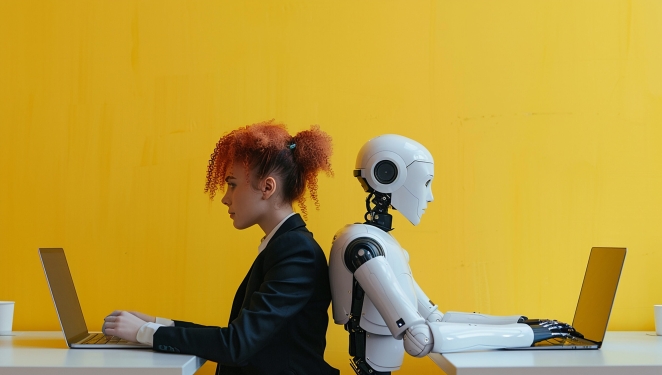
First, a reality check: No role is 100% immune to AI’s influence. As POD LDN Founder Adrienn Major cautions, “I don’t think any role is completely immune, but certain ones are deeply human at their core.”
In practice, this means that while AI might encroach on aspects of every job (yes, even creative ones), there are facets of certain roles that AI simply can’t replicate or replace. It’s less about job titles and more abouthuman traits like taste, strategic judgment, emotional intelligence, and relationship-building. These are the attributes that define the roles AI won’t be stealing anytime soon.
So, in practice staffing in areas like strategy, consumer insight and conceptual roles remains safe while roles focused purely on production or execution get hit hardest. In other words, the further your job is from rote production and the closer it is to leading with human insight, the safer you are.
As Major notes, the value is shifting from execution to direction. The following roles exemplify that shift, blending skills that AI can assist with but not fully own.
Creative Directors
In an era where generative AI can spit out 100 layouts or tagline options in a minute, you’d think the creative director’s role might be on the chopping block. After all, if an AI can generate ideas, what’s left for the humans? Plenty. Creative Directors and senior creatives in general – provide something no algorithm can: taste and a point of view. Or as SomeOne Founder Simon Manchipp pithily puts it: “taste is not an algorithm.”
AI can remix what it’s seen before, but it has no genuine point of view or instinct for what feels right. Taste is inherently human, born of cultural exposure, personal experience, and intuition. It’s the creative director’s compass to know which of those 100 AI-generated options is on-brand, original, and resonant.
Taste is not an algorithm
Research from Carnegie Mellon University on human-AI collaboration backs this up: AI can churn out lots of competent content, but humans provide the judgment (call it taste) about what people will like or if the output conveys the right message or emotion.
Put simply, AI can’t tell a good idea from a great one. It doesn’t feel the spark of excitement when a concept clicks, nor the tingle of apprehension when something’s off-brand. It takes a human creative lead to make those intuitive judgment calls.
That’s why even as AI floods us with more options, the role of the creative director as a curator and quality guardian becomes even more critical. They ensure that creativity isn’t just plentiful, but purposeful – aligned with brand values and capable of making audiences feel something. In the age of automation, creative directors aren’t getting replaced; if anything, their discerning taste is more valuable than ever.
Brand Strategists & Planners

Next up, the brand strategists, planners, and cultural strategists – the folks who define what a brand should stand for and how it connects with real people in the real world. They live and breathe cultural nuance, human trends, and context. In theory, an AI could crunch millions of data points about consumer behavior faster than any human strategist.
But here’s the catch: insight isn’t the same as information. Strategy is as much art as science, and “culture is not code,” to quote Manchipp again. You can’t reduce understanding human motivations or emerging cultural shifts to a neat algorithmic output.
Sure, AI can analyze past trends and even suggest ideas based on what’s worked before. What it struggles with is true originality and foresight. It can’t see around the corner of culture. Humans, on the other hand, excel at understanding context: why a meme catches on, what symbolism will resonate (or offend), how a local market’s history influences consumer trust.
These are the soft signals and subtleties that a seasoned strategist picks up on by virtue of being a living, breathing participant in culture. AI doesn’t do irony, or subtext, or zeitgeist, at least not reliably.
AI doesn’t do irony, or subtext, or zeitgeist
In practice, many strategists are already using AI as a research sidekick (getting quick facts or generating rough drafts of market analysis) but then adding that crucial layer of human interpretation and gut feeling.
Even the most advanced language models spit out a “generic baseline” when it comes to culturally nuanced strategy, often missing the deeper context and recommending bringing in human experts anyway. In short, brand strategy requires empathy and cultural literacy that AI can augment but not fully emulate.
Great strategists often challenge the data too. They know when the numbers lie, or when to go with a bold insight that runs counter to historical data because the world is changing. AI, by design, is backward-looking, trained on yesterday’s information. Strategists are forward-looking, imagining and steering toward a future that hasn’t been coded yet.
That creative foresight is gold. Agencies will always need humans who can interpret the world’s messy human narrative and turn it into brand direction. Those roles aren’t getting automated out; if anything, they’ll steer the AI to ensure the brand remains relatable, authentic, and culturally in tune.
Relationship Builders (Account & Client Services)
Finally, let’s talk about the relationship builders like the account managers, client service directors, business development folk, and even project managers who grease the wheels between the agency and the client. These are the people persons, the diplomats and translators who manage client expectations, rally teams, and often must read between the lines of what a client says versus what they mean. Their superpower? Emotional intelligence and trust. And trust, dear readers, is decidedly not downloadable.
In advertising, as in any service business, relationships are everything. Clients don’t hire an agency just for deliverables; they hire them for counsel, for confidence, for a sense of partnership. No AI can schmooze a wary CMO over coffee or instinctively know when a client’s uneasy about a pitch direction and needs extra reassurance.
As Simon Manchipp quips, “trust isn’t downloadable.” It takes human warmth, credibility, and consistency over time to build that trust. In fact, surveys show customers and clients overwhelmingly prefer interacting with humans over bots for complex or sensitive matters – one study found that if people had to pick one customer service method, they’d still choose talking to a human, likely because we trust our ability to build rapport with a person. You simply can’t automate genuine rapport.
Trust isn’t downloadable. It takes human warmth
That’s not to say AI has no role here. Agencies are already deploying AI for data-driven personalization, CRM, and even sentiment analysis to flag if a client email sounds unhappy. But those are tools in the relationship-builder’s kit, not replacements.
The “account person” of the future might use an AI assistant to draft routine status updates or gather campaign performance stats, freeing them to spend more time in genuine conversation with clients. Adrienn Major observes: AI will handle the grunt work so that humans can focus on the deeply human parts of understanding nuance, context, and client psychology.
Importantly, trust isn’t just built with results, but with transparency and empathy. A human can admit a mistake, crack a joke to ease tension, or intuitively sense when a client’s under personal stress and adapt accordingly.
AI lacks that human touchstone. As one tech leader noted, technology can deliver personalization at scale, but you need humans in the loop for oversight, intervention, and decision-making at critical points… to win deeper and sustained consumer trust. In client relationships, the same holds true: AI can assist, but ultimately people want to do business with people. The handshake (or Zoom call) still matters.
From Execution to Direction: The Human Touch Remains Essential
Mike Whyte
Adrienn Major encapsulates it well: “AI can generate options, but it can’t make final judgment calls rooted in brand trust, emotion, or instinct. The value will shift from execution to direction.” In other words, the nature of many agency roles is changing – but not in the apocalyptic way some fear. Rather than replacing creatives and strategists, AI is refocusing their talents. The mundane production bits? Automated. The core human judgments? More front-and-center than ever.
Think of AI as the ultimate intern or assistant: it can churn out drafts, crunch data, and handle repetitive tasks at superhuman speed. This elevates the humans to do what only they can do – provide vision, make judgment calls, and build relationships.
The future creative team might include AI in the trenches, but a human at the helm. In fact, generative AI’s rise is making roles that “steer the vision, hold relationships, and navigate ambiguity” even more pivotal (to use Major’s words). These are Creative Directors who guide brand storytelling, Strategists who set course amidst cultural change, and Account Leaders who maintain the human bond.
Every role will be affected, but the impact ranges wildly from disruptive to truly liberating.
None of this is to say anyone can rest on their laurels. Agency professionals will need to continuously adapt, learning to work alongside AI and focus on their uniquely human strengths. But if you’re in one of these deeply human roles, take heart: your skills are not about to be deepfaked or automated away.
As long as taste, culture, and trust are part of the equation, flesh-and-blood professionals will be in the mix. Or as Tim Brown of IDEO reminds leaders, AI can’t change fundamental human qualities – our authenticity, our craving for meaning, our ever-evolving taste for the new.
Ultimately, asking “Which agency roles will never be affected by AI?” might be the wrong framing here because every role will be affected, but the impact ranges wildly from disruptive to truly liberating.
The roles discussed above are poised to be liberated by AI: freed from drudgery so they can focus on higher-level work. They’ll certainly be augmented, but not annihilated. So if you’re a creative leader, strategist, or relationship builder, the future isn’t about fighting AI – it’s about embracing it as your powerful new sidekick.
Your job is to do what the AI can’t: provide the human spark that turns good enough into great, the context that turns data into insight, and the trust that turns interactions into partnerships. Those aspects of the job are here to stay, algorithm or not, and in fact will define the next era of agency value.




Vila DeVila September 9th, 2025, at noon
What an excellent article! I thoroughly enjoyed reading it — as a strategist, I can wholeheartedly endorse everything that was said. The insights presented are spot-on!