

Fake brand names have a peculiar advantage over the real thing. They don’t have to survive a board meeting, justify a dip in market share, or issue an apologetic statement after a disastrous launch. They just have to live in the imagination. That’s why the best fictional brands, the smartest fictional company names, and the most famous fictional companies in popular culture often outlast the stories that introduced them. Some become shorthand. Some become merchandise. A few make the jump into the real world entirely.
What makes them memorable is that they rarely feel accidental. The strongest fictional brands tell the audience what kind of world they’re in before the plot has properly got going. They can signal greed, magic, rot, menace, mediocrity or absurdity in a single glance. A good fake brand name can do more than pages of exposition. It can tell the audience who holds the power, what kind of people built the place, and whether that sleek logo ought to be trusted for even a second. Designers interviewed by It’s Nice That made a similar point, arguing that fictional brands work best when they create recognition and emotional connection using the same principles as real ones.
Why movies, TV shows and games create fake brands
Part of the answer is practical. Real brands come with permissions, sensitivities and the constant possibility that somebody in legal will object to their logo appearing next to a murder, a zombie outbreak or a collapsing media dynasty. But legal caution only explains so much. The bigger reason is creative control. Fictional brands let writers and designers distil reality until it becomes legible. A made-up beer can stand in for a whole culture. A made-up biotech firm can embody cold corporate ambition. A made-up media empire can capture everything rotten about inheritance, capital and image management in two clipped words and a tasteful serif logo.
That’s why the best fictional brands don’t feel like props. They feel like compressed world-building. They do what good branding always does: tell a clear story, fast.
The Most Recognisable Fictional Brands
1. ACME Corporation
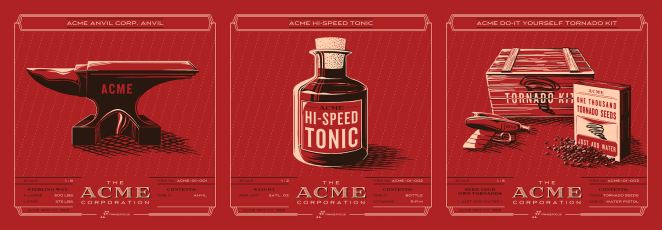
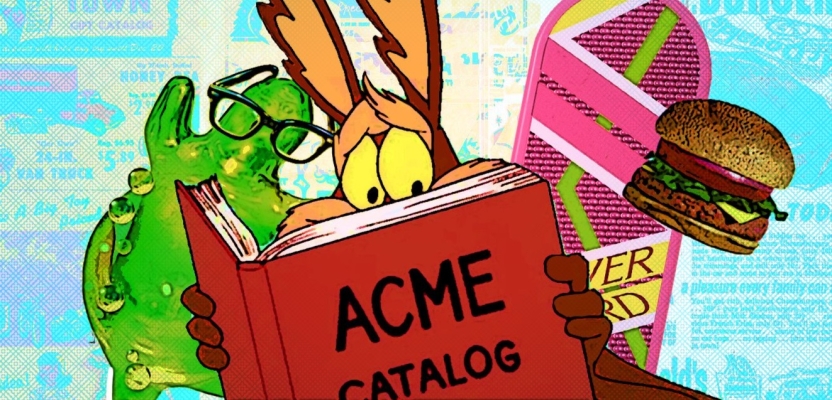
ACME is probably the clearest example of a fictional company becoming bigger than any one story. It’s most closely associated with Looney Tunes, especially Wile E. Coyote’s endless reliance on mail-order contraptions that promise precision and deliver disaster, but the word itself predates Warner Bros. by decades. “Acme” comes from Greek, meaning something like the highest point or peak, and in the early 20th century it was commonly used in business names because it suggested excellence and often appeared near the top of alphabetical directories. That’s what makes its use in the cartoons so sharp: ACME sounds like the best possible supplier, yet every product fails in the most humiliating way imaginable.
From a creative point of view, ACME is memorable because it takes one of branding’s oldest promises, reliability, and turns it into a running gag. The brand identity is simple, repeatable and endlessly flexible. It can sell rocket skates, giant magnets, explosives or portable holes because the point isn’t the category. The point is the pattern. Every encounter with ACME reinforces the same brand truth: impossible promise, catastrophic result. In real branding terms, that is absurdly disciplined. It also helps that the name is short, punchy and visually useful. It looks good stamped on a crate, a detonator or a parachute. That kind of graphic economy is a huge part of why it stuck.
What makes ACME so enduring is that it doesn’t just function as a joke inside the cartoon. It became a kind of cultural shorthand for generic corporate overreach. It feels like a parody of the company that sells everything, claims everything and quality-controls nothing. That’s why it still turns up in design conversations and media lists about great fictional companies. It isn’t only funny. It’s structurally perfect.
Our regular contributor and SomeOne Founder Simon Manchipp, adds: “ACME is the ultimate critique of the "everything store" decades before Amazon existed. ACME provides everything from giant magnets to dehydrated boulders, and crucially, it never works. It’s the perfect brand because its failure is the entire point of the narrative. It’s the most consistent identity in history: high promise, zero delivery, 100% brand recognition.”
2. Wonka
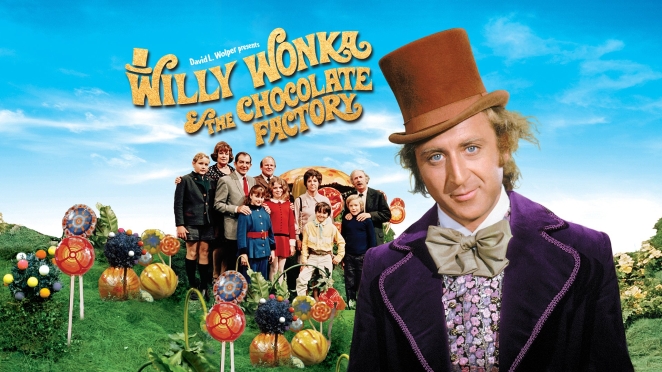
Wonka is one of the rare fictional brands that was practically born asking to become real. Roald Dahl introduced Willy Wonka in Charlie and the Chocolate Factory in 1964, but the character was always more than a character. He was already a brand world: inventor, showman, chocolatier, ringmaster, manufacturer of impossible products and keeper of a completely singular tone of voice. By the time the 1971 film came around, the brand logic was so strong that Quaker Oats helped finance the film in exchange for rights tied to candy sales. The Wonka confectionery brand launched in 1971, later passed through several owners, and Nestlé eventually sold the Wonka confectionery business to Ferrero in 2018. Ferrara then revived the name for Wonka tie-in gummies in 2023.
Creatively, Wonka works because the brand is built on controlled excess. Everything about it is heightened, but not randomly so. The name itself has bounce and warmth. It sounds playful, slightly odd and unmistakably proprietary. Then there’s the product system: Wonka Bars, Everlasting Gobstoppers, lickable wallpaper, fizzy drinks that lift you off the ground. Even before real-world packaging entered the picture, Wonka already had the essential quality of a strong consumer brand: a product universe that feels coherent, desirable and ownable.
That’s why the leap into reality felt so natural. Most fictional brands that become real do so because audiences like the joke. Wonka became real because it already behaved like a real masterbrand. It had mythology, packaging cues, product extensions and a consistent promise of wonder. In brand terms, it’s less a one-off fictional creation than a fully formed experiential identity. It sells imagination, but in a way that can still sit on a shelf. That’s a very unusual trick.
3. Weyland-Yutani
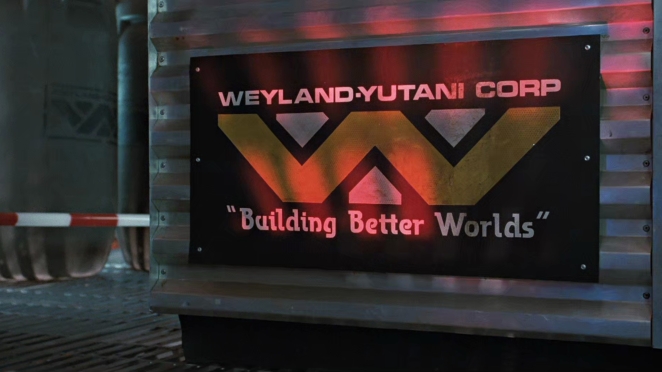
Weyland-Yutani works because it sounds like a company that could genuinely exist tomorrow. In Alien lore, it’s a vast multinational conglomerate formed from the merger of Weyland Corp and the Yutani Corporation, and it becomes so dominant that characters often refer to it simply as “the Company.” That shorthand is part of the brilliance. Once a corporation becomes generic, once it no longer even needs its full name, it starts to feel less like a business and more like an operating system for the world around it.
From a creative point of view, the name does a huge amount of work. “Weyland” has an old industrial heft to it. “Yutani” adds global scale and a faintly futuristic polish. Together they sound international, expensive and impossible to challenge. That matters because Alien isn’t really frightened by technology alone. It’s frightened by bureaucracy, extraction and the possibility that a giant corporation might treat cosmic horror as a logistics opportunity. Weyland-Yutani is memorable because it doesn’t feel flamboyantly evil. It feels administratively evil. That’s much more unsettling.
It also lasts because the identity is so transferable. “The Company” can appear on screens, uniforms, cargo, memos and spacecraft without ever losing its meaning. That kind of graphic and narrative flexibility is one of the reasons the brand has stayed culturally vivid. It doesn’t just belong to one film. It belongs to a whole idea of corporate menace in science fiction.
4. Tyrell Corporation
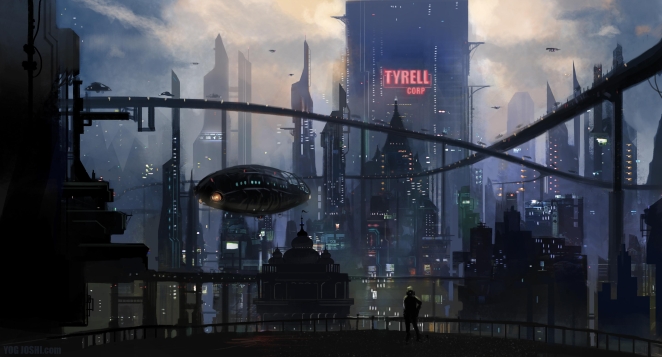
Tyrell Corporation helped set the visual and conceptual template for the future-facing megacorp long before that became standard genre furniture. In Blade Runner, it is the high-tech company responsible for creating replicants, and it is named after its founder, Eldon Tyrell. That simple founder-led naming structure is part of why it works so well. It feels plausible, like the natural endpoint of a brilliant industrialist turning himself into an institution.
Creatively, Tyrell is memorable because it fuses luxury and dread. The company’s name is clean, corporate and faintly aristocratic. It sounds established. Refined. Untouchable. Then the world around it does the rest. The pyramid headquarters, the godlike founder, the immaculate surfaces, the unnerving calm: all of it turns Tyrell into more than a manufacturer. It becomes a philosophy of design. The corporation doesn’t just make replicants. It brands artificial life as a premium product. That’s a much richer and more memorable proposition than a generic evil lab.
What makes Tyrell stick is that it captures a very particular fear: not that technology will go wrong, but that technology will be commercialised beautifully. It’s not messy or chaotic. It’s elegant. That elegance is exactly what gives the brand its afterlife. Countless fictional corporations after it have borrowed some version of Tyrell’s mood, whether consciously or not.
5. InGen


InGen is one of those fictional company names that sounds suspiciously like it was built in a boardroom, which is precisely why it works. Short for International Genetic Technologies, it is the bioengineering company behind Jurassic Park, founded in franchise lore by John Hammond and Norman Atherton. Even before the dinosaurs arrive, the company name already tells the audience what kind of operation this is: sleek, ambitious, scientific and probably too pleased with itself.
From a creative perspective, InGen’s strength lies in its vagueness. It sounds specific enough to be real, but broad enough to contain almost anything. That’s a useful trick in fictional branding. A name like InGen can plausibly sit on research facilities, investor decks, transport vehicles and park signage without ever feeling stretched. It also mirrors the ethical slipperiness of the story. “Genetic technologies” sounds clean and neutral. It disguises the fact that the company is resurrecting extinct predators for commercial entertainment.
That’s why InGen is memorable. It doesn’t announce itself as madness. It presents itself as innovation. The best fictional corporations often work like that. They hide the absurdity of what they’re doing behind the polished language of progress. InGen may not have the flashiest logo or the cult following of some others on this list, but it remains one of the most convincing examples of a fictional biotech brand sounding just credible enough to be dangerous.
6. Cyberdyne Systems
Cyberdyne Systems is a brilliantly economical piece of naming. In The Terminator universe, it is the tech company responsible for the development of Skynet, the AI system that ushers in apocalypse. Even without that context, the name already lands. “Cyberdyne” sounds metallic, corporate and militarised, while “Systems” gives it exactly the sort of dull institutional finish that real defence-adjacent tech firms often have.
That combination is why it has endured. Creatively, Cyberdyne feels like the perfect midpoint between future-cool and bureaucratic banality. It is not a comic-book villain name. It is much more persuasive than that. It sounds like a company that would sponsor a robotics conference, recruit elite engineers and insist that its autonomous weapons programme exists to improve safety. That’s what makes it sticky. The brand isn’t memorable because it’s exaggerated. It’s memorable because it sounds like a version of reality pushed half a step too far.
It also benefits from being attached to one of cinema’s most durable modern anxieties. Cyberdyne doesn’t just make machines. It makes the future feel outsourced to people who shouldn’t be trusted with it. That’s a strong narrative position for any brand, fictional or otherwise. Once you hear the name, it carries an entire category of fear with it.
7. Bubba Gump Shrimp Co.
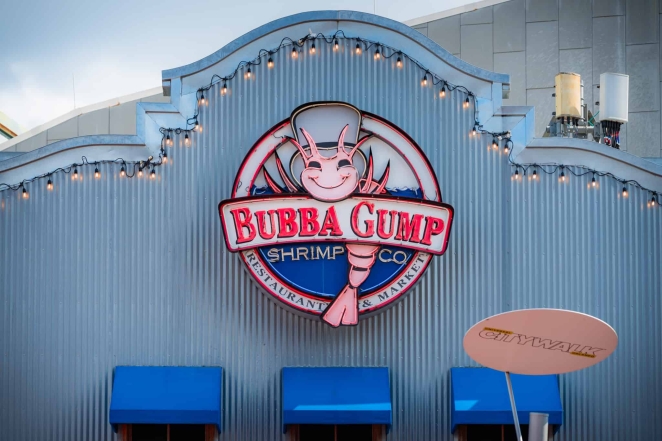
Bubba Gump is a fascinating case because, unlike Wonka, it wasn’t created as an expansive product universe. In Forrest Gump, Bubba Gump begins as an idea tied to character and story: Bubba’s obsession with shrimp and the promise he and Forrest make to go into business together. On paper, that could easily have remained a nice bit of narrative texture. Instead, it became a real restaurant chain. The official brand history dates its launch to 1996 on Cannery Row in Monterey, California, and describes it as the first casual restaurant chain based on a motion picture property.
The reason it made that leap is that the name carries more brand logic than it first appears to. “Bubba Gump Shrimp Co.” sounds homespun, regional and oddly trustworthy. It feels specific enough to have come from a real American business, not a screenwriter’s placeholder. It has the rhythm of a heritage food brand, and that matters. The best fictional company names don’t just sound clever. They sound usable. Bubba Gump sounds like a place with framed signs on the walls, a signature dish, a gift shop and a queue of tourists outside. In other words, it was already halfway to being a themed hospitality brand.
Creatively, it also benefits from emotional association. The restaurant doesn’t just borrow the film’s recognition. It borrows its warmth. Forrest Gump is nostalgic, earnest and commercially huge, which gave the brand a tone that people were willing to inhabit in real life. That’s the part a lot of fictional brands can’t manage. They’re recognisable, but not inhabitable. Bubba Gump could become real because it offered a full experience people were willing to buy into, not just a logo they remembered from a scene.
8. Duff Beer
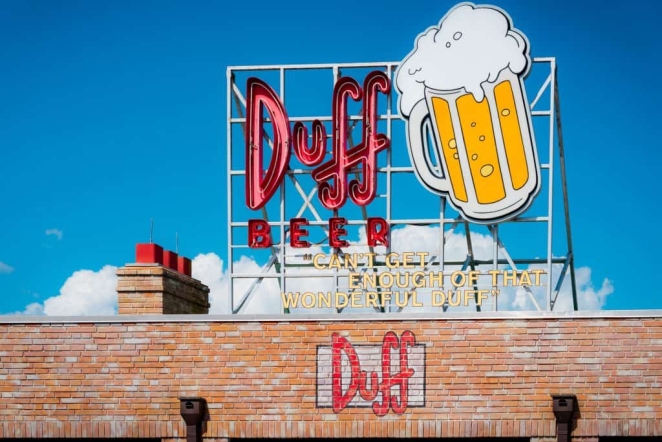
Duff is one of the smartest examples of satire becoming brand equity. In The Simpsons, Duff begins as a parody of mass-market American lager: aggressively advertised, nutritionally dubious, omnipresent and faintly depressing. It’s the beer Homer drinks not because it represents taste or aspiration, but because it represents habit, culture and low-level surrender. That alone makes it funny. But what makes Duff memorable is how complete the parody is. The name, the can design, the red-and-white visual language, the ad style, the sponsorship energy, it all feels like a real beer brand boiled down to its bluntest essentials.
Creatively, Duff works because it understands that strong consumer branding often rests on repetition, not nuance. The name is monosyllabic, stupidly memorable and slightly ugly in exactly the right way. It sounds mass-market. It sounds industrial. It sounds like something you’d hear yelled across a bar. That phonetic bluntness is part of the brand’s success. Visually, too, it’s effective because it doesn’t try to overdesign the joke. It looks just plausible enough. That’s what lets the satire land.
And then, of course, the thing happened that always confirms a fictional brand has really worked: it escaped the fiction. Universal’s parks serve officially licensed Duff Beer in their Springfield areas. Once that happened, the brand effectively moved from parody object to experiential product. People were no longer just recognising the joke. They were buying into it. That’s a remarkable creative achievement, because satire usually weakens when converted into merchandise. Duff survives the transition because its design is so clean and its cultural role is so instantly legible.
9. Waystar Royco
Waystar Royco is one of the best recent fictional company names because it understands contemporary corporate aesthetics almost too well. Unlike ACME or Duff, it doesn’t need exaggeration to be funny. It wins by sounding exactly like the kind of company that already exists: post-merger, over-lawyered, expensively rebranded and vague enough to conceal all sorts of rot. HBO’s merchandising around Succession helped cement that identity in the real world, but the name itself was already doing the heavy lifting.
From a creative perspective, the brilliance is in the blandness. “Waystar” feels directional, strategic, consultant-approved. “Royco” sounds dynastic and corporate at once. Put them together and you get a company name that feels like it was assembled to reassure shareholders while confusing everyone else. That’s exactly why it works for Succession. The show is about power insulated by language, polish and systems, and the brand name reflects that perfectly. It doesn’t scream villainy. It murmurs institutional inevitability.
That matters because memorable fictional branding doesn’t always come from flamboyance. Sometimes it comes from precision. Waystar Royco is memorable because it feels true to the corporate era it’s satirising. The logo, the tone, the merchandise, the phrasing, all of it carries the same idea: a sleek, disciplined exterior stretched over dynastic chaos. It’s one of the best examples of a fictional company being memorable not because it looks unreal, but because it looks horrifyingly plausible.
10. Los Pollos Hermanos
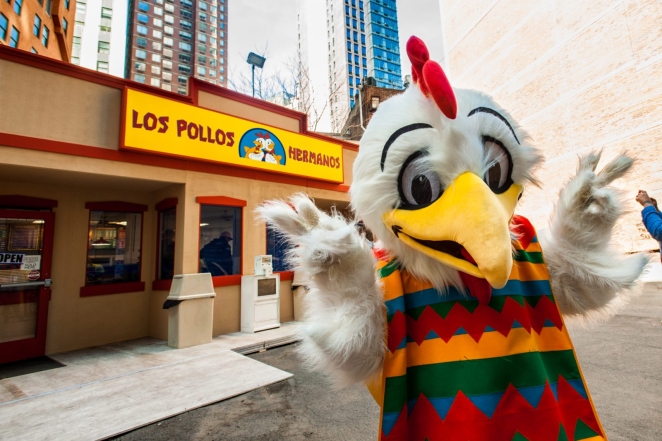
Los Pollos Hermanos is memorable because it’s convincing at first glance and sinister at second. In the Breaking Bad universe, it functions as a fast-food chicken chain and a front for Gus Fring’s criminal empire. The official merchandise line still leans heavily on its identity, which tells you how well the brand was built in the first place. It was never just a prop business. It had a clear name, a cheerful visual world and a recognisable promise.
Creatively, the genius is in the dual readability. “The Chicken Brothers” is warm, friendly and slightly corny. It sounds family-run, approachable and designed to put people at ease. That’s exactly why it works as cover. The sunniness of the brand is not incidental to the story. It is the story. The crisp uniforms, smiling mascot and bright fast-food presentation all reinforce the same idea: trust this place, it’s harmless. Good fictional brands become memorable when their surface meaning and hidden meaning are both strong. Los Pollos Hermanos does that almost perfectly.
That’s also why it remains such a potent piece of TV branding. It isn’t merely iconic because fans remember the joke. It’s iconic because the identity is complete enough to live outside the show on T-shirts, signage and merch without losing its charge. Even detached from the plot, it still tells a story.
11. Globex Corporation
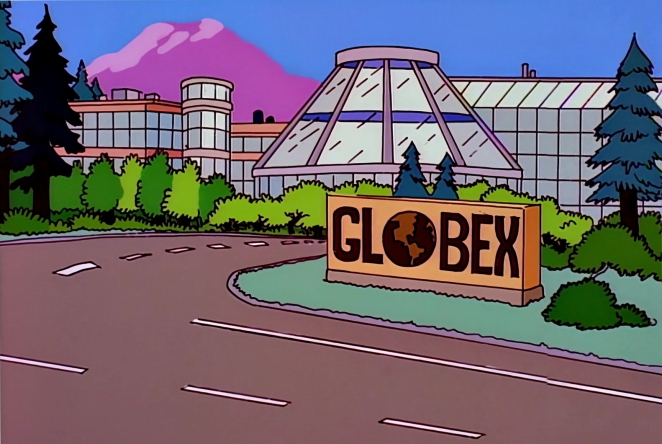
Globex is one of The Simpsons’ best fictional brands because it starts from a very simple comic insight: a terrifying global corporation might actually look rather pleasant from the inside. In the episode “You Only Move Twice,” Globex is introduced as a high-tech company run by Hank Scorpio, outwardly friendly and efficient while secretly serving as a front for world domination.
The name is a big part of the joke. “Globex” sounds like every multinational with an airport lounge account and a suspiciously upbeat annual report. It has that late-20th-century corporate confidence to it, the sort of made-up business word designed to imply scale, reach and frictionless ambition. That makes it memorable because it feels both generic and specific. It’s clearly a parody, but not of any one company. It’s a parody of multinational branding itself.
Creatively, what makes Globex last is the contrast between Scorpio’s affability and the company’s true purpose. The brand world is clean, open and employee-friendly. The underlying organisation is monstrous. That contrast sharpens the satire. Great fictional brands often condense an entire worldview into a name and a few visual cues. Globex condenses the suspicion that nice offices, soft corporate language and free perks might be hiding something far worse.
12. Morley Cigarettes
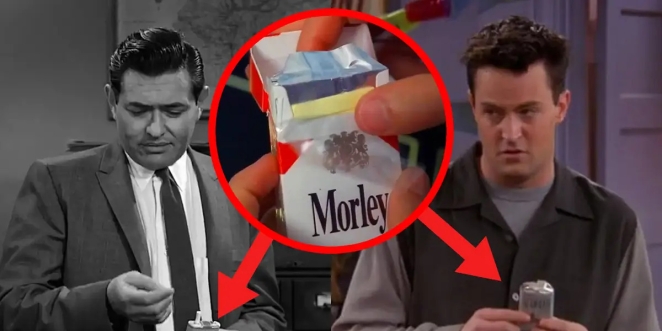
Morley is a quieter example than most on this list, but it’s one of the best demonstrations of how repetition can turn a background prop into a genuine cultural artifact. The fictional cigarette brand traces back to Alfred Hitchcock’s Psycho and later appeared across a wide range of films and TV shows as a stand-in for Marlboro-style branding. TIME included Morley in its list of influential fake companies, which says a lot about how persistent the brand became despite rarely taking centre stage.
From a creative perspective, Morley is memorable because it understands the value of almost-recognition. It sounds enough like a real cigarette brand to pass in the corner of a frame, which is exactly what it was designed to do. It doesn’t call attention to itself. It creates plausibility. That kind of restrained fictional branding is often harder to pull off than the louder examples because it has to feel native to the world without seeming invented for effect.
Over time, that restraint became its own form of power. Morley gathered meaning through recurrence. It kept appearing, quietly building a half-life in popular culture. That’s why it matters here. Not every memorable fictional brand becomes iconic through plot importance. Some become iconic because they’re used so consistently that they start to feel like part of shared visual language.
13. Oceanic Airlines

Oceanic Airlines works because it feels exactly like the kind of airline name nobody would question while boarding. It is bland in a very strategic way. In the Lost universe, that normality was crucial. The series needed a carrier that felt fully plausible before disaster struck, and “Oceanic” does that job perfectly. ABC even extended the illusion through official Oceanic Airlines websites tied to the show, which is one of the clearest examples of fictional branding being used for immersive world-building rather than simple set dressing.
Creatively, Oceanic’s strength lies in its neutrality. Airline branding in fiction often has to work fast. The audience needs to recognise the category immediately and accept its reality without thinking too hard. Oceanic sounds corporate, international and reassuringly generic. It doesn’t distract. That makes it ideal for a story in which the brand’s main function is to establish normality before everything collapses.
The reason it became memorable is that the show didn’t stop at the name. By creating official sites and promotional material, Lost treated Oceanic like a genuine brand with customer-facing touchpoints. That shift matters. Once a fictional company starts behaving like a real one outside the narrative, even temporarily, it becomes much easier for audiences to remember it as more than a plot device.
14. Umbrella Corporation
Umbrella is one of the great naming coups in video game branding because the word itself is so reassuring. An umbrella protects. It shelters. It covers you. That makes it a perfect name for a company at the centre of the Resident Evil universe, where the gap between corporate presentation and corporate reality is the whole point. Capcom still frames Umbrella as the pharmaceutical company bound up with the Raccoon City disaster, and that tension between benign identity and monstrous consequence is exactly what made the brand iconic.
Creatively, Umbrella works because it combines softness and menace better than almost any fictional brand. The name is everyday and domestic. The logo is clean and geometric. The corporate category, pharmaceuticals, implies trust, expertise and regulation. All of those signals make the betrayal more potent. If the company had been called BioDeath Systems or something equally obvious, it wouldn’t have lasted half as well. Memorable brands, fictional or otherwise, know not to over-explain themselves.
Umbrella also benefits from having a strong emblem. The red-and-white mark is simple, recognisable and easy to migrate across games, films, merchandise and fan culture. That portability matters. It turns a plot device into an identity system. In branding terms, Umbrella is memorable because it understands contrast: safe name, lethal consequence; polished symbol, contaminated reality; corporate calm, biological horror. That tension is what keeps it alive in the imagination.
15. Aperture Science
Aperture Science is one of gaming’s funniest and most effective bits of institutional branding. Valve’s official description of Portal places players inside the Aperture Science Laboratories, which immediately establishes the corporate-academic setting the game needs. The name is ludicrously pompous in exactly the right way. “Aperture” sounds precise, technical and faintly self-important. “Science” is so broad and declarative that it becomes funny.
That tonal balance is why the brand sticks. Aperture Science feels like a company run by people who believe curiosity automatically justifies recklessness. The name has the cadence of a serious research institution, but it also carries a whiff of corporate theatre. That suits Portal perfectly. The world of the game is sterile, intelligent, absurd and increasingly deranged, and the brand identity captures all of that before GLaDOS has even finished speaking.
Creatively, it’s memorable because it’s not just a name. It’s a voice. Everything associated with Aperture feels like part of the same worldview: testing, innovation, procedural language and a total collapse of ethical proportion. Strong fictional brands don’t just label the environment. They define the logic of the environment. Aperture Science does that with unusual precision.
16. Abstergo Industries
Abstergo Industries is a very modern kind of fictional company. In Ubisoft’s official Assassin’s Creed Nexus VR description, it is presented as an organisation using lost artifacts to manipulate people’s beliefs, while other Ubisoft materials position characters as former Abstergo researchers or employees. That gives the company a clear narrative role, but the name is what makes it memorable.
“Abstergo” sounds sleek, Latinate and corporate in a way that suggests private power dressed up as innovation. It has the polished neutrality of a tech platform or pharmaceutical giant, but there’s something faintly cold about it too. Add “Industries” and the effect is complete. It sounds like a company that would absolutely have a wellness initiative, a mission statement and a terrifying interest in human behaviour.
That’s why it works creatively. The Assassin’s Creed series is obsessed with control, surveillance and the packaging of history into usable systems. Abstergo is memorable because its branding reflects all of that. It feels contemporary, scalable and plausible. It is less a cartoon villain than a polished infrastructure company whose actual ambitions become visible only once you look too closely.
17. Vault-Tec
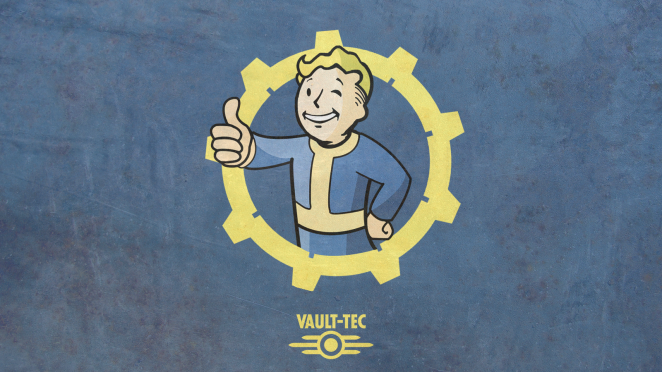
Vault-Tec is another fictional company that became bigger than its narrative function because its branding is so complete. In Fallout, the company sells apocalypse-proof reassurance: order, planning, family safety, engineered survival. Bethesda has extended that into extensive real-world merchandise, which makes sense because Vault-Tec was already built like a brand system rather than just a plot mechanism.
What makes it memorable creatively is the false friendliness. “Vault” suggests security. “Tec” gives it just enough corporate futurism to sound credible. Then the design world around it leans heavily on optimistic mid-century Americana: bold instructional graphics, upbeat institutional messaging, bright colours, paternal mascots. It looks like the future as sold by an old government pamphlet. That aesthetic contradiction is the whole brand. Vault-Tec promises care while operating as something much darker and more manipulative.
That’s also why it translates so easily into merchandise and fan culture. People don’t just remember the company because it’s evil. They remember it because it has a worldview. Good fictional brands need more than recognition. They need a coherent emotional tone. Vault-Tec has one in abundance: smiling reassurance at the edge of ruin.
18. Nuka-Cola
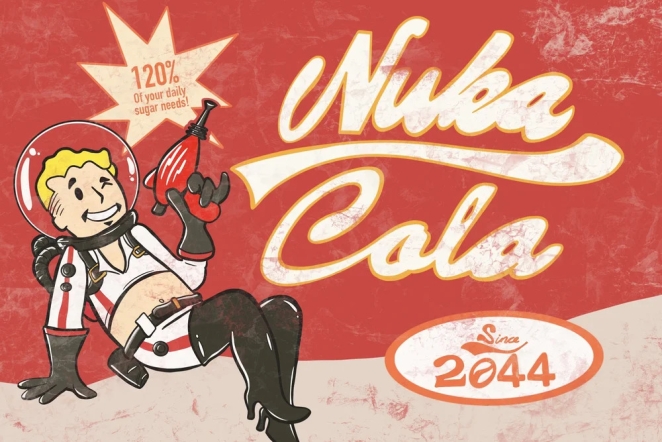
Nuka-Cola is memorable because it understands one of the darkest truths about branding: a great consumer brand can survive almost anything, even the end of the world. Inside Fallout, it isn’t just a soft drink. It’s a relic of a fully commercialised culture, complete with mascots, variants, slogans and visual nostalgia. Bethesda’s own merchandising shows how effectively that identity carries outside the game.
From a creative angle, the genius is obvious. The name is close enough to Coca-Cola to trigger instant recognition, but different enough to build its own mythology. The design leans into retro Americana, atomic-age optimism and cheerful overproduction. It’s familiar on sight, which is exactly what a parody beverage brand needs to be. But it also goes beyond parody. Nuka-Cola has its own tone, its own product logic and its own collectible appeal. It doesn’t just reference soda branding. It behaves like a fully imagined soda brand.
That’s why it sticks. The audience isn’t merely told that pre-apocalypse consumer culture was obsessive and ridiculous. They can see it in the bottle design, the naming, the advertising voice and the persistence of the brand long after civilisation has collapsed. In storytelling terms, that’s elegant world-building. In branding terms, it’s a lesson in how much meaning a fictional product can carry when every visual and verbal cue points in the same direction.
19. Stark Industries
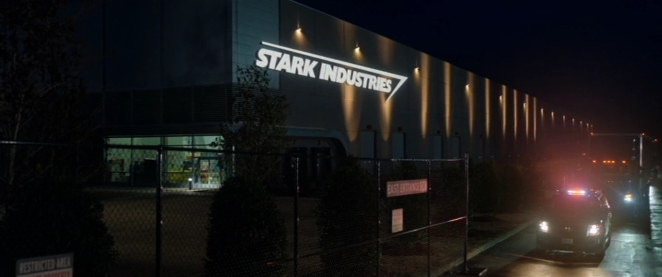
Stark Industries has the advantage of being tied to one of the most recognisable characters in modern popular culture, but it wouldn’t last if the company name itself weren’t so strong. Marvel’s official character material makes clear that Howard Stark founded the company and Tony Stark later inherited it, developing weapons and technology far beyond what other firms were creating. That founder lineage is important because it makes the company feel dynastic as well as futuristic.
Creatively, Stark Industries is memorable because it is essentially Tony Stark in corporate form. The name is clean, blunt and confident. “Stark” carries a sense of power, clarity and a little intimidation. It doesn’t try too hard. That restraint is what gives it authority. In brand terms, it behaves like a premium engineering company with an unusually charismatic frontman, which is exactly the lane the stories need it to occupy.
The company also made the jump beyond comics with unusual ease. Marvel has used Stark Industries across games, collaborations and adjacent media, and the identity travels well because it’s built on such a simple, portable proposition: genius, money, technology, ego. Some fictional corporations feel trapped in their original narrative. Stark Industries feels expandable by design.
20. MomCorp
MomCorp is one of the sharpest satirical brands on the list because it turns the language of comfort into the language of monopoly. TIME’s list of influential fake companies includes MomCorp and describes Mom as the smiling face of a vast industrial empire in Futurama. That pairing is the whole joke. A company called MomCorp sounds silly and comforting right up until it starts to feel uncomfortably close to the way real conglomerates try to present themselves.
From a creative standpoint, the name is brilliant because it weaponises familiarity. “Mom” is intimate, domestic and nurturing. Add “Corp” and the contrast becomes funny immediately. The company sounds like it wants to tuck you in and dominate the marketplace at the same time. That’s a much more memorable satirical move than simply calling it something overtly sinister.
What makes MomCorp last is that it understands something fundamental about branding: the most powerful organisations often present themselves as benevolent helpers. Futurama just pushes that idea a little harder and makes it funnier. The brand sticks because it condenses a whole critique of consumer capitalism into one wonderfully horrible name.
Why some fictional brands feel more real than actual brands
Because they’re usually better edited. Real brands accumulate compromise. They expand into odd categories, lose the nerve of their original proposition, sand off their own personality and then wonder why nobody feels anything anymore. Fictional brands only need the most telling bits: name, tone, promise, hypocrisy, done. That economy makes them sharper. Duff is more legible than plenty of real beer brands. Waystar Royco feels more coherent than a good number of actual media conglomerates. Umbrella, Vault-Tec and Abstergo all understand the dark appeal of corporate clarity.
It also helps when a fictional brand is allowed to spread across touchpoints. Universal turned Duff into a drinkable theme-park product. Bubba Gump became a real restaurant chain. Wonka moved from page and screen to shelf, then into the portfolio Ferrara acquired from Nestlé’s US confectionery business. Once a fictional company starts behaving like a real brand outside the story, recognition compounds fast.
What real brands can learn from fictional ones
The fictional brands that make the leap into the real world tend to have three things in common. First, they already behave like brands inside the story, with clear products, a defined tone and recognisable visual cues. Second, they offer an experience people actually want to inhabit, not just a joke they want to recognise. And third, they’re creatively disciplined. Wonka sells wonder. Bubba Gump sells nostalgia and hospitality. Duff sells instantly legible parody. None of them feel half-built. They feel like brand systems waiting for a licensing deal. That’s usually the difference between a funny fake company and one that becomes culturally permanent.
The most famous fictional brands don’t feel like background decoration. They feel like case studies in identity, tone and storytelling pressure. And that may be why they continue to fascinate designers, writers and anyone else interested in how culture gets built: they prove that the fastest route to recognition is still the oldest one. Know what the brand means and express it without blinking.
How Creativepool Can Help You Build a Brand People Remember
Oliver Craddock
The best fictional brands work because they know exactly what they mean. ACME promises excellence and delivers chaos. Wonka sells wonder. Umbrella offers protection while hiding horror. Waystar Royco sounds like power wrapped in corporate upholstery. These names stick because they’re not just labels. They’re tiny stories.
Real brands need that same discipline, even if they don’t have the luxury of existing inside a perfectly edited fictional world. A name, logo, tone of voice, product system or campaign platform has to survive customers, competitors, channels, search results, internal stakeholders and the general indignity of real life. That’s why strong branding rarely comes from a clever name alone. It comes from a coherent identity system built by people who understand strategy, language, design and culture.
That’s where Creativepool can be useful. For businesses developing a new brand, refreshing an existing one or trying to create a more distinctive identity, Creativepool’s company directory offers a way to discover branding agencies, naming studios, design consultancies, copywriters, strategists and creative companies with the skills to turn a vague idea into a brand people can actually recognise.
A startup may need a naming partner who can create something ownable, legally sensible and emotionally sharp. An entertainment brand may need a studio that understands world-building, visual systems and fan culture. A consumer brand may need packaging, tone of voice, campaign assets and product architecture that all feel like they belong to the same universe. A corporate brand may need the opposite of Waystar Royco: clarity, trust and character without the whiff of dynastic collapse.
Creativepool can also help brands find individual specialists through its talent network. That might mean a freelance copywriter to sharpen a brand voice, a graphic designer to build a visual identity, an illustrator to create a distinctive character system, a motion designer to bring a brand world to life, or a creative director to connect all the moving parts into one coherent idea.
For agencies and designers, Creativepool also works as a place to showcase the kind of branding work that proves strategic and creative range. Strong case studies can show not just the finished logo or packaging, but the thinking behind the name, the world it creates, the tone it establishes and the way it behaves across different touchpoints. That matters because, as the best fictional company names prove, memorability comes from consistency as much as invention.
Browsing Creativepool Awards and featured creative work can also help businesses understand what strong brand-building looks like in practice. The best identity projects don’t just look polished. They create recognition, emotional connection and a clear sense of what the brand is there to do.
That’s the useful lesson from fictional brands. They’re memorable because they’re ruthlessly edited. They know the joke, the promise, the threat or the fantasy they’re built around. Creativepool helps real businesses find the agencies and creative talent who can bring that same level of clarity into the real world, where a brand has to do more than sound good in a script. It has to be chosen, trusted, remembered and, ideally, loved.