


There’s a tendency in some circles to romanticise success. We talk about “viral moments” as if they’re strokes of luck, fleeting and unrepeatable, as though the brands behind them simply happened to be in the right place at the right time with the right idea. It’s a useful myth. It protects us from having to interrogate the work too closely.
But the truth (and it’s one that becomes harder to ignore the longer you spend studying the best examples of social media campaigns) is far less forgiving. The campaigns that resonate, scale and endure aren’t accidents. They’re constructed. Not rigidly, not formulaically, but with a level of intent that’s often invisible on the surface.
This is where the real strategy of social media marketing sits. Beneath the aesthetic. Beneath the tone of voice. Beneath the metrics that get reported in case studies. It sits in the decisions made early on: what behaviour are we tapping into, what role does the audience play, and why would anyone care enough to pass this on?
The campaigns that resonate, scale and endure aren’t accidents. They’re constructed
Because that’s the defining shift. Social media hasn’t just changed how campaigns are distributed but how they’re experienced. Audiences are no longer passive recipients. They’re participants, critics, amplifiers and, increasingly, co-creators. And that changes everything.
Social media hasn’t made marketing easier. It’s made weak thinking more visible. A campaign can no longer hide behind media spend or immaculate production. If the idea isn’t clear, useful, funny, moving or culturally fluent, it tends to disappear very quickly.
The best marketing campaigns on social media understand this. They don’t treat platforms as dumping grounds for assets made elsewhere. They behave natively. They invite participation. They give audiences a role beyond passive consumption. And, perhaps most importantly, they know when to stop explaining.
Examples of Social Media Campaigns That Delivered Real Results
It’s worth starting with the campaigns that have become shorthand for success, not because they’re perfect, but because they reveal patterns that repeat across very different categories.

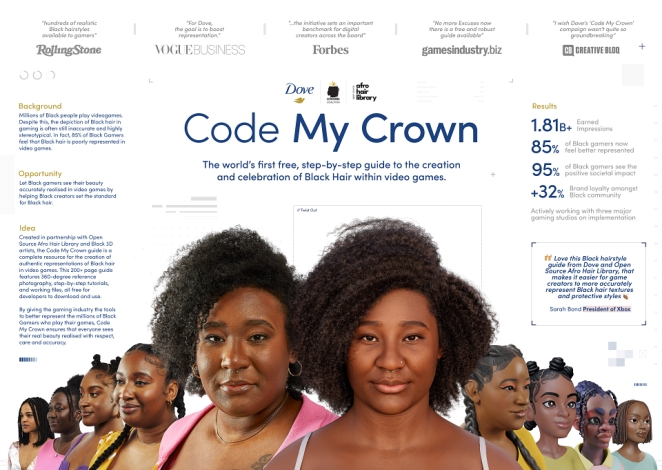
When Dove released Real Beauty Sketches, it didn’t feel like a social campaign in the traditional sense. It felt more like a piece of documentary storytelling. But that was precisely the point. By anchoring the idea in a human truth (that women tend to view themselves more critically than others do) Dove created something people didn’t just watch, but discussed, debated and shared. The campaign travelled because it reflected something back to the audience that felt uncomfortably familiar.
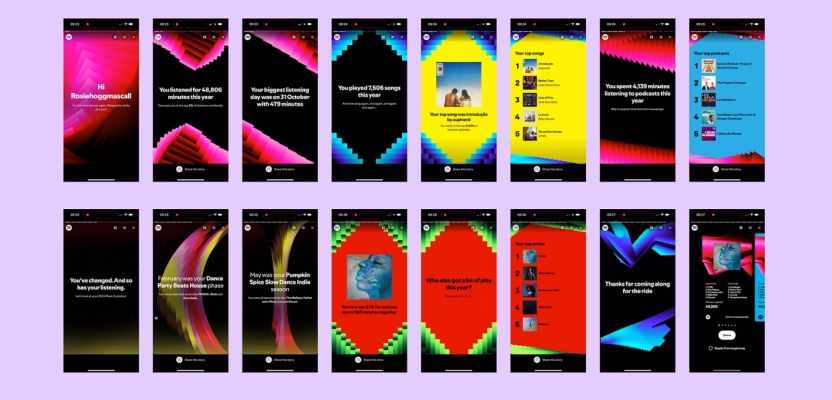
There’s a similar clarity in Spotify’s Wrapped. On paper, it’s a data visualisation exercise. In reality, it’s something far more potent. It takes behavioural data and reframes it as identity. It tells people who they are (or at least who they’ve been over the past year) and packages that insight into something inherently shareable. Wrapped works not because it’s clever, but because it’s personal.
Nike, meanwhile, has built an entire playbook around clarity of belief. Its You Can’t Stop Us campaign didn’t attempt to reinvent the brand. It distilled it. The split-screen execution was visually striking, but the reason it resonated across social platforms was simpler: it expressed a consistent worldview at a moment when audiences were looking for something to hold onto.
What these campaigns share is not format, budget or even tone. It’s clarity
Then there’s the ALS Ice Bucket Challenge, which remains one of the most cited (and often misunderstood) marketing campaigns on social media. What made it effective wasn’t just its reach, but its structure. Participation wasn’t optional. It was embedded. You took part, you nominated others, you donated. The campaign didn’t just spread; it replicated.
Burger King’s Moldy Whopper campaign demonstrated the power of doing something deliberately uncomfortable. In a category defined by artificial perfection, Burger King chose decay. The result was visually jarring, but strategically precise. It forced attention not by shouting louder, but by breaking the visual language people had come to expect.
And on platforms like TikTok, campaigns such as Chipotle’s #GuacDance reveal a different kind of intelligence. The brand didn’t impose a narrative. It tapped into an existing behaviour (dance challenges) and gave it a simple, brand-linked hook. Participation followed naturally.
What these campaigns share is not format, budget or even tone. It’s clarity. Each one is built around a single idea that can be understood quickly and acted on immediately.
A Broader View: Campaigns Beyond the Obvious
It would be easy to stop there, to build an argument entirely on globally recognised work. But that would miss a significant part of the picture. Some of the most instructive examples of social media campaigns are happening outside the usual spotlight in work that operates with tighter budgets, more specific audiences and, often, sharper constraints.
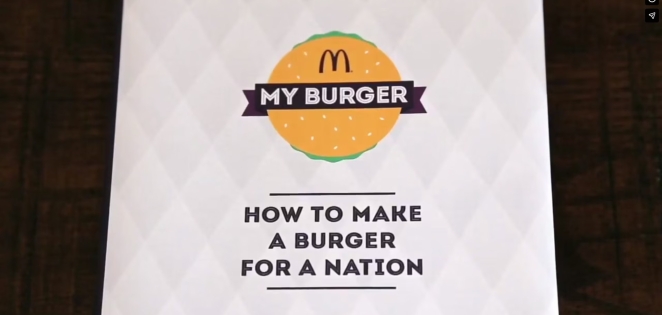
McDonald’s My Burger – UK
Take Daniel Bonner’s McDonald’s My Burger – UK campaign. At its core, it’s disarmingly simple: invite customers to design their own burgers, share them and gather votes. But that simplicity masks a more strategic shift. The campaign hands over a degree of control to the audience, turning them from consumers into contributors. And crucially, that contribution has a tangible outcome. The winning ideas don’t just get attention. They get produced.
There’s a similar understanding of platform behaviour in VCCP’s Wispa Gold Hazelnut Flavour, “A New Type of Gold”. Built entirely on Twitter, the campaign created a fictional trading market where people could “buy” shares in a chocolate bar using a hashtag. The value fluctuated based on engagement, turning social interaction into a kind of game. It’s playful, slightly absurd, but entirely aligned with how people use the platform.
VaynerMedia London’s Durex “Fit Matters” campaign takes a different approach, tackling a subject that many brands would struggle to address openly. By working with creators who already had credibility in the space, the campaign reframed the conversation around condom fit, making it more accessible and less awkward. The results (millions of impressions and a measurable shift in perception) are important, but the real achievement is in changing the tone of the conversation.
Then there’s FCB London’s Raising Profiles, created for The Big Issue in partnership with LinkedIn. When lockdown made street sales impossible, the campaign recreated the vendor model digitally, allowing vendors to connect with potential customers in their local area. It’s a reminder that the most effective good marketing campaigns often blur the line between marketing and service design.
TMW’s adulting for Kinder Bueno operates on a lighter note, but with equal precision. By tapping into the shared experience of navigating adulthood (the small victories, the quiet anxieties) the campaign positions the product as a reward for everyday competence. It’s not a grand statement, but it doesn’t need to be. It’s recognisable, and that’s enough.
McCann Lima’s The Most Famous Griller in Peru shows how constraints can sharpen creativity. Faced with the challenge of generating buzz without the budget for a global celebrity, the campaign found a cultural shortcut that delivered the same effect. It’s a useful reminder that scale is often less important than relevance.
And then there are ideas that extend beyond the screen entirely, like Pete Case’s KFC Soundbite Table, which turns a physical object into a social experience, or MTV #LetsTalkColour, which uses the absence of colour to provoke conversation around racism. Both demonstrate that social media doesn’t have to be confined to feeds and formats. It can be a layer that sits across a broader experience.
Strategy of Social Media Marketing Behind Successful Campaigns
Gemma Purkiss
Once you start looking beyond surface-level execution, certain patterns begin to emerge. The strategy of social media marketing that underpins effective campaigns is rarely complex, but it is deliberate.
The first and perhaps most important element is behavioural insight
Not in the abstract sense that often appears in presentations, but in a very practical understanding of what people already do. Do they share personal data? Do they take part in challenges? Do they respond to humour, outrage or recognition? Do they want to feel seen, useful, clever, generous, rebellious or part of something larger than themselves?
The campaign needs to align with that behaviour, not fight against it. Spotify Wrapped works because people already use music to express identity. The Ice Bucket Challenge worked because public nomination created momentum and accountability. McDonald’s My Burger worked because people already have opinions about what should be on the menu. Durex Fit Matters worked because creators could make a private subject feel discussable in a public space.
The second element is platform fluency
Each platform has its own logic, its own rhythms, its own unspoken rules. TikTok rewards participation, speed and imitation. Instagram leans into identity, aesthetics and social proof. LinkedIn is built around professional relevance, credibility and networks. X, formerly Twitter, has historically thrived on immediacy, argument and shared in-jokes. A campaign that works beautifully in one of these places may feel entirely out of place in another.
This is where weaker campaigns often stumble. They confuse distribution with strategy. They take an idea designed for film, slice it into ratios and call it social. But the best campaigns are built with the platform in mind from the start. They understand not just what the platform allows, but what its users are already doing there.
The third element is simplicity
This is often the hardest part. There’s a tendency, particularly in creative industries, to equate complexity with sophistication. But on social media, complexity is usually a barrier. The idea needs to be understood quickly, often without sound, often in passing, often by someone who didn’t ask to see it.
That doesn’t mean the thinking behind it is simple. In fact, the opposite is usually true. The simpler the audience-facing idea, the more disciplined the strategy behind it tends to be. “Design your dream burger” is simple. So is “share your music year.” So is “turn colour off to talk about racism.” The simplicity is what allows the idea to travel.
And finally, there’s participation
Not every campaign needs user-generated content, but every campaign needs to consider the audience’s role. Are they observers, contributors, advocates, challengers, customers, witnesses or collaborators? The clearer that role, the more likely the campaign is to generate momentum.
What Makes Good Marketing Campaigns Stand Out on Social Media

9inchideas
The difference between good marketing campaigns and forgettable ones is rarely budget. It’s clarity of intent.
The strongest campaigns know exactly what they’re trying to do, and they resist the temptation to do everything. They don’t chase every platform, every format, every trend. They focus. That focus gives the work shape. It allows every asset, every partnership and every media decision to ladder back to a single thought.
They also understand culture, but not in the superficial sense. Cultural awareness isn’t simply referencing whatever happens to be trending that week. It’s about understanding context: what people are talking about, what they’re tired of, what feels unresolved, what still has emotional charge.
This is why purpose-led campaigns are so difficult. They can be powerful, but they’re also vulnerable to cynicism. Audiences are quick to spot the gap between what a brand says and what it does. A campaign like Raising Profiles works because the platform mechanic directly supports the social issue. It doesn’t merely state concern. It creates a practical bridge between vendors and potential buyers.
Purpose-led campaigns can be powerful, but they’re also vulnerable to cynicism
The same applies to campaigns built around humour. A funny campaign that doesn’t understand the brand, the audience or the platform can feel desperate very quickly. But humour with a strong strategic spine can be incredibly effective because it lowers resistance. Wispa Gold’s fictional chocolate stock market is silly, yes, but it’s silly in a way that makes participation feel low-risk and enjoyable.
Then there’s consistency. Not repetition, but coherence. A campaign should feel recognisable across touchpoints even as it adapts to different formats. Nike can move from film to social cutdowns to athlete posts because the belief system is consistent. Spotify Wrapped can evolve year after year because the central mechanic remains intact: your listening tells a story about you.
That kind of coherence matters because social media is fragmented by nature. People encounter campaigns in pieces, often out of order, often stripped of context. A strong campaign can survive that fragmentation because the idea is clear enough to hold together.
How Marketing Campaigns on Social Media Are Structured for Success

Digital Da Vincis
Structure is often overlooked because it’s less visible than the idea itself. But it plays a crucial role in how a campaign performs.
Most successful marketing campaigns on social media move through a series of phases, whether consciously or not.
Introduction
There’s an initial period where the idea is introduced, often through a specific community, audience segment or group of creators. This phase is less about mass reach and more about credibility. It asks: who needs to see this first for it to feel legitimate?
Amplification
Then comes amplification. This is where paid, owned and earned activity start working together. Paid media can create visibility, but it can’t manufacture genuine interest on its own. Owned channels can provide consistency, but they can feel limited if the audience isn’t already engaged. Earned media can create momentum, but only if the idea is strong enough to deserve attention.
Participation
The third phase is participation. This is where the audience begins to shape the campaign, whether through submissions, comments, remixes, reactions, shares or debates. It’s also where brands need to let go a little. A campaign that invites participation but then tries to control every response rarely feels genuinely social.
Sustainance
Finally, there’s sustain. This is where many campaigns fall down. They launch loudly, spike briefly and vanish. The better ones evolve. They respond to audience behaviour. They generate follow-up content. They leave behind a stronger association, a changed perception, a usable service or a community that remains engaged after the campaign window has closed.
Spotify Wrapped is the clearest example of sustain. It isn’t a one-off campaign anymore. It’s a recurring cultural ritual. The anticipation is now part of the value. People expect it, discuss it, compare it and complain about it, which, in social terms, is often its own kind of success.
Social Media Marketing Types Used in High-Performing Campaigns

VCCP
There are several social media marketing types that appear across high-performing campaigns, and they each serve a different purpose.
Brand Storytelling
Brand storytelling remains one of the most powerful, particularly for brands with a clear point of view. Dove, Nike and Burger King all use storytelling in very different ways, but each builds from a strong brand position. Dove leans into emotional recognition. Nike leans into belief and performance. Burger King leans into category provocation.
Participation
Participation-led campaigns work differently. They’re less about saying something to the audience and more about giving the audience something to do. The Ice Bucket Challenge, Chipotle’s #GuacDance and McDonald’s My Burger all succeed because the campaign mechanic is easy to understand and easy to pass on.
Data
Data-driven personalisation is another powerful type, but it’s difficult to do well. Spotify Wrapped succeeds because it turns data into something emotionally resonant. Bad personalisation feels creepy or mechanical. Good personalisation feels revealing.
Creator
Creator-led campaigns have become increasingly important, particularly when brands need credibility in spaces where corporate messaging struggles. Durex Fit Matters is a good example because the creators aren’t simply media placements. They’re part of how the campaign earns permission to have the conversation.
Purpose
Purpose-led campaigns can be among the most effective, but only when the action is credible. Raising Profiles and #LetsTalkColour work because the campaign format supports the message. They don’t simply ask audiences to approve of a brand’s values. They use the platform to create visibility, conversation or utility.
Hybrids
Then there are experiential-social hybrids, where the social idea begins outside the feed. KFC Soundbite Table is useful here because the experience itself becomes the content. The technology creates a reason for people to engage, talk and share.
The mistake is choosing the type before understanding the problem. A brand doesn’t need a TikTok challenge because TikTok challenges are popular. It needs one only if participation, imitation and speed are the right strategic tools for the job.
Why Do Some Social Media Campaigns Go Viral While Others Fail Completely?
Big Hair Films
Virality is often treated as an outcome in itself, but it’s better understood as a byproduct of alignment. When the idea, platform and audience all align, a campaign has the potential to travel. When they don’t, it doesn’t.
That sounds obvious, but plenty of campaigns still fail at the first hurdle because they’re built around what the brand wants to say rather than what the audience has any reason to care about.
Some fail because they ask too much. The audience is expected to create content, use a hashtag, tag friends, visit a microsite, enter personal details and somehow feel grateful for the privilege. Others fail because they ask too little. They put out a film and hope people will share it, without giving them any social reason to do so.
The best campaigns go viral because people can immediately understand both the idea and their relationship to it
Some fail because they misunderstand the emotional tone of the platform. A serious message delivered in a space where users expect humour can feel heavy-handed. A joke in the wrong cultural moment can feel tone-deaf. And a highly polished brand asset in a feed full of lo-fi creator content can feel alien, however expensive it was to produce.
There’s also the problem of trend-chasing. Trends can be useful, but only when there’s a natural fit. A brand inserting itself into a meme without permission or wit is rarely charming. It’s usually just visible effort, and visible effort is often fatal in social.
The best campaigns go viral, when they do, because people can immediately understand both the idea and their relationship to it. They know why they’re sharing it. They know what it says about them. They know what role they’re playing.
What Mistakes Reduce the Effectiveness of Social Media Campaigns?

Treating social as an afterthought
Too many campaigns are still built around a hero asset, with social reduced to cutdowns and supporting posts. That can work, but it rarely produces genuinely social behaviour.
Confusing noise with impact
A campaign can generate conversation and still fail strategically. Controversy might create reach, but if it damages trust or distracts from the actual objective, it’s not success. The question isn’t simply, “Did people talk about it?” It’s, “Did the right people talk about it in the right way, and did that conversation move anything that matters?”
Weaken campaigns by flattening platform differences
The same idea can live across multiple channels, but it shouldn’t behave identically on each. LinkedIn doesn’t need to pretend to be TikTok. Instagram doesn’t need to behave like YouTube. Platform adaptation is not a production chore; it’s a strategic requirement.
Overproduction
This is uncomfortable for an industry that quite rightly values craft, but some social ideas die because they’re too polished. That doesn’t mean craft no longer matters. It means craft has to be appropriate to the context. A beautifully shot film can be powerful. So can a rough creator video. The question is which one the idea needs.
Campaigns suffer when brands try to remove all risk
Social media is a live environment. Audiences will interpret, respond and occasionally push back. That doesn’t mean brands should be reckless, but it does mean that campaigns built to be completely frictionless often end up being forgettable.
How Small Brands Can Replicate Successful Campaigns With Limited Resources
For smaller brands, the lesson from these campaigns shouldn’t be to imitate the execution. Most small businesses don’t have Nike’s production budget, Spotify’s data ecosystem or Burger King’s global visibility. But they can apply the thinking.
The first step is to narrow the audience
Big brands often need to speak to broad groups, but small brands can be more specific. That specificity is an advantage. The more clearly you understand the audience, the easier it becomes to create something that feels relevant rather than generic.
The second is to build around one behaviour
Don’t start with “we need a campaign.” Start with the question: what do we want people to do? Share a story? Vote? Try something? Visit a location? Recommend us? Learn something? Once that behaviour is clear, the campaign can be built around it.
The third is to use the native strengths of the platform
If you’re on TikTok, think about participation and repeatability. If you’re on Instagram, think about visual identity and social signalling. If you’re on LinkedIn, think about credibility and usefulness. A small brand with platform fluency can often outperform a larger brand with bigger assets but weaker instincts.
The fourth is consistency
Small brands often fall into the trap of sporadic bursts of activity. A campaign launches, runs for a week, then disappears. But social trust compounds through repetition. A strong idea can often be extended through formats, updates, responses and community interaction.
And finally, small brands should embrace constraints.
Constraints force decisions. They make it harder to hide behind production. Some of the most effective social ideas are simple because they had to be.
How Brands Measure the Success of a Social Media Campaign
Edelman
Measurement is where strategy becomes tangible. But it’s also where things can become misleading.
Reach and impressions are easy to report, but they don’t tell you much about impact. They tell you whether people had the opportunity to see the campaign. They don’t tell you whether anyone cared.
Engagement is more useful, but still limited. Likes, comments and shares suggest resonance, but they need context. A high engagement rate may indicate genuine interest, or it may reflect controversy, confusion or incentive-driven behaviour.
Conversion is clearer, whether that means sales, sign-ups, donations, downloads, enquiries or behaviour change. But even conversion doesn’t tell the whole story if the campaign’s main purpose is long-term brand-building.
The strongest campaigns define success before they launch
This is why the strongest campaigns define success before they launch. A campaign built to drive sales should not hide behind sentiment. A purpose-led campaign should not be judged only by clicks. A brand campaign may need to be measured through recall, perception shifts or share of voice over time.
The most useful measurement frameworks combine several layers: visibility, engagement, sentiment, conversion and longer-term brand effect. The balance depends on the objective.
What matters is honesty. Metrics should clarify performance, not decorate the post-rationalisation.
Key Patterns Found in the Best Social Media Campaigns

JSR Agency
Step back from individual case studies and the key patterns become clear.
The best examples of social media campaigns begin with a human truth.
- They understand something people already feel, want, fear, enjoy or argue about.
- They don’t invent behaviour from scratch.
- They respect the platform.
- They understand the environment they’re entering and behave accordingly.
- They don’t simply resize assets and hope for the best.
- They simplify the idea until it can travel. That doesn’t mean dumbing it down. It means making the audience-facing expression as clear as possible.
- They give people a role. Sometimes that role is active participation. Sometimes it’s recognition. Sometimes it’s debate. But the audience is never treated as an afterthought.
- They also have enough strategic discipline to know what not to do. Not every campaign needs to be everywhere. Not every trend is worth joining. Not every metric matters equally.
That discipline is what separates effective social creativity from content churn.
Connection Over Content

Juice
The best examples of social media campaigns don’t feel like content calendars. They feel like ideas with social energy.
They’re clear, relevant and participatory. They understand the platforms they inhabit and the audiences they speak to. They can be emotional, funny, useful, provocative or practical, but they’re rarely vague.
And while the formats will continue to evolve (new platforms, new behaviours, new expectations) the fundamentals are unlikely to change. People respond to ideas that understand them. They share things that say something about who they are. They participate when participation feels worthwhile.
That’s why the strongest strategy of social media marketing isn’t really about being louder. It’s about being sharper.
Because at its core, social media marketing isn’t about content. It’s about connection.
And connection, when it’s done properly, tends to travel.