



Digital advertising has never suffered from a shortage of formats. Banners, takeovers, pre-roll, paid social, search, programmatic, creator partnerships, AR, AI, gaming environments, shoppable media, branded utilities, live streams. The industry has spent more than two decades inventing new ways to put brands in front of people’s faces.
What it has not always done is give people a reason to care.
That’s what separates the best digital ads from the rest. They are not merely well-targeted or well-produced. They understand the behaviour of the audience, the conditions of the platform and the role a brand can credibly play within that space. They make the technology feel invisible. They make the idea feel inevitable.
The most effective digital ad campaign examples share a particular quality: they feel native to the moment in which they appear. They do not simply use digital media as a delivery system. They use it as part of the idea itself.
That distinction matters more than ever. Digital advertising has become so embedded in daily life that audiences are fluent in its tactics. They know when they are being followed around the internet. They know when a brand is borrowing a trend without understanding it. They know when an idea has been cut down from a TV spot and pushed into social feeds as an afterthought. The best digital advertising does not disguise the commercial intent, but it earns the right to be there.
The best digital ads reveal how creativity behaves when it has to respond to platforms, audiences, data and culture all at once.
Best Digital Ad Campaign Examples That Stand Out
A strong digital campaign does not begin with placement. It begins with possibility. What can this medium unlock that another cannot?
That question sits at the heart of Sleep with Rain for AT&T Business by Critical Mass. The campaign responded to a moment of low small-business confidence by doing something more imaginative than a conventional B2B reassurance message. It brought together familiar entertainment figures through the short film Sleep With Rain, using narrative and cultural recognition to speak to business audiences in a more human way.
What makes the work interesting is not celebrity alone, but the way digital entertainment becomes a route into business relevance. B2B advertising can too easily drift towards rational claims, service promises and forgettable product language. This campaign understands that business audiences are still people. They respond to charm, humour, narrative and emotional familiarity. Digital gives the work room to behave less like a brochure and more like a piece of culture.
That is a useful reminder for brands in any category. The best digital ads do not simply translate a sales message into a shorter format. They find the most compelling way for that message to live in the world.
A different kind of digital intelligence appears in Heinz’s AI Ketchup. When AI image generators were asked to produce ketchup, the results repeatedly resembled a Heinz bottle. The campaign worked because it intersected with a live cultural conversation and turned it into a brand argument. At a time when many brands were rushing to show that they were “using AI”, Heinz found a way to make the technology reinforce a long-standing brand truth: in the public imagination, ketchup looks like Heinz.
That is one of the defining qualities of the best digital advertising. The technology is not the point. The point is what the technology reveals.
The same principle applies to Talent, meet opportunity by AKQA for ai.io. The project is built around the idea that much of the world’s sporting talent remains unseen and underdeveloped, using AI-driven analysis and data to help democratise talent discovery.
This is digital advertising as infrastructure rather than interruption. The campaign does not present AI as an abstract capability or fashionable add-on. It grounds it in a tangible human outcome: connection. It suggests that technology has creative value when it helps a brand solve a recognisable problem, not simply when it looks sophisticated on a case study page.
Monzo’s Money Never Felt Like Monzo offers another useful contrast. Rather than overwhelming audiences with product features, it built its digital messaging around emotional clarity. Money is rarely just functional. It carries anxiety, relief, control, embarrassment, optimism and habit. Monzo understood that the category opportunity was not simply to make banking easier, but to make it feel different.
That kind of restraint is often underrated in digital advertising. Not every campaign needs to shout. Some of the best digital ads work because they simplify a feeling and allow the audience to recognise themselves in it.
Liquid Death offers another model entirely. Its advertising is less a series of campaigns than a sustained entertainment system. The brand has used absurdity, merchandise, collaborations and video content to create a world people want to follow, even before they think about buying water. The lesson is not that every brand should become outrageous. It is that consistency of voice can turn digital advertising into ongoing cultural presence.
Best Digital Ads of All Time and Why They Still Work
Looking back at the best digital ads of all time, what stands out is not the technology itself. Much of it now looks dated. Interfaces change. Platforms age. Formats lose novelty. The strategic principles remain surprisingly durable.
Tipp-Ex’s Hunter and Bear remains instructive because it understood interactivity before interactivity became a default expectation. By allowing users to rewrite the story through YouTube’s interface, the campaign turned a correction product into an engine for play. The product benefit was embedded directly into the mechanic. The audience was not just watching an idea about correction. They were correcting the narrative themselves.
That is the kind of elegance digital advertising still strives for. The medium, message and product behaviour were all working together.
Red Bull’s Stratos worked at an entirely different scale. The live-streamed space jump was not a conventional ad in any meaningful sense, but it was one of the clearest demonstrations of what digital brand building could become. It created a global shared moment, one that audiences actively chose to watch.
The significance of Stratos was not only the spectacle. It showed that a brand could behave like a broadcaster, an entertainment company and a cultural institution at once. It was a piece of content, but more importantly, it was an event.
Evian’s Roller Babies sits somewhere between old and new advertising logic. Its charm was traditional in one sense: a memorable visual idea, repeated with confidence. But its digital life gave it a scale and afterlife that broadcast alone could not have delivered. It was built for sharing before “shareability” became a boardroom cliché.

A more recent example, KFC Suppertime Stories by Ogilvy South Africa, extends this thinking into a more intimate setting. The campaign connected bespoke KFC bucket sleeves to a mobile app, unlocking original audio stories that used a phone’s speaker, flashlight and vibration functions. Placed face-down on the table, the phone helped bring illustrated sleeves to life through sound, light and projection.
What makes it more than a clever packaging idea is its understanding of context. The work uses mobile technology to enhance a shared meal, not distract from it. Digital becomes part of the ritual rather than an interruption to it. That is a subtle but important shift. A weaker campaign might have sent families to a microsite or pushed them towards a generic piece of branded content. This one uses the object already on the table and the device already in the hand to create something that feels connected to the moment.
What these examples prove is that longevity in digital advertising rarely comes from novelty alone. It comes from a simple idea made participatory, spectacular, useful or instantly recognisable.
Award Winning Ads That Redefined Digital Advertising
Award winning ads are not always the most useful benchmarks. Some win because they are beautifully crafted but difficult to replicate. Others dazzle juries while failing to move audiences. The most valuable ones are those that reveal a shift in how advertising can work.
Volvo Trucks’ The Epic Split did exactly that. On the surface, it was a stunt. Beneath that, it was a product demonstration with absolute clarity. The execution was dramatic, but the message was simple: precision and stability. In a digital environment full of noise, the campaign trusted stillness, tension and craft.
Its success came from the fact that the idea could be understood in seconds. You did not need a technical explanation. The image explained the benefit.
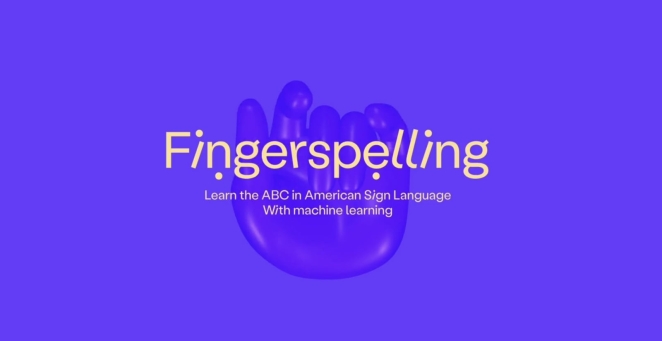
A pioneering approach to teaching the sign language alphabet by DEPT® for The American Society for Deaf Children expands that definition further. The browser-based app Fingerspelling.xyz uses a webcam and machine learning to analyse hand shapes, helping users learn the ASL alphabet correctly.
This is digital advertising as utility. The campaign earns attention by providing something genuinely useful, particularly for hearing parents of deaf or hard-of-hearing children. It does not ask audiences to admire the technology. It lets the technology do something meaningful.
That distinction is increasingly important. Digital experiences often fail when they begin with the technology and then search for a reason to exist. This work begins with a human need and finds the right technology to support it.
The New York Times’ The Truth Is Hard showed another side of digital effectiveness. It used stark typography, rhythm and restraint to communicate the value of journalism at a time when public trust, misinformation and political pressure had become central cultural issues. The campaign did not chase a platform trend. It expressed institutional purpose with force and clarity.
That kind of work matters because digital advertising is often mistaken for speed. The assumption is that online audiences only respond to quick jokes, bright visuals or instant gratification. The Truth Is Hard proved that seriousness can travel when the idea is urgent enough.
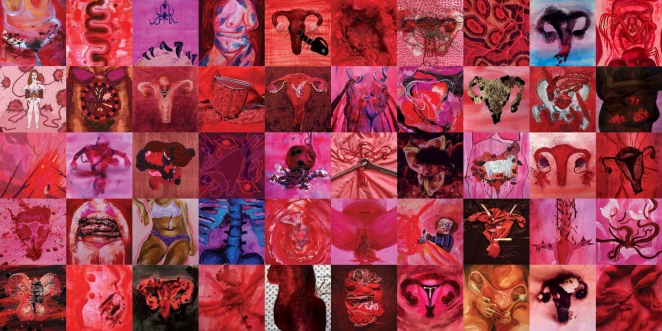
Then there is Pain Museum by Ketchum for Libresse. The campaign set out to challenge the silence around menstrual and intimate pain, creating space for experiences that are often dismissed, misunderstood or minimised.
Its strength lies in refusing to make discomfort more palatable. Digital becomes a platform for testimony, education and recognition. In a category where euphemism has often been the default, that directness is strategically necessary. The campaign does not simply tell people that the brand understands them. It creates a place where their experiences can be seen.
Cadbury’s Worldwide Hide offers a lighter but equally instructive example. By allowing people to hide virtual Easter eggs for others using Google Maps, Cadbury turned a seasonal product moment into a digital act of generosity. The technology extended the ritual. It did not sit on top of it.
That is the real measure of strong digital craft. The platform should not decorate the idea. It should deepen it.
What Defines the Best Digital Advertising Today
The best digital advertising today is not defined by a single channel or format. It is defined by how well a campaign understands context.
Context includes the platform, certainly, but also the audience’s mood, the cultural moment, the category conventions and the level of attention being asked for. A six-second YouTube bumper, an interactive AR experience and a creator-led TikTok campaign are not variations of the same thing. They are different forms of communication with different rules.
The best campaigns respect those rules without becoming trapped by them.
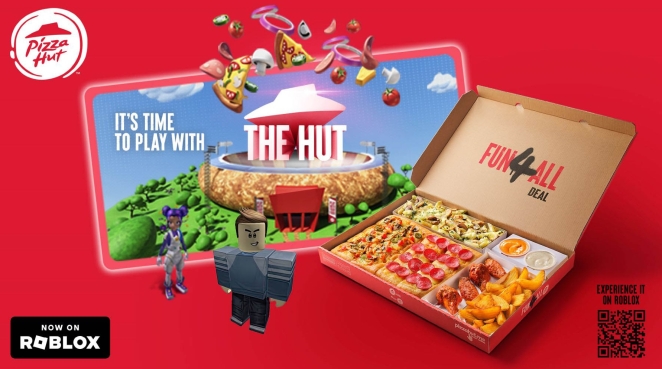
Pizza Hut Roblox by Iris is a strong example of platform-native thinking. Created to build relevance with younger audiences across 30 European markets, the project brought Pizza Hut into Roblox through an official game where players could explore a surreal pizza-themed world, complete obstacle courses, collect ingredients and collaboratively make pizzas.
That matters because Roblox is not simply media space. It is a social environment with its own behaviours, language and expectations. A brand entering that environment has to do more than appear. It has to contribute to the play. The campaign works because it builds within the world rather than advertising around it.
By contrast, Bang & Olufsen: Exist to Create by ManvsMachine shows the power of digital craft. The campaign used CG to honour the brand’s materials, product design and creative ethos, building 3D worlds inspired by each device’s mood and form.
In a feed environment dominated by speed, this kind of considered visual world-building can feel unusually distinctive. It reminds us that digital does not always have to mean disposable. It can deepen a premium brand’s sense of materiality, even when the work itself is entirely screen-based.
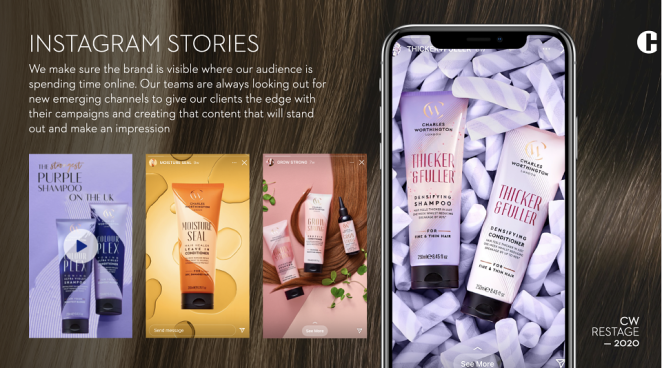
Charles Worthington: Love Your Healthy Hair by Ride Shotgun offers another perspective on what modern digital advertising requires. The work supported a major brand restage, delivering a large suite of mixed-media assets across multiple product ranges and channels.
That kind of production architecture is rarely glamorous, but it is essential. Digital campaigns are often encountered in fragments. A consumer might see one asset on Instagram, another in a retail environment, another through paid media and another on a brand site. Coherence across those fragments is what allows a campaign to hold together.
The strongest digital campaigns are clear about what they want from the audience. Some campaigns want a click. Some want a sale. Some want a shift in perception. Some want participation. Some want to create memory structures that pay off months later. Problems arise when brands confuse these objectives, measuring brand work like performance marketing or judging performance work by vague awareness metrics.
This is why the strongest digital strategies define success before the work is made. The campaign’s creative shape should follow its intended effect.
Key Patterns Behind the Best Digital Ads
The first pattern is behavioural insight. Great digital campaigns tend to begin with something people already do. They search, compare, personalise, share, remix, watch together, save for later, send to friends, build routines, follow creators, argue in comments and turn data into identity.
The campaign’s job is not to invent behaviour from nothing. It is to find the right behaviour and give it sharper meaning.
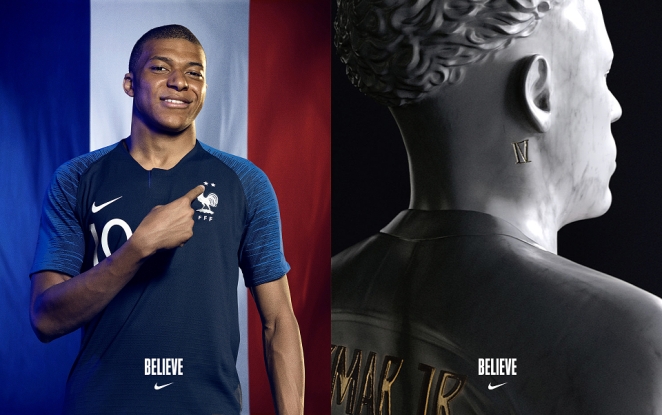
That is visible in Nike Believe by AKQA for Nike Football. Built around the World Cup, the campaign used athlete stories of self-belief to inspire younger football fans, with content designed for Instagram, Instagram Stories, IGTV, Twitter and Nike’s commerce site.
The lesson is not just responsiveness. It is coherence. The campaign could react to live sporting moments while still holding a consistent Nike point of view. In a fragmented digital landscape, that is not a minor achievement. People encounter campaigns out of sequence and often without context. A strong idea has to survive that fragmentation.
The second pattern is simplicity. This does not mean the work is simplistic. Often, the thinking behind a great campaign is highly sophisticated. But the audience-facing idea must be easy to grasp. Digital environments are unforgiving. If the idea requires too much explanation, it usually collapses before it has a chance to spread.
The third pattern is participation. Participation does not always mean user-generated content. It can mean interaction, recognition, interpretation, contribution or collective viewing. What matters is that the audience understands its role.
The fourth pattern is fluency. Digital culture has its own codes, and audiences can tell when a brand is borrowing them clumsily. The best campaigns do not simply mimic platform behaviour. They understand why that behaviour exists.
Finally, the best digital advertising tends to have a strong relationship between idea and medium. The campaign would not work as well anywhere else. That is usually the sign that digital has been treated as more than media space.
Why Some Digital Ad Campaigns Travel While Others Disappear
Plenty of campaigns have media spend. Far fewer have momentum.
The difference often comes down to whether people have a reason to carry the idea forward. A digital ad travels when sharing or engaging with it gives the audience something in return: status, usefulness, humour, identity, belonging, surprise or emotional recognition.
This is where many campaigns fail. They assume that because something is visible, it is valuable. But visibility is only the first condition. The audience still has to decide whether the work is worth any further attention.
A campaign can be perfectly produced and still disappear if it does not create a social or personal reason to engage. It can be technologically impressive and still feel empty if the idea is weak. It can be aggressively targeted and still fail if the message has no resonance.
Clear Vietnam by Tag Collective Arts shows how craft can become part of that resonance. Built around liquid simulation, full CG and post-production, the campaign demonstrates how category codes can be elevated through technical execution.
In categories where visual sensation matters, craft is not cosmetic. It is part of persuasion. The audience may not consciously analyse the production technique, but they feel the difference between generic category imagery and work that has been built to create a distinct sensory impression.
The same is true of Alive by Junction Eleven for Shell and Maserati. The project used full CGI animation to make Shell Helix Ultra feel “alive”, creating a cinematic world where technology and visceral automotive performance could merge.
The value of this kind of work lies in translation. Technical excellence can be difficult to communicate in purely rational terms. Digital craft gives it texture, movement and feeling. It turns product performance into something the audience can sense.
The strongest work understands that attention is not just a media metric. It is a human decision.
How Brands Measure the Success of Digital Advertising Campaigns

Mag. Vladimir von Bergdorff, MA
Measurement is one of digital advertising’s great strengths, but also one of its great traps.
The availability of data can create the illusion of clarity. Impressions, clicks, completion rates, dwell time, conversions, shares and sentiment all tell part of the story. None tells the whole story alone.
A performance campaign may rightly prioritise conversion and return on ad spend. A brand campaign may need to look at recall, favourability, search uplift or longer-term demand. An interactive campaign may need to measure depth of engagement. A creator-led campaign may need to consider trust, relevance and audience quality, not just reach.
The best brands avoid retrofitting success after the campaign has run. They decide what matters upfront.
That discipline changes the work. It forces teams to ask whether the creative idea, media strategy and measurement framework are all pointing in the same direction. When they are not, campaigns often end up with impressive-looking numbers and very little business meaning.
A useful way to think about measurement is in layers. The first layer is visibility: did the campaign reach the intended audience? The second is engagement: did people respond in a meaningful way? The third is interpretation: did they understand the idea as intended? The fourth is action: did they do what the campaign was designed to encourage? The fifth is memory: did the work leave behind a stronger association for the brand?
Not every campaign needs to excel at every layer. But every campaign needs to know which layers matter most.
What Trends Are Shaping Modern Digital Advertising?
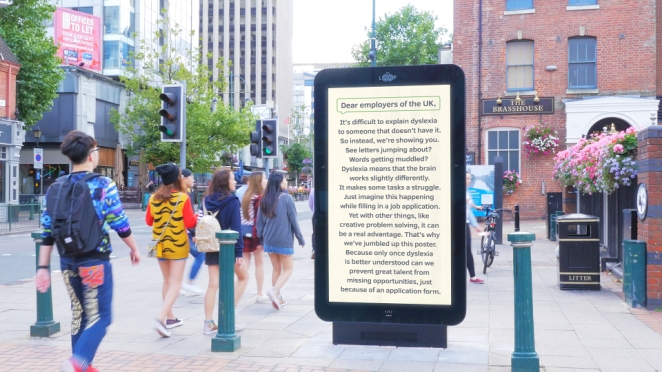
Catherine Morgan
Several trends are reshaping digital advertising, but the most important ones are not purely technical.
AI is changing how campaigns are conceived, produced, personalised and optimised. Yet the strongest AI-led work still depends on human judgement. The technology can accelerate production and generate surprising outputs, but it cannot decide what a brand should stand for.
Gaming environments are becoming more important, particularly as brands look for ways to enter spaces where audiences already spend time. But gaming cannot be treated as a novelty placement. As Pizza Hut Roblox shows, brands need to understand the culture and mechanics of play. The question is not simply, “Can we appear there?” It is, “What can we contribute there?”
Creator partnerships are also becoming more central, particularly as audiences place greater trust in people than institutions. The most effective creator work is not a media buy disguised as authenticity. It gives creators enough strategic clarity and enough freedom to make the message feel native to their audience.
Short-form video continues to shape creative expectations, compressing storytelling and rewarding immediacy. But the rise of short-form does not mean every idea should be reduced to speed. It means brands must become more disciplined about entry points, rhythm and payoff.
Immersive formats such as AR, interactive tools and digital experiences are growing, but their success depends on usefulness. Novelty alone fades quickly. Utility, play and relevance endure.
The deeper trend is that digital advertising is becoming less like a message and more like an experience. The best work gives people something to do, feel, use, recognise or pass on.
How Digital Advertising Has Evolved Compared to Traditional Ads

Rob Pratt
Traditional advertising largely operated through interruption. A brand bought space around something the audience actually wanted: a programme, an article, a street, a journey, a song. The creative challenge was to make that interruption memorable enough to justify itself.
Digital advertising changed that contract. It introduced targeting, feedback, interactivity and real-time optimisation. It also gave audiences more control. They can skip, block, mute, scroll past, comment, parody, remix or ignore.
That has made weak advertising more vulnerable. A traditional campaign could sometimes survive through repetition and media weight. A weak digital campaign is exposed much faster. If the idea does not earn attention, the audience simply moves on.
But digital has also expanded what advertising can be. It can be a tool, a game, a service, a live event, a personalised story, a community prompt, a mobile experience or a cultural signal. That range is both opportunity and responsibility.
The best digital ads understand that the audience is not a captive recipient. They are an active participant in whether the campaign succeeds. They decide whether to watch, skip, share, search, click, comment, remix or remember.
That changes the creative standard. It places greater pressure on the idea, but also opens more interesting possibilities for how brands can behave.
What Makes a Digital Ad Memorable to Users?

Maria Papagianni
Memorability rarely comes from exposure alone. People remember digital ads when the work connects quickly and leaves behind a distinct impression.
That impression might be visual, as with Bang & Olufsen’s carefully built CG worlds. It might be behavioural, as with Tipp-Ex inviting the user to shape the story. It might be emotional, as with Pain Museum creating recognition around experiences that are too often dismissed. It might be useful, as with Fingerspelling.xyz turning a campaign into a learning tool.
The common factor is specificity. Generic ads vanish because there is nothing for memory to hold onto. The best digital ads give the audience a clear hook: a feeling, a gesture, a mechanic, an image, a line or an action.
They also understand that memorability is not the same as noise. A campaign can be loud, bizarre or controversial and still fail to build a meaningful brand association. The work needs to be distinctive, but it also needs to connect that distinctiveness back to the brand.
That is why Heinz AI Ketchup works. The joke, the technology and the brand truth are inseparable. Remove Heinz and the idea collapses. That is usually a sign of strong advertising.
Why Do Some Ad Campaigns Go Viral While Others Fail?

Rory Campbell
Virality is often discussed as if it were a mysterious force, but most successful digital campaigns share a more practical foundation. They align the idea, the audience and the platform.
Some campaigns fail because they ask too much. The audience is expected to watch, click, register, share, tag, create content and somehow feel grateful for the privilege. Others fail because they ask too little. They simply place a film online and hope people will carry it forward.
The best digital campaigns make the audience’s role obvious. Hide an egg. Rewrite the story. Enter the game. Watch the jump. Learn the alphabet. Share the experience. Explore the world. The action does not have to be complicated, but it does have to be meaningful.
They also give people a reason to associate with the idea. People share things that say something about them: what they find funny, what they believe, what they value, what they know, what they are part of. A campaign travels when engagement with it offers some kind of social or personal return.
This is why chasing trends is so dangerous. A trend can provide a useful structure, but only when there is a natural fit. Without that fit, the brand becomes visible for the wrong reason: effort. Audiences are especially sensitive to visible effort in digital culture. Work that tries too hard often loses the casual fluency that made the trend attractive in the first place.
What Makes Good Digital Advertising Stand Out?
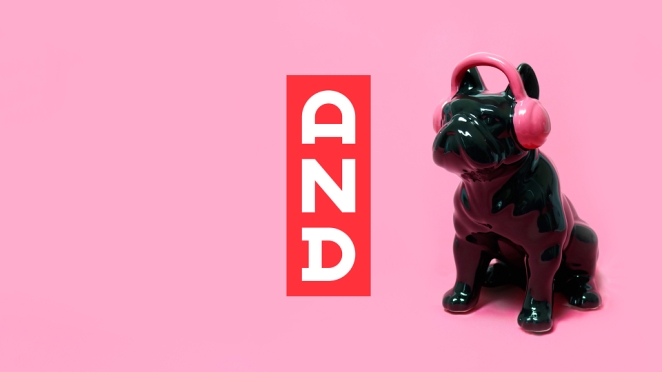
Jonathan Sands
Good digital advertising stands out when it has clarity of intent.
It knows whether it is trying to drive sales, build memory, change perception, create participation, educate an audience or establish cultural relevance. It does not try to do everything at once.
This focus shapes the work. A campaign designed to create participation needs a clear mechanic. A campaign designed to educate needs accessibility and utility. A campaign designed to build brand prestige needs craft and restraint. A campaign designed to drive conversion needs simplicity and momentum.
The mistake is assuming that all digital campaigns should behave the same way. They should not. Digital advertising is not a single discipline. It is an ecosystem of different behaviours, formats and expectations.
The best agencies and brands understand this. They use digital not as a place to put ideas, but as a way to shape them.
The Future of the Best Digital Ads
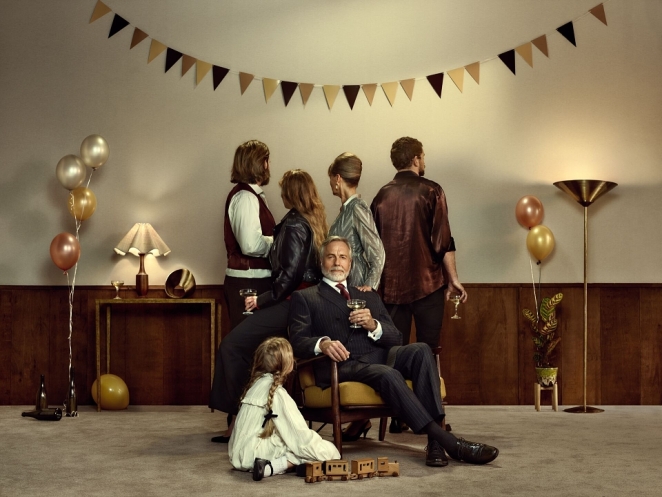
Tony Pipes
The future of digital advertising will not be won by the brands that use the most tools. It will be won by the brands that use the right tools with the clearest intent.
As technology becomes more accessible, executional novelty will become harder to sustain. AI-generated visuals, immersive filters, interactive worlds and personalised content will become increasingly common. What will remain rare is judgement: knowing what to say, when to say it, where it belongs and why anyone should care.
That is why the best digital ads still rely on fundamentals. A strong idea. A clear audience role. A meaningful relationship between message and medium. A measurement framework that reflects the real objective.
The platforms will keep changing. The formats will keep multiplying. The behaviours will evolve.
But the work that lasts will still be the work that understands people first.