

Out of all the creative disciplines, animation for me has always stood above the rest, and no finer place can this form of expression by realised than in animated music videos. Unlike other types of motion capture, every moment of an animation is a conscious decision, every element used placed specifcially for a purpose. As the natural home for this type of expression, MTV is disappearing from the UK after 30 glorious years (and a few no-so glorious latter years), now is a good time to look back and put togther a list of the finest animated music videos of all time.
Some of the earliest examples of animation in the 1920s relying on music to do a great deal of the heavy lifting. In the 1980s, the artform of the music video exploded, to the extent that the debt of new videos became a legitimate "event" and many of those early examples relied on the strange beauty of animation to get them over the line and onto our screens.
Even today, when done right, animated music videos can create worlds where sound becomes colour, and imagination has no gravity. From psychedelic hand-drawn journeys to surreal stop-motion nightmares and dazzling CGI dreamscapes, animated music videos have long belonged to the boldest corners of visual storytelling.
In this curated collection, I've put together the most inventive, mind-bending, and iconic animated music videos ever made. These are the videos that transformed their attached songs into cinematic adventures and redefined what a “music video” could be. Whether painted frame-by-frame or rendered with digital wizardry, these clips prove that when animation meets music, magic is possible.
Kraftwerk – Autobahn (1979)
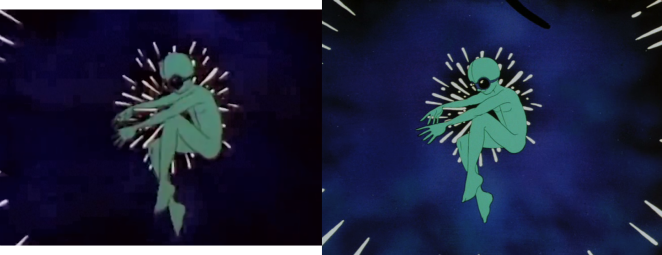
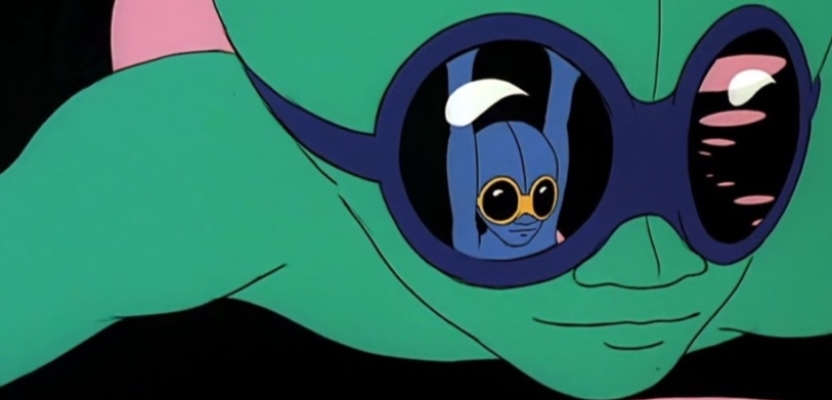
German pioneers Kraftwerk famously celebrated the highway with their 1974 song “Autobahn,” and a few years later animator Roger Mainwood delivered a truly trippy visual interpretation. Mainwood’s 12-minute animated film (commissioned around 1979 for an early laserdisc release) eschews literal cars for abstract, kaleidoscopic imagery. As Mainwood himself explained, he aimed for “a sense of a repetitive journey and alienation” – represented by a lone futuristic figure wearing goggles winding endlessly through surreal tunnels.
The result is pure psychedelic pop: hand-drawn sequences of amorphous shapes, throbbing geometries and strange creatures marching across the screen. Although neither Kraftwerk nor their label directly made it, Mainwood’s Autobahn animation became a cult classic among fans for its colorful, hypnotic style and its prescient take on technology and travel.
Pink Floyd – The Wall (1982)
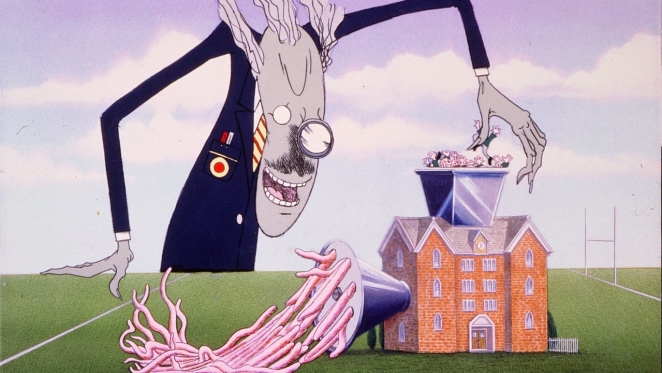
Pink Floyd’s wildly ambitious concept album The Wall was transformed into a 1982 feature film combining live-action and animation – one of the first rock operas to do so. Wikipedia describes The Wall film as “a 1982 British live-action/animated surrealist drama… with animation sequences directed by Gerald Scarfe”. Although most of the movie is live-action, the few minutes of Scarfe’s cartoons have become legendary. Scenes like a schoolroom dove turning into fighter jets or marching children burning a teacher in a bonfire showcase macabre imagination.
Scarfe’s roughly 11 minutes of animation (during songs such as “Another Brick in the Wall” and “Goodbye Blue Sky”) are still considered “stunning and nightmarish classics”. These hand-drawn sequences gave Pink Floyd’s dark concept an almost fairy-tale absurdity, cementing Scarfe’s work as some of the most haunting and memorable visuals ever set to rock music.
Dire Straits – Money for Nothing (1985)
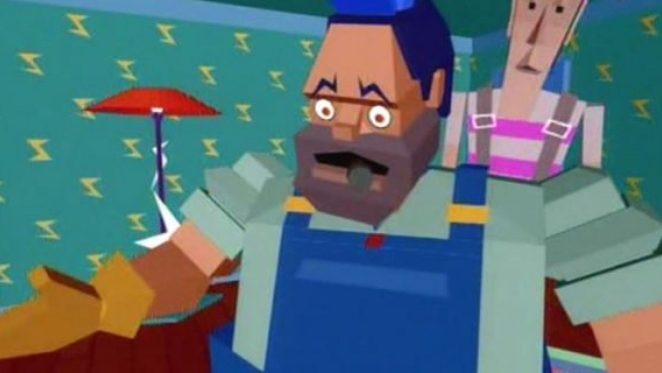
In 1985, Dire Straits teamed up with MTV veteran Steve Barron for Money for Nothing, and the result was a watershed for computer graphics. This video was one of the first to use 3D CGI human characters: the band members (and animated dockworkers) appear as blocky, polygonal figures whose limbs swing in sync to the riff. (Fun fact: the video was the first ever played on MTV Europe.)
Although primitive by today’s standards, the jagged CGI was mind-bending at the time and perfectly matched the song’s wry view of television culture. The innovation paid off spectacularly: at the 1986 MTV Video Music Awards the clip earned 11 nominations and won both Video of the Year and Best Group Video. In short, Money for Nothing proved that computers could make even a sardonic tune feel fresh and cutting-edge on screen.
A-ha – Take On Me (1985)
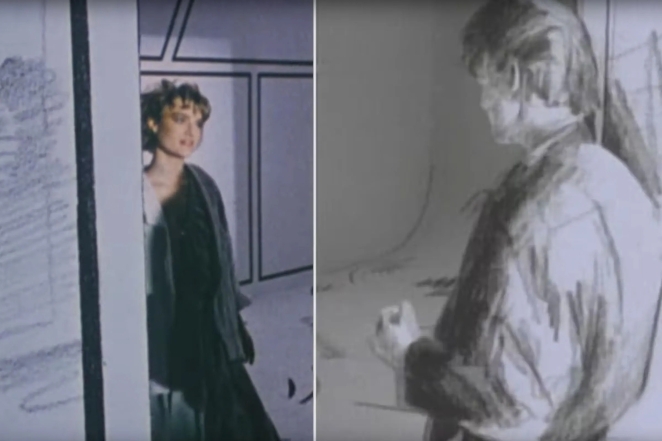
When Norwegian band A-ha recorded Take On Me, they (and their director Steve Barron) took six full months to craft one of music video’s most iconic creations. The video famously blends live-action with pencil-sketch animation using rotoscoping: lead singer Morten Harket appears to jump in and out of a hand-drawn comic book world.
This labour of love paid off – after an initial flopped release, the 1985 re-release featuring the animated clip shot the song to #2 on the UK charts and #1 in the US, earning multiple MTV Awards in 1986. Nearly forty years later Take On Me still astonishes viewers with its simple yet ingenious fusion of fantasy and reality. It remains both the band’s signature image and a case study in how creative visuals can make a hit single.
Peter Gabriel – Sledgehammer (1986)
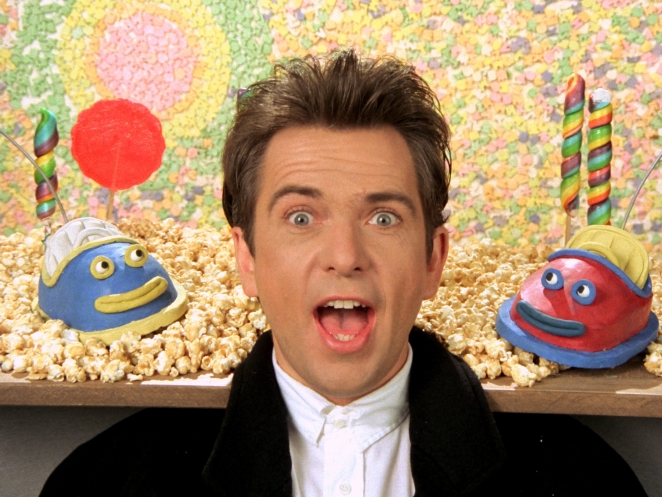
No list of creative animated videos is complete without Peter Gabriel’s Sledgehammer. Directed by Stephen R. Johnson and animated by legendary studios Aardman Animations and the Brothers Quay, this 1986 video is a riot of stop-motion whimsy. Gabriel’s face morphs through claymation chomping chickens, dancing bones and moving vegetables, while real footage of him singing is intercut with puppetry and pixilation.
The effect is endlessly playful and surreal. It paid off handsomely: Sledgehammer swept the 1987 MTV Video Music Awards, winning nine VMAs (a record) for its inventiveness. To this day it’s often cited as the greatest animated music video ever – a mood-lifting masterpiece of visual gags and flawless timing.
The White Stripes – Fell in Love with a Girl (2002)
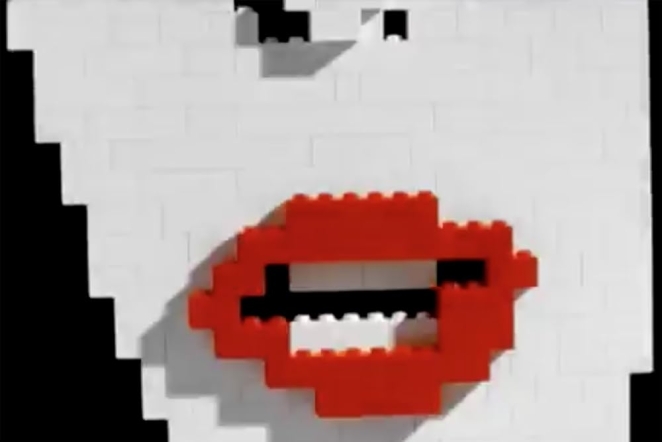
It’s hard not to smile at the White Stripes’ Lego masterpiece. Michel Gondry’s 2002 video for “Fell in Love with a Girl” was constructed entirely from Lego bricks, shot in rapid stop-motion so that Jack and Meg White appear as building-block animation. Every frame the duo (and surrounding objects) are deconstructed and rebuilt to mimic a live take.
The result is a charming, hyper-energetic cartoon come to life. This simple yet ingenious concept captured hearts worldwide: it became the band’s breakthrough mainstream hit and the video won three MTV Video Music Awards for Best Special Effects, Best Editing and Viewers’ Choice. Gondry’s Lego film proved that innovation can be delightfully low-tech one literal brick at a time.
Nizlopi – JCB Song (2005)
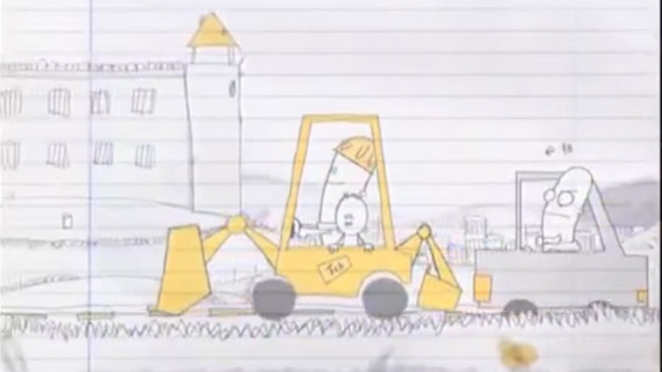
Skipping ahead a few short years to 2005, Nizlopi’s “JCB Song” is a wistful tune that unexpectedly scored a Christmas #1 single in the UK, thanks in part to its quirky animated video. Illustrator-director Laith Bahrani crafted a hand-drawn video (using Flash and After Effects) that follows a little boy and his father on a JCB digger through fields and rainbows.
The style is warm and nostalgic, with delicate cartoon sequences of birds, tractors and family scenes that play off the song’s lyrics about a rural childhood. Behind the scenes, the video was built in a very grassroots way: Bahrani reportedly uploaded 30-second segments of the drawn animation online as he completed them. This “blog by animation” approach generated buzz over months, helping the song go viral – it topped the charts right before Christmas 2005. In short, JCB Song shows that a modest DIY video, lovingly handcrafted, can capture public imagination just as surely as big-budget effects.
R.E.M. – Man-Sized Wreath (2008)
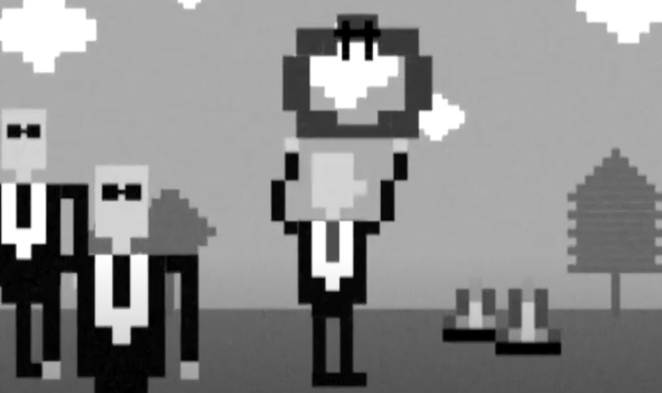
R.E.M.’s Man-Sized Wreath is a visual fever dream from Toronto design studio Crush Inc. The video’s allegory is playful but pointed: a subdued “everyman” wanders through city streets while cartoonish ads and bizarre distractions literally chase him through a technicolor world. As Crush’s designers explained, it’s “a visual metaphor for a populace too distracted to notice the mayhem around them”.
In the clip, a surreal traffic jam, a flashing street parade of corporate logos, and finally a runaway presidential motorcade all unfold around the oblivious hero. The production combined guerrilla live-action shooting with heavy use of 3D tracking and animation, giving it a fluid, collage-like feel. The tone is slightly unsettling yet humorous – a man calmly humming while a literal “man-sized wreath” (a phalanx of ads) encircles him. By blending social commentary with vivid, kaleidoscopic visuals, Man-Sized Wreath stands out as a clever, topical creation in R.E.M.’s catalog.
Blockhead – The Music Scene (2010)
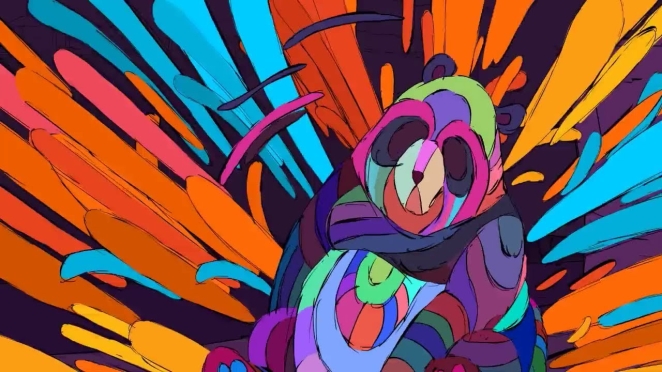
In 2010, electronic producer Blockhead released an animated video for “The Music Scene” that dazzles with hand-drawn surrealism. Animator Anthony F. Schepperd created a non-stop parade of morphing figures and landscapes that flow in sync with the music. Cartoon Brew’s Amid Amidi called it “one of the finest animated music videos you’ll see,” noting how Schepperd’s fluid line-drawings “breathe and pulsate with energy” and convey a dreamlike stream-of-consciousness.
Indeed, the video feels like a fever dream: faces dissolve into animals, cars melt into trees, and each shot seamlessly transitions to something impossibly inventive. It’s the kind of visual journey that demands repeated plays just to track all the gags. In a year filled with viral hits and high-tech tricks, The Music Scene stood out simply by the sheer skill of its illustration and the boundless imagination behind it.
LORN – Anvil (2016)
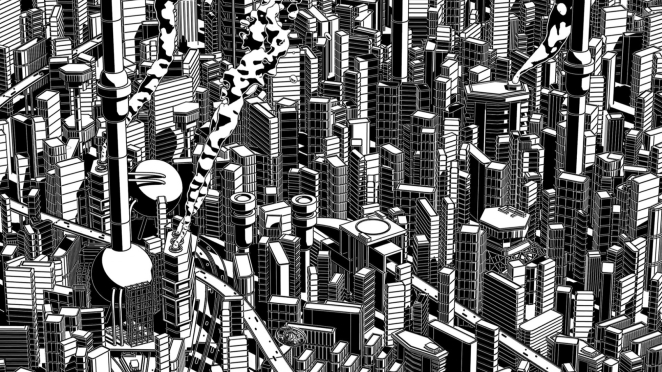
Moving into the 2010s, LORN’s “Anvil” (2016) offers a very different kind of spectacle. This fully animated video – directed by Hélène Jeudy and Antoine Caëcke – envisions a dystopian, overcrowded future. Rendered mostly in a stark monochrome palette (grays punctuated by occasional color), it follows weary citizens plugging themselves into a digital “afterlife” to escape an apocalyptic reality. The Verge praised the aesthetic as “beautiful, yet horrifying” – like a cross between Ghost in the Shell and Akira.
Buildings tower overhead, surveillance drones circle ominously, and characters with antennae-like devices glued to their heads wander ghostlike through the city. Every shot is meticulously composed, with shades of black and gray folding into glowing screens and flickering data. The video feels like a short sci-fi story: haunting, cinematic, and rich in detail. With Anvil, LORN and his directors showed that an animated narrative can carry the same emotional weight as any live-action film – it’s immersive world-building at its most artful.
Jarvis Cocker – Aline (2021)
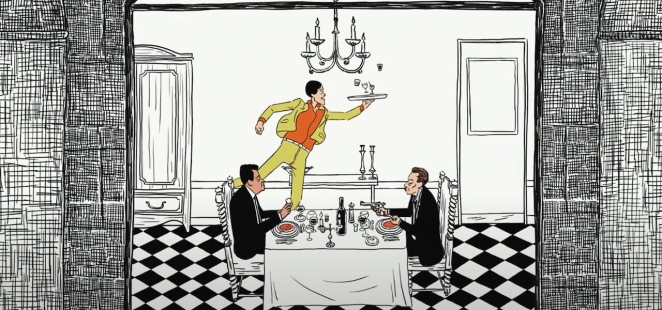
For The French Dispatch (Wes Anderson’s 2021 anthology film), the director created a standalone music video for the song “Aline.” Anderson cast Jarvis Cocker as “Tip Top,” a fictional 1960s-style French pop singer, and directed this whimsical clip himself. The result: a perfect piece of Andersonian nostalgia. Cocker, in a mod suit, sings the retro French ballad in a color-coordinated set, surrounded by pastel art animations and vintage photography effects (credit to illustrator Javi Aznarez).
It looks like a lost TV performance from 1960s Paris, complete with slow-motion dancers and split-screen inserts, yet everything is executed with Anderson’s meticulous symmetry and dry humor. In short, the Aline video is both a love letter to old-school European pop and a mini-movie of its own – proving that creativity can remix cinema and music in delightful ways.
Radiohead – Burn the Witch (2016)
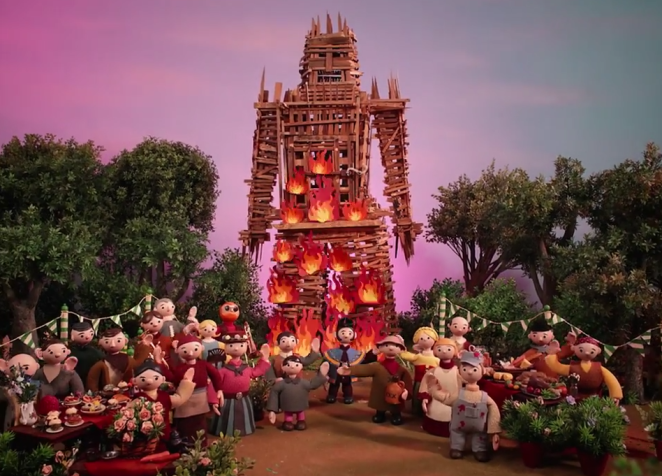
Radiohead’s “Burn the Witch” video is a miniature stop-motion horror movie. Directed by Chris Hopewell, it uses clay puppets and model sets in the style of 1960s British children’s TV (think “Trumptonshire” or old Gumby cartoons). The quaint village setting quickly turns sinister: an officious inspector is shown around a rural town until he is trapped inside a giant wicker effigy and set ablaze – a direct homage to the classic horror film The Wicker Man.
The effect is chillingly surreal: bright, cheerful puppets and pastoral scenes give way to mob rule and ritual sacrifice. This contrast – innocent-looking clay figures performing a violent, nightmarish scenario – makes Burn the Witch an unforgettable blend of nostalgia and nightmare.
Tool – Sober (1993)
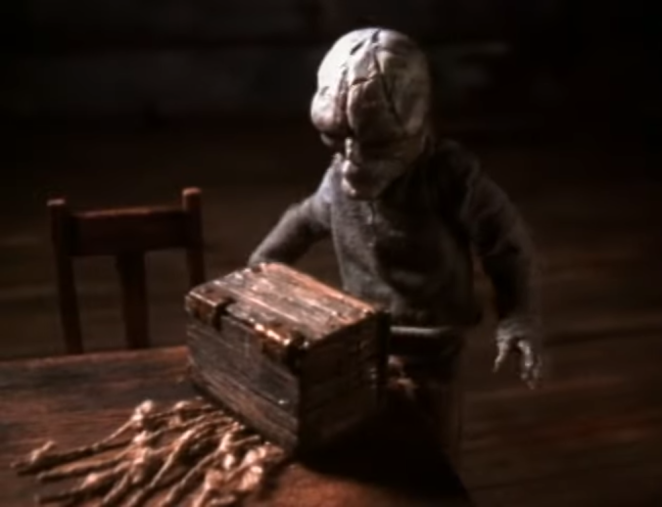
Tool’s first major video is a haunting stop-motion short directed by Fred Stuhr. It centres on a deformed clay humanoid living alone in a grim, flesh-like mansion. Early in the clip the creature discovers a mysterious wooden box; opening it unleashes bizarre hallucinations (levitating furniture, vibrating limbs, strange mechanical apparati) as he wanders through dank corridors.
Guitarist Adam Jones, who designed and built the central puppet, drew on his background as a sculptor and special-effects artist to craft every disturbing detail. The result is a nightmarish visual collage – grotesque yet mesmerizing – that perfectly matches the song’s dark, obsessive mood. Sober’s mix of gothic stop-motion effects and painstaking animation set a new bar for ambition in rock videos.
Björk — I Miss You (1997)
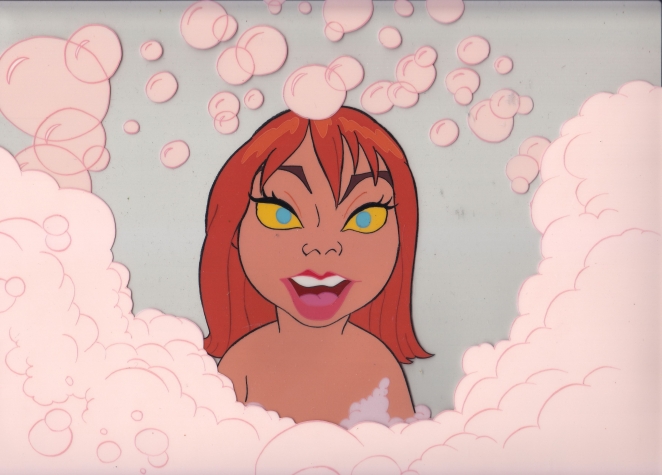
With the audacious support of animation legend John Kricfalusi and his studio Spüm Cø, this video mixes live-action and wild cartoon mayhem that reframed what a pop-video could be. Björk appears in live-action sequences with vivid red hair, then shifts into manic animated loops featuring Kricfalusi’s characters (including Jimmy the Idiot Boy) and surreal visual twists.
Its fearless fusion of musical performance, hand-drawn chaos and taboo imagery (including scenes censored for mainstream TV) made it a standout of the era.The clip didn’t just accompany the track — it elevated it into a visceral, unforgettable visual experience, earning a win at the Annie Awards for Best Animated Short Subject. I Miss You deserves a mention for its willingness to defy conventions, to blur the line between cartoon and pop, and to demand the viewer’s full attention in both image and sound.
Bringing Your Next Animated Vision to Life with Creativepool
If these animated music videos prove anything, it’s that when bold ideas meet masterful execution, the result isn’t just entertainment but lasting culture. Whether it’s surrealist stop-motion, kaleidoscopic 2D illustration or haunting cinematic CG, the right animator can turn a song into a story, a story into a spectacle, and a spectacle into a legacy. And that’s exactly where Creativepool comes in.
Saliha Mimaroğlu
Whether you’re searching for a frame-by-frame traditionalist who understands the poetry of movement, a 3D specialist with a flair for cinematic lighting, or a motion studio capable of world-building in under four minutes, you’ll find them here. Creativepool is home to thousands of animators, illustrators, directors, motion designers and VFX artists—the people who turn sound into sight and bring imagination to life, one frame at a time.
Hiring an Individual Through Creativepool
There are three simple ways to connect with the sharpest animation and motion talents for your next music project or narrative brief:
1. Search and Contact
If you know what you’re after (maybe a character animator for a hand-drawn lyric video, or a motion studio experienced in music-led storytelling) you can dive directly into Creativepool’s talent network. Browse showreels, portfolios and project case studies using smart filters. Creativepool’s ranking system helps you identify the most experienced creatives across categories, from acclaimed boutique studios to rising solo artists. Once someone catches your eye, message them directly to start the conversation. You can also skip directly to our top 25 section and peruse our top 25 creative professionals from each creative profession.
2. Post a Studiogig
Need a specialist fast? Post a Studiogig. It’s the quickest way to connect with freelancers and collaborators who understand the visual language of music from title sequences and visualisers to concept-driven animated shorts. Your brief is instantly distributed across the most relevant members in the Creativepool community, and responses come straight to you.
3. Post a Job
If you’re building out your internal animation team (perhaps hiring a lead motion designer, a junior compositor, or a head of visual storytelling) post a job listing. Creativepool reviews and promotes all listings, notifies qualified candidates, and hosts your role on a dedicated Jobs Board viewed daily by top-tier creatives. You stay in full control of the process (no recruiters, no middle layers) just a direct line to the people who can bring your style and vision to life.
Hiring an Animation Studio Through Creativepool
If your project calls for an end-to-end animated campaign (whether a full-length music video, an interactive visual experience, or a cross-platform series) you’ll want a specialist studio. Creativepool makes it easy to search, shortlist and connect with studios who’ve done it all.
Tim Yu
Find a Studio
Use Creativepool’s studio search to explore reels, client experience, visual approach and past campaign success. Filter by animation type, technique, or even tone of voice. You can also find our top 10 creative sector agencies based on speciality.
Post a Brief
Prefer proposals? Just post your brief, budget and objectives. Studios that align with your creative needs will respond with tailored ideas.
Need Help?
Creativepool’s team of ex-industry experts is here to guide you. Whether you’re producing a lo-fi looped animation for TikTok, commissioning a stylised lyric video, or seeking a hybrid live-action/CGI concept, we’ll help shape your brief and find the right people fast.
Chat with us live when posting your gig, or get in touch via our Contact page. We're here to connect your next great idea with the creative minds who know how to animate the extraordinary.
Mihaly Sipos November 10th, 2025, at dawn
Great collection of animated music videos — a few of these I hadn’t seen before.Two of my all-time favourites come from the same studio, Shynola.
Go With the Flow by Queens of the Stone Age is an absolute masterpiece - I was completely mesmerised when I first saw it back in the early 2000s.
The other one, Eye for an Eye by UNKLE, creates such a distinct universe - layered, symbolic, and deeply meta.
Not many people remember this, but in the early 90s there were actually two Simpsons music videos. In fact, there was a whole album featuring the characters performing songs across different genres. Do you remember the Bart Simpson rap videos? :D
I was obsessed - that cassette and the rewind button both suffered for it. Growing up in Budapest in the 80s, watching mostly Eastern Bloc cartoons (some of which were great, to be fair), the Bart Simpson animated rap clip was mind-blowing for an 11-year-old.
Just like the Pink Floyd - The Wall animation. It completely captivated me. I used to line up my G.I. Joes on top of a Lego box - that was the stage - and project their shadows onto the wall with a flashlight while the album played. (Which reminds me of that intense Mike Oldfield video, Shadow on the Wall.)
What an era that was.