

‘I don’t care if it hurts. I want to have control. I want a perfect body. I want a perfect soul. I want you to notice. When I’m not around. You’re so fucking special. I wish I was special. But I’m a creep, I’m a weirdo. What the hell am I doing here? I don’t belong here.’
These lyrics, from Radiohead’s ‘Creep’ outline the current commercial creative conundrum. They describe our predicament and our state of mind. Yet no one’s prepared to discuss what binds us together. It’s seen as just too embarrassing.
Why are you reading this? Why have I bothered to write it? Why can I safely assume that the majority of people who’ve made it this far into these words are largely designers, or those somehow working within a certain specific group of people, namely the commercial creative world? — How can I reliably assume this? It’s because we are all the same. We’re connected by a common thread. A single unifying theme keeps us together, looking over our shoulders in each others direction. And it’s not a love of words and pictures.
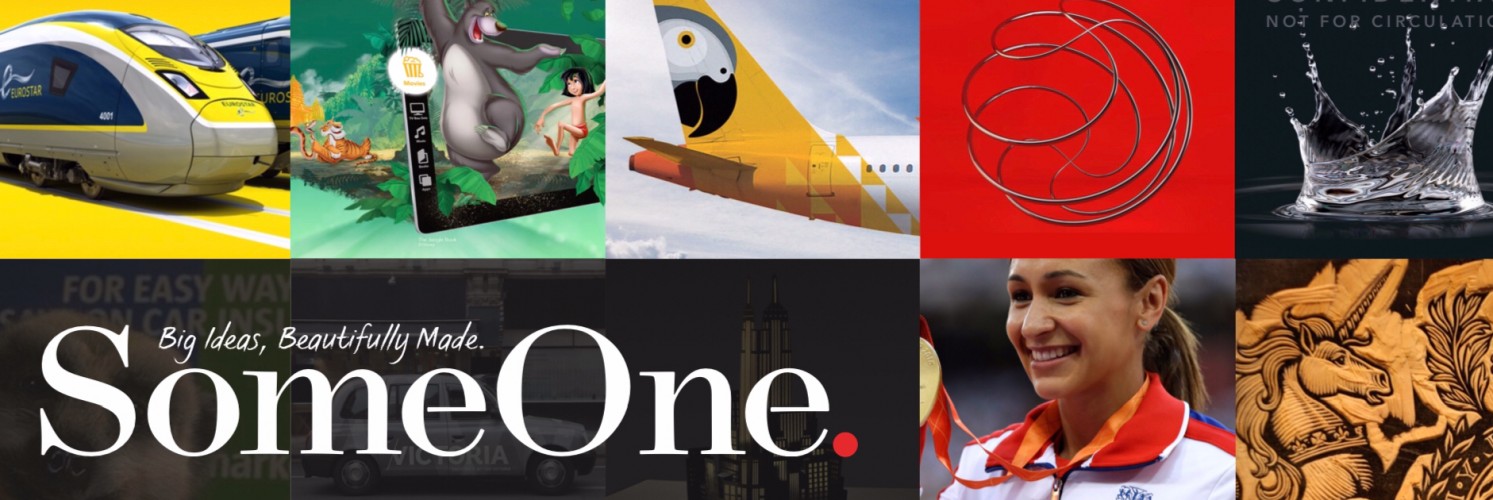
At the design practice I work with we have a very active internship scheme. In fact the majority of designers at SomeOne were at one time an intern. Most joined fresh from their idealised thinking at University. Their pursuit of a creative dream in the various dreaming spires made them want to pursue a career in commercial creativity. But those that endure at SomeOne understand that losing is what they need to be ready for, not winning. I’m not saying they need to aspire to experiencing loss mind you. No one wants to be a loser now do they? But when you are on the receiving end of a slap in the face — and experience it daily. You’ve got to find a way to cope with that awful sinking feeling that comes from hearing you’ve just not got what it takes this time around.
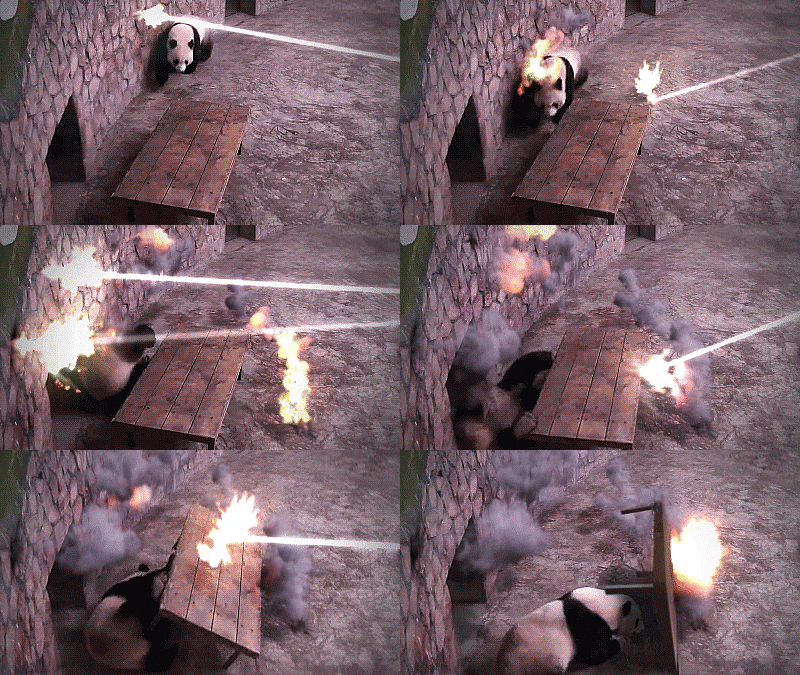
A typical day at SomeOne. The Designer featured suffered no lasting damage.
Losing is not cool. Unless you are say, Radiohead. Then it’s a brilliant facade of sadness and downtrodden moments immortalised in sound. (Their new album is terrific by the way.) But loss in the commercial world is not taken lightly. And you can forget all that Silicon Valley nonsense of ‘fail fast’ — I’ve yet to meet a client who’s happy to fund failure. ‘We know you want a new app, so we’ll go on the journey with you (for a hell of a fee by the way) but we may end up in an entirely different place and you might not get an app — yeh? — Sign here…’
If losing commercially is bad — seen to be losing in a social context is a disaster. It’s definitely not something one looks for in people when choosing your friends, your colleagues, or your spouse. Yet as designers and creatives, it surrounds us in a sticky fog of unspoken worry.
Losers are seen as the rejected scum of society. Left to slide down the leg of success towards the slag heap of those not deemed worthy receiving or dishing out warm handshakes. Yet losing is what we as commercial creatives face more than any other feeling. It’s losing that leads us to any possible chance of success. If you are not losing, you’re not in the game.

This took THOUSANDS of hours. For this one Gif. THOUSANDS.
I asked well over 100 people in the creative industries what they thought their ratio of winning to losing was. When I say win. I’m not talking pitches. (As a design business, if you don’t hone your craft to a point where it’s possible to convey what you do without entering into a full blown creative pitch — involving bespoke design work — I think you’re in trouble these days.) So the question was, how much of the work you do, sees the light of day. How much actually gets bought. Gets sold. Goes live. The results were shocking. (And I’m a world class loser, so was expecting the worst.)
40% of respondents said that — in their experience — only around two in every ten ideas to ever finds its way to the surface. A further 35% of people said that their experiences had shown that at best only four out of ten projects went live. This is an incredible hit rate. Or rather, lack of hit rate. (Not a near miss, because surely that means you nearly miss something and therefore, logically, hit it — right?) I found this 2/10 ratio incredible, if this was any kind of product, it would have been pulled off the shelf in the first few months of its life. A washing powder that only worked two out of ten washes? That is not a good product. A watch that only tells the time twice a day is a broken one. No wonder clients find the creative industries frustrating. They don’t seem to work well at all.
Or does it? Is this low hit rate indicative of why the creative industries are so incredibly successful?
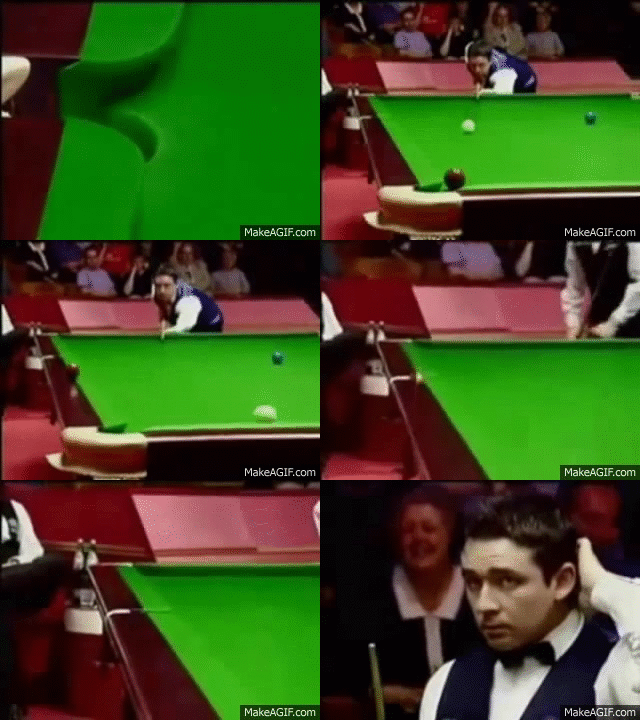
That moment when the project actually goes live.
I believe, if you are not losing, you’re never going to get close to winning anything of note. The most applauded projects coming out of our studio are always hard won. Nothing sails through. If it does, we get worried. For it is bound to fail before it goes live. Gloomy? Sure. It’s exactly that gloomy outlook that helps make work better. We are permanently ready for the kick in the teeth. The feeling of loss. That awful phone call trying to let you down gently. ‘I’m sorry. It’s not good news, but…’
‘Of course!’ I hear you cry, ‘It’s the bloody clients fault!’ Nope. Our clients are often not at fault here. (Of course a few of them are. Some of them really are. After all, everyone’s a designer these days, we’ve all chosen our duvet covers, that’s a design decision. So why can’t we all have an opinion on a bespoke typeface or colour system or website or logo? (A million reasons why, but that’s another article)). Much of the loss comes down to our own ambition. It’s us. Not them. We’re pushing hard all the time. To see if it breaks. To see it fail before those paying the bill have to. So for every three routes a client sees there are at least 12 that never made it out of the door.
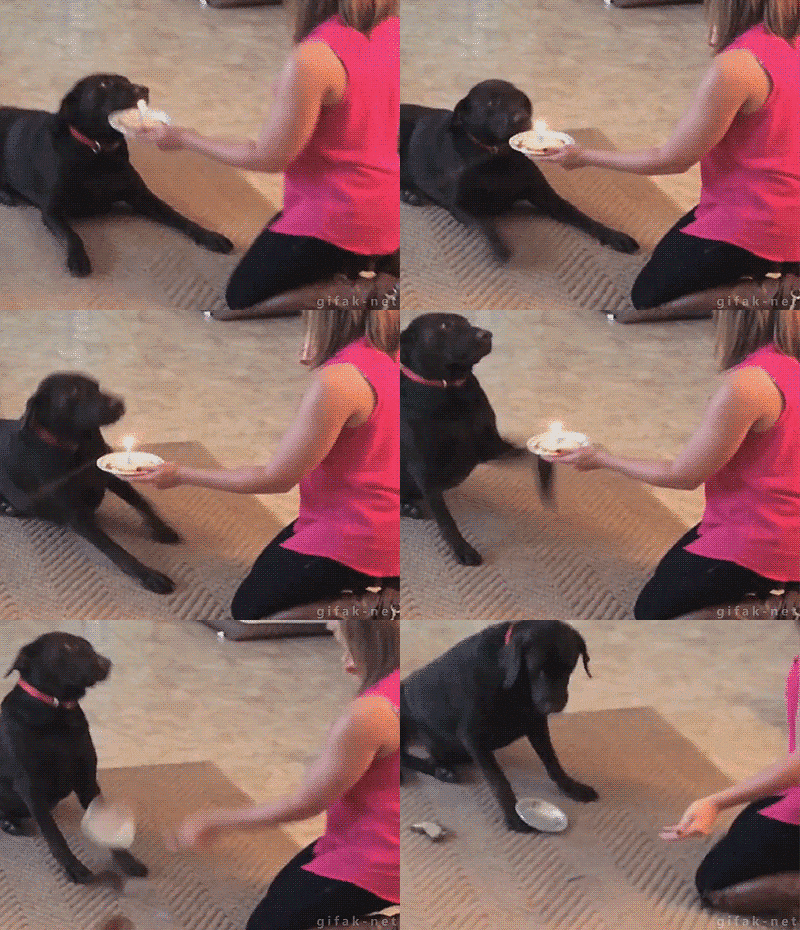
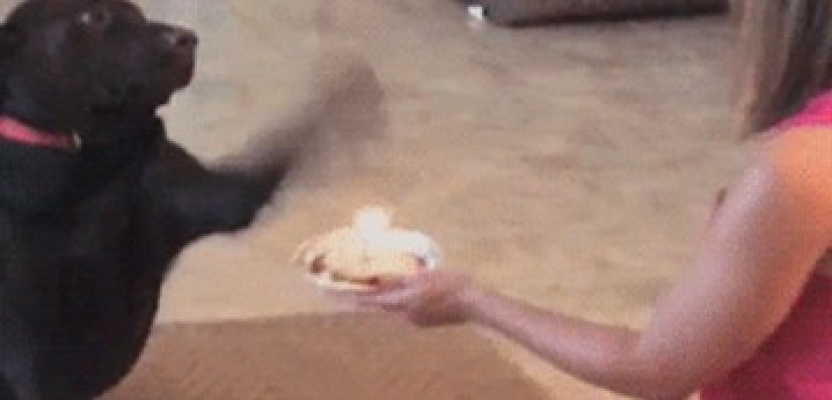
That cake took a designer days to create. And one second for the Creative Director to destroy.
It’s one of the reasons great creative work has a considerable price tag. There’s a lot that’s paid for that is never seen in the end result. As a client you’re mostly protected from the massacre seen at most creative reviews. The blood of bland branding covers the walls in those things. But you have to go through them. You need the cull. However painful. Otherwise it’s a disaster. I once showed all the work we did unedited to a client at their request. They just came away very confused. A bit ratty. And told us not to do it again. After all. We’re being paid to come up with ideas that transform their business. Visions that will make them famous. Thoughts that will echo around the planet. Dreams of utopian futures — and ultimately solutions to all the brands worldly problems. Not to parade a bunch of misfits in front of them and hope for the best.
Great designers all think they have lucked out. They all lie awake at night thinking they are about to be found out in tomorrow’s meeting. They believe that somewhere, someone’s made a fundamental error allowing them to slip through the net. They are getting to do what they love after all. And they are being paid — which can’t be right, can it? So they better not make too much of a fuss. And all that rejection? That’s entirely fine. That’s cool. Keep calm. Carry on. Here’s another option. Quick as a flash.

A Designer. Apparently…
I was at a gigantic leviathan of a business recently where the head of design described her designers as ‘dogs’. When pressed she went on to elaborate that what she meant was that designers ‘just want to please their owners’ so on being rejected, when they have dutifully returned the stick, they are only too happy to accept the rejection and bound off to get it again when it’s thrown back across the field. And this was from someone who claimed to work WITHIN the design industry. Not some battle hardened brand manager. The rejection that designers experience matches any level of thespian slog so often discussed in Oscar acceptance speeches. Yet we don’t have the luvvy nature to bring it up in public. It’s a private shame.
Back to those interns. The ones that don’t stay at SomeOne. Why? Well, there are of course many variables at play — but one of them — and it’s a common trait — is a feeling of entitlement. In the USA I’m told it’s often seen in the form of parking. You park in the supermarket carpark, which is of course busy, it’s a Saturday… and you so you have to park a bit of a way away from the entrance. You stroll down from your car and — boom — a huge SUV his parked up on the kerb, right by the front door — ploughing a channel into the grassy knoll with it’s gnarly tires… My American friends said it was an increasing trend named ‘over-entitlement’. The feeling some people get when they are driving a whopping car and believe they can overrule the norm and do what the hell they like.
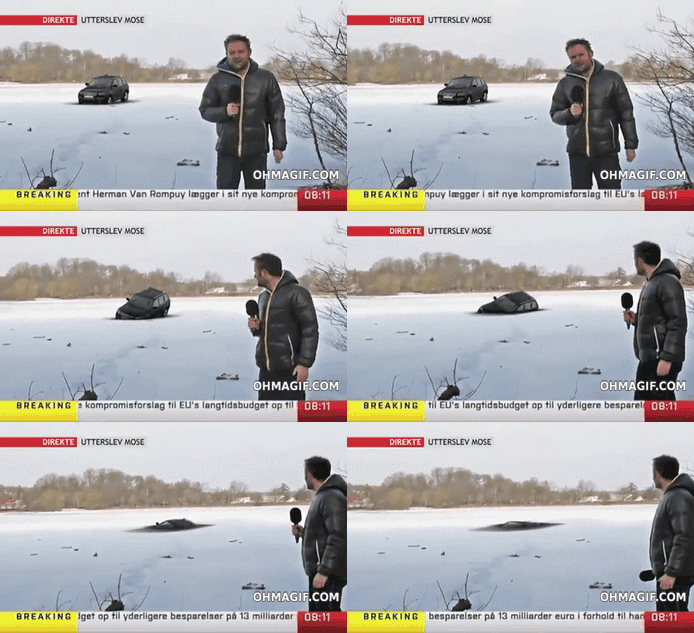
A very poor choice of over-entitled parking
Well it’s the same with some interns… they turn up and simply cannot understand that their work, that’s taken all of a morning — did not sail through the approval process without so much as a smile and a nod. They freak out when an idea is halted. Changed. Or simply killed. They have a sense of over-entitlement. These creatives have not yet learnt the fine art of losing. And perhaps they remind us all about the pain of loss that we’ve grown so used to.
So why the press and PR gurus sing up the wins… and the bragging on Twitter & Instagram continues… the reality is that we are far more likely to be infrequently winning and frequently losing. But that’s not to say we are not gaining traction. Through our losers approach we win with our peers, our clients, the sector and indeed the nation. The creative industries contribute more to the UK economy than any other. Yep, they out perform everyone. Even the master of the universe honking around the city square mile in their Ferraris lighting rare cigars with flaming paper currency.
Of course the way we phrase things is crucial in a world of semantics and inferred meanings. What I call losing more sensitive souls might call iterative or collaborative… but for me, what we do more than anything else is think. That can be intellectual, but can also be aesthetic. We use visual stimuli at SomeOne in almost every meeting internal and external. We think with pictures as well as with words and notions. And thoughts are the most fragile of all creative moments — so perhaps it’s no wonder we’re such losers?
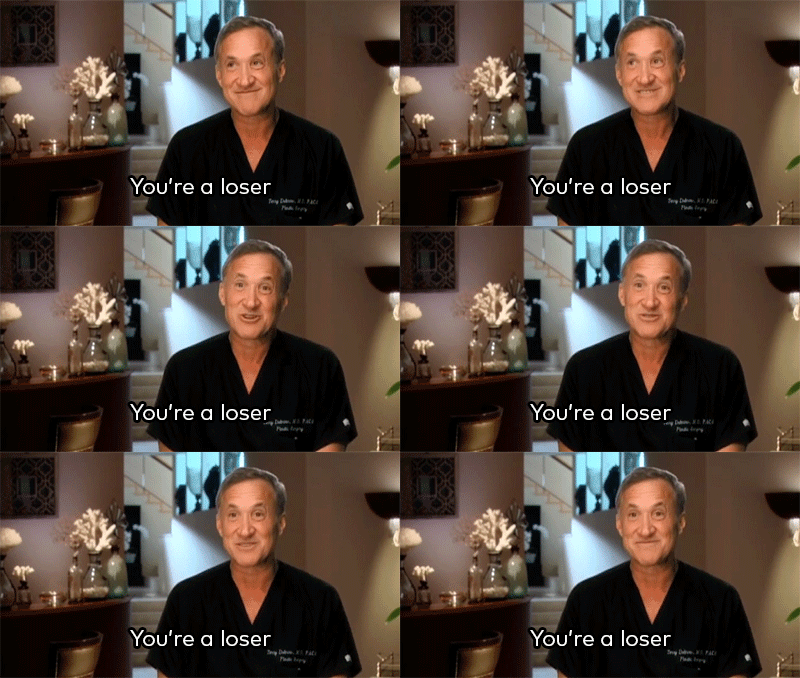
Deal with it.
When I worked in an advertising agency I saw the thoughts of creatives radically changed with a single word or sentence… ‘this film is based in Barbados’ — said the writer… ‘what about Brighton?’ said the client… and suddenly a script was altered forever… It’s these little losses that add up to the ultimate bland brand work. But, as the truism goes, you can’t win them all… so what to stand up for?
It’s interesting to look at the accepted heroes of creativity and see what worked… and more interesting to conclude that no matter what your career does, you’ll very likely be remembered for one thing. That could be a career of illustration, design, art, sculpture, scandal and paedophilia — but, as in the case of Eric Gill, who dabbled in all of those activities — is left largely famous for a typeface that comes free with every computer… Or, say a career of engineering, draughtsmanship, being a trained electrician… but the one thing you do for free, in your spare time — becomes the London Underground Map… and that Harry Beck, is what you’ll leave behind for the kids… So even after a 40 year jog through your career of creativity, chances are you’ll leave a single mark that might, if you are terrifically lucky, leave a smudge in history. But don’t bank on it.
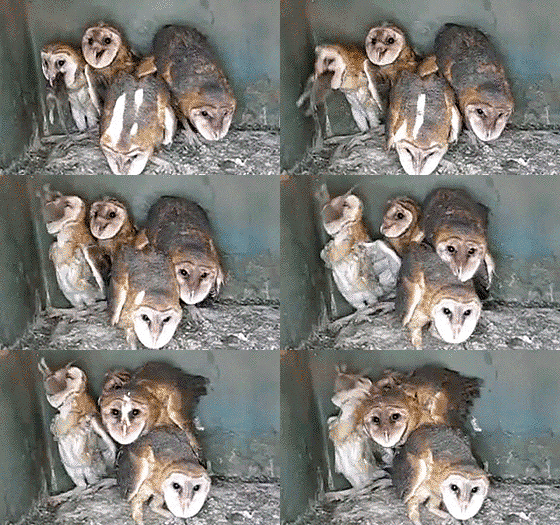
Terrified Designers after the end of a long day losing
For the vast majority of those of us involved in commercial creativity our impact is minimal, magical and most likely invisible in the long term. Currently, as I travel around London I’m surrounded by SomeOne’s portfolio… from travelling to Victoria on a Thameslink Train, hailing a taxi with Karhoo, past the Royal Opera House, having a glass of The Glenlivet to paying for the lot via WorldPay — it feels like our work is everywhere. Feels like we might be winning… but the truth is these projects are the tips of the icebergs of loss. So many ideas died to give them to life. And in truth, they are all likely to get rebranded at one time or another, when they succeed further, or get taken over, or experience a significant loss themselves.
This is the game we choose to play and how we choose to play it. We could of course make life far easier for ourselves. If we stopped back biting on blogs, in front of our peers, our clients, and the wider world — we’d show a united front that could bind us more closely together than shred grief ever could… but that’s simply not in our nature is it?
A full time mastrubator takes time out to broadcast his thoughts about a new logo.
Designers. Just. Can’t Leave. It. Alone. Because if we didn’t do it… it’s clearly not good enough. Why? Because every designer feels they can do something to improve things. No designer ever set out to make things worse. But while these public actions stem from positive beginnings they only serve to help demean and destroy the sector. As the figureheads of loss and misery, Radiohead put it — ‘You do it to yourself, you do. And that’s what really hurts’
Witness the public slaughter of any rebrand of scale these days. This isn’t an accident. It’s a partial result of all the in-fighting and a failure (that again) to recognise the bigger result of these empty but bitchy ‘I don’t like it, it looks like…’ statements from people who masquerade as designers with listening to. But what have they actually done? Why should we listen to them? Where’s their London Underground Map? Their Gill Sans?
I hope the mindless design critiques from sideline design-hobbyists — who have stopped mastrubating online long enough to pass a flippant logo judgement on a 2 year deeply considered branding programme — have not irrevocably damaged designs already fragile reputation with those who have the option to fund it.
All terribly gloomy right? Slit those iWatch clad wrists now? No, no, no… Stop!
We creative few are actually winning a war here, just not the battles (yet). Our relentless but slow ascension towards respect in business circles is gaining ground. Our cries of creativity in the boardroom are echoing around the front covers of Harvard Business Reviews. Our more lateral approaches to developing advantages for products, organisations and services are finally being publicly recognised. We may soon see a tipping point moment where we’re looked at not as those who struggle to add up or spell, but the answer to big business prayers.
We’ll just have to keep on losing.
It’s the only way we’ll win.