In a marketplace flooded with choices and noise, what separates the memorable brands from the forgettable ones is not just what they sell but how they make people feel through thoughtful brand design.
This article explores how a holistic branding experience can turn every customer interaction (from a first glance at a logo, to a late-night scroll on social media, to the feel of unboxing a product) into a moment worth remembering.
By weaving together visual identity, sensory cues, customer touchpoints and storytelling, brands can craft a coherent brand experience that resonates emotionally, builds trust, and invites loyalty. Whether you’re launching a startup or reviving a legacy brand, creating a brand experience should always be the foundation for a brand people will talk about, share, and return to.
How to Improve Branding and Customer Experience
Imagine walking away from a pop-up event still buzzing about it days later. This is the dream of every brand builder: to “craft experiences that people talk about, long after the lights go out”.
In practice, that means designing every activation around your brand’s identity and your audience’s desires – not just flashy spectacles. Creative leaders like Imagination’s Tom Gray, Pixel Artworks’ Nick Hodges, and Tavern’s Mike Perry agree: it’s the emotional and participatory elements, anchored in a clear brand story, that spark buzz.
Research even backs this up – a Harvard Business Review study found customers who feel fully emotionally engaged with a brand are “52% more valuable” to it. In other words, building brand experiences is the ultimate long-term investment in loyalty and word-of-mouth.
In the article below, I’ll unpack how to harness identity, inclusion, emotion, and narrative to create memorable experiences. I’ll share expert insights (including direct quotes from Gray, Hodges, and Perry), practical tips, and case examples. Along the way, I’ll also spotlight real-world examples and warn of common pitfalls.
Whether you’re a brand strategist or an event producer, our goal is a clear roadmap: build experiences that invite people in, move them emotionally, and give them something to share.
The power of identity and inclusion/exclusion

Publicis Dominicana
At the heart of any great experience is a sense of belonging. People want to see themselves in your brand, not feel like outsiders. If a brand feels “too exclusive or intimidating," it risks alienating the very audience it wants to attract.
People want to see themselves reflected in a brand, not be left on the outside looking in. In other words, strong brand identity is about who is included just as much as who is excluded. Done right, it makes your audience feel part of the club.
Tavern’s Mike Perry has seen this play out. He describes how the family-friendly restaurant chain Sizzler suffered an identity crisis after years of drifting away from its roots: “Over the years, Sizzler faced an identity crisis and lost its way,” he explains.
By digging into Sizzler’s heritage (nostalgic logos, iconic slogans, even a forgotten 1950s cow mascot) Perry’s team reintroduced what made the brand special. Acknowledging those old memories let fans, including Millennials now raising families, “recreate those core childhood memories” and feel at home again.
The results speak for themselves: by leaning into its past, Sizzler’s new design “resonates with longtime fans and a new generation,” giving the brand an emotional recharge.
This principle applies to any brand experience: build it around a clear brand identity and value proposition, so your audience knows instantly who you are and why it matters to them. A hands-on clue or welcome that signals your brand’s story will make participants feel seen.
Conversely, a generic “cool” spectacle risks making people wonder “but what is this brand about?” Always ask: Is this experience rooted in our authentic identity? Does it welcome the right crowd?
Include your tribe
Emphasize customer identity in every element. Use imagery, language and staff that reflect your target audience’s culture and values.
Honor your heritage
As Perry advises, “uncover [your brand’s] true history: the stories, symbols, and values that made it matter… then reimagine them in a way that feels relevant today”. A booth or venue that incorporates archival brand elements (old logos, jingles, design motifs) immediately creates a sense of authenticity.
Be mindful of exclusion
Avoid insider jokes or costly elements that only appeal to a tiny elite. Make sure everyone invited feels welcome. (If you exclude people by dress code or price, they won’t talk about how great your brand is – they’ll just complain.) Use inclusive language and accessibility features so no one is left “outside looking in”.
By celebrating what makes your brand unique, and inviting everyone who matches that identity in, you turn ordinary attendees into a community. This sense of belonging naturally generates conversation and loyalty long after the event.
Emotion and participation over spectacle

Blue Zoo Animation Studio
The most shareable experiences aren’t the biggest or flashiest but they are the most memorable. And memorability comes from emotion and involvement, not just pyrotechnics.
Memorable activations don’t rely on spectacle alone. They thrive on participation, because it gives your audience a personal stake in your story. When people do something (move, play, create) they aren’t just passive observers, they become part of the narrative. In their words, they “write themselves into” the brand’s story.
Likewise, psychological research reminds us that people tend to remember only two things: the emotional high point of an experience and how it ends. In practical terms, that means your goal should be one powerful emotional peak (a surprise reveal, a tear-jerking moment, a huge cheer) and a strong, satisfying finale.
This is known as the Peak-End Rule. For instance, if you plan a brand activation around a peak moment (say, a dramatic product reveal or a jaw-dropping stunt), save the best for last and end on a positive note. That way, attendees leave with a great final memory – and a great story to tell friends.
Lead with story and emotion
Make sure every touchpoint carries emotional resonance. In practice, that means using narrative at the start to hook your audience (a video or tale that tugs heartstrings), then building toward a climactic moment they won’t forget.
Encourage active participation
Swap out one-way displays for interactive elements. Give visitors a role: have them vote, compete, co-create, or control something. For example, RFID wristbands that unlock personalized content, or AR filters letting attendees manipulate objects in real time. These participatory features transform “spectators” into co-authors of the experience.
Surprise and delight
Plan a moment that outsmarts expectations. It could be a pop-up guest appearance, an unexpected gift, a hidden invitation, or a sudden light show timed with music. True surprises (the safe is boring, after all) will send attendees excitedly grabbing their phones and raving on social media.
Tap all senses
Beyond sight and sound, use touch, smell or taste to deepen impact. Research shows people recall 25% of what they smell vs. just 5% of what they see. Think scented lanyards for a foodie brand, a textured surface to trace, or a themed dish to taste. When you engage multiple senses, you build stronger memories.
Above all, remember Tom Gray’s insight: "emotional engagement is the driver of value. Designing for feeling (not just for flash) ensures your audience leaves with a story worth telling."
Foundations of a talk-worthy brand experience

Minh N. Ly
Mike Perry distills the essence of memorable brand work into guiding principles. Below are nine principles (inspired by Perry’s philosophy and industry best practices) that form the foundation of an experience people want to talk about. For each, we include a brief explanation and practical tips.
1. Honor Your Brand’s Authentic Story
Every aspect of the experience should feel genuine to your brand. Perry stresses digging into “stories, symbols, and values that made [the brand] matter in the first place,” then reimagining them for today.
In practice, that could mean using archival content (old ads, heritage motifs, founder quotes) in your installations. This anchors the experience in authentic identity.
- Use an archival centerpiece or interactive timeline to share your brand’s history.
- Feature icons or mottos from your heritage in decor (vintage posters, music, etc.).
- Avoid gimmicks that contradict your brand’s legacy; focus on elements that reinforce what you truly stand for.
2. Be Consistent Across Every Touchpoint
Consistency breeds trust. As Perry puts it, “every touchpoint, from packaging to social content to experiences, should be filtered through the lens of your brand. Consistency builds trust”.
Whether it’s signage, staff uniforms, or post-event emails, use the same tone, visuals, and values. A coherent thread reassures participants they’re in the right place.
- Align themes and colors at the venue with your existing brand guidelines (logo, palette, music style).
- Train your team to speak your brand voice – brief them on key messages and signage copy.
- Run a quick “spot check” checklist: does each element (booth design, swag, lighting) feel on-brand?
3. Create Emotional Peaks
Plan for a few wow moments, especially one major emotional climax. Use storytelling structure: build up to a highlight. For example, if it’s a product launch, gradually reveal hints throughout the event until the big unveiling.
Or in an entertainment context, sequence smaller interactive games leading to one grand finale. Make that peak highly emotional or dramatic – laughter, awe, nostalgia, or excitement. This will stick in people’s minds.
- Identify a single “hero moment” (e.g. a surprise guest, reveal, or personal dedication) and stage the event around it.
- Design the end on a high note: finish with a celebration (thank-you speech, fireworks, giveaways) so the last memory is positive.
- Use Mike Perry’s advice to think long-term: plan these peaks to reinforce why people love your brand (e.g. family, heritage, adventure).
4. Engage the Senses
Immersion means more than visuals. Incorporate smell, taste, touch or motion to deepen the experience. For instance, a car brand event might have a test-drive booth (touch/motion) and branded coffee blend (smell). Just make every sensory cue reinforce your story.
- Match music to the mood; consider interactive soundscapes or tactile samples.
- Offer a signature scent or flavor that people associate with your brand.
- Add gentle wind, mist or vibration in VR or ride simulations to ‘feel’ the brand.
5. Encourage Participation & Story Co-creation
Give visitors agency. Instead of a passive demo, invite them to shape the experience. For example, a fashion brand could let attendees design a piece on iPads, or a tech brand let them hack a code challenge.
When people actively contribute, they feel ownership – and then they talk about it. (As one industry blog puts it, participants aren’t just attending your activation, “they’re writing themselves into it”.)
- Use gamification: quizzes, leaderboards, or mission cards. Reward shareable achievements.
- Collect user-generated content: photo booths with branded frames, AR filters that overlay logos on selfies, or a digital graffiti wall.
- Enable user feedback loops: let attendees vote on the next feature or leave a virtual message to influence future events.
6. Foster Community and Belonging
Position your experience as for your people, not at them. Feature elements your community already loves.

Perry’s NYCFC pigeon stunt (above) (where New York City FC floated a giant, five-story-tall inflatable pigeon down the Hudson River) is a perfect model as by leaning into that authentic connection the activation was both culturally resonant and true to the brand. In short, reflect their culture back at them.
- Champion user stories: showcase customer testimonials or fan art in the experience.
- Create zones for group interaction (fans high-five walls, community photo frames, hashtag pods).
- Recognize shared values: if your brand stands for sustainability, have a recycling art station; if for family, create lounge areas for relatives.
7. Be Bold and Unforgettable
Playing it safe rarely earns buzz. Safe is boring and predictable… To really be able to WOW your audience, your brand must step outside the comfort zone. Think “what’s the most out-there but on-brand thing we can do?”
Then do it, safely. Memorable experiences are often a little risky: a giant art installation, a flash mob, or a secret celebrity drop-in. These surprises get people talking.
- Plan an attention-grabbing spectacle that fits your brand (e.g. a flash mob dance to your jingle, a drone light show shaped like your logo).
- Experiment with one new technology or format (VR, hologram, interactive video wall) to create novelty.
- Don’t over-engineer: sometimes the simplest bold idea is the best. A clear, novel concept trumps convoluted tech.
8. Make it Shareable
In the social media age, design with phones in mind. Provide photo-worthy backdrops, instant-snap installations, or branded props. Pixel Artworks highlights that creativity + tech should “craft experiences that people talk about”.
Encourage sharing: post-event giveaways (physical or digital) that tie back to the experience, or create a unique event hashtag and make uploading easy. The more your audience shares their participation, the more your brand conversation spreads.
- Set up a visually striking “Instabooth” area with props and lighting that prompt attendees to take photos.
- Give visitors something tangible (like a custom polaroid or digital download) to remember and post.
- Incentivize sharing: run a contest for best event photo, or offer discounts if they tag your brand online.
9. Plan for Longevity and Growth
Finally, think beyond this single event. A talk-worthy experience is one piece of a larger journey. Be consistent: keep the conversation going with follow-ups (emails, exclusive offers, content) and plan how the activation can scale or repeat.
Perry reminds us trust is built “over time” – don’t chase every fad, but show up consistently under your brand’s banner. Treat the event as a chapter, not the last page.
- Collect attendee info (with permission) for post-event outreach (early-access offers, event highlights, community forums).
- Measure reactions and iterate. What did people love? What did they skip? Use that data to improve.
- Think ahead to sequels: a pop-up could become an annual tour, or a virtual reveal could lead into a physical installation.
Integrating these principles won’t guarantee instant virality, but it will ensure your brand experience is deeply engaging and meaningful. As Mike Perry demonstrates with his “modern heritage” approach, attention to authentic storytelling and audience engagement is the bedrock of any talk-worthy activation.
Building the experience journey

HSBC
An outstanding brand activation isn’t random – it’s a carefully mapped journey. To keep the momentum high, plan how participants move from first hearing about the event to long after they leave. A helpful model is to think in stages: Teaser → Arrival → Immersion → Peak → Reflection/Exit → Follow-up.
- Teaser (Pre-event buzz): Build anticipation before the day. Use social media hints, mystery invitations, or an early “coming soon” splash page. This gets people curious and invested.
- Arrival: First impressions matter. Make arrival effortless and brand-centric. Branded signage, themed entrance displays, and friendly greeters set the tone. For instance, if it’s a futuristic brand, consider an LED-lit tunnel or robot valet on arrival.
- Orientation: Brief guests on what’s happening. This could be a welcome booth, an app tutorial, or an animated guide. Use this moment to prime your story: a short video or host introduction should quickly re-anchor them in the brand narrative.
- Immersion (Core engagement): This is the heart of the journey. Here you deliver your main activities – demos, games, workshops or displays. Stage these logically so they ramp up interest. A “step-by-step flow” might look like the arrival, then orientation, followed by Core Activations (the main interactive stations). Ensure each activity reinforces the narrative thread – maybe they solve puzzles that reveal parts of your brand story, or collect badges for trying different experiences.
- Peak (Climactic moment): Plan a centerpiece event that serves as the emotional high point. This could be a keynote reveal, a performance, or a collective experience (like a countdown or synchronized activity). This is where your “one spectacular, highly emotional peak” comes to life. For example, a mobile company might debut a holographic concert at the finale, or a gaming brand might hold a surprise tournament championship.
- Reflection/Exit: After the climax, give attendees space and comfort. Have a lounge or chill zone where people can process and chat – perhaps with branding visuals or a slideshow of event highlights. Offer mementos (branded merchandise or digital keepsakes). This stage prevents the ending from feeling abrupt and leaves a warm final impression.
- Follow-up: The journey continues even after goodbye. Within 24 hours, send a thank-you email with a recap video or photo gallery (studies show quick follow-ups get much higher engagement). Solicit feedback or offer an exclusive deal – this turns the event into an ongoing brand touchpoint.
Throughout these stages, keep the brand story and experience goals consistent. Even during the event, you should present your brand’s story in a way that connects emotionally with participants.
That means every touchpoint (orientation video, interactive station, staff scripts) ties back to the same narrative theme. For example, a sustainable apparel brand might have green foliage decor in the arrival area, stories of farmers in the orientation, clothing-design workshops for immersion, and a fabric art installation at the peak – all telling the story of eco-conscious fashion.
By mapping out each lifecycle phase and using it to amplify your message, you ensure attendees aren’t just wandering through an attraction – they’re walking through your brand’s world. The clearer the journey, the more likely they’ll arrive at your intended emotional destination and then eagerly share the story with others.
Case study: Squid Game: The Experience (Netflix)
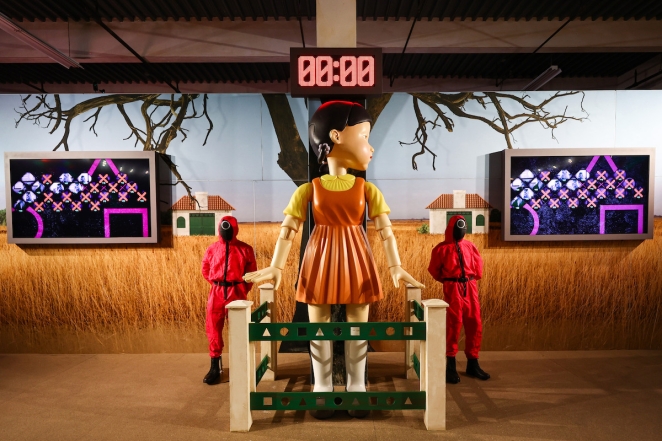
One striking example of these principles in action is Netflix’s Squid Game experiential campaign. To promote season two of the hit series, Netflix took fans literally inside the show’s world, turning viewers into participants. They created a real-life Squid Game arena in New York (and Sydney), complete with the series’ signature green tracksuits and giant animatronic doll.
Participants teamed up and competed in familiar challenges, accumulating points in a dramatic, timed sequence. This interactive design ticked many boxes: it leveraged the community of fans (identity), used the original storyline (story/heritage), created one massive thrilling peak (the games themselves), and required full participation (every player was on edge).
After the games, attendees didn’t just wander off – they “unwind[ed] at the on-site Night Market” and browsed the Squid Mart merchandise store. In other words, Netflix built in reflection and takeaways: photo ops, exclusive merch, and themed food.
This activation proved hugely talk-worthy. Fans shared videos of themselves screaming “Red Light, Green Light!” on social media, generating massive earned buzz. The campaign’s success mirrored its design: it was deeply authentic to Squid Game’s identity, emotionally intense (players risked “elimination”), and irresistibly participatory.
By the end, a Squid Game jogathon, public challenges on the Champs-Élysées, and a world premiere stunt had created a global conversation – exactly the kind of enduring chatter our principles predict.
Common mistakes and how to avoid them

Blue Zoo Animation Studio
Even a brilliant concept can falter if executed poorly. Here are some frequent traps and how to sidestep them:
- Losing Focus on the Brand: It’s easy to get dazzled by flashy tech or cool props and forget why the event exists. The fix? Constantly tie every element back to brand values. If a feature doesn’t reinforce your story or product, cut it. Always ask: How does this moment make our brand clear to attendees?
- Skipping the Follow-Up: Many teams celebrate on day one and then move on. But failing to close the loop wastes momentum. Plan your aftercare: send thank-you messages, gather feedback quickly, and offer next steps (like early access to a new product or an invite to a related event). This not only cements memory but keeps people talking.
- Trying to Please Everyone: A common pitfall is making an event too generic. One article warns that “by attempting to reach everyone, you may create an event that is too generic and that doesn’t resonate with anyone”. It’s better to aim sharply at your target audience. Define a clear persona (families? gamers? fashionistas?) and tailor every detail to them. Depth of connection beats broad but shallow appeal.
- Over-Engineering or Tech-Obsessing: Gadgets are fun, but piling on VR headsets or flashy screens doesn’t guarantee engagement. Technology should serve the story, not be the story. If tech acts as a barrier (difficult to use, slow to set up) it breaks the flow. Stick to a principle of purpose: use a tool only if it enhances interaction. Sometimes a simple physical prop or live performer is more effective than a complex AR app.
- Neglecting Logistics: Practicalities matter. Long lines, unclear signage, or understaffing can sour even the most exciting concept. Pilot-test every scenario: Walk the path as an attendee would. Make sure capacity, crowd flow and safety are covered. (A little friction ruins fun – and what people talk about next day might be “I waited two hours in line,” which is not the buzz you want.)
By being aware of these mistakes – and planning around them – you can avoid dampening your experience’s impact. Keep the brand front-and-center, honor your audience, and treat every touchpoint (including the one after the event) as part of the story.
Framework: The Brand Experience Readiness Checklist

SampsonMay
Before launching a major activation, use this quick audit to check your readiness:
- Clear Objectives and Audience: Have you defined specific goals? (Brand awareness? Trial? Loyalty?) And do you know exactly who the experience is for? If you haven’t surveyed your audience or crafted personas, do that first. Make sure the event concept solves a real need or desire for your target group.
- Story Alignment: Is your brand’s core message woven into every aspect? Walk through the plan: arrival, main activities, and exit – and ask if each element reinforces your brand identity. There should be no “orphan” parts that feel unrelated. If something feels off-brand, adjust or remove it.
- Emotional Engagement: Do you have a strong emotional hook or narrative arc? Check against the Peak-End rule – is there a designed high point and a satisfying finale? If not, brainstorm ways to heighten emotion (a powerful story cue, a collective activity, or an unexpected reveal).
- Technical & Logistical Preparedness: Is your team briefed and rehearsed? Do you have the right staff-to-guest ratio for engagement? Confirm that all needed equipment is tested, backup plans are in place, and your space supports your concept (layouts, power, accessibility, etc.).
- Participation Mechanisms: Are there built-in ways for guests to interact? For example, can people take something physical away (like freebies or photos)? Plan for giveaways or digital keepsakes that extend the conversation beyond the venue.
- Metrics & Follow-up: Have you decided how to measure success? (Surveys? Social media mentions? Signup conversions?) Ensure you have tools to capture data – e.g. scanners at game stations, hashtags to track, or quick feedback forms. Also set reminders for post-event actions: email blasts, thank-you notes, or content recaps.
If you can confidently say yes to the above, you’re in good shape. If any answers are “no” or “not sure,” invest more time in planning those areas. Use our nine principles as a cross-check: for each, make sure you have at least one concrete plan in place. Going in prepared will maximize the chances that people leave talking – and keep talking long after the activation ends.
Make People Feel Something Real
Great brand experiences start from a simple yet powerful idea: make people feel something real. When you design around a clear identity and let genuine emotion and participation shine, word-of-mouth follows naturally.
As Tom Gray emphasizes, enduring success comes from building emotional connections and brand equity that “compound over time”. In fact, research shows that emotionally engaged customers (the very people your experience aims to delight) are significantly more valuable to a brand.
The central message is clear: focus on people over props. Craft experiences that reflect the identity of the community you want, give attendees a role in your story, and build one or two unforgettable moments into the journey. Mix creative boldness with meticulous planning. Then watch as your audience carries that story home and continues the conversation long after the event lights go out.
As Mike Perry reminds us through his work, successful brands don’t chase every trend; they stick to their unique heritage and values, consistently showing up in creative ways. You can apply that wisdom too. Start small if you must, perhaps by testing one interactive idea or strengthening the final peak. Then learn and iterate.
In the end, a powerful brand experience is never accidental. It's carefully designed through intentional brand design and consistent branding experience that spans every touchpoint. When brands invest in thoughtful visual and experiential design, they give customers not just a product, but a feeling, a memory, and a reason to return.
Over time, these experiences shape perception, loyalty and advocacy, turning customers into ambassadors. In today’s crowded marketplace, creating a brand experience that people talk is the difference between blending in and standing out.
How Creativepool Can Help
Kim Griffin
Designing, producing and sharing unforgettable experiences requires the right creative partners – and that’s where Creativepool comes in. We’re a global community connecting brands and agencies with the talent and tools needed to bring immersive experiences to life.
Looking to design an interactive installation or visionary event? Browse Creativepool’s network of designers, brand strategists and experiential agencies. You can view portfolios of architects, set designers, graphic artists and more who specialise in the kind of standout concepts that spark conversation.
Need to produce it? Discover production companies, tech-builders, performers and event managers with proven track records. Our members have delivered everything from pop-up activations and augmented-reality experiences to large-scale festivals – and they’re ready to help turn your idea into reality.
To share the experience is just as important as creating it. On Creativepool, you’ll find content creators, PR firms and social media experts who can amplify your launch. Post project briefs or job listings to tap into a pool of videographers, editors and influencers who can capture your event and spread the word.
Looking to staff an unforgettable experience? Our job board and talent directory make it easy to recruit hospitality staff, brand ambassadors, and creative technologists who fit your vision and brand culture.
Throughout the Creativepool platform, you also get access to insights and inspiration from around the creative world. Read case studies of other successful brand experiences in our articles, or join discussions in our community groups to learn best practices. You can even showcase your own work on Creativepool to attract collaborators and build buzz.
Creativepool helps you assemble the right team and resources at every stage – from initial concept through execution and sharing – so your brand experience not only dazzles in person but leaves people talking long afterward.