Video has always been one of marketing’s more seductive formats because, when it works, it doesn’t feel like marketing at all. It feels like a story. A mood. A little branded moment that somehow lodges itself in the back of the brain.
It has also, traditionally, been expensive. Properly expensive. The kind of expensive that involves locations, crews, lighting, talent, edit suites, post-production, versioning, reshoots, weather problems, stakeholder notes and at least one person quietly wondering whether the whole thing could have been done as a static social post instead.
That calculation is changing fast. AI in video production isn’t simply adding another tool to the creative stack. It’s changing the economics of the entire thing. What used to take weeks can now take days. What used to require a six-figure production budget can sometimes be produced for a few thousand. What used to be a single hero film can now become dozens of cutdowns, language variants, social edits, product versions and personalised assets.
That doesn’t mean AI is making video “easy”, whatever the more breathless tech demos might imply. It means the bottleneck is moving. Production itself is becoming cheaper, faster and more scalable. The premium is shifting towards taste, judgement, strategy, story and creative direction. In other words, the expensive bit isn’t always the camera anymore. It’s knowing what should be made in the first place.
AI Is Slashing Costs and Timelines
Richard Berry
The most obvious economic impact of AI video is cost. The second is speed. The third, and arguably the most disruptive, is what those first two things do to client expectations.
A study discussed by the MIT Initiative on the Digital Economy found that AI-generated personalised video ads outperformed both image ads and generic video ads on click-through rates, with the research involving more than 21,000 consumers. Importantly, the researchers also stressed that the marketing team retained control over the message, using generative AI as a production tool rather than handing over the creative idea itself.
That detail matters because it points to the real model emerging here. AI isn’t just being used to make random video content quicker. It’s being used to make specific, targeted, versioned content financially viable at scale.
The cost shift is fairly obvious: median AI-assisted video production is estimated at around $2,500 per finished minute, compared with around $4,200 for traditional production. As such around 78% of marketing teams are now using AI-generated video in at least one campaign per quarter.
That’s the sort of figure that makes procurement teams sit up straighter and agency producers start quietly sweating. But the more useful interpretation isn’t “video is now cheap.” It’s that brands can now spend the same amount of money in very different ways.
A single campaign budget can stretch further. A brand can make the hero film, the social cuts, the language variants, the internal version, the sales enablement clips and the personalised email assets without treating each one as a fresh production mountain to climb. The budget doesn’t necessarily have to shrink. It can be redistributed.
From One Campaign to Hundreds of Assets

Butterfly Cannon
The real disruption isn’t that AI can make one video cheaper. It’s that it can make video behave less like a precious object and more like a system.
For decades, the standard campaign model orbited around scarcity. There was the big shoot. The hero asset. The key visual. The carefully rationed set of deliverables. Everything else was extracted from that central production event, usually with varying degrees of elegance.
AI changes that. A campaign idea can now be expanded, tested, localised and reformatted with far less friction. One concept can become a suite of short-form videos, vertical edits, internal explainers, regional versions, product demos, personalised sales assets and campaign teasers.
That’s the new production logic. It’s not just about making a film. It’s about building a content engine.
This is particularly powerful for personalisation and localisation. MIT found that AI-personalised videos delivered click-through rates 9.4% higher than personalised image ads and 6.5% higher than generic videos. The researchers also flagged the need to balance scalability with privacy, quality control and consumer trust, which is where the human layer becomes essential.
The temptation, of course, is to interpret this as a mandate to flood every channel with infinite video. That would be a mistake. The fact something can be made doesn’t mean it should be made. If anything, the ability to generate more assets makes restraint more important, not less.
Quantity is no longer the bottleneck. Meaning is.
How AI-Generated Commercials Are Changing Advertising Production

Bottomline AI
The most visible symbol of this shift so far has been the rise of AI-generated commercials. Not AI in the edit. Not AI in the storyboard. Fully AI-generated spots, pushed into mainstream media environments that would once have required a traditional production machine.
One obvious recent example is Kalshi. In June 2025, the prediction-market platform aired a surreal AI-generated commercial during the NBA Finals. The spot was created using Google’s Veo 3, cost around $2,000, and went from idea to live ad in three days, according to Business Insider. Kalshi had reportedly looked at traditional production routes first, but the quotes and timelines didn’t fit.
Director PJ Accetturo described the brief as making the “most unhinged NBA Finals commercial possible,” which is about as neat a summary of the spot as anyone’s likely to manage. The ad’s strange, chaotic, fever-dream quality wasn’t a by-product of AI so much as the point. AI suited the creative idea because the idea itself was deliberately unhinged.
The Kalshi example worked as a talking point not just because it was cheap, but because the medium and concept made sense together. As Accetturo put it, the route was essentially “crazy people doing crazy things” while showcasing the brand. The machine provided the executional acceleration, but the instinct was human.
Kalshi isn’t alone. Coca-Cola’s “Create Real Magic” platform openly invited digital creatives to use Coca-Cola archive assets with GPT-4 and DALL-E, in partnership with OpenAI and Bain & Company. The results were mixed, but compelling enough to warrant strong engagement.
The direction of travel is clear. Brands that once couldn’t afford high-volume video production can now enter the arena. Local businesses can create polished social ads. B2B companies can turn product information into explainers. Agencies can offer faster test-and-learn production models. Internal teams can make content that once required external specialists.
That’s exciting. It’s also commercially uncomfortable.
Because once clients see that something can be done faster and cheaper, the next question is inevitable: why shouldn’t they pay less?
Doing More with the Same Should Be the New Baseline
One of the clearest arguments against treating AI as a simple cost-cutting tool comes from Sarina Da Costa Gomez, executive creative director at Particle6. Her point is that the industry risks misunderstanding the opportunity if it sees AI only as a way to make the same work for less money.
As she puts it: “Much is being shared about campaigns that can now be made at a fraction of the cost – but quite frankly, this ‘race to the bottom’ approach is a little concerning. As an industry, we should, while mindful of both client budgets and briefs, be re-organising and re-calibrating the costs and look at what more we can do for the same budget.”
That feels like the more interesting production economics story. Not cheaper work. Not smaller ideas. Not a steady erosion of creative value dressed up as efficiency. Instead, AI should give agencies and brands a chance to rethink how a budget is used, where the money goes, and how much more value can be created from the same investment.
Da Costa Gomez gives a simple but useful example: “So, rather than creating, say, one 30-second national advertisement twice a year, can we use AI to work more quickly and make better use of the budget and maybe produce two 30-second commercials twice a year, each localised for three different regions?”
That’s where AI starts to look less like a threat to production and more like a redistribution mechanism. The saving isn’t the end point. It’s the thing that allows the campaign to stretch further. A brand can create more executions, test more ideas, localise more intelligently and build a campaign that feels less like one expensive object and more like a living system of assets.
She also points to the parts of production that once consumed an outsized share of the budget. “Alternatively, there are some elements that used to cost a disproportionately large chunk of a budget eg a CGI close up of shampoo working its magic smoothing a hair follicle. CGI and animated product demos like this can now be made with AI for less – freeing up more of the budget to invest in the rest of the ad and its creative execution.”
That’s the key. AI doesn’t have to drain money out of creativity. It can remove friction from the technical and repetitive parts of production, then push more of the budget back into the parts audiences actually feel: the idea, the writing, the performance, the craft, the edit, the media strategy and the overall creative execution.
For agencies, this is a much healthier argument than simply telling clients that AI makes everything cheaper. If the conversation starts and ends with savings, the industry walks itself into a value problem. If the conversation becomes about what more can be achieved with the same spend, then AI becomes a tool for ambition rather than austerity.
Da Costa Gomez sums it up neatly: “We should be thinking smarter, making the budgets work harder and look to deliver better, more meaningful results for our clients. Doing more with the same should be our new baseline.”
The Agency Problem: When Production Stops Being the Premium

Grammatik Agency
For agencies and production companies, AI-generated video is both an opportunity and a threat. It opens new markets, lowers barriers and makes once-impractical creative ideas more achievable. It also attacks some of the traditional economics that have underpinned agency and production business models for years.
If a client once paid for time, complexity and coordination, what happens when those things become less visible? If an agency’s value was partly wrapped up in managing the machinery of production, what happens when the machinery gets lighter?
This is where the conversation has to move beyond cost. Agencies can’t defend old production overheads for the sake of it. They also can’t allow clients to conclude that faster production means less value. The narrative has to shift from output to judgement.
That’s already happening elsewhere in the agency conversation. In a recent Creativepool piece on the sustainability of the traditional agency model, SomeOne founder Simon Manchipp described a market in flux but rejected the easy doom narrative. “There is a lot of change in agency land, but there’s also a lot of demand,” he said, adding that many firms made money from “churning out the everyday” and that “the everyday is now easily automated so it’s the age-old story of ‘adapt or die’.”
That feels painfully relevant to video production. The everyday is exposed. Simple cutdowns, generic explainers, basic product videos, versioned ads, localisation, templated social clips: all of that is becoming easier to automate or bring in-house.
But the complicated work isn’t going away. The need for creative platforms, campaign thinking, brand systems, narrative judgement, cultural relevance, emotional intelligence and quality control may actually increase. The more content a brand can produce, the more it needs someone to decide what matters.
That’s the agency opportunity. Not “we can make more stuff.” Everyone will be able to make more stuff. The opportunity is “we know what’s worth making, how it should behave, where it should go, and why anyone should care.”
The Growing Role of AI in Video Marketing

VCCP
AI isn’t just changing how videos are made. It’s changing where video sits in the marketing mix.
Video has been central to digital marketing for years, but AI is making it more operationally useful. It’s not just the big emotional brand film anymore. It’s the product demo. The sales follow-up. The onboarding explainer. The event recap. The personalised prospecting message. The internal training module. The social test. The paid variant. The localised retail clip.
A recent report by Animoto found that 84% of marketers are already using AI in their video creation process, with more than 75% using it frequently. The same report found that 97% of marketers say video is important to their overall strategy, while 90% plan to create more video in 2026.
That’s not a side trend. That’s infrastructure.
Brands are building teams around it too. Animoto found that 75% of marketers have hired dedicated internal video creators or built internal teams, while 60% said in-house videos outperform agency-produced content. Taken at face value, that’s a serious warning shot for agencies. Taken more carefully, it suggests that brands are separating routine video production from high-value creative partnership.
The agency doesn’t need to make every asset. In many cases, it probably shouldn’t. But it does need to help define the system: the campaign idea, the brand rules, the creative standards, the distribution plan, the quality thresholds and the moments where human craft matters most.
Because AI video marketing can go wrong very quickly when it’s treated as a volume game. Audiences might tolerate AI content, but they’re not naïve about it. Animoto found that nearly 83% of consumers say they’ve watched a video they suspected was AI-generated, while 36% said an AI-generated video would lower their perception of a brand.
Beth Forester, CEO of Animoto, captures the tension well: AI can help marketers “supercharge” creation, but it can also risk “eroding the authenticity that builds trust.” That’s the line every brand is now walking.
Distribution Is Becoming Part of the Creative Brief
Maguires
One of the more useful shifts AI forces is that it makes distribution impossible to treat as an afterthought.
When production was expensive and slow, it made sense to think in terms of finished assets. Make the film, launch the campaign, then plan the roll-out. That logic already looked tired in the age of social media. In the age of AI-generated asset abundance, it looks almost antique.
A campaign today isn’t a single object. It’s a content ecosystem. A 30-second spot might need to become six-second bumpers, vertical edits, stills, GIFs, creator prompts, email embeds, presentation assets, retail screens, local market versions, search-friendly clips, paid social variations and internal sales tools. Distribution isn’t the delivery mechanism. It’s part of the creative architecture.
That’s why Gavin MacArthur, Senior Creative Director at Pixel Artworks, is right when he says: “Distribution is becoming as important as creativity.” In the same Creativepool piece, he argues that AI and new tools intensify the attention problem because, if everyone can make something, the question shifts from whether something can be made to whether it can reach the right people in a way that lands.
That thought should sit at the centre of AI video strategy. More production without better distribution just creates more noise. More variants without a sharper media strategy just creates a larger folder of unused files. More content without a stronger idea just creates more evidence that the brand doesn’t know what it’s trying to say.
AI can help make the assets. It can’t make people care about them.
What AI Can Replace in the Production Process
Spiel
There’s no point pretending AI won’t replace parts of the production workflow. It already is.
AI can support scripting, storyboarding, editing, transcription, translation, subtitling, voiceover, rotoscoping, background generation, rough animatics, localisation, versioning, resizing and personalisation. It can turn a product page into a rough explainer. It can generate concept frames. It can help a small team produce an amount of video that would previously have required a much larger one.
That’s not a future prediction. It’s already how many teams are working.
The more practical question is which parts of production become automated, which parts become augmented, and which parts become more valuable because they’re harder to automate.
Routine execution is the obvious pressure point. A basic social cutdown doesn’t necessarily need a full post-production process. A personalised sales video doesn’t need a new shoot every time. A training module doesn’t always need a studio, a presenter and a traditional edit. AI can do a lot of that work well enough, especially when the audience’s expectations are functional rather than cinematic.
But “well enough” is the phrase that matters. Sometimes well enough is enough. Sometimes it’s death.
A low-stakes internal video can tolerate rough edges. A flagship brand film probably can’t. A simple product explainer may benefit from AI speed. A luxury campaign may be damaged by the faint whiff of synthetic compromise. A performance ad might only need to convert. A brand platform needs to mean something.
This is where creative judgement becomes commercially important. The best teams won’t be the ones that use AI everywhere. They’ll be the ones that know where it belongs.
What AI Still Can’t Replace
Dan Kindley
For all the change, there are still things AI can’t properly do.
It can’t understand a brand’s history the way a good strategist can. It can’t feel the nervousness in a client presentation when an idea is almost right but not quite. It can’t read the room. It can’t tell when something is technically impressive but emotionally dead. It can’t reliably understand cultural timing, subtext, taste, humour, restraint or the strange little imperfections that make a piece of communication feel alive.
AI can generate footage, but it can’t decide why that footage should exist. It can produce options, but it can’t reliably choose the one that will make someone feel something. As one industry thinker puts it: “AI can give you a thousand options, but it can’t tell you which one will make someone cry. Taste is the ultimate human moat.”
That’s not sentimental. It’s practical. In an environment where production becomes abundant, taste becomes a filtering mechanism. Strategy becomes a sorting mechanism. Human judgement becomes the difference between a useful campaign and a landfill of technically competent assets.
Brand safety is another limit. Generative models can produce strange, biased, inaccurate or simply off-brand outputs. They can hallucinate details, distort people, mishandle cultural cues or produce something that looks fine at first glance and deeply wrong at second glance. The more AI is used at scale, the more important review processes become.
That doesn’t mean every AI-generated clip needs a committee. It means brands need standards. They need approval workflows. They need clear policies around disclosure, talent, copyright, likeness, representation, data use and where AI can or can’t be used. They need people who understand both the creative possibilities and the reputational risks.
Then there’s emotional nuance. Animoto’s report found that consumers value personal and authentic brand videos, with nearly 68% saying real people help support that authenticity. That doesn’t mean AI avatars are useless. It means they have to be used with care. Sometimes synthetic is fine. Sometimes it’s efficient. Sometimes it’s even the creative point. But sometimes the most powerful thing a brand can show is a real person, in a real place, feeling something recognisably human.
AI can imitate that. It can’t always inhabit it.
How to Use Creativepool to Hire a Video Producer
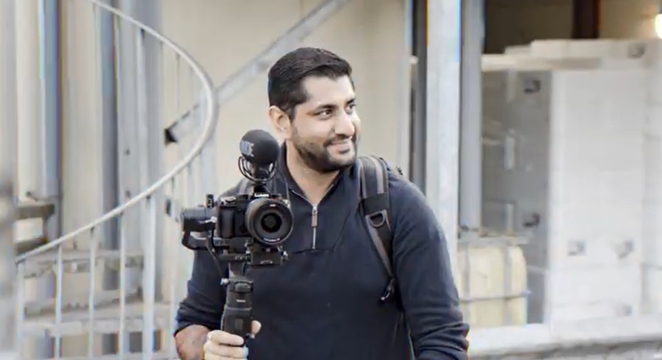
Roon Sharma
For all the noise around AI video production, there’s still a strong case for doing some things the old-fashioned way. Not old-fashioned as in slow, expensive or resistant to change. Old-fashioned as in finding a real person with taste, judgement, experience and a body of work you can actually interrogate before trusting them with your brand.
That’s where Creativepool can be particularly useful. The platform is built around connecting brands, agencies and companies with creative talent, whether they’re looking to hire an employee, a freelancer or an agency partner. It’s also commission-free, which matters when production budgets are already being scrutinised from every possible angle.
Hiring a video producer through Creativepool means looking beyond the toolset. Yes, AI literacy is becoming increasingly useful. A modern video producer should probably understand how generative tools can support pre-visualisation, versioning, editing, localisation or asset creation. But the real value is still in the human stuff: knowing how to shape a brief, manage a shoot, work with talent, protect a brand, judge an edit, solve production problems and make sure the final film actually serves the idea.
The process starts with clarity. A brand shouldn’t simply search for “someone who can make videos.” It should decide what kind of video problem it’s trying to solve. Does it need a social-first producer who understands TikTok, YouTube Shorts and paid social? Does it need a producer-director who can run lean shoots? Does it need a post-production specialist, a videographer, a filmmaker, or someone who can manage the whole process from concept to delivery? Creativepool’s dedicated pages for video editors, videographers, film makers and post-production producers make that search easier to narrow.
This is also where the “old-fashioned” part still wins. A profile, reel, CV and portfolio tell you things a prompt box can’t. They show whether someone understands pacing. Whether they can frame a shot. Whether they’ve worked with people, not just pixels. Whether they can move between polished brand work and scrappier social content. Whether they have a point of view. In a market where AI can make a lot of work look superficially competent, a proper portfolio becomes more important, not less.
Creativepool also helps companies think about hiring in the right shape. Some brands will need a full-time video producer, particularly if video is becoming part of their daily content engine. Others will be better served by a freelance producer who can come in for campaign bursts, launches, events or social content packages. Others may need an agency or production partner that can combine strategy, creative, production and post.
The point isn’t to default to one model. It’s to find the right human capability around the right production need. Creativepool gives brands a way to do that with the one thing AI can’t replace: evidence of real creative judgement.
How Brands, Agencies and Production Companies Are Responding

Iris
The response across the industry is uneven, which is exactly what should be expected. Some agencies are sprinting into AI production. Some are cautiously experimenting. Some are still trying to work out whether clients actually want it or just want to know they’re not being left behind.
Brands are moving quickly because the incentives are obvious. AI offers speed, volume and cost control. Internal marketing teams can use it to increase output without increasing headcount at the same rate. They can test more ideas, create more variants and respond to trends faster.
Agencies, meanwhile, have to find the balance between adopting AI and defending the value of what sits above it. The smart ones are building AI into workflows without making AI the proposition. They’re using it to move faster in research, ideation, pre-visualisation and versioning, then making sure the visible value remains strategy, craft, creative direction and effectiveness.
Production companies are facing a slightly different challenge. Some are positioning themselves as AI-enabled partners, building hybrid workflows around pre-vis, VFX, dubbing, translation, virtual production and synthetic assets. Others are leaning harder into the things AI still can’t easily replicate: live-action craft, human performance, complex shoots, specialist cinematography, physical production design and high-end direction.
Neither route is automatically right. The wrong answer is pretending nothing has changed.
The interesting development is the rise of proprietary workflows. As AI tools become widely available, the value may move from simply using them to knowing how to combine them. The process becomes part of the IP. The prompt chains, the review methods, the brand-safety checks, the model choices, the editing workflows, the integration with media and CRM systems: that’s where competitive advantage starts to sit.
In other words, production IP is no longer just the final asset. It’s the system that produces the asset.
The Future of AI in Video Production
Shane Geffen
The future of AI in video production probably won’t be as clean as either the evangelists or the sceptics want it to be.
It won’t be a total replacement of human creativity, because the more AI content exists, the more valuable genuinely distinctive creative judgement becomes. It also won’t be a minor efficiency tool sitting politely at the edge of the production process. It’s already too useful, too fast and too economically attractive for that.
The more likely future is hybrid. Human teams will use AI to accelerate early concepting, generate visual directions, create rough cuts, test variants, personalise assets, localise campaigns and automate repetitive production tasks. Human directors, producers, strategists, creatives and editors will then shape, reject, refine and elevate that output.
Some roles will change dramatically. Editors will need to understand generative workflows. Producers will need to cost hybrid productions. Creative directors will need to know what to ask of AI, when to ignore it and how to judge the results. Strategists will need to think about versioning and distribution earlier. Clients will need to understand that cheaper execution doesn’t make strategy less valuable.
The biggest shift will be psychological. The industry will have to stop treating video as something that only exists when there’s a shoot. Increasingly, video will be generated, assembled, adapted and personalised as part of a broader content system. That system will still need ideas. It’ll still need taste. It’ll still need craft. But the production rhythm will be different.
There will also be more debate around transparency. As AI-generated ads become more common, audiences, regulators and platforms will ask harder questions about labelling, consent, likeness, copyright and authenticity. Brands that use AI carelessly may save money in production and spend it later rebuilding trust.
That’s the tension. AI makes video easier to produce, but harder to justify. When anyone can make a decent-looking video, the question becomes: why this video? Why now? Why from this brand? Why should anyone watch, believe, share or remember it?
Basic Production Is Becoming a Commodity. Creative Judgement Isn’t.
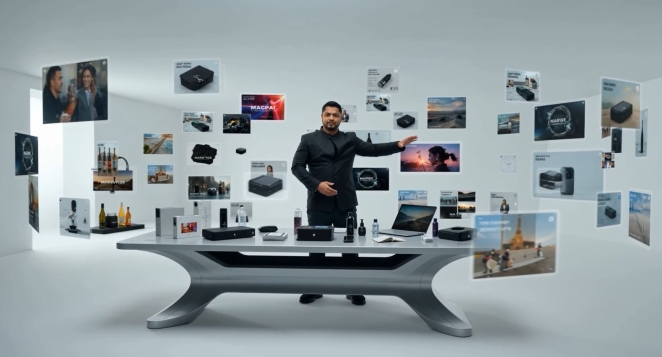
Al Amin
AI in video production is reshaping production economics because it changes the relationship between cost, speed and scale. It makes more things possible for more brands, which is genuinely exciting. It allows smaller companies to behave more like larger ones. It allows larger companies to personalise and localise at a level that once would have been impractical. It gives agencies and production teams new ways to prototype, test and deliver.
But it also strips away some comfortable assumptions. If basic production becomes cheaper, basic production becomes harder to charge a premium for. If content becomes abundant, attention becomes more valuable. If AI can generate endless options, the person who knows which option matters becomes more important, not less.
That’s the real story here. AI isn’t killing video production. It’s exposing what parts of video production were valuable because they were difficult, and what parts are valuable because they’re meaningful.
The former is getting cheaper. The latter might be about to become priceless.