
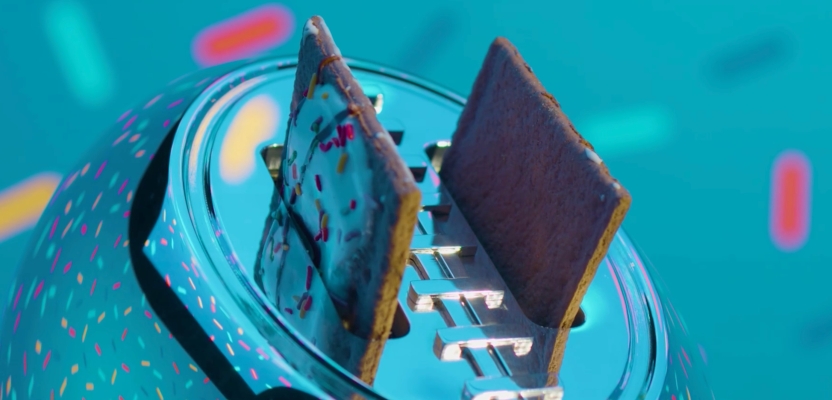

From Pop-Tarts being lowered into a giant toaster to Westworld turning SXSW into a fully scripted frontier town, the best experiential advertising activations don’t just grab attention. They make people step inside a brand, feel something real, and leave with a story worth repeating.
Experiential advertising used to be treated as the flashy side-project of the “real” campaign: good for a few photos, a bit of PR, and the odd case-study montage if everything behaved itself on the day. That feels hopelessly out of date now. The best experiential advertising activations are some of the only pieces of marketing people still voluntarily give their time to. They don’t just interrupt culture for a moment. They drop themselves into it.
Research reflects that shift. EventTrack 2025 reported that 74% of Fortune 1000 marketers planned to increase experiential marketing budgets in 2025, while Freeman’s 2025 studies found that 95% of attendees trusted brands more after an in-person event and 85% were more likely to make a purchase afterwards. In other words, live brand experiences aren’t decorative extras anymore. They’re doing brand-building, sales influence, advocacy and earned media all at once.
That change makes perfect sense in a media culture where audiences have become brilliantly efficient at ignoring anything that feels like an interruption. People are consuming more media than ever, but almost entirely on their own terms: they’ll sit for hours with streaming, feeds and creator content, yet dodge even a five-second interruption if it feels irrelevant or dull. From a content angle, brands now have to earn attention rather than assume it.
The lesson for experiential marketing campaigns is brutally simple: if you want attention in 2026, you’ve got to earn it by creating something people choose, not something they merely endure. The best brand activation examples do exactly that. They stop behaving like messages and start behaving like places, stories, games, rituals or social currency.
That doesn’t mean every pop-up, festival shack or immersive room deserves to be called great. Far from it. The work that lasts is rarely the work with the most gadgets. It’s the work that belongs in its setting, gives people a role, builds to a memorable emotional peak, and leaves with a satisfying ending rather than a dead QR code and a tote bag.
The 2025 Brand Experience & Activation jury at Cannes Lions essentially described the whole field in two camps: work that solves a real problem, and work that’s playful and entertaining, with the best entries sometimes managing both. That’s still the cleanest way to judge the category. If an activation has no utility, no play, no participation and no point beyond being photographed, it isn’t a great experience. It’s expensive furniture.
Why experiential advertising matters now
The strongest experiential marketing examples are built on an uncomfortable truth many brands still resist: being seen isn’t the same as being welcomed. In festival culture, for example, the most useful thinking isn’t about spectacle at all but about fit. Brands earn their place when they understand the mood, the rituals and the real needs of the audience rather than treating an event as blank space for logos.
That’s why mundane-sounding touches often outperform giant set builds. A shaded corner during a heatwave, a mobile phone charging point, a refill station, a place to sit still, cool down and fix your make-up: these things sound less glamorous in the pitch deck than a giant LED cube, but in lived experience they can build far more affection.
Even at Cannes, some of the smartest recent work has won attention not by trying to out-yacht everyone else, but by solving the very immediate problems people actually have. That sounds obvious, but it’s where a lot of live marketing still falls apart. Too many activations are designed to be photographed before they’re designed to be used.
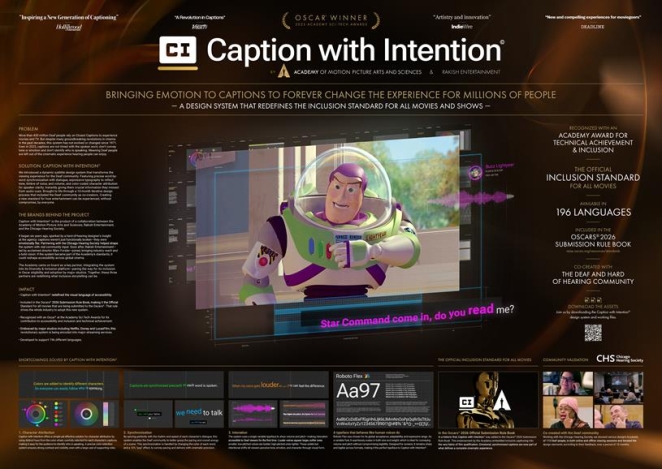
The recent award landscape backs up that broader idea. The 2025 Brand Experience & Activation winners ranged from the Grand Prix-winning Caption for Intention, which was created by FCB Chicago and redesigned captions with animation, colour and expressive typography for Deaf and hard-of-hearing audiences, through to projects rooted in retail mechanics, transport behaviour, public storytelling and physical provocation.
You don’t need to have watched every case film to see what that says about the state of experiential advertising. The category has become broad enough to hold accessibility design, entertainment, utility and social behaviour all at once.
The point isn’t that anything can be experiential. It’s that the best experiential activations are increasingly the ones that turn brand thinking into something the audience can physically feel, do, navigate or remember.
There’s also a second reason the discipline matters more now: the best live experiences are no longer just live. They’re built to create native content, conversation and search behaviour as part of the design. That doesn’t mean slapping on a hashtag and praying. It means understanding that a great activation now has to work in three layers at once: for the people physically there, for the wider audience who encounter it through social or press, and for the commercial system that follows after the event.
That logic helps explain why 29Rooms became so influential, why Toblerone’s airport tantrum travelled so fast, and why Nike’s Reactland sent people home with custom shareable clips rather than a fuzzy recollection of having jogged on a treadmill. The physical moment is the engine. The content is the exhaust. The best experiential campaigns know the difference.
What the best brand activation examples get right
One useful way to think about the best experiential advertising activations is to ask what they replace. Great work tends to replace something dull with something lived. It replaces a product demo with a game. It replaces a sponsorship logo with a social ritual. It replaces a lecture about brand purpose with a direct encounter that proves the point faster than a manifesto ever could. It replaces exposure with participation.
Our own feature on How to Create a Brand Experience That People Talk About is useful here because it frames the challenge in exactly the right way: memorable brands aren’t just defined by what they sell, but by how they make people feel through the total experience around them. It also gives you a neat internal-link opportunity around the idea of emotional peaks, sensory cues and joined-up touchpoints.
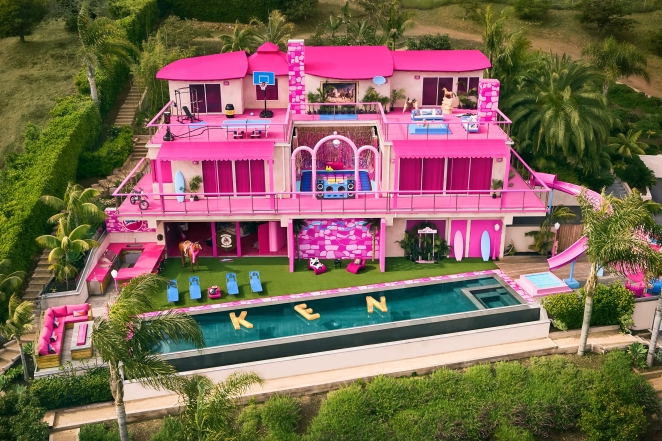
That matters because mediocre live marketing is full of screens that add nothing, while great experiential work often uses very simple mechanics with ruthless clarity. A line dance in Ken’s DreamHouse, a tantrum at an arrivals gate, a giant Pop-Tart lowered into a toaster on national television: none of these ideas needed a three-minute explanation. That’s usually a good sign.
The flipside is just as useful. Weak activations usually make one of three mistakes. They try to please everybody and end up generic. They become obsessed with tech and forget the brand, so the audience remembers the cleverness but not the company. Or they neglect logistics, which means the thing people discuss afterwards isn’t wonder, humour or delight but queueing, confusion and heatstroke.
These sound like operational notes, but they’re really creative notes. There’s nothing less creative than building an experience so cumbersome that it murders its own momentum. The best experiential marketing examples feel inevitable once you’re inside them. They never make you work harder than the idea itself.
When a brand becomes a place
Diogo Bonaparte
Some of the most important experiential activations in advertising history succeeded because they stopped acting like campaigns and started acting like destinations. Vans’ Warped Tour helped establish the logic of the wholly owned brand property. Camp Jeep proved that retention could be as emotionally powerful as acquisition by turning ownership into an annual muddy pilgrimage.
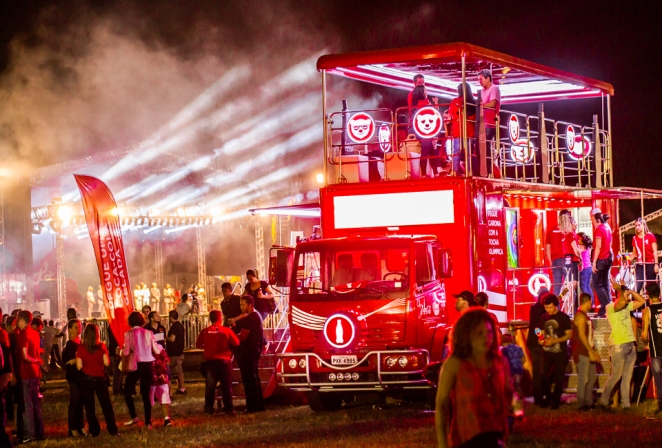
Coca-Cola’s Olympic Torch Relay (above) showed how a global sponsorship could become a living branded ritual rather than a passive badge. PepsiCo’s Mountain Dew DEWmocracy handed fans influence over flavour and marketing, turning crowdsourcing into participation rather than tokenism.
Diageo’s Smirnoff Nightlife Exchange Project reframed Facebook not as a media channel but as a way of swapping nightlife cultures across countries. Bud Light’s Whatever, USA remains one of the category’s great acts of committed absurdity: a city takeover so deeply built around a brand platform that it’s still referenced as a benchmark. These weren’t merely events with logos on them. They were systems of belonging.
That instinct towards inhabitable brand worlds eventually became more cinematic. HBO’s activation for Westworld at South by Southwest didn’t merely nod to the show’s aesthetic; it recreated a vast version of Sweetwater with actors, scripted interactions and personalised visitor journeys so that no two guests had the same narrative path. That isn’t a themed pop-up. That’s worldbuilding with obsessive intent.
Refinery29’s 29Rooms achieved something related by very different means. When it debuted during New York Fashion Week in 2015, it made creativity feel open, social and physically explorable at a moment when much of fashion’s cultural capital still depended on exclusion. Airbnb’s Barbie DreamHouse partnership later showed how a piece of entertainment marketing could become a tangible overnight fantasy, with Ken-hosted stays turning movie hype into a bookable piece of narrative real estate.
If that sounds unusually entertainment-led, it’s because entertainment brands have often been better than most at understanding the first rule of immersive marketing: make the audience feel as though they’ve stepped through a membrane. Netflix’s rooftop playground at Cannes in 2024 drew on Bridgerton, Squid Game, Emily in Paris, Stranger Things and The Gentlemen not as static backdrops but as interactive episodes.
Meta’s Reels Cinema treated vertical video as architecture rather than merely content. Pinterest’s Manifestival turned the platform’s mood-board logic into tattoo parlours, charm bars, colour consultations and creation stations. Hulu’s Seinfeld: The Apartment worked because it understood that fans didn’t want a plaque. They wanted proximity, replication and the pleasure of stepping into a joke they already loved.
The common trait across all of them isn’t tech. It’s translation. They translated digital or narrative identity into physical verbs.
When the product becomes the medium
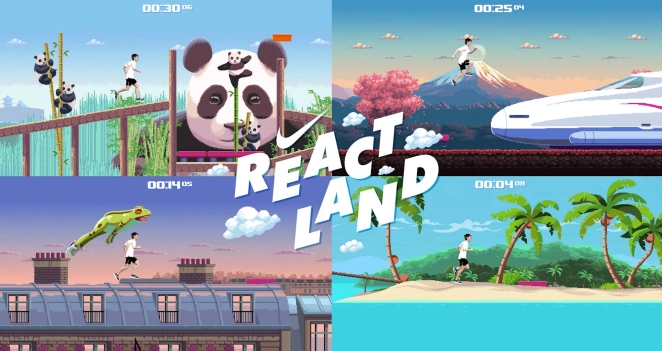
If the previous set of examples turned brands into places, the next group turned products into experiences. That’s often where the smartest experiential advertising campaigns live, because product truth becomes far easier to remember once the audience has physically enacted it.
Nike’s Reactland (above) is still one of the cleanest examples. Instead of asking shoppers to infer what “soft, light and bouncy” might mean from retail signage, it hacked the product trial itself: people created avatars, ran on treadmills through a game world built around the shoe’s qualities, then left with personalised clips to share.
Ford’s drivable escape room did something similarly elegant by turning vehicle technology into a puzzle mechanism rather than a spec sheet. American Express’s hydrointeractive tennis experience at the US Open translated sponsorship into an encounter with ball speed and shared spectacle. The UFC’s live-wired Las Vegas takeover used RFID, wristbands and QR codes to make fandom feel connected across a whole city rather than inside a single venue.
Other great examples came from brands willing to embody their proposition in a slightly stranger form. LinkedIn’s Cannes activation in 2024 distributed NFC-enabled cards and bracelets so that networking was no longer just a conversational aspiration but a tangible behaviour.
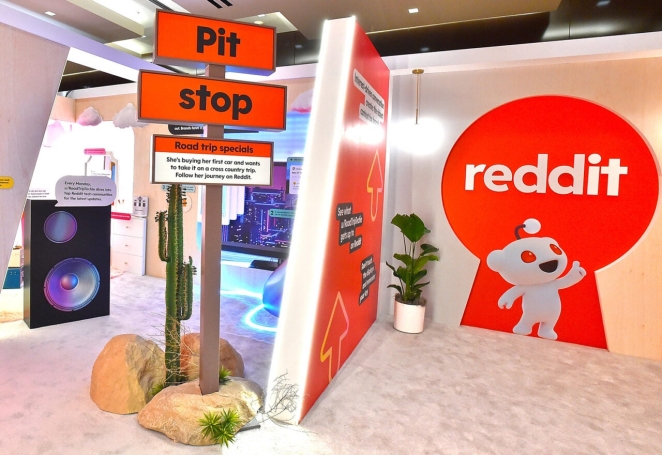
Reddit’s user-journey installation dramatised discovery, consideration and validation with real community reviews and even a mini-golf moment, neatly turning a messy digital path to purchase into a physical one. Glade showed how fragrance could become a multisensory environment rather than a shelf promise, with rooms built around scent and mood. Acura’s biometrics-driven Mood Roads went further still, measuring emotion and changing landscape, colour, music and speed in real time so that each person’s journey felt literally tuned to them.
None of this is random wow-factor. It’s product communication that’s escaped the confines of copy.
Then there are the activations that understand exaggeration better than most strategist decks ever will. Pop-Tarts’ Edible Mascot won because it was gloriously stupid in exactly the right way: a live national-TV stunt in which the mascot Strawberry was lowered into a giant toaster and then eaten by victorious players. It was sampling, broadcast spectacle, meme culture and brand voice all at once.
Target’s live Imagine Dragons commercial during the Grammys similarly turned a television ad into an event that physically involved the crowd. Freightliner’s projection-mapping launch on the Hoover Dam made a truck introduction feel genuinely monumental rather than dutiful. Old Navy’s Twitter vending machines transformed social posting into literal transaction.
The lesson isn’t silliness for the sake of it. It’s that one of the smartest experiential activation ideas is often to take a product or message so seriously that you become playful about how it’s performed.
When mischief, risk and theatre carry the message
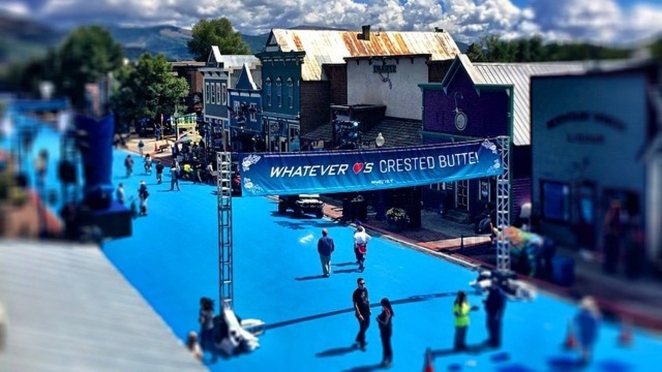
One of the more encouraging developments in recent experiential advertising is that the category has begun rewarding wit again. Too much modern marketing has become so anxious about appearing strategic that it forgets absurdity can be a strategy when it’s perfectly married to the brand. Pop-Tarts won because it was bizarre and unforgettable. Bud Light’s city takeover (above) worked because it committed fully to the joke. Old Navy’s vending machine gimmick stuck because it made social currency tangible.
Great experiential marketing often needs at least a trace of mischief, because mischief is one of the clearest signs that a brand understands human attention rather than merely budget allocation.
As Remi Danino, Co-Founder of Dissidence Productions, puts it:
“While not a traditional activation, I found the way Rémi Babinet promoted his book at the 2025 Cannes Lions to be a brilliant subversion of the industry. The book was titled “No Ads Please” (pasdepublicitemerci.com/en) – a nod to a sticker commonly found on the mailboxes of many homes in France. The marketing was genius: he drove a tiny car all around Cannes branded only with that sentence. It was a bold, humorous way to talk about advertising by taking the exact opposite approach.
I also have to mention the Toblerone, which was incredibly ballsy. LePub staged a fake tantrum at an airport with a child screaming for a Toblerone. It felt so organic and real that people didn’t realize it was a commercial at first. It was a massive risk that ultimately won a Lion for its smart, visceral execution.
When it comes to experiential, Pressiat’s 2025 Paris Fashion Week launch was a special project for us at Dissidence. We shot the film while it was projected onto the runway and broadcast to an online audience. This is a great example of how brand identity can be transformed into a provocative physical experience by blending high-concept storytelling with immersive, almost theatrical activations.”
Danino’s three examples are useful because together they show how broad the best experiential advertising activations can be while still obeying the same logic. Babinet’s No Ads Please stunt worked as anti-advertising theatre. Tantrum Girl worked because it exploited a volatile threshold space and staged a scene so recognisable that bystanders effectively did the distribution.
Pressiat’s Requiem moved in a more fashion-film direction, but the principle was identical: the brand wasn’t merely shown at Paris Fashion Week, it was enacted across runway, projection and broadcast at the same time.
These are different genres, but each converts brand identity into behaviour in the real world.
That’s also why the mischievous examples linger. Bud Light transformed Crested Butte into Whatever, USA because its platform demanded whole-environment commitment. Pop-Tarts lowered a mascot into a toaster because the brand’s comic excess could sustain it. Target’s live commercial made a crowd into the ad. Even apparently lower-stakes ideas like Old Navy’s vending machines or Reddit’s miniature decision journey worked because they physicalised what the brand wanted people to do instead of merely asking them to do it.
The best live brand activations almost always understand that the audience shouldn’t have to decode the strategy afterwards. The strategy should be embedded in the act itself.
The lesson for every experiential marketing campaign
So, what should brands, experiential agencies and producers take from the best experiential advertising activations of the last two decades?
- Start with audience truth, not event vanity. If an activation could be transplanted unchanged from a gaming festival to a luxury launch to a trade show, it probably lacks enough specificity to matter.
- Design for participation rather than observation. The person who runs the course, swaps the nightlife ritual, steps into Sweetwater, personalises the tote, hits the mini-golf ball or opens the safe is writing themselves into the memory.
- Technology should serve the story, not become the substitute for one.
- Build for the Peak-End Rule. Give people a moment worth retelling and an ending that seals it.
- Plan the afterlife. Great experiential campaigns extend through press, creator content, follow-up, social fragments, search behaviour and sales action.
That final point matters because measurement is usually where bad experiential marketing hides behind vague adjectives. The good stuff can be felt, yes, but it can also be tracked. Track recall, participation, search lift, conversation, site visits, affinity and actual commercial movement. The best experiential marketing campaigns aren’t opposed to measurement. They just understand that the real metrics begin once the lights go down and the audience decides whether the brand deserves to live in memory.
Why the best experiential brand activations turn heads
In the end, the best experiential brand activations don’t win because they’re louder, shinier or more expensive. They win because they give people something most advertising doesn’t: a reason to care while it’s happening. Utility, theatre, participation, provocation, product truth, social currency — the mechanics can change. The principle doesn’t.
Make the brand tangible. Make the moment worth retelling. Make people actually want to be there.
In an era of skippable everything, that’s about as powerful as advertising gets.