

For more than two decades, Household has been redefining what brand experience means by blending strategy, creativity, retail design, and human behaviour. Founded in Shoreditch in 2004, the independent, female-founded agency has partnered with global brands including Amazon, Netflix, Charlotte Tilbury, Soho House, Warner Bros. Discovery, and Boots to create immersive brand experiences that connect with people on a deeper level.
In this interview, CEO and co-founder Julie Oxberry shares how Household has grown into one of the UK's leading experience design agencies, discusses the role of AI in the creative process, explains why behaviour-led design delivers stronger brand outcomes, and offers valuable insights on agency growth, innovation, culture, and the future of experience-led branding.
How was your company born and where are you based?
 We started in 2004, in the iconic Biscuit Building in Shoreditch. We called ourselves Household because we wanted to be the kind of place we were designing for others, somewhere people come together, feel welcomed, and where relationships matter.
That instinct has never really changed. People and experience have been at the heart of everything we do from day one, and what began as a founding ethos has become the core of the transformation work we do with clients; it's what they're reaching for too. A female-founded team, we're now in our third decade, still based in Shoreditch (come and find us in Hoxton Square) with an office in New York.
What was the biggest challenge to the growth of your company?
The gap between ambition and infrastructure. From early on we were winning clients significantly bigger than us, global brands, complex briefs, high expectations and building the capability to deliver them in real time. That entrepreneurial stretch produces some of the best work, because everyone is fully committed and operating without a safety net. But it creates its own pressures around resourcing, process, and financial headroom.
Being independent is a genuine advantage; speed of decision, directness with clients, no holding-company politics. But it also means every investment comes from within. No group budget to draw on when you need to hire ahead of the work or absorb the cost of a pitch that doesn’t land. Getting that balance right, between reinvesting in the business and maintaining the stability to keep operating, has been a constant thread throughout our growth.
Which was the first huge success that you can remember?
In 2005 we rebranded a scrappy online fashion retailer that was about to become asos.com! Winning against 10 pure marketing agencies for a very ambitious client felt exciting, and we helped shape what it became.
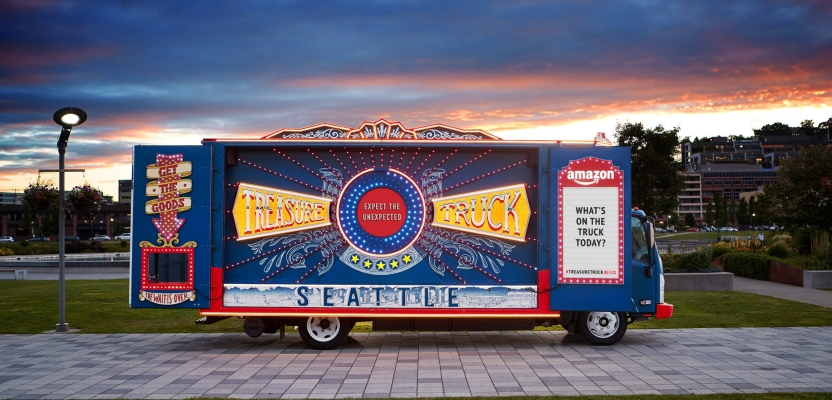
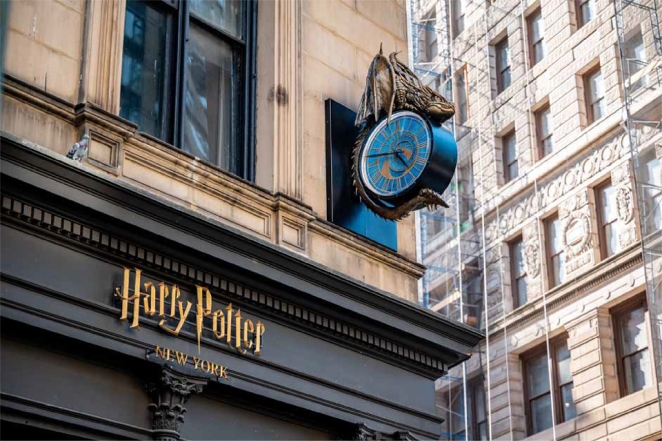
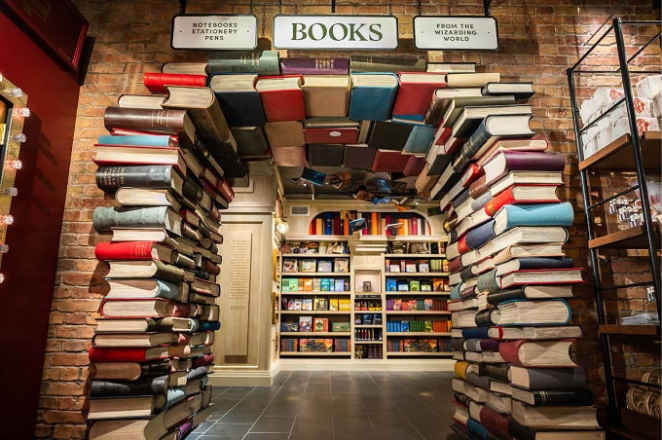
That entrepreneurial instinct has stayed with us. Since then: launching Soho House's first London hotel and the Cowshed at Shoreditch House in 2009; designing Charlotte Tilbury Beauty's first retail concept in Selfridges in 2013; winning the global pitch that year for Amazon's first US retail experience, later earning us an Innovation Patent for The Treasure Truck; and creating the first official Harry Potter flagship in New York with Warner Bros. Discovery in 2021. Today we work with Netflix, Warner Bros., Boots, The Body Shop, Saks, the Premier League and others.
Looking back, it's about good timing and good work, being in the right room at the right moment and making the most of it.
What’s the biggest opportunity for you and your company in the next year?
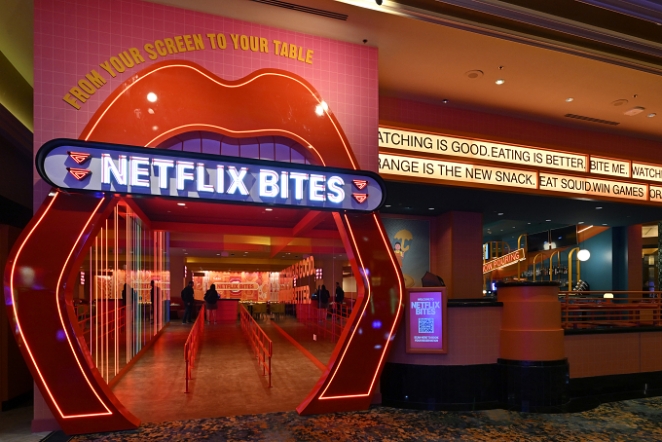 The convergence of physical and cultural experience plays directly to what we do. Brands now need to justify physical space in ways they never had to, not through retail design alone, but by creating worlds people want to enter, return to, and belong to. Our work sits at that intersection of brand, space, story, and behaviour.
The other opportunity is AI as a creative collaborator, not replacing the team, but expanding what's possible, accelerating research, opening up territories we wouldn't otherwise have time to explore. We're building that into how we work as a genuine shift in process, not a bolt-on. Agencies that get this right in the next 12 to 18 months will have a meaningful advantage.
Can you explain your team’s creative process? What makes it unique?
We start with behaviour, not aesthetics. The first question isn't "what should this look like?" but "what do we want people to feel, do, and remember?" and that shift changes everything downstream. Our process moves from cultural observation to strategic insight to experience principle to physical and visual expression, always searching for the one organising idea that can hold a brand world together across every touchpoint, from flagship store to staff interaction to digital screen.
What makes this genuinely different for our core offer is that strategists, designers, and experience directors work in the same room from the start, no handoff from strategy to creative. The thinking stays grounded, and the design stays purposeful.
How does your team remain inspired and motivated?
We spend a lot of time outside the industry. We look at theatre, architecture, food culture, technology, music, sport, anywhere that human experience is being shaped with intention. Some of our best thinking has come from a performance a movement, or a piece of public infrastructure, not from another agency's case study.
We also try to give the team genuine creative ownership. People stay motivated when they feel that the work is theirs, that their instinct is trusted, not just executed. That means accepting that the best idea in the room doesn't always come from the most senior person and building a culture where that's genuinely true rather than just aspirational.
And honestly? Working with brands that matter helps. When the work finds its way into the world and does something real like launch a brand, transform a space, change how people shop or feel, that's a powerful motivator in itself.
How has COVID-19 affected your company?
 We were fortunate in the immediate term as we happened to have a substantial branding project running when the pandemic hit, and the UK furlough scheme meant we could protect the team through the most uncertain period. In that sense, COVID revealed the resilience that comes from a strong culture and a team that genuinely wanted to stay together.
The harder lessons came later, in the structural and economic turbulence that followed; shifting client behaviours, changing ways of working, a more volatile new business environment. That period accelerated a number of decisions we might otherwise have taken more slowly: how we package our services, how we think about different markets, how we build a business that can absorb shocks without compromising the work. We came through it more deliberate and more grounded than we went in, and we learned a lot.
Which agencies do you gain inspiration from? Do you have any heroes in the industry?
Less about agencies than an individual type, really. I'm drawn to people whose authority comes from living the change they talk about, not just describing it: Scott Galloway on the future of business and tech, Jim Lawless on courage and personal transformation, Susie Wolff on inclusion in motorsport, Afua Hirsch on identity and culture in Britain, Karim Rashid on the future of design, Alexis Hope on creativity and work, Lindsay Angelo on consumer behaviour. Each translates a big shift into something you can actually act on, which is close to how we think about behaviour as well as aesthetics at Household.
Then there's a parallel set of heroes where aesthetic philosophy becomes its own intellectual position: Marian Bantjes, Stefan Sagmeister, Jessica Hische, Paula Scher, Es Devlin. Es Devlin in particular sits alongside Bantjes for me: both treat intricate, almost handmade detail as a form of storytelling, which is exactly the ‘feel, do, remember, join’ territory we work in.
What is one tip that you would give to other agencies looking to grow?
Know what you're for. The agencies that grow well tend to be clear about what they do and who they do it for, and are willing to say no to work that falls outside that. Trying to be everything to everyone is the surest way to become invisible. And treat every client relationship as a long game. Some of our most significant opportunities have come from people we worked with years earlier, in a different role, at a different company. That kind of trust compounds over time in a way that no amount of new business activity can replicate.
How do you go about finding new clients/business? (Pitching, work with retainers, etc.)
 Reputation and relationships remain the most reliable source. The majority of our best work has come through people who have worked with us before, or who know someone who has. That's the result of 22 years of doing the work seriously; the network it creates is cumulative.
Beyond that, we invest in visibility: thought leadership, industry presence, selective award entries where the work genuinely merits it. We pitch for work we believe in, and we're increasingly focused on pitching at a level of strategic specificity, bringing a point of view to the brief, not just a capability statement.
We've also developed fixed-fee entry products that lower the barrier for clients who want to experience how we think before committing to a larger engagement. That's a useful tool for building new relationships at the right pace.
What’s your one big hope for the future of the industry?
That we rediscover the courage to make things that are genuinely for people rather than primarily for awards, case studies, or trend cycles.
The best work we've ever done, and the best work I've seen from others, comes from a deep commitment to the experience of the person who will actually inhabit it. A customer. A guest. A patient. A citizen. When that person is truly at the centre, the work tends to be more creative, more effective, and more lasting.
I hope AI accelerates that rather than distracts from it. The tools are extraordinary. The question is whether we use them to go faster toward the wrong thing, or deeper toward the right one.
Can you share a defining moment in your company's journey that shaped its identity or direction?
When we won the global pitch to create Amazon's first retail experience in the US, it was already a significant moment, but the work evolved into something none of us had anticipated: The Treasure Truck was a roaming retail vehicle that delivered surprise and delight to neighbourhoods, driven by technology, built around human connection. It earned Household a joint Innovation patent with Amazon. It told us something important: that our value isn't just in making things beautiful, but in thinking through what an experience could be before the category has a name for it. That appetite for working at the edge of what's defined, bringing strategic and creative thinking to problems that haven't been solved yet became a conscious part of how we describe ourselves and what we look for in the work we take on.
How do you foster a culture of innovation and experimentation within your team?
 By protecting space for thinking that isn't billable. That sounds simple and is actually quite hard in a project-based business, but it's the only way to stay ahead of what clients will need next.
We run internal sessions where the brief is deliberately open, for example a cultural question, an emerging technology, a category we're curious about, with no client attached and no output required. The point is that innovation isn't a separate activity from the work; it's what happens when you give people time and permission to think without the pressure of an immediate answer.
We also try to hire people who are genuinely curious about things beyond their discipline as those collisions of reference tend to produce the most interesting thinking. They share their knowledge and passions with colleagues on our ‘InspoThread’ and at monthly get-togethers.
What measures do you take to ensure diversity and inclusion are prioritised within your company?
As a B-Corp this question is especially important. We look at who we're hiring, who we're developing, and who has a genuine voice in how the work is shaped, not just who is present in the room. We're a London agency with a global client base, and we take seriously the responsibility that comes with designing experiences for people whose lives and references may be very different from our own. It requires active listening, and ongoing effort. We're better than we were and not yet where we want to be.
Can you describe a project that challenged your team creatively and how you overcame any obstacles?
On creative challenge: designing Charlotte Tilbury's first retail concept 2013 tested us in the best possible way. Charlotte had an extraordinarily clear and powerful sense of her own aesthetic, so everything had to be right. But the brief was genuinely new: a beauty brand built around the idea that every woman deserves to feel like the most glamorous version of herself, translated into a physical space that had never existed before. The obstacle was the scale of the ambition relative to the constraints of a department store footprint. We resolved it by going back to the essential experience, the moment a woman sits down, looks in the mirror, and decides who she wants to be today. Then we designed everything outward from that single point. The result helped launch a brand that is now a global superstar.
How do you balance maintaining your company's unique creative voice while meeting the diverse needs of clients?
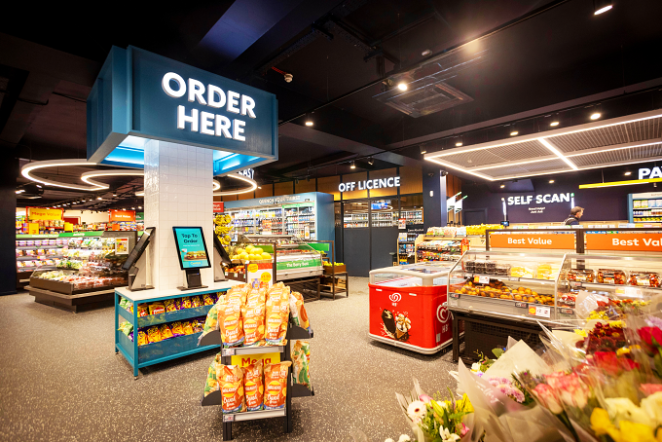
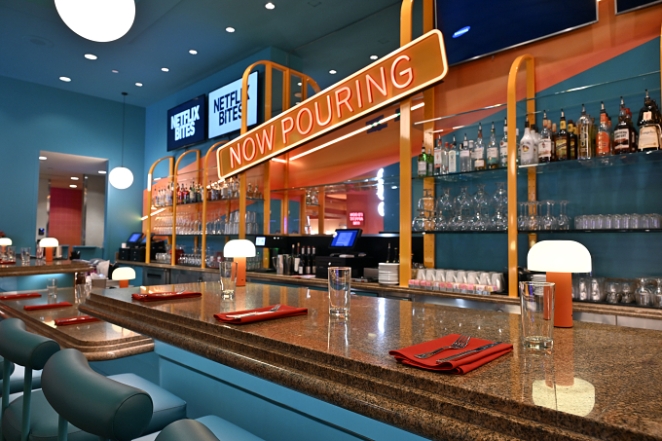 Our creative voice isn't really an aesthetic, it's an approach. It's the commitment to starting with behaviour and experience rather than style, to finding the organising idea before reaching for the visual language, to asking what the work needs to do before deciding what it should look like. This approach is consistent across everything we do, even when the output looks entirely different from one project to the next. It’s actually what makes it possible to work across categories (beauty, entertainment, retail, grocery, sport) without losing coherence. Clients get a distinctive way of seeing their problem, not a house style imposed on it.
What strategies do you employ to adapt to changes and trends in the industry while staying true to your company's values?
We try to distinguish between trends and shifts. A trend is something that the industry is doing right now. A shift is something that is changing the underlying conditions of how people live, shop, gather, or feel. We care much more about the latter.
That means investing time in understanding what's actually changing in culture, technology, and behaviour, not to chase it, but to know which of those changes are relevant to the work we do and the clients we serve.
In what ways do you invest in the professional development and growth of your team members?
Beyond project work, we invest in cultural exposure: we encourage the team to go to things, exhibitions, performances, conferences, talks, and we create space to bring that back into the agency. We are deliberate about mentoring and about making visible the thinking behind strategic and creative decisions, so team members can see not just what was decided but why.
We're a 25-person agency, which means career development is less about formal programmes and more about genuine attention to where each person is and what they need next. That personal quality of investment, knowing someone's ambitions and helping them move toward them, is something we take seriously.
We work with businesses like You Can Now (YCN) who help develop modern, emotionally intelligent leadership at all levels of an organisation, using their unique, performance-enhancing blend of human technology, practical tools and live experiences.
How do you approach sustainability and ethical practices within your company's operations and projects?
 Honestly, and with an awareness that there is always more to do. On the operational side, we're thoughtful about such as material choices, supply chains; On the ethical side, the more interesting questions for us sit around technology and experience. As AI becomes more embedded in the spaces and brands we design, questions about transparency, data, and human agency become design questions as well as policy ones. We believe that experience design has a responsibility to the people who inhabit it, and this shapes how we think about interactive and data-driven elements of the work.
Can you discuss a time when your company had to pivot or innovate in response to unforeseen challenges, and what lessons did you learn from that experience?
There was a period where two significant clients paused major projects simultaneously; (indefinitely, with little warning) while we were also absorbing the broader economic impact of Brexit and other global economic issues. The combination was serious enough that we had to make redundancies, which is never something you do lightly. The broad lesson was that resilience isn't the absence of difficulty, it's the speed and clarity with which you respond to it.
Do you have any websites, books or resources that you would recommend?
Books: ‘The Brand Gap’ and ‘Zag’ by Marty Neumeier for brand strategy thinking; ‘Designing Brand Identity’ by Alina Wheeler as a practical reference; ‘The Image of the City’ by Kevin Lynch for spatial/wayfinding thinking that underpins experience design; Shannon Vallor's ‘The AI Mirror’ for the tech/culture intersection; and Jim Lawless's ‘Taming Tigers’ for the change/courage angle.
Websites and platforms: It's Nice That and Creative Review for industry coverage and emerging talent; Dezeen for spatial and architectural experience work; The Dieline for packaging and retail; Contagious for strategy and culture trend analysis; and Frame magazine for retail and hospitality interiors specifically.
News, business and culture: The Financial Times, Forbes, The Guardian.
Worth following: Stripe Partners and The Future Laboratory for cultural/consumer trend forecasting, and Eye on Design (AIGA) for more critical/cultural design writing rather than just portfolio showcases.