


Creative industries are constantly evolving, with new technologies reshaping how ideas are developed, produced and brought to life. From traditional editing and motion graphics to 3D, visual effects and generative AI, creative professionals are increasingly expected to understand not only their craft but also the technology and processes behind it. For Andriy Kostyuk, Creative Producer and Creative Technologist based in Ukraine, this evolution has been a defining part of his career. His journey from telecommunications engineering into visual production reflects a continuous curiosity for new disciplines and a willingness to explore the possibilities of emerging technologies.
In this Creativepool interview, Andriy shares how his multidisciplinary background has shaped his creative process, why understanding the fundamentals matters more than mastering individual software tools, and how generative AI is changing the possibilities of independent production. He also discusses his experience creating Breaking Through, a narrative music video produced using locally run generative AI models, and considers what the future holds for creative professionals as technology becomes increasingly integrated into the production process.
How did you first get into the industry?
 I first became interested in editing while I was studying Telecommunications Engineering at university. Outside my formal studies, I was teaching myself video editing. This was before online tutorials became as accessible as they are today, so a lot of that learning came from books. I was interested not only in how to use the software, but in editing theory, directing and why a sequence actually works.
During my second year at university, I got my first job at a television station as a broadcast engineer. Editing was not part of my role, but I kept learning it in parallel. The editors there knew I was interested, and when deadlines became tight they gradually started giving me material to cut. Small tasks became complete news pieces and programme segments, and eventually my next television job was already as a full-time editor.
That pattern continued through much of my career. While editing, I became interested in computer graphics and started learning that. It eventually led to my next television role, this time working primarily in motion graphics and 2D/3D animation. From there I became increasingly interested in the point where graphics and live-action meet - compositing, camera tracking and integrating CG into filmed material - which eventually took me into post-production work on commercials, films and music videos.
Over roughly the next decade, I worked across several television channels as well as production and post-production studios, gradually moving between editing, motion graphics, 3D, compositing and visual effects. Later I became Head of CG at a newly launched television channel, before moving into freelance and independent production.
Looking back, most of the major transitions in my career happened in a similar way: I became curious about the next discipline, started learning it before it was part of my job, and eventually it became part of what I did professionally. Over time, that made me increasingly multidisciplinary and comfortable taking projects from the initial idea through production, post-production and final delivery.
Where are you based now and who do you work for?
I’m based in Ukraine and work independently as a Creative Producer and Creative Technologist. My work is project-based, collaborating mostly with international clients, studios and creative teams across visual production, creative technology and generative AI.
I enjoy working this way because every project can require a slightly different role - from developing the initial idea and visual direction to production, post-production and building new AI-driven workflows.
What is your personal background and what role did it play in your career?
My background is a combination of technical education and self-directed creative learning.
I studied Telecommunications Engineering, and that technical foundation has stayed with me throughout my career. It taught me to think in terms of systems, understand how different components interact and approach problems methodically rather than treating technology as a black box.
The creative side developed quite differently. Most of what I learned in editing, motion graphics, 3D, compositing and later generative AI came through independent study, experimentation and professional practice.
I think the combination of those two backgrounds has shaped the way I work more than either one on its own. I am interested in the creative result, but I also naturally think about the system behind it - how the different stages connect, where problems might appear and how the workflow itself can be improved.
That way of thinking has become especially useful with generative AI and creative technology, where creative decisions and technical understanding are increasingly difficult to separate.
If you weren’t in your current industry, what would you be doing?
 I suspect I would probably find my way back into it somehow.
What has kept me interested for so long is that this industry sits at the intersection of creativity, technology and problem-solving. The tools keep changing, which means there is always something new to learn, explore and turn into something visual.
So even if I had started somewhere completely different, I think I would eventually have gravitated back toward some form of visual production or creative technology.
Can you explain your creative process? What makes it unique?
My process changes depending on the project because I do not think there is one workflow that fits every creative problem.
I normally start with the core idea and with what the finished piece needs to communicate. From there I think about visual language, pacing, composition, movement and the technical approach that can support the idea most effectively.
What probably shapes my process most is that I tend to think about the entire production pipeline rather than one stage in isolation. Because I have worked across editing, motion graphics, 3D, compositing, post-production and now generative AI, I naturally think several steps ahead. A decision that looks good at one stage may create problems later, so I try to anticipate those dependencies early.
That does not mean trying to do everything myself. A specialist can always go much deeper in a particular discipline. But understanding how those disciplines connect makes it easier to choose the right approach, communicate across different parts of a project and design a workflow that supports the final result rather than fighting against it.
Generative AI has added another layer to that process. It allows me to explore ideas and iterate much faster, but I still approach it with the same production mindset - the technology should expand what is possible, not become the idea by itself.
How would you describe your style?
I am not sure I would describe myself as having one fixed visual style, and I actually see that as a strength.
Much of my career has involved commercial and freelance work, where the visual language needs to serve the project rather than the artist. Different ideas require different approaches, so I am more interested in finding the right visual language for a particular piece than in forcing every project into the same aesthetic.
What probably stays consistent is the way I approach the work. I pay a lot of attention to composition, timing, movement, physical credibility, continuity and how different elements work together as a whole.
I enjoy technology and experimentation, but I do not want the technique itself to become the entire idea. For me, style should grow out of the concept.
Which individuals do you gain inspiration from? Do you have any heroes in the industry?
 I find it difficult to name one particular person because there are so many artists, directors and studios producing exceptional work.
These days, I tend to be inspired more by individual projects than by following one particular creative hero. I might see a piece of cinematography, design, visual effects or generative work that catches my attention and become interested in how it was made, why it works and what I can learn from it.
Earlier in my career, one person who genuinely inspired me was Jama Jurabaev. His work stood out because it crossed different disciplines and combined strong technical ability with a very distinctive visual imagination.
But overall, inspiration for me comes from many different people, projects and fields rather than from one person I try to emulate.
What tips would you give to aspiring creatives looking for work?
Learn the fundamentals, not only the software.
Tools change incredibly quickly, and today that is more obvious than ever. What lasts much longer is an understanding of composition, editing, timing, storytelling, light, movement and how images communicate.
I would also encourage people not to define themselves too narrowly too early. A large part of my own career came from learning something adjacent to what I was officially employed to do. I was an engineer learning editing, an editor learning graphics, and a motion designer becoming increasingly interested in compositing and VFX.
Those additional skills often created the opportunity for the next stage of my career.
And finally, make things. Personal projects and experiments are valuable because they give you a place to learn, take risks and build the kind of work you actually want to be hired for, rather than waiting for the perfect client brief to appear.
What tips would you give to other professionals to get more clients?
I do not think there is a single formula for getting more clients, especially in a creative industry where the market and the way people hire are constantly changing.
What I have found more valuable is focusing on becoming someone clients want to work with again.
For me, that starts with communication. I try to understand not only what a client is asking for, but what they are actually trying to achieve. I prefer to keep them involved at the important stages of the process, so we can make sure we are still moving in the same direction rather than disappearing with the brief and returning only with a finished result.
Reliability matters just as much as the creative work. Delivering on time, being clear about what is possible, responding when problems appear and making the collaboration itself easy and professional all help build trust.
If a client feels understood, knows what is happening and trusts that you will do everything possible to deliver what was agreed, there is a much better chance that one project becomes an ongoing working relationship.
So my advice would be to focus not only on getting the next client, but also on giving the clients you already have a reason to come back.
Can you share a memorable experience from your career journey that shaped your approach to creativity?
 One experience that stayed with me happened very early in my career.
I was working as a broadcast engineer at a television station, so editing was not officially part of my job. But I had been learning it independently, and the editors around me knew that. When deadlines became tight and they needed extra help, they started giving me material to cut. At first these were small tasks, but eventually I was trusted with complete pieces.
What stayed with me was not only that it opened the door to a different direction in my career. It also shaped the way I think about creative work. I learned very early not to treat a job title as a boundary around what I was allowed to explore.
That pattern continued throughout my career. Whenever I became curious about a neighbouring discipline, I would start learning it, experimenting with it and looking for ways to apply it in real work. Over time, that approach took me from engineering into editing, motion graphics, 3D, compositing, visual effects and eventually creative technology and generative AI.
I think that experience taught me that creativity often grows from curiosity and from being willing to step outside the role you already know. You do not always need to wait for permission or for the perfect opportunity to start developing the next part of your work.
What kind of tools/kit/software could you not do without?
If you had asked me this a few years ago, I would probably have answered SideFX Houdini.
Over the years I worked with 3ds Max, Maya, Cinema 4D, Blender and many other tools, but Houdini became my main 3D environment for roughly a decade. What I liked most was its procedural way of thinking. Instead of building a fixed result, you build a system that can be adjusted, reused and changed without starting again from scratch.
That way of working suited me because it made experimentation and iteration much more flexible, especially in client work where creative direction often evolves during the process.
Today, though, my answer would probably be AI - not one particular model or application, but the wider ecosystem of tools that now spans research, ideation, image generation, video, music, coding and increasingly interaction with traditional creative software.
What makes it difficult to imagine working without is not just the speed. It is the ability to move between different parts of the creative process much more fluidly, explore more ideas and build things that would previously have required far more time, infrastructure or people.
I still rely heavily on the knowledge I gained from traditional production tools, but AI has become the layer that increasingly connects many of those disciplines together.
What’s your secret to staying inspired and motivated?
For me, inspiration usually comes from learning something new and then finding a way to turn it into an actual project.
New tools and technologies definitely help because they constantly open up unfamiliar territory to explore. But simply testing a tool is rarely enough to keep me interested for long. What really motivates me is when I can take that experimentation and use it to solve a creative problem, develop an idea or make something that did not exist before.
I also think I stay motivated because there is always another layer to understand. Even after working in visual production for many years, I still regularly encounter things that make me feel like a beginner again - and I actually enjoy that.
So if there is a secret, it is probably curiosity combined with making. Learning gives me the energy, but turning that knowledge into something tangible is what keeps me engaged.
What’s the work achievement you’re most proud of?
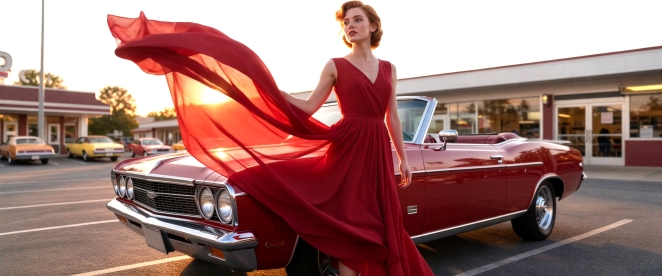
 One project I keep coming back to is a narrative music video called Breaking Through.
I would not call it the most technically perfect piece I have ever made. In fact, generative AI is developing so quickly that if I rebuilt the same project today, even only a few months later, I could probably produce it faster and achieve a noticeably better result. What makes the project important to me is not technical perfection. It is that it changed my understanding of what a single creator can realistically produce.
I set myself a fairly specific challenge: create an entire narrative music video locally, on one workstation, using generative models running on my own hardware. But I did not want it to become simply a sequence of attractive AI shots. I wanted it to feel like a complete production with a protagonist, a visual world, a story and an emotional progression.
The story itself was deliberately simple and familiar - a young woman arrives with the ambition of becoming a performer, struggles with failure and stage fright, and eventually finds the confidence to step onto the stage. The challenge was not inventing the most original plot. It was seeing whether I could actually tell that story visually, without dialogue, while keeping the character, environments, emotions, music and pacing coherent from beginning to end.
That meant approaching the project much more like a traditional production. I had to effectively cast the protagonist, establish her appearance, design the visual world, plan the shots, think about continuity and decide how each scene contributed to the larger sequence. I also wanted her to feel like a character rather than simply a consistent face, so a lot of effort went into trying to generate believable expressions and emotional moments.
At the time, that was technically difficult. I trained a custom LoRA to maintain the protagonist's identity across different scenes and lighting conditions, and many shots had to be regenerated repeatedly. Sometimes a model would get the character or emotion exactly right but introduce a problem somewhere else in the frame, making the whole result unusable. Other ideas had to be changed completely because the models could not execute them reliably.
Even the setting evolved because of those limitations. The original concept was much more strongly inspired by 1950s America and classic Hollywood imagery, but generating historically convincing details consistently proved difficult, so the visual period gradually shifted toward a broader retro aesthetic that the models could handle more reliably.
What I enjoyed most, though, was being able to orchestrate the entire process myself. The lyrics, music, character development, images, video, editing and final visual direction could all become parts of one connected workflow. Traditionally, a project like this involves actors, locations, a production crew and specialists across many different departments. Here, one person could guide the whole thing from the initial idea to the final edit.
The technology still imposed plenty of compromises, and there are things in the finished video I would approach differently now. But that is also what makes the project interesting to me. The tools improve so quickly that many problems I had to solve manually at the time are already becoming easier, which means more attention can gradually move away from fighting technical limitations and back toward directing, storytelling and creative decisions.
Breaking Through was the project where generative AI stopped feeling to me like a collection of tools for producing individual images or clips. It started to feel like a genuine production workflow - one that allows a single creator to coordinate disciplines that, not long ago, would have required a much larger team. That shift in what feels possible is probably the achievement I am most proud of.
As someone with experience in the industry, what trends do you foresee shaping the future of creativity?
Generative AI will obviously be one of the biggest forces shaping creative work, but I think the more important change is that it will increasingly become part of the entire production process rather than existing as a separate generation tool.
We are already moving toward systems that can contribute to research, ideation, pre-production, image creation, video, music, editing, coding and even interaction with traditional creative applications. I think those boundaries will continue to blur.
As production becomes faster and more accessible, the role of the creative person will also change. Being able to generate an image, a video or a piece of music will become less unusual on its own. The more important skill will be deciding what is worth making, what fits the idea, what should be rejected and how all of those different elements can be shaped into something coherent.
I also think creatives will become increasingly multidisciplinary. Not necessarily because everyone needs to master every discipline, but because understanding how different parts of the process connect will become much more valuable when the tools allow one person to move between them so quickly.
For me, that is probably the most interesting shift. Technology will continue to reduce many of the technical barriers to production, but it will not remove the need for taste, judgement, storytelling and direction. If anything, those qualities may become more important as the number of possible outputs grows.
What do you think sets apart truly exceptional creatives from the rest of the pack?
Curiosity is a big part of it.
The strongest creatives I have worked with or followed rarely stop at knowing how to execute one particular technique. They want to understand why something works, what could make it better and what they can learn from disciplines outside their own.
I also think exceptional creatives develop strong judgement. Technical skill gives you options, but judgement is what helps you recognise which option actually serves the idea and which one is simply impressive on a technical level.
Another important quality is the willingness to keep learning. Creative industries change constantly, and the tools I started with are very different from the ones I use today. The people who continue to grow are usually the ones who remain open to new approaches without throwing away the fundamentals they have already learned.
And perhaps most importantly, they keep making things. Curiosity and knowledge matter, but eventually you have to turn them into work, make decisions, fail, adjust and try again. That process is where a lot of creative judgement is actually built.
How do you think technology has influenced the creative industries and how have you adapted to these changes?
 Technology has shaped almost every stage of my career, so I have experienced several major shifts in creative production firsthand.
One of the biggest was simply the evolution of the internet. When I first started learning editing, even getting access to material to practise with could be difficult. Internet connections were slow enough that downloading video was often not realistic, online tutorials were limited and there was nothing close to the amount of footage, references and educational material available today.
At one point I bought a video capture card and recorded television material simply so I would have something to edit. I would recut it into promos or trailer-like sequences to understand pacing, structure and how different edits could completely change the way the same material felt.
Today, someone can decide they want to learn a creative discipline and immediately have access to tutorials, breakdowns, reference material and the work of artists from around the world. The internet also changed who can be seen. A talented artist no longer needs to be physically close to a major studio or creative centre for people to discover their work. Technology changed not only the tools we use, but access to knowledge, audiences and opportunities.
At the same time, I have watched the production tools themselves evolve through increasingly powerful editing systems, motion graphics, 3D, digital compositing, procedural tools such as Houdini and now generative AI.
My approach to those changes has always been fairly simple: when a technology meaningfully changes what is possible, I try to understand it and work out where it can genuinely improve the creative process.
I also do not think adapting means abandoning everything that came before. Each new layer tends to build on the previous ones. My experience with editing still affects how I think about timing and storytelling. 3D and compositing influence how I judge space, light and physical credibility. Procedural tools taught me to think in systems. All of that still shapes the way I work with AI today.
Generative AI feels like another major shift because it is changing not just one particular tool, but many parts of the production process at once. It dramatically increases the speed and scale at which ideas can be explored, while also making capabilities that once required specialised teams or infrastructure accessible to far more people.
For me, adapting has always meant the same thing: understanding what a new technology makes possible, learning how to use it without losing the knowledge that came before, and being ready for the next shift when it arrives.
What is the one thing that you would change about the industry?
I would probably change the growing tendency to treat speed and low cost as the main measures of efficiency in creative work.
There is nothing wrong with producing things faster. Better tools should make production more efficient. The problem starts when faster production creates the assumption that good creative work should also require less thought, less iteration and almost no room for experimentation.
A strong result still depends on judgement, direction, problem-solving and many decisions that are largely invisible in the final piece. AI makes this tension even more obvious. It can accelerate parts of the process dramatically, but generating something quickly is not the same as arriving at the right result.
At the same time, easier production means we are surrounded by more content than ever. That makes the ability to create something with a clear purpose, point of view and visual identity increasingly important.
So if I could change one thing, I would like the industry to value the thinking behind the work as much as the speed at which it can be produced.
Any websites, books or resources you would recommend?
I would be reluctant to recommend one particular website, book or resource because the best source depends heavily on what you are trying to learn, especially in creative technology where things change so quickly.
I tend to combine several types of resources. Official documentation is useful for understanding how a tool is supposed to work, tutorials can help with specific techniques, and community discussions are often where you discover practical solutions, limitations and workflows that are not documented anywhere else.
I also learn a lot from project breakdowns and from following people who are actively working in the field. Seeing how someone approaches a real creative or technical problem can often be more useful than a perfectly structured tutorial.
But the most important part for me is still experimentation. I usually understand something properly only after I have tried it myself, broken it, changed it and found out where its limits are.
So rather than relying on one source, I would recommend building a habit of continuous learning, comparing information from different places and then testing it in your own work.
Andriy Kostyuk November 5th, in the morning
Really enjoyed being part of this. Thanks to the Creativepool team for putting it together.