



There once was a time when “doing it in-house” was shorthand for “we can’t be arsed” or “we’d rather spend the money elsewhere,” but in recent years, more brands than ever have been building their own in-house creative agencies.
It’s a practice promising faster turnarounds, tighter brand control, and immense cost savings, so you can certainly see the appeal. From Fortune 500 companies to startups, the trend of “in-housing” creative work has surged dramatically in the years following the pandemic and it’s only going to get worse. But is this actually a positive step for the creative industry? Or is it really just the veneer for bottom chasing, wage-slashing and freelance exploitation that we all think it is?
The Rise of In-House Agencies
It’s impossible to ignore the rapid rise of in-house agencies and studios. A decade and a half ago, only a minority of companies had internal creative departments. Today, the majority do. In the U.S., for example, just 42% of advertisers had some form of in-house agency in 2008, but by 2023 that number spiked to 82%. Globally, a recent WFA survey found 66% of multinationals now have an in-house agency (up sharply from 2020), with another 21% considering one. In other words, establishing in-house creative capabilities has gone from a niche experiment to mainstream practice across the industry.
Why are brands doing this? In-house teams promise several advantages that traditional external agencies can’t always match. Companies point to benefits like:
Speed and Agility: An embedded team can turn around projects faster, reacting in real-time without the delays of agency onboarding or lengthy feedback loops. Especially in the age of social media and always-on marketing, speed is critical.
Brand Control & Integration: In-house creatives live and breathe the brand, ensuring consistency and deep product knowledge. There’s closer integration with other departments, which can yield more cohesive campaigns.
Cost Efficiency: Perhaps the biggest driver – cutting out agency fees and markups. By using salaried staff or on-demand freelancers, brands aim to save money on creative production.
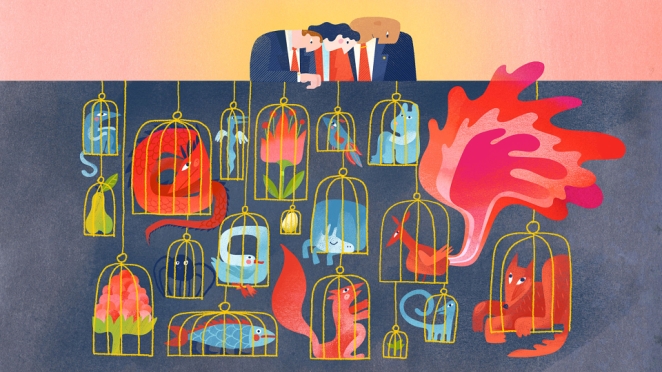
Anastasia Beltyukova
According to industry research, cost efficiencies remain the strongest motivation behind in-housing (cited by 83% of companies), followed by quicker, more agile processes (76%) and better integration with the brand (59%). It’s no secret that after the 2008 financial crisis (and again during recent economic pressures), CFOs love the idea of trimming hefty agency budgets. Marketing spend is an easy target for cuts, and moving work in-house is seen as a way to do more with less.
Unilever is one high-profile example of a brand investing heavily in an in-house content studio to reduce agency spend. In 2017, Unilever reported its U-Studio network was creating content around 30% cheaper (and faster) than external agencies, yielding substantial savings on agency fees.
Indeed, companies of all sizes have reduced creative production expenses by over 30% simply by shifting work from outside agencies to in-house teams. Consumer goods giant Unilever isn’t alone; many big advertisers have launched internal studios (often poaching agency talent to do so). PepsiCo built an in-house design unit spanning 17 global centres, and tech firms from Google to Airbnb have internal creative squads. The appeal is clear: own the talent, own the process, and hopefully save a bundle.
The Allure for Brands: Speed, Control, and Cost
Proponents argue that in-house studios offer a win-win for brands. Let’s briefly break down those key promises:
Faster Turnarounds
Being on the inside means creatives can respond to briefs immediately. In-house teams are “always on” for one client (their employer), which sounds great – until convenience turns into constant pressure and burnout as some have noted. (We’ll come back to that downside later.) But purely from a workflow perspective, many brands report quicker output with an internal team that isn’t juggling multiple clients.
Greater Control & Brand Intimacy
An internal team is immersed in the brand’s culture and strategy. They sit in the same meetings as product managers and CEOs, which can lead to work that’s more on-brand and strategically aligned. For example, Dubai’s super-app Careem moved creative in-house to better integrate with its business strategy, enabling campaigns that “would have been almost impossible for an external agency” to pull off. In-house creatives often have direct access to data, executives, and other teams, potentially resulting in more relevant, insider ideas.
Cost Savings
This is the big one. By not paying external agency overhead, brands can produce more content for the same budget – or so the theory goes. There’s evidence this works: Unilever’s U-Studio saved roughly a third of content costs, and other companies report similar efficiencies. One survey found 70% of advertisers planned to shift even more work in-house in coming years as their capabilities grow. Especially for high-volume content needs (social media assets, daily ads, etc.), in-house can be significantly cheaper per piece. As one marketing lead quipped, “If you launch an in-house agency primarily to save money then it’s tough to think of it as anything else”– cost is top of mind.
Addi Rujoh
From a brand leader’s perspective, these benefits are alluring. It’s not just theory either: satisfaction with in-house output is reportedly high (over 80% of companies are happy with their in-house agencies’ work). And successful cases abound. PepsiCo’s design team, for instance, is often cited as an in-house “gold standard,” having won over 2,000 design awards in a decade. That kind of track record shows an internal team can deliver world-class creative results, given the right setup and talent.
PepsiCo’s in-house design and innovation team, spread across global hubs, has been hailed for its success. In just over ten years, PepsiCo’s internal agency has won more than 2,000 industry awards and is widely considered a model for how to run an in-house creative operation. Big brands like Pepsi proved that with the right investment, an in-house team can rival the best external agencies.
With such successes, it’s easy to see why many brands are saying: “Why not bring it in-house?” Especially after the pandemic and budget cuts, every marketing dollar is being scrutinized. Two-thirds of major multinationals now have in-house agencies, and many openly tout the speed and savings they’re gaining.
However, for all these promises, there’s a growing chorus of sceptical voices – particularly from the creative professionals on the other side of the equation.
Creative Concerns: Job Security, Pay, and Creative Freedom
While brands celebrate their in-house moves, many creatives (designers, copywriters, art directors, and the freelancers who support them) are raising concerns. The question on everyone’s mind: Is this trend actually good for creative workers, or are we normalizing a model that pays people less and offers less security?
Job Security (or Lack Thereof)
Ironically, an in-house role can be less secure than working at an agency with multiple clients. If a brand hits hard times, the in-house team is often the first on the chopping block when marketing budgets tighten. We’ve seen this recently – in 2025, PepsiCo scaled back parts of its in-house studio, leading to staff exits, and Keurig Dr Pepper outright shut down its internal creative team.
A freelancer who relied on those gigs or an employee on that team suddenly finds themselves out of work. In contrast, an agency can sometimes shuffle you to another account if one client leaves. So, the notion that going in-house means stability is questionable. As one industry veteran put it, in-house teams live in a “precarious spot” because they face huge expectations but can be cut as soon as the “floor starts to shake” economically.
Lower Pay and “Wage Slashing”
A big part of cost efficiency is, unfortunately, paying people less (or getting more work from them for the same pay). Many creatives suspect that brands use in-house studios to slash wages compared to agency rates. For example, a full-time in-house designer might earn less than their agency counterpart, offset by promises of better work-life balance or benefits. Data on this is mixed – one PR industry survey found total compensation can be similar in-house versus agency at mid-levels, but agency staff got bigger raises and senior agency leaders outearned in-house leaders. The perception persists that in-house teams are a way for companies to get talent “on the cheap.”
Freelancers, in particular, report downward pressure on their day rates. A brand that previously paid a big agency (which in turn paid the freelancer a healthy fee) may now approach the freelancer directly but at a much lower rate, because “hey, we’re cutting out the middleman.” In fact, that’s exactly what’s happening: clients have cut out the agency middlemen and started hiring freelancers directly as a “cost-effective alternative”. It might be cost-effective for the brand, but it can feel like undercutting to the creative. As one Reddit user joked, in-house means “lower pay, better benefits, better hours” – not exactly a recipe for getting rich.
Freelance Exploitation and Unclear Contracts
The gig economy has fully permeated the creative industry. Many in-house “studios” aren’t made up purely of salaried employees – they rely on a pool of freelancers to scale up and down. Nearly a quarter of companies with in-house agencies admit to utilizing freelance talent regularly. The trouble is, these freelancers can end up as perma-lancers – working on-site (or virtually on-site) for months or years with no job security or benefits.
Some are essentially “disguised employees” without the perks: one analysis estimated about one-third of self-employed folks are effectively in-house staff in all but name. This raises all sorts of contract issues. In the UK, for instance, new labour rules (IR35) and court rulings are cracking down on companies treating long-term contractors like staff without proper employment status. That means some brands could face legal and tax repercussions for what critics call “polite exploitation” of freelancers – keeping creatives on endlessly renewed contracts to avoid hiring them full-time.

Scott Balmer
Freelancers themselves often complain of unclear contracts and expectations in these arrangements. They might be asked to sign NDAs and non-competes, work full-time hours, be available at a moment’s notice, and yet have none of the protections of an employee. Payment terms can be shaky too (net-60 payment, anyone?). In worst cases, companies have been known to promise “it could lead to a permanent role” as bait – only to string freelancers along at a low day rate for ages. All of this has left many independent creatives feeling uneasy – and sometimes exploited – by the in-house trend.
Creative Limitations and Burnout
Beyond money issues, there’s the creative soul to consider. A common fear is that going in-house means trading the excitement of diverse projects for a one-brand diet. “Isn’t in-house boring?” is practically a meme at this point. Designer Emily Matthews, for example, admitted she had “strong reservations” about moving in-house because she’d seen peers end up doing “menial, everyday work” with little creative glory. “There’s a perception that moving in-house can mean just rolling out a core brand, without the creative flex that agency projects offer,” she said.
Many creatives thrive on variety – today a sports brand, tomorrow a non-profit campaign, next a tech launch. In-house teams, by definition, focus on one company. The concern is that this can lead to creative stagnation or atrophy of skills, especially if the juiciest campaigns still get outsourced to specialist agencies while the in-house crew handles the drudge work. Moreover, being embedded in a corporation often means dealing with office politics and internal “clients” who might dilute the creative (you can’t walk away from a difficult client when the client is your boss!).
There’s also the “always-on” pressure that comes with being the convenient go-to team. In-house creatives have reported feeling like an internal production house churning out content endlessly, which can lead to burnout. Fewer boundaries exist compared to an external agency that can push back or negotiate scope. All of this can make the supposed creative utopia of in-house feel, at times, like a bit of a grind.
Not All In-House Teams Are Evil
Despite these concerns, it’s important to acknowledge that in-house studios aren’t inherently bad. In fact, many creatives do enjoy in-house roles, and not every brand exploits the model. Some positives often get overlooked in the debate:
Deep Brand Engagement
Working in-house can allow creatives to dive deeply into a brand’s story and really influence it over time. You’re not just parachuting in for one campaign; you can shape the brand’s creative direction in the long run. As Emily Matthews herself found, joining the right company in-house can be “a great opportunity to play an instrumental role” and not at all the boring backwater she feared. In-house designers often report learning new skills – from understanding business strategy to influencing product development – that agency life might not expose them to. The key seems to be whether the company truly values creativity.
Better Lifestyle
Many (though not all) in-house gigs come with a bit more work-life balance than the famously frenetic agency world. There’s truth to “fewer ping-pong tables” and less beer-on-tap culture, but also usually less of the midnight oil and weekend heroics that agency folks endure. Benefits like paid leave, insurance, and stability can be a relief for creatives who have burned out on the agency grind. One survey noted in-house roles often have more robust benefits packages (pensions, etc.) even if base salaries aren’t dramatically higher.
Hybrid Models Emerging
The industry is finding middle grounds. Some brands use embedded agency teams(external agency staff working internally), or maintain a roster of freelancers they treat well, to get the best of both worlds. There are also cases where in-house agencies are taking on external clients – essentially becoming revenue centers rather than cost centres. This evolution could create new opportunities (and better pay) for in-house creatives who effectively work in an internal/external hybrid model.
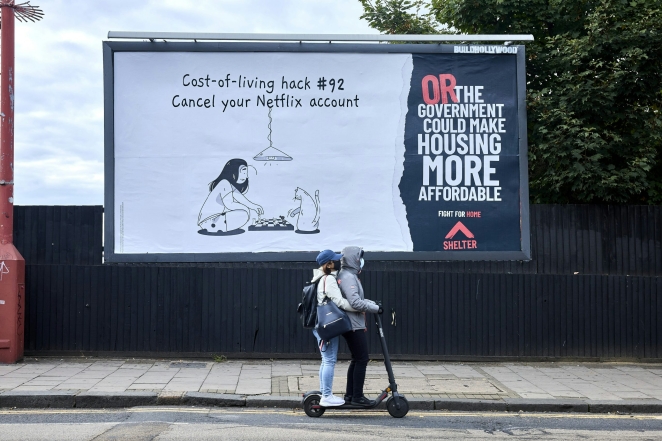
Bold in-house work from the Shelter team
In short, in-house studios can deliver great work and be rewarding places to work – but it takes careful structuring and good leadership to avoid the pitfalls. As global advertisers’ association WFA noted, cost may be the initial driver, but the additional benefits only materialize when in-house teams are set up for success (with the right talent, clear goals, and executive support). If done right, an in-house agency can be empowering and efficient rather than exploitative.
Creative industry leaders have mixed opinions. Some agency veterans see in-house teams as competition or a race to the bottom on price. Others acknowledge they’re here to stay, and focus on how to make the relationship fair. There’s a growing call for standards and transparency: clear contracts for freelancers, fair day rates, and realistic expectations on both sides. Freelancers, for example, are banding together in online communities to share intel on which brands pay decently and which to avoid. On the brand side, some are recognizing that relying too heavily on underpaid freelancers is not sustainable – talent will walk, or laws will catch up, as the gig economy gets more scrutiny.
The Bottom Line
So, is the promise of in-house studios just a cover for wage-slashing and freelance exploitation? The honest answer: It can be, but it doesn’t have to be. In-house agencies undeniably arose in part to cut costs, and many creatives have felt the sting of that reality. Yet, with the right approach, in-house teams could also represent a new model that works for both businesses and creatives – if fairness and creative integrity are maintained. As the industry continues to grapple with this balance, perhaps it’s best summed up by the refreshingly blunt words of Simon Manchipp, Founding Partner of SomeOne:
“Yes. Next question. Okay, not just a cover—but let’s not pretend it’s a creative utopia. Brands want speed, control, and cost-cutting. In-house means fewer ping-pong tables, more polite exploitation. Creatives must demand clearer contracts, higher day rates, and the right to say, ‘No, this is rubbish.’”
Peter Keenan July 7th, 2025, in the morning
It feels like we’re in a race to the bottom. Follow the money and you’ll find some of the best ideas — and the people behind them — falling away.Production value? Devalued. Craft? Compromised. Risk-taking? Replaced by risk management. The wrong people are running the show — and they have been for over two decades.
We’ve gone from :60-second stories that moved culture to six-second interstitials that barely register. The minds that once built unforgettable campaigns are burning out, switching careers, or retiring early. Not because they lost their touch — but because the system did.
The fun is gone. The work is being reverse-engineered to satisfy small thinking and shareholder anxiety. Instead of provocative, brand-defining ideas, we’re left with safe bets and shallow metrics.
And the worst part? It didn’t have to be this way.