



Technology has become so deeply embedded in our lives that it feels less like a set of tools and more of an appendage. When was the last time, for example, you found yourself without your smartphone? Did you descend into an existential panic for a few seconds? You certainly wouldn’t be the first and you certainly won’t be the last.
“We don’t just consume brands anymore – we experience them”
The smartphone, however, might be the most consequential invention of the 21st century but it’s hardly an emerging tech. Smartphones have fulfilled their potential and have already transformed society (for good and bad) but there are a handful of technologies still in the nascent stages that have yet to blossom fully and those are the technologies I’ll be shining a spotlight on today.
SomeOne
Emerging technologies are slowly but surely fundamentally changing how we experience brands, products, and services. For decades, marketing relied on exposure: showing people ads and hoping for attention but today, with the rise of immersive tech like augmented reality (AR), virtual reality (VR), and generative AI, we’re entering an experience-led era where people are invited to participate, co-create, and engage on their own terms.
“Ultimately, we don’t just consume brands anymore – we experience them,” says Liz Trumper, Head of Growth at VR/AR agency Circus. “And as immersive marketing becomes mainstream, the winners will be those who move fastest from showing people ads to inviting them into meaningful, participatory worlds.”
Bridging Imagination and Reality
One of the most powerful applications of emerging tech has been AR in consumer marketing and retail. Augmented reality allows consumers to visualise products in their own space, whether it’s seeing how a sofa looks in your living room or trying on cosmetics virtually, effectively bridging the gap between imagination and reality.
Brands have embraced this to invite customers into more interactive shopping experiences. For example, IKEA’s AR app IKEA Place (launched in 2017) lets shoppers virtually place true-to-scale 3D models of furniture in their home. Using a smartphone camera, anyone can preview an item’s size, style and fit in their room with 98% accuracy in scale, without ever visiting a store. If anyone has ever had to tolerate an afternoon at IKEA will attest, that's a small miracle.
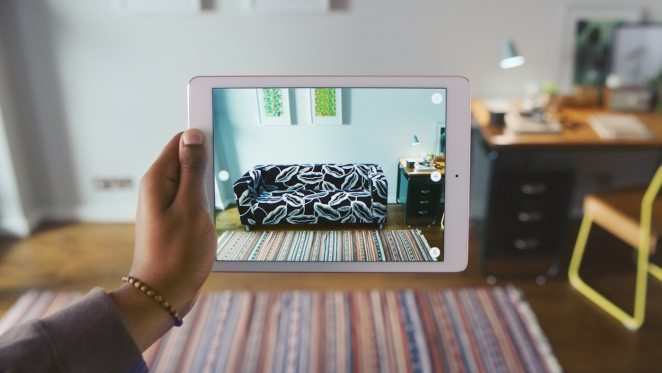
As is often the case with these kind of innovations, a spate of major retailers from Wayfair to Amazon followed suit with similar AR apps, recognising that giving customers a “try-before-you-buy” option builds a surprising amount of confidence when it comes to purchasing a big-ticket items online.
72% of shoppers ended up buying products they hadn’t initially intended to after using AR
The impact on consumer behavior is quite significant. Indeed, one study found that 72% of shoppers ended up buying products they hadn’t initially intended to after using AR. By superimposing products into real-world contexts, AR not only reduces guesswork but also inspires new ideas and finds shoppers discovering items that they might have overlooked in a traditional online catalog. It’s more kinetic and personal and makes an item feel like it’s already “yours” even when it’s not (at least not yet).
Eric Jordan
Of course, producing these kind of AR experiences requires a fusion of creative and technical skills. Roles like User Experience (UX) Designers and Interactive Designers craft the intuitive interfaces that make AR easy to use, while 3D Artists develop the realistic models of products.
Bringing it all together, Creative Technologists and AR developers ensure the digital content seamlessly integrates with the physical world. These creative professionals are in high demand as brands seek to build ever more engaging AR campaigns.
Immersive Storytelling and Training
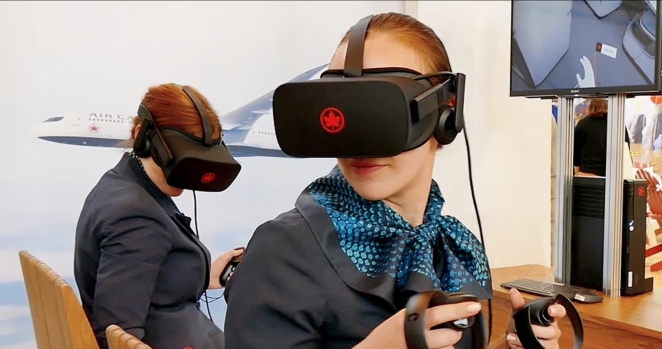
If AR invites customers to overlay the virtual onto reality, virtual reality goes a step further and transports users entirely into a brand’s world. VR is transforming brand interactions into immersive journeys.
As Liz Trumper notes, instead of telling someone about a destination or product, VR lets them “walk its streets, explore landmarks, and feel the experience” before they buy. Travel and hospitality brands have capitalised on this by offering VR previews of destinations and hotels so that anyone with a VR headset can stroll the streets of Paris or dive into a tropical resort from the comfort of their sofa.
Neutral Digital
The result is a richer emotional connection; potential customers can try the experience in advance, which increases their likelihood to book the real thing. In the tourism sector, VR has effectively democratised access to faraway places, making experiences available to anyone with a device.
VR is delivering real-world value in training and education
Beyond consumer marketing, VR is delivering real-world value in training and education. “Immersive tech is driving impact in familiarisation and training,” Trumper says. In healthcare, for example, VR simulations allow doctors and nurses to rehearse procedures in a safe, controlled environment.
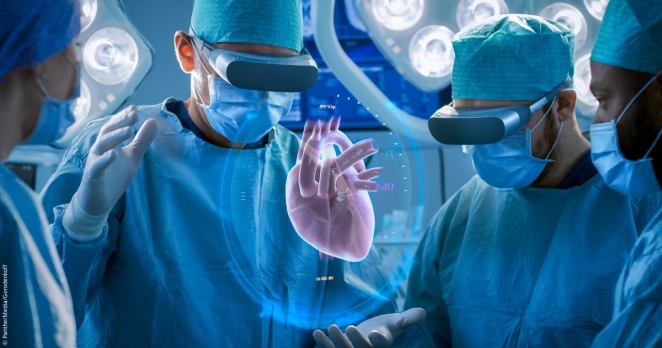
Complex surgeries can be practiced virtually, improving skills and reducing mistakes when it counts. In manufacturing and logistics, workers train on virtual replicas of machinery, learning proper operation and safety protocols without any risk or costly downtime. The effectiveness of VR training is backed by hard data: one enterprise study found that a VR safety training program reduced lost-time injuries by 43% and even increased productivity by 25%. These outcomes show how immersive technology can deliver both social good (safer, more confident workers) and business ROI.
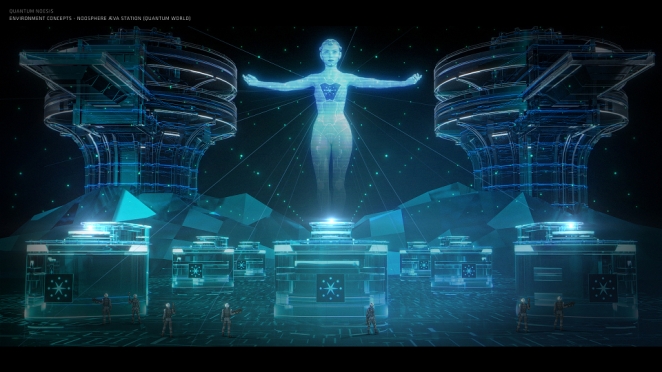
Storytelling in VR isn’t limited to headsets and training modules. Forward-thinking creative agencies have built multi-sensory VR brand experiences – from virtual test drives for automotive brands to VR concerts hosted by beverage or apparel companies. Such projects require interdisciplinary talent.
Eric Jordan
A team creating a VR experience might include Game Designers (to craft interactive narratives), 3D Designers and artists (to build detailed virtual environments), and technical specialists like Unity or Unreal developers. Leadership from roles such as Creative Directors and Art Directors ensures the experience aligns with the brand’s story and quality standards.
VR has shown that immersive storytelling can deepen customer engagement
Many of these roles are hybrid creative-tech positions that barely existed a decade ago. Now, you can find them right here on Creativepool’s job listings as companies hunt for talent that can bring VR ideas to life. VR has shown that immersive storytelling can deepen customer engagement in ways flat media never could and poses an exciting frontier that’s only going to grow as technology improves and those headsets get smaller and more practical.
Creative Partners and Personalisation Engines
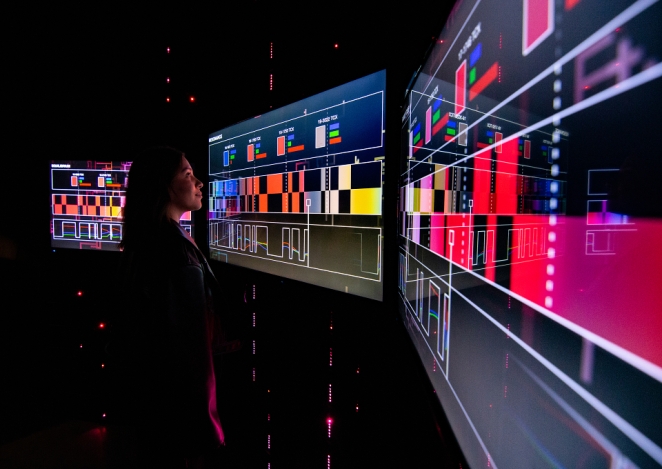
Of all emerging tech, artificial intelligence (AI) might be the buzziest term across industries right now. In marketing and customer experience, genertive AI is adding a powerful new layer by making personalised, adaptive content scalable like never before.
Brands can now create campaigns that respond to individual user preferences, behaviors, and context, shifting marketing from mass exposure to tailored experience. Imagine an email or advertisement that is dynamically generated by AI for each recipient: the visuals, copy, even the product offers could be uniquely suited to what the AI knows about that person’s tastes.
Almost Studios
This isn’t the future; it’s already happening. And it addresses a real consumer expectation: studies show 80% of consumers are more likely to make a purchase from brands that offer personalised experiences. AI is the engine that can deliver this level of one-to-one personalisation at scale, far faster than human teams alone.
Consumers are more likely to make a purchase from brands that offer personalised experiences
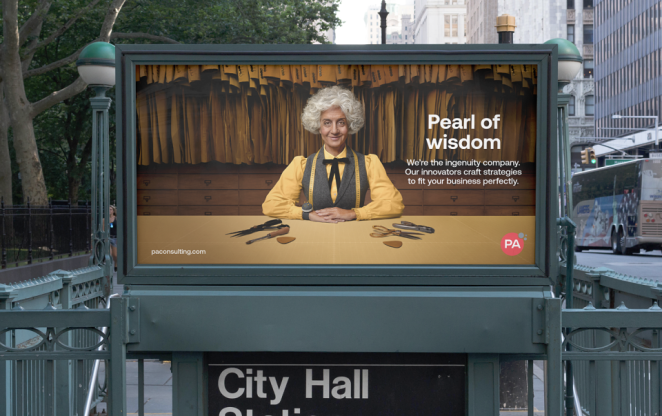
Generative AI models are also becoming creative partners to human designers and writers. In advertising, we’ve seen AI used to generate countless variations of an ad, allowing marketers to test and optimise what resonates.
Copywriters can use AI tools to draft social media posts or even video scripts that they then refine – effectively co-creating with an algorithm. Visual designers are tapping AI image generators to brainstorm concepts or produce assets. This doesn’t replace the creative professional; rather, it augments their capabilities.
SomeOne
A Creative Director can now iterate campaign ideas with the help of an AI, and a Copywriter or Content Strategist can focus on higher-level narrative and editing, while letting the AI handle the first draft or variations. Brands like Coca-Cola have even launched campaigns inviting consumers to create AI-generated art with their products – flipping the traditional producer-consumer dynamic and fostering deeper engagement.
However, within the creative industries, there’s a growing conversation that current uses of AI often focus too much on outputs and not enough on the creative process itself.
“Artificial intelligence is the current buzzword across many industries; however, creative solutions primarily focus on the output rather than interrogating the process,” observes Jamie Shilvock, Real Time Technical Lead at Imagination. His point: many in advertising churn out AI-made images or text to meet a brief, but few ask how the AI arrived at that result or what new creative process could be invented with AI.
Matthew Mayes
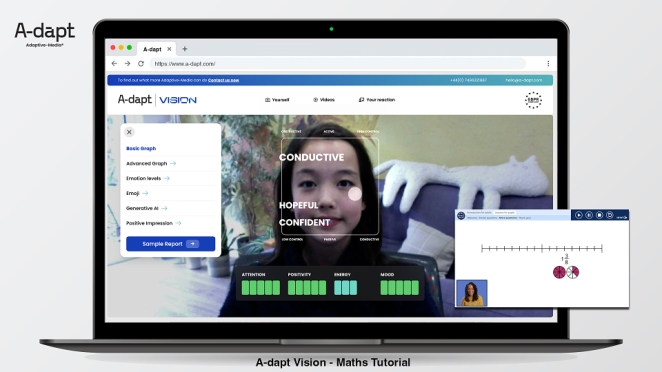
To find truly novel applications, Shilvock suggests looking at the art world, where there are fewer rules and KPIs. One striking example he cites is an installation by artist duo MOTS. Initially, they set out to build a simple AI “machine” that would give a raw, honest opinion about a person who sat in front of it. Over time, the project evolved into “an exploration of how far we are willing to let a machine analyse our appearance,” turning a straightforward idea into a provocative commentary on AI and human vanity.
The resulting artwork (which invited users to be virtually “judged” by an AI) not only produced eerily candid (sometimes insulting) remarks, but also made people reflect on their relationship with a machine’s perception. In other words, the process (letting an algorithm scrutinise you) became the art, not just the output. It’s a powerful reminder that AI’s best uses may lie in augmenting human creativity and sparking dialogue, not just automating tasks.
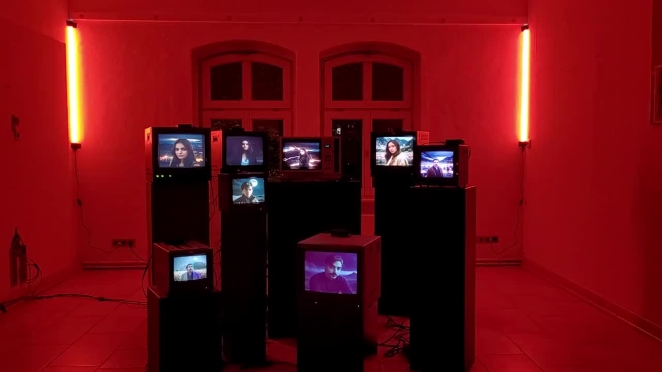
Another imaginative use of AI (combined with other tech) is in immersive art installations and the emerging realm of NFTs. Shilvock points to artist duo A.A. Murakami, who created a multi-sensory installation called “The Passage of Ra.”
This work is described as a “harmonious marriage between physical and digital technologies” and a prime example of how emerging tech can be used in experiential art. In the installation, machines generate tangible fog rings that float through the space, slowly dissipating. Simultaneously, a digital screen displays a mirrored world: for every real fog ring that vanishes, a digital fog ring appears on screen, sailing off into a virtual seascape.
These digital rings persist over time, each one minted as a unique NFT in a virtual world, even as their physical counterparts fade away. The artists dubbed this concept “Ephemeral Tech,” illustrating how something fleeting and sensory can be captured and given eternity in the digital realm. The Passage of Ra mesmerised audiences – not just as a visual spectacle, but as a philosophical experience blurring the line between the real and virtual.
Emerging tech can create storytelling that transcends mediums
For brands, the lesson here is profound: emerging tech can create storytelling that transcends mediums. An experiential marketing campaign could similarly blend physical installation (perhaps a live event with AR effects like fog, light, or sound) with digital assets (like NFTs or virtual twins of the experience) to engage audiences both on-site and online.
The Future is Already Here
From AR shopping and VR training, to AI-driven content and boundary-pushing art, the 21st century’s emerging technologies have already delivered some astounding use cases. These innovations are not just tech gimmicks – they’re solving real problems and elevating the way people interact with brands and culture. Importantly, they all underscore a shift in consumer expectation: people crave experiences, not just products.
For creatives and companies alike, staying ahead means embracing this change. Teams are now seeking multidisciplinary talent (someone who might be a designer, coder, and storyteller all in one) to build these new experiences.
SomeOne
As Liz Trumper puts it, “Emerging technologies invite people to participate on their own terms… Ultimately, these technologies are changing the definition of ‘consumption.’ We don’t just consume brands anymore – we experience them.” The best uses of emerging tech so far have given us a glimpse of participatory, immersive, human-centered innovation. And judging by the momentum, this is only the beginning of a more creative future.