

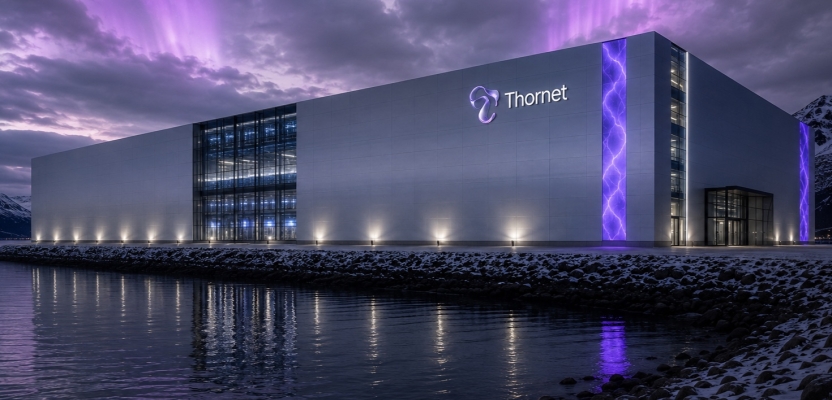

Artificial intelligence has become part of the business landscape with unusual speed. It is already helping companies analyse information, develop software, automate routine processes, improve customer service, detect fraud, optimise logistics and production, support research and make sense of increasingly complex datasets. It is also finding its way into areas that were, until recently, considered distinctly human: writing, design, translation, communication and creative work.
For most people, this transformation happens on a screen. Behind the screen, however, something much larger is taking place.
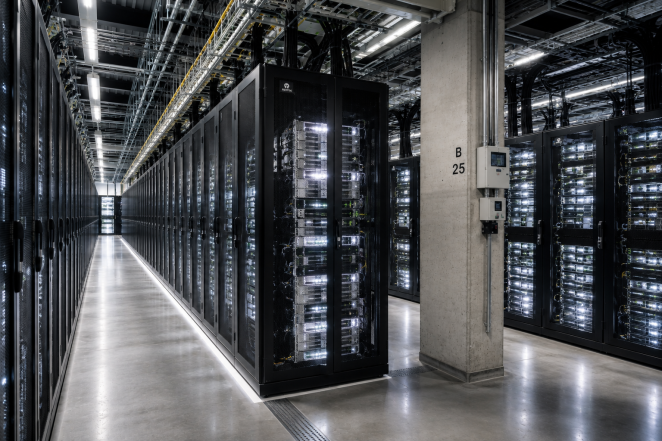
AI requires computing power, and computing power requires physical infrastructure. The servers running today’s AI systems sit in data centres containing thousands of processors, sophisticated networking equipment, cooling systems, backup power and security infrastructure. As AI becomes more capable and more widely used, these facilities are becoming larger, denser and more strategically important.
But AI is only one part of the story.

Data centres support much of the digital economy, including cloud computing, enterprise software, online services, telecommunications, financial systems, streaming, storage, cybersecurity, scientific research and everyday business operations. The demand created by these services is already substantial, and AI is adding a new and particularly intensive layer on top of an infrastructure sector that was growing long before generative AI became a mainstream topic.
The energy implications are already significant. According to the International Energy Agency, data centres consumed around 415 terawatt-hours of electricity worldwide in 2024, approximately 1.5% of global electricity consumption. The IEA expects global data-centre electricity demand to more than double by 2030, with AI as one of the most important drivers of that growth.
These numbers explain why data centres have moved from the background of the digital economy into the centre of infrastructure planning. They also make the environmental side of the story impossible to separate from the technological one.
Electricity, cooling, water, land, construction materials, networks, backup systems, and local energy infrastructure are all part of the same picture.
The most interesting developments, however, are beginning to show that a data centre does not necessarily have to be viewed only as a large consumer of resources. In several places around the world, the heat generated by computing is already being recovered and used to heat homes, offices, greenhouses, and industrial facilities.
The idea is surprisingly simple. The engineering behind it is considerably more sophisticated, but the principle is straightforward: energy that has already been consumed for computing can sometimes remain useful after the computing has been completed.
That changes the environmental equation.

The physical reality behind the cloud
The expression “cloud computing” has always hidden something rather physical. There is no cloud in the literal sense. There are buildings. Those buildings are increasingly sophisticated industrial facilities, and AI is changing their design. But the underlying purpose of a data centre is broader than AI. It is to provide a controlled, secure, and continuously available environment for computing, storage, networking, and digital services.
Traditional data centres accommodate a wide range of workloads. Enterprise applications, databases, websites, cloud platforms, email, file storage, backup systems, online transactions, telecommunications services, and streaming platforms all require data-centre capacity. Many businesses also rely on data centres for disaster recovery, cybersecurity monitoring, virtual desktops, software development, and the operation of critical internal systems.
These workloads have different technical characteristics. Some require large amounts of storage, while others depend on fast network connections or low latency. Some need predictable processing capacity, while others fluctuate according to customer demand. Financial services and telecommunications may require extremely high availability, while scientific and engineering workloads can require specialised computing resources. Cloud services need to scale rapidly across multiple locations.
AI workloads are different again.
Training and running advanced models require large concentrations of specialised processors, creating far greater power density inside the facility. Inference, the process of using a trained model to generate a response or perform a task, can also create substantial demand when AI services are used at scale.
The consequence is not simply a larger electricity bill. High-density computing generates considerable heat, which has to be removed continuously. Cooling therefore becomes a major engineering consideration alongside power availability, network connectivity, physical security, and the ability to maintain operations during disruptions.
The location of a data centre becomes equally important. A facility may be selected because it has access to renewable electricity, a stable grid, suitable land, strong fibre connectivity, a cool climate, available water, or proximity to customers. In many cases, no single location offers every advantage, so operators must balance energy, connectivity, latency, resilience, regulation, construction costs, and the needs of the surrounding community.
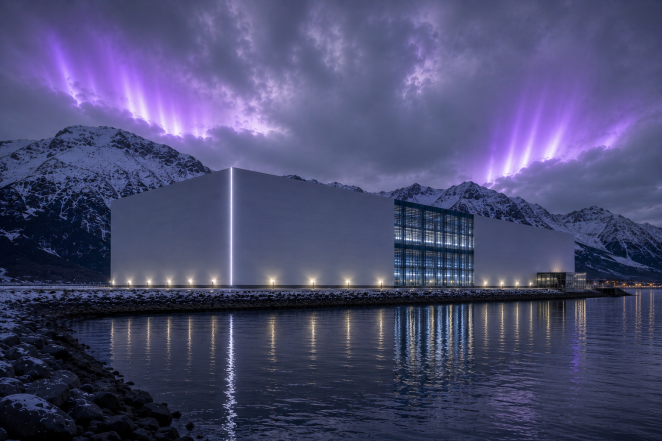
The Nordic region has attracted particular attention because of its combination of relatively low-carbon electricity, cooler climates that can reduce cooling requirements, and room for further infrastructure development.
Finland provides an especially interesting example. The country’s electricity system is already dominated by low-carbon generation, while its district-heating infrastructure creates an additional opportunity: the heat produced by data centres can potentially become part of the energy system rather than simply being released into the atmosphere.
That distinction matters.
A data centre does consume energy, whether it is running AI models, storing business data, hosting websites, or supporting cloud applications. The environmental and economic consequences depend greatly on where that energy comes from, how efficiently it is used, and what happens afterwards.
The heat that used to disappear
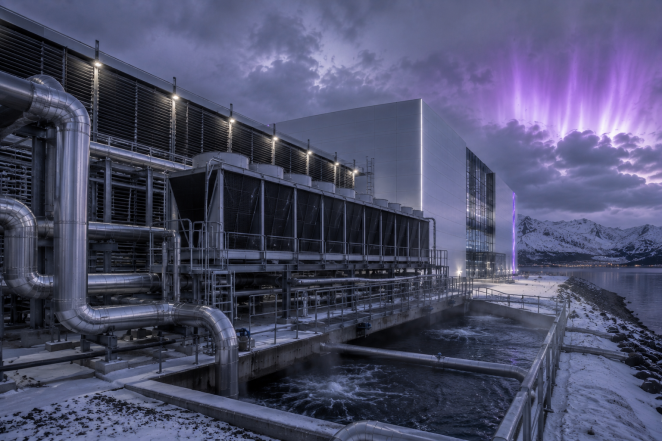
Almost all electricity consumed by computing equipment eventually becomes heat. In a conventional facility, cooling systems remove that heat and transfer it outside the building. For many years, this was simply considered part of the process.
Today, an increasing number of operators, energy companies, and municipalities are looking at the same heat differently. The opportunity is particularly strong in cities with district-heating networks, where large quantities of hot water are already circulated through underground pipes to homes and businesses. A data centre located close to such a network can become another source of heat within the system.
The heat produced by servers can be captured through heat exchangers and transferred into a water circuit. Because recovered heat can be at a lower temperature than the water required by an existing district-heating network, heat pumps can raise its temperature before it is distributed to buildings. The result is that electricity already used for computing can have a second useful application.
The International Energy Agency estimates that around 70–80% of electricity consumed by data centres eventually becomes recoverable heat, and that heat pumps can make a significant proportion of it useful for heating. The IEA estimates that if data-centre waste heat were fully integrated into district-heating networks, it could provide up to 300 TWh of space heating to buildings within approximately five kilometres of data centres in Europe by 2030, enough to cover around 10% of European homes.
That is no longer a niche sustainability idea. It is an energy-infrastructure opportunity.
The IEA’s June 2026 report on renewable district energy reinforces this broader direction, highlighting recovered heat, large-scale heat pumps, and thermal energy storage as important components of cleaner and more resilient heating systems.
Stockholm has been doing this for years
Stockholm offers one of the clearest examples of what happens when the concept is built into a city’s infrastructure strategy. The Stockholm Data Parks initiative was created around the idea that data centres could become suppliers of recovered heat to the city’s district-heating network. Stockholm Exergi operates an “Open District Heating” model in which data centres, supermarkets, and other businesses producing excess heat can supply it to the network.
The system has developed into a genuine marketplace for excess heat. Companies can sell recovered energy to Stockholm Exergi, which then distributes it through the city’s extensive district-heating network. Stockholm Exergi currently reports that excess heat is already being used to heat around 11.000 apartments.
One of the participating companies is GleSYS, whose data centre in Stockholm’s Västberga district has supplied excess heat to the district-heating network since 2017. The system uses heat pumps to cool the data centre while transferring the recovered heat into the city’s heating infrastructure.
The significance goes beyond one facility.
The data centre is no longer simply an electricity consumer. Its operation becomes part of the city’s heating infrastructure, while the district-heating network provides a practical destination for energy that the data centre has already produced as a by-product.
Stockholm Exergi’s stated ambition is for Stockholm’s district heating to be generated entirely from renewable and recovered energy by 2030.
The model demonstrates something important about sustainable infrastructure: environmental value can increase when infrastructure is connected rather than designed in isolation.
Helsinki treats a data centre as a radiator
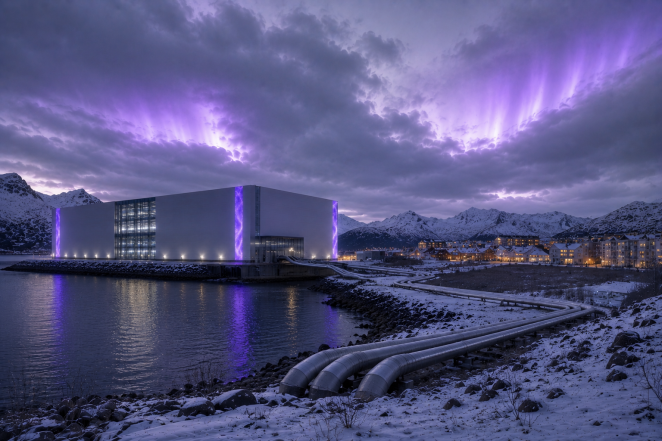
Telia’s Helsinki Data Center provides another compelling example. The facility was designed from the beginning with heat recovery in mind, allowing excess heat from the data centre to be transferred into Helsinki’s district-heating system.
Telia reports that around 60% of the heat produced by the facility can already be reused, with the long-term goal of reaching approximately 80%. The recovered heat is distributed through Helsinki’s existing network to homes and offices. Telia’s current description of the system says the heat from the Pitäjänmäki data centre is already serving around 7.000 homes and offices, with the potential to reach more than 20.000 homes as utilisation increases.
The important detail is that the heat is not simply captured and stored. It becomes part of an existing urban system. The district-heating network already exists. The buildings already need heat. The data centre already produces heat. Infrastructure connects the three. The system also changes the way cooling is approached. Telia describes a hierarchy in which heat recovery takes priority, followed by free cooling when conditions allow, with mechanical cooling used when necessary. This makes the heat-recovery system part of the operational design rather than an environmental feature added after the fact.
The result is a form of circularity that is remarkably practical. A resource that once had to be removed from the building becomes part of the energy supply for the city.
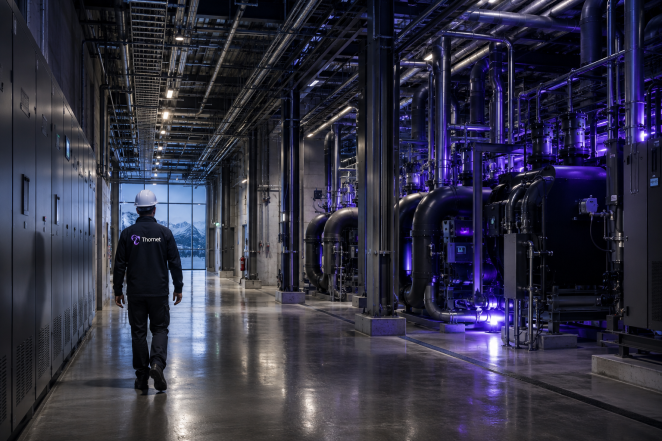
Denmark is turning surplus heat into household heating
Denmark provides several further examples of the same principle operating at substantial scale. Meta’s data centre in Odense supplies surplus heat to the local district-heating system operated by Fjernvarme Fyn. The project has been designed to recover heat from the data centre and use it to provide heating for local households.
Microsoft has developed another example in Høje-Taastrup near Copenhagen. Its Danish data-centre infrastructure includes a heat-recovery system designed to transfer surplus heat into the local district-heating network, with the potential to supply heating equivalent to the needs of thousands of homes.
These projects demonstrate the importance of proximity. Heat is not as easy to transport over long distances as electricity, which makes the relationship between data-centre location and surrounding infrastructure particularly important.
A data centre located close to a district-heating network has an opportunity that an otherwise identical facility may not have. The physical geography of infrastructure therefore becomes part of its environmental performance.
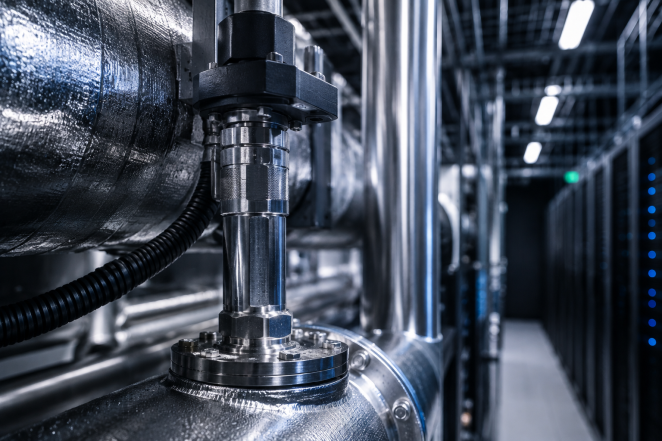
Finland is taking the idea even further
The most ambitious examples are emerging where data centres are planned alongside energy infrastructure from the beginning. Microsoft’s data-centre development in the Helsinki region is designed around the recovery of surplus heat and its integration into the district-heating systems serving Espoo, Kauniainen, and Kirkkonummi.
Microsoft and Fortum have described a future system capable of supplying heat to approximately 250.000 people. Heat from the data centres will be captured and transferred into a heat-pump facility, where its temperature will be raised before entering the municipal heating network. The project is scheduled to begin operations in 2027.
The significance lies partly in the planning philosophy.
The heat-recovery system is not being treated simply as a sustainability feature attached to an existing data centre. It is being considered as part of the infrastructure surrounding the data centre. That approach creates opportunities that become difficult or impossible to achieve later.
The IEA’s analysis makes the broader potential clear. Espoo is already cited as an example where a cluster of new data centres could eventually provide enough recovered heat for around 100.000 homes.
This is one reason Nordic cities have become particularly interesting in the global data-centre discussion. They combine data-centre investment with established district-heating infrastructure, relatively low-carbon electricity systems, and a long history of integrating different energy sources into municipal networks.
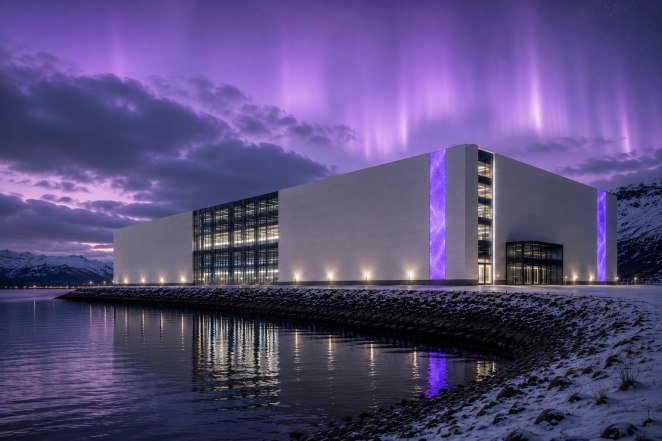
Norway shows what happens outside the city
Not every useful application of data-centre heat involves homes. In Rjukan, Norway, the recipient is a trout farm. Green Mountain operates a data centre approximately 800 metres from Hima Seafood’s land-based aquaculture facility. The two facilities are connected through a heat-reuse system in which excess heat from the data centre is used to maintain the temperature of water in the trout-production tanks.
The first phase became operational in autumn 2025 and is currently being tested at up to 1.75 MW. The companies are studying an expansion to 8 MW. There is an additional layer to the system that makes it particularly interesting. After the water has been used in the aquaculture process, the cooled water can return to the data centre and be integrated into its cooling system.
This is industrial symbiosis in a very literal sense.
The data centre produces heat. The fish farm needs heat. The fish farm produces cooled water. The data centre needs cooling. Two very different businesses can therefore share resources because their operational requirements happen to complement one another.
The project also demonstrates that heat recovery does not need to be confined to major urban centres. It can become part of an industrial ecosystem in a smaller community where two businesses are close enough to share infrastructure.
It is difficult to imagine a better illustration of the principle that waste is often a matter of perspective.
Greenhouses could be another destination
The same principle can apply to agriculture. Greenhouses require controlled temperatures, often in climates where heating represents a significant part of production costs. Data centres, meanwhile, generate heat continuously throughout the year.
Microsoft has highlighted greenhouse agriculture as one of the potential applications for recovered data-centre heat, particularly because greenhouse operations can make productive use of lower-temperature heat.
This creates another form of industrial symbiosis.
The data centre gains a productive outlet for heat that would otherwise need to be removed. The greenhouse gains a source of thermal energy. The surrounding region gains another example of industrial activity being integrated rather than planned independently. The same principle can potentially be applied to other low- and medium-temperature industrial processes.
The important point is not that every data centre should be connected to a greenhouse, fish farm, or district-heating network. The important point is that the physical output of computing can have value somewhere else when infrastructure is planned with that possibility in mind.
Heat does not have to be used immediately
There is another technical challenge when thinking about heat reuse at scale. Data centres operate continuously, while demand for heating fluctuates. Homes need less heat during summer. Industrial demand changes throughout the day. Agricultural requirements follow production cycles. This creates a mismatch between when heat is produced and when it is needed.
Thermal storage can help bridge that gap. The European THUNDER project, coordinated by RINA and funded through Horizon Europe, is developing a system for recovering heat from data centres, storing it during periods of lower demand, and releasing it later for urban heating. The project combines thermal storage, high-temperature heat pumps, and district-heating networks, with a pilot project in Varna, Bulgaria.
This is an important development because the challenge is no longer simply capturing heat. It is matching the timing, temperature, and location of the available energy with the needs of the surrounding system.
The same principle applies to electricity.
Batteries, thermal storage, and flexible computing workloads can potentially help data centres interact more intelligently with the electricity grid, provided that critical workloads remain protected and operational requirements are respected.
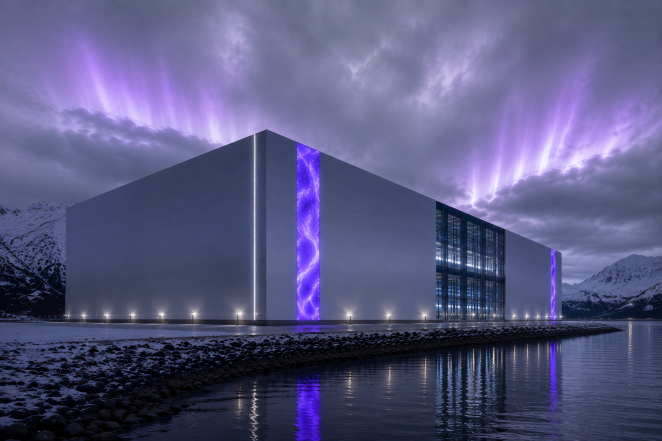
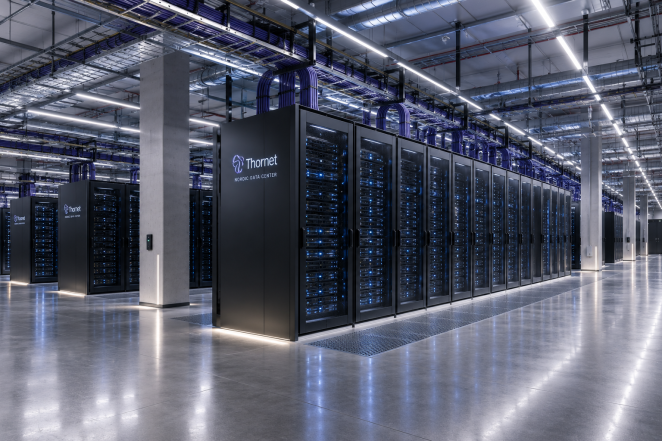
Serbia offers another compelling example, where the infrastructure hosting Thornet’s servers operates within a network powered by 100% green-certified renewable electricity, showing that the growth of digital infrastructure does not have to come at the expense of a lower-carbon energy transition.
Water is part of the equation
Electricity is usually the first resource discussed in relation to data centres, but water can be equally important in some locations. Cooling systems may use water to transfer or remove heat. Evaporative cooling can be efficient from an electricity perspective, but it may consume more water. Closed-loop systems can reduce water use, although they may require different equipment, higher capital investment, or additional electricity.
The right solution depends on the local climate, facility design, workload, and availability of water. This makes location particularly important.
A data centre may be located in a region with abundant low-carbon electricity but limited water resources. Another may have access to plentiful water but rely on a more carbon-intensive electricity mix. A third may have a naturally cool climate that reduces cooling demand but lacks sufficient grid capacity or network connectivity.
There is no single sustainability measure that resolves these trade-offs. A responsible infrastructure strategy therefore needs to consider electricity, water, land, construction materials, local ecosystems, and the wider energy system together.
This is where ESG becomes more than a reporting exercise. The environmental characteristics of a data centre are increasingly determined by decisions made before the first server is installed.
Efficiency changes the equation
There is another side to the story that is sometimes lost in the debate about AI and energy. Technology becomes more efficient.
Ericsson’s research into ICT energy consumption illustrates the point. Between 2007 and 2023, global data traffic increased by roughly 80 times, while electricity consumption in the use phase of the ICT sector increased by approximately 1.4 times. The relationship between more data and proportionally more electricity is therefore much more complicated than it may initially appear.
Efficiency improvements occur at several levels.
Processors can perform more calculations using less electricity. Servers can be configured more effectively. Storage systems can use lower-power media for less frequently accessed data. Cooling systems can respond more precisely to actual demand. Software can reduce unnecessary processing. Workloads can be scheduled across locations according to availability, cost, or carbon intensity.
AI is nevertheless creating a new challenge because it is pushing computing into much more intensive territory. The most powerful AI processors require considerably more electricity than conventional servers, and the number of such processors being deployed is increasing rapidly. At the same time, advances in chips, software, and model design are improving the amount of useful computing that can be achieved for each unit of energy. The same principle applies to non-AI workloads.
Cloud platforms can consolidate many smaller systems into more efficient shared infrastructure. Virtualisation can allow one physical server to support several applications. Automated management can reduce idle capacity. Better storage policies can prevent unnecessary duplication. Modern facilities can use more efficient power distribution and cooling systems than older server rooms.
Efficiency does not automatically reduce total consumption. If lower costs encourage more usage, overall demand may still rise. This is one reason why efficiency and growth need to be considered together.
The IEA expects electricity consumption from accelerated servers, largely driven by AI, to grow rapidly through 2030. Efficiency improvements nevertheless remain one of the industry’s most important responses because electricity is both an environmental consideration and one of the largest operating costs of a data centre.
The same industry that is increasing demand for computing is therefore under enormous pressure to make every calculation cheaper, faster, and more energy-efficient. That pressure is likely to remain one of the strongest drivers of innovation in AI hardware, software, cooling, storage, and data-centre operations.
The grid is becoming part of the data-centre conversation
The rapid development of data centres also exposes another constraint: electricity infrastructure does not move at the same speed as technology. A new data centre can be designed and constructed in a matter of years. Power-generation projects, transmission infrastructure, and grid connections often require much longer planning cycles.
The IEA identifies grid connections and infrastructure as major potential bottlenecks to data-centre expansion. In some regions, the challenge is no longer simply whether there is sufficient computing demand, but whether enough electricity infrastructure is available at the right location and at the right time. This makes energy strategy increasingly relevant to technology strategy.
Companies considering where their digital infrastructure should operate need to think about much more than latency and price. Power availability, grid stability, renewable generation, cooling conditions, connectivity, resilience, and regulatory conditions are all becoming part of the same decision.
Data centres can also affect the grid in different ways depending on their operating patterns.
Some workloads are relatively flexible and can be scheduled at different times or moved between locations. Others, such as real-time transactions, telecommunications, and critical business systems, require continuous availability and cannot easily be interrupted. This creates opportunities for more intelligent energy management while making it equally important to distinguish between flexible computing and workloads that must remain permanently available.
The result is a much closer relationship between digital infrastructure and the energy system that supports it.
From consumption to circularity
The most interesting developments are therefore not necessarily the ones that promise to make data centres invisible. They are the ones that make them more integrated. A data centre can be connected to a district-heating system, provide heat to a greenhouse, support aquaculture, operate alongside renewable generation and energy storage, or use cooling systems designed around local climate conditions and water availability.
The physical equipment can also become part of a circular system. Servers, processors, memory, storage devices, and networking equipment have finite operating lives, but that does not necessarily mean their useful life ends when they leave one data centre. Refurbishment, component recovery, reuse, and recycling can retain value and reduce the need for new raw materials.
Microsoft’s recent sustainability reporting describes a growing network of Circular Centers dedicated to processing retired data-centre equipment, with components being reused or recycled rather than automatically treated as waste.
This is another part of the same story.
Sustainable infrastructure is not only about electricity. It is also about what happens to the physical infrastructure once its first useful life is over. The broader objective is to keep energy, materials, and equipment useful for as long as possible.

The business case is becoming stronger
There is also a commercial reason for taking this seriously. Energy efficiency lowers operating costs. Reliable power reduces operational risk. Efficient cooling can reduce both energy consumption and infrastructure requirements. Water-efficient systems can reduce exposure to local resource constraints. Heat recovery can create an additional source of value or reduce the cost of heating nearby buildings and industrial processes.
Access to renewable electricity can support corporate emissions objectives, while good infrastructure planning can reduce exposure to future energy-price volatility and grid constraints. Modern, efficient facilities can also provide better performance, security, and resilience than fragmented legacy infrastructure. The environmental and commercial interests therefore increasingly overlap.
What improves efficiency can improve margins. What improves resilience can reduce risk. What reduces waste can create value. What strengthens a local energy system can improve the economic case for infrastructure development. Responsible infrastructure does not necessarily require businesses to choose between growth and sustainability. Good engineering can sometimes make both possible.
The next data centre may be part of something much bigger
The first generation of data centres was largely designed around one primary objective: keeping computing available. The next generation is increasingly being designed around relationships with the electricity grid, renewable energy, heating networks, water systems, nearby industries, telecommunications infrastructure, and local communities. This is particularly relevant as AI continues to expand.
The scale of new facilities is changing rapidly, with the largest AI-oriented developments moving from conventional data-centre footprints towards campuses capable of supporting hundreds of megawatts and, in some cases, ambitions approaching gigawatt scale. But the same infrastructure race is also being shaped by cloud adoption, digital services, storage, telecommunications, enterprise systems, and the growing need for resilient computing capacity. That scale makes intelligent infrastructure planning unavoidable.
The larger the facility, the harder it becomes to treat its environmental impact as an isolated technical issue. It becomes part of the local economy, the local energy system, and, potentially, the local environmental equation.
The infrastructure around technology can do the same
AI will consume more electricity. Data centres will continue to grow. The world will need more computing capacity, more networks, more storage, and more sophisticated digital infrastructure. The direction of that growth, however, is not predetermined.
There is a significant difference between a data centre that consumes electricity and releases its excess heat into the surrounding environment and a data centre designed from the beginning to become part of a heating network. There is a difference between two industrial facilities operating independently and two facilities sharing energy and water because their processes complement one another. There is a difference between choosing a location solely because it has available land and choosing it because electricity, connectivity, climate, and surrounding infrastructure make a more sustainable system possible.
The examples already emerging around Europe show that this is more than an interesting idea.
Stockholm is recovering data-centre heat for its district-heating network. Helsinki is using heat from computing to help warm homes and offices. Denmark is integrating surplus heat from data centres into local heating systems. Espoo is developing infrastructure in which recovered heat could eventually serve around 100,000 homes. In Rjukan, excess heat from computing is helping produce trout.
These are operating projects, infrastructure investments, and partnerships between technology companies, energy providers, municipalities, and other industries. They demonstrate that the environmental footprint of digital infrastructure is not determined solely by how much electricity a data centre consumes. It is also determined by what surrounds it, how the infrastructure is designed, and what happens to the resources it produces.
This leads to a more interesting way of looking at sustainable technology.
The objective does not always have to be making an individual system consume as little as possible. Sometimes the greater opportunity is to connect systems intelligently enough that the output of one becomes the input of another.
A data centre needs electricity and produces heat. A city needs heating. A greenhouse needs warmth. An aquaculture facility needs controlled temperatures. An electricity system needs flexibility. A business needs reliable computing.
None of these systems was necessarily created to serve the others. Yet, when they are planned together, their requirements can begin to complement one another.
This is where technology and sustainability stop looking like opposing forces.
The data centre does not have to become invisible. The AI does not have to stop developing. Digital infrastructure does not have to disappear from the physical world. Instead, the infrastructure around it can become more intelligent.
The most responsible data centre will not necessarily be the one that consumes the least. It may be the one that makes the most of what it consumes, keeps resources useful for longer, and creates value beyond the computing tasks performed inside its walls. That idea extends far beyond data centres.

The next generation of sustainable technology may not be defined by making every individual system perfect. It may be defined by connecting imperfect systems intelligently enough that less is wasted and more is shared.
Less isolation. More integration.
Less waste. More exchange.
Less thinking in individual facilities. More thinking in ecosystems.
The remarkable part is that this is not a vision waiting somewhere in the future.
Sweden is already doing it. Finland, Denmark, and Norway are already doing it as well. The technology exists. The infrastructure is being built. The examples are already operating.
The next opportunity lies in discovering what else can be connected to it. AI may be changing the data centre. The more important change may be happening around it.
And perhaps that is where the next chapter of responsible technology will be written.
SOURCES AND FURTHER READINGS: The article draws on publicly available research, industry analysis, and company information published up to June 2026.
1. International Energy Agency (IEA) - Energy and AI, 2025–2026.
2. International Energy Agency (IEA) - Opportunities for district heating in the changing energy landscape.
3. International Energy Agency (IEA) - Renewables in District Energy, June 2026.
4. McKinsey Global Institute - Colocation data centers: The infrastructure race behind AI, June 2026.
5. Ericsson - ICT energy evolution: Telecom, data centers, and AI, 2025.
6. Telia Business - Helsinki Data Center and heat recovery.
7. Stockholm Exergi - Open District Heating and data-centre heat recovery.
8. Microsoft - Data-centre heat recovery and sustainable infrastructure projects in Finland and Denmark.
9. Meta - Odense Data Centre and district-heating integration.
10. Green Mountain - Heat reuse and the Rjukan data-centre / aquaculture project.
11. Hima Seafood - Rjukan aquaculture and heat-reuse collaboration.
12. RINA / Horizon Europe - THUNDER project on data-centre waste heat, thermal storage and urban heating.
13. Ministry of Economic Affairs and Employment of Finland - Data centres and the developing energy system and economy, May 2026.
14. Microsoft - Environmental Sustainability reporting and circular data-centre hardware initiatives.
15. Foster + Svensson / Thornet - Digital infrastructure, connectivity, data-centre and IT services.