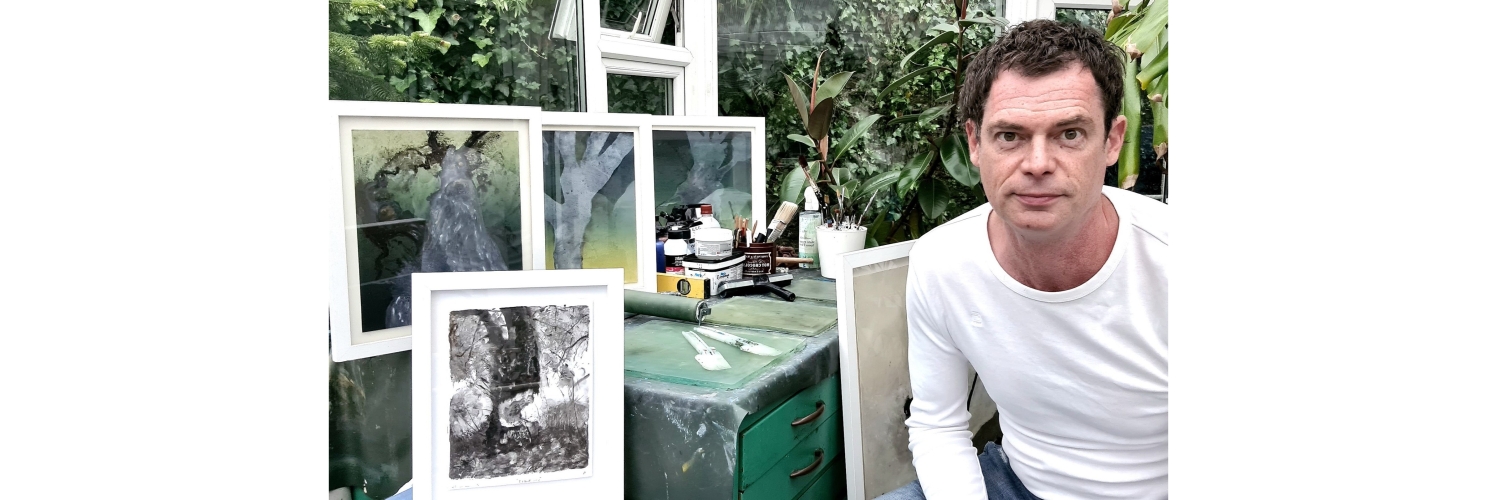

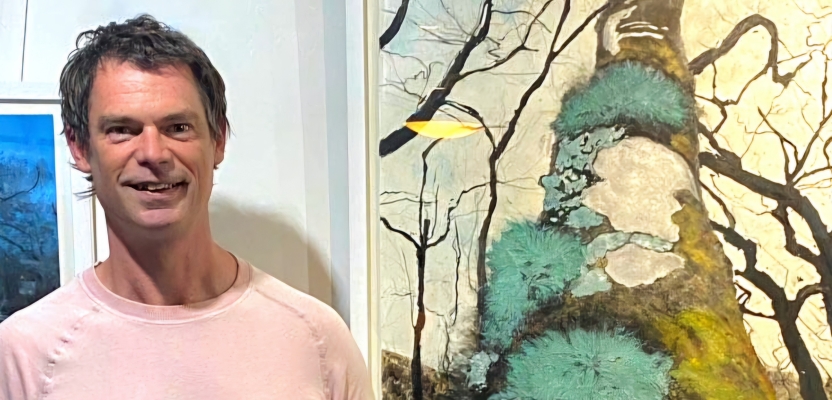

In a world brimming with artistic voices, one in particular resonates with rare and captivating originality. As a self-employed fine art printmaker working from his Dartmouth studio, Stewart Taylor has carved out a uniquely compelling niche with his gelliplate monoprints—works that bridge the gap between art and science to explore the nuanced beauty of the natural world.
Today, we are thrilled to shine our Member Spotlight on Stewart, celebrating not just his remarkable skill and environmental focus, but also his unwavering dedication to a craft that has earned him top honours on Creativepool. Join us as we delve into Stewart’s journey, from his art college epiphanies to his innovative printmaking techniques and discover the story behind the artist who continues to push the boundaries of visual storytelling.
How did you first get into the industry?
I’ve been an artist for nearly all the 30 years since I left art college – I think you have several moments during your creative education when the penny absolutely drops, and you realise that what you are doing [and how good it makes you feel] is something you want for the rest of your life.
Where are you based now and who do you work for?
I’m self-employed and work from my studio in Dartmouth/Devon
What is your personal background and what role did it play in your career?
My parents were both musicians, so I was encouraged to create from a very early age. That freedom and permission was also very much granted to me when I made the decision to go to art college and not go down a more academic/science-based path.
If you weren’t in your current industry, what would you be doing?
I looked very hard at doing Zoology and Veterinary Science – I have a life-long love of the natural world – but the pull of doing what I really wanted to do was too strong. I think my creative journey has partly pulled me back towards these subjects over time. That bridge between the arts and science has always been appealing. I did work in the Media industry for some time to support my practise, so that would be the other alternative!
Can you explain your creative process? What makes it unique?
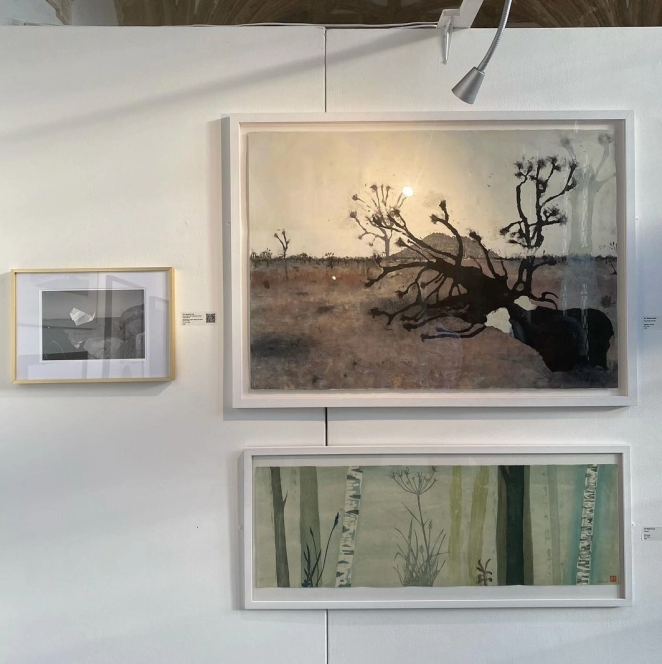
I use gelliplates for all my work now, and I have done for the past 6 years now [I’d previously used reprographic methods in both etching and screenprinting before this.]. Although many of my monoprints are ‘pure’ still, my larger works are composite gelliprints which also incorporate drawing [ink/pencil/pen], working in negative using masking fluid, and pigmented filler.
I think I’m ‘owning’ a unique space in this medium, and I was delighted to have an article about my processes published in Printmaking Today recently.
How would you describe your style?
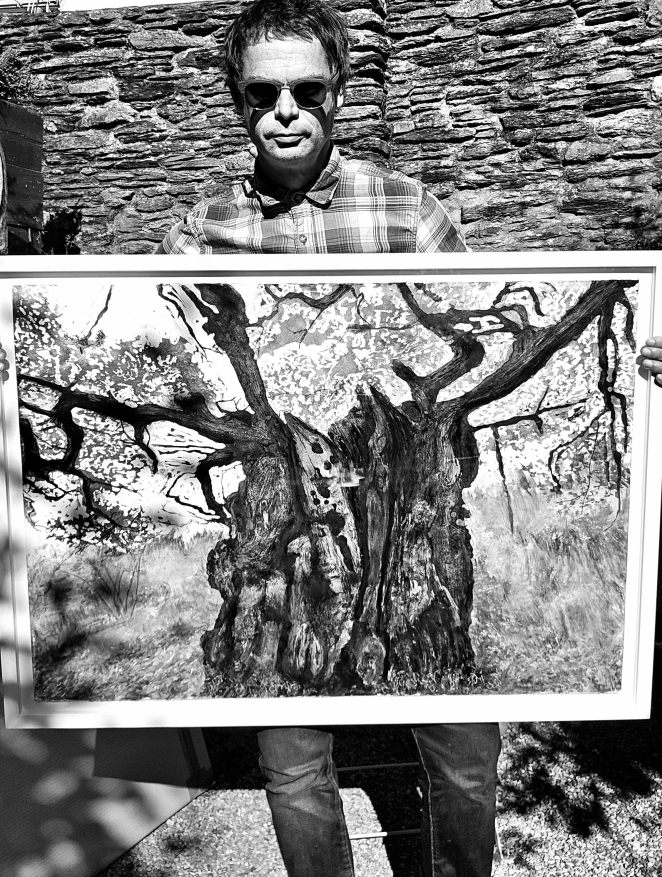
That’s a good question – I wouldn’t say I aim to have a particular style. My subject matter, for me, demands an element of natural representation that is heavily influenced by a sense of place and the individual character of each tree that I portray.
Which individuals do you gain inspiration from? Do you have any heroes in the industry?
I did my graduate thesis on Philip Guston, who to this day remains a major touchstone, & was to my mind the greatest American Painter of the last Century. His decision to move away from abstraction in the late 1960s to a personal and politically charged oeuvre caused a huge, lasting controversy.
His recent retrospective at the Tate Modern was jaw-droppingly good. Other major influences would include Goya, De Chirico, Del Piero, Anselm Kiefer, Lee Krasner, James Rosenquist, and Frank Stella. Of my contemporaries, Sarah Gillespie, Claire Cansick, and Bunny de Sade are big favourites. They all tackle similar issues to me around habitat encroachment and destruction.
What tips would you give to aspiring creatives looking for work?
Make sure you have a mature, large body of work behind you, and that you have a definite voice. & be super-resilient, because there will be plenty of rejections and knock-backs.
What tips would you give to other professionals to get more clients?
This is probably one that I can’t answer with any massive conviction right now, but it’s really a question of identifying your ideal audience. One that will have an organic relationship with you and your work, hopefully forever.
Can you share a memorable experience from your career journey that shaped your approach to creativity?
Following my Degree Show Private View, one of the senior lecturers Jim Tierney left a note in my comments book, requesting if I could spare a few moments to talk to him about my Work. This was duly arranged, & upon meeting him it was apparent he was deeply moved by my prints. In particular, he referenced their lyrical, quiet beauty and stated that it was the best printmaking degree offering he had seen in years.
Although inside I knew that my work was pretty good, this kind of validation was not only great for me moving out of the sheltered art college environment, but it meant a huge amount personally due to the high regard that he was kept in.
What kind of tools/kit/software could you not do without?
Gelliplates! & aside from that, a very good camera phone + a laptop
What’s your secret to staying inspired and motivated?
I think I have a subject to work with for the foreseeable future, and I’m reassured by the belief of both others and myself in my own output enough to keep going. I’ve not doubt that my work will take different routes in the future, and I’m very happy for it to evolve through collaborating with other artists and those that work in habitat restoration.
What’s the work achievement you’re most proud of?
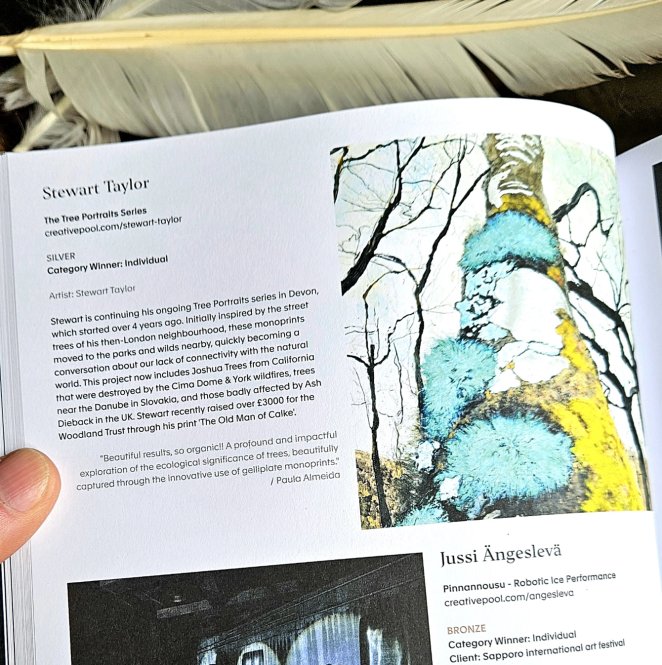
Be prepared to cringe – but coming top in the Creativepool Art category last year! Having recognition for my Tree Portraits series as a project by other creative professionals has been an enormous boost and is something I will be proud of for a long time.
As someone with experience in the industry, what trends do you foresee shaping the future of creativity?
The environmental crisis is fundamental to my work, and should be underpinning how we look at the world and each other.
What do you think sets apart truly exceptional creatives from the rest of the pack?
An unshakable belief in what they are doing, and total persistence.
How do you think technology has influenced the creative industries and how have you adapted to these changes?
I kind of sit outside this realm, so the adaption part of this question doesn’t really apply – but there are strong, aesthetic feelings around AI and CGI. How and when it’s used are key to how it does & doesn’t work. A crude example would be how truly awful the Stars Wars prequels are because of their totally obsessive use of new tech -I f you don’t have any unique, engaging or relatable content, you’re in deep trouble.
I think the fears around ChatGPT, Dalle and Sora threatening roles are understandable; but if you’re up against those simply generating recycled/generic content I think your own/team’s creativity will shine against it, providing you are employing this new tech and incorporating them when best required.
What is the one thing that you would change about the industry?
I’d somehow dissolve the power of social media that allows influencers in and around the Arts to gain enormous traction, who lack integrity and any discernible talent. Not sure how that is possible, sadly!
Any websites, books or resources you would recommend?
https://artopps.co.uk/ and https://resartis.org/ for artist’s opportunities and residencies.
One book about being an artist I’d recommend is ‘Night Studio’ by Musa Mayer.
Stewart Taylor January 22nd, 2025, at noon
thank you Ben & Silvia for helping with this feature. If anybody is interested in purchasing my work at half-price, I currently have a Crowdfunder running until 28th February for my new studio. We have already raised 6K of the initial 11K target for the build. Simple donations can also be made here;https://www.crowdfunder.co.uk/p/help-build-the-print-shed-1