
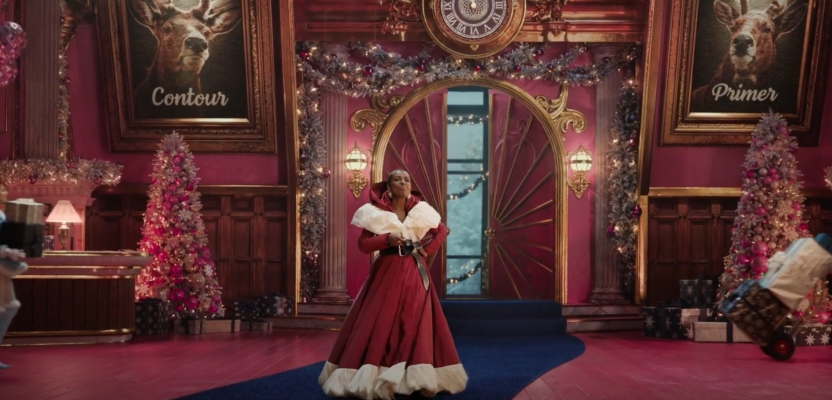

’Tis the season for big budget TV advertising campaigns. These shiny TVCs go one of three ways; they become classics (like the incredible Sainsbury's ad below from 10 years ago), get cancelled or, more likely, fade rapidly into obscurity. But whatever the outcome, there’s one thing festive TVCs all have in common, they never succeed on social media.
There was a time when Christmas adverts set the tone for the season. Many millennials, me included, still see the Coca Cola truck as the real beginning of the festive season.
More recently (that is, than the nineties), John Lewis completely changed the game for Christmas advertising. It’s hard to overstate the impact of the earlier John Lewis ads; they were talking points, tear-jerkers, often chart toppers, and most marketeers of a certain age can name their favourite.
And yet, as anticipated as these adverts still are, and with all due respect to the attempts of other retailers to replicate this success, the world has changed. Back in 2007, when the first John Lewis Christmas ad launched, the average UK citizen was watching 218 minutes of TV a day. In 2023, that had dipped to 149, a percentage loss approaching 32%.
Arguably, the realities of viewership are skewed by the very young, who rarely watch TV, and the elderly, who get six hours a day. But if we want to talk about commercial realities, then for the millennials who represent the peak of UK buying power, TV watched amounts to 72 minutes a day including on-demand services. By contrast, millennials average more than double that on socials, at 154 minutes (a figure which I, a terminally online person, would argue feels suspiciously low).

In light of our rapidly evolving media consumption, it feels odd that brands don’t seem willing or able to crack social-first Christmas campaigns. If our biggest spenders spend the most time online, why aren’t brands meeting them there?
Ever the trailblazer, this year’s effort from John Lewis does include a social mechanic, with TikTok users invited to cover the soundtrack to the third in their trio of adverts. But it’s a toe-dipped, cautious bolt-on to test the waters, rather than a real play for online ownership of the festive season.
The reality is that the big beasts of media don’t really understand the rules on social media when it comes to campaigns. There’s whacking out a couple of viral BAU videos, and then there’s building a full-scale seasonal strategy - and the latter is still fairly uncharted territory.
Speaking as a social media lurker both personally and professionally, there’s three core areas which need to be addressed before we see the first brand achieve pervasive social success with a Christmas campaign.
The Sincerity Gap
In traditional media, Christmas is sacred territory. It’s earnest, and wholesome, and heartwarming. We do not laugh at Christmas. We might laugh with Christmas sometimes, but usually only when there’s a cute dog/cat/carrot involved. This, of course, is completely at odds with (current) social culture.

From irony, to post-irony to meta irony, the tone on social has become increasingly spiky. At its lightest, it leans into the absurd, at its darkest it tears apart the poor souls still attempting to be sincere online. A reaction to early noughties oversharing (#LeaveBritneyAlone), today’s social users are not only afraid of vulnerability, but deeply disdainful of it.
A successfully integrated Christmas campaign would need to understand the difference in tone between TV and TikTok and to offer a platform that can cater to both. The social elements would need to be self-aware and wry - they’d need to understand Hi Gay and what it says about the way brands address social users, while TV would still demand warm and fuzzy. It’s about finding a way to be both the Grinch and Santa, charming the old dears and entertaining the cynical online mass.
The Shining
The other issue with Christmas campaigns is their inherent shininess. By now, we should all understand that ‘native’ is the goal when it comes to how brand content looks and feels; and cut-downs from hyper-polished TVCs do not meet that brief.
Ultimately, few of us swipe to be sold to, so the goal is to create content which feels so true-to-platform, so in tune with users, that viewers don’t realise it’s an ad until they’re fully engaged with the content.
And what’s interesting is that, for most brands, they’re actually halfway there. Christmas is really the one remaining time of year when the adverts become really creative, where they live and die by storytelling. In essence, that commitment to narrative above brand visibility is the perfect place to start for a social campaign (just with much, much lower production value).
For example, imagine if the Morrisons singing gloves were recreated lo-fi, in a store staff room by a bunch of giggling employees on their break? Keep the creative, but make it make sense for the viewership.
The Influencers
Instant disclaimer - while I do believe influencer use is a crucial tool in securing success on social media, it absolutely should not be the lynchpin of a campaign. Your creative should speak for itself, and if it doesn’t, not only will it not work, but it’ll also damage your partner influencer’s credibility too, which further cements the loss.
What is essential is the buy-in of social tastemakers. Let’s say you’re running with the oven gloves. You’ve done the lo-fi staffroom version; you need it to gain traction. At this point you supplement the campaign with the relevant heavy hitters - maybe you get ItalianBach to demonstrate how he’d overpower a chorus of oven gloves.

Maybe you get Ash Holme and Jack Remmington to do an oven glove puppet show of their favourite festive chat up lines. Whatever you do, you bring in people who can drive social proof, and you let them shape the content.
Influencer collaborations in this context are not for sales, they’re for reach. They’re for getting your creative noticed, for driving viewers to places where you can deliver more on-brand messaging, they’re for gaining access, not for selling.
It’s too late for 2024, but 2025 could be the year we see Christmas content really take off on social. For brands it’s a no-brainer in terms of reaching current and future customer groups. And for creatives, it’s an irresistible challenge. As for this year, I’ll be watching the results of John Lewis’s TikTok effort closely, because odds on, maybe next year, they’ll be the ones who cross that social finish line first.
By Beth Blance, Associate Creator Director at SocialChain