BUCK
Amsterdam
ABOUT
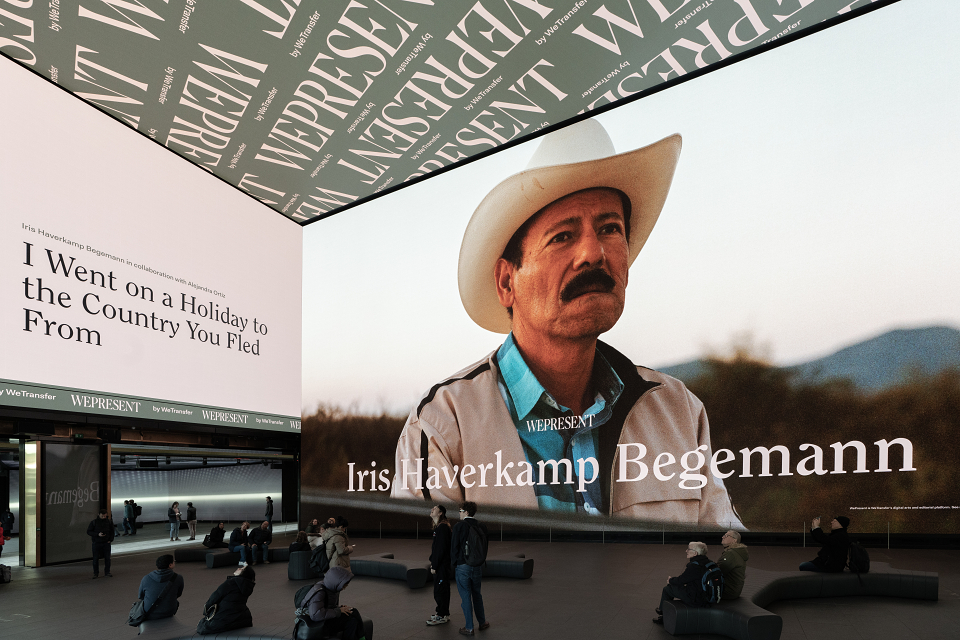
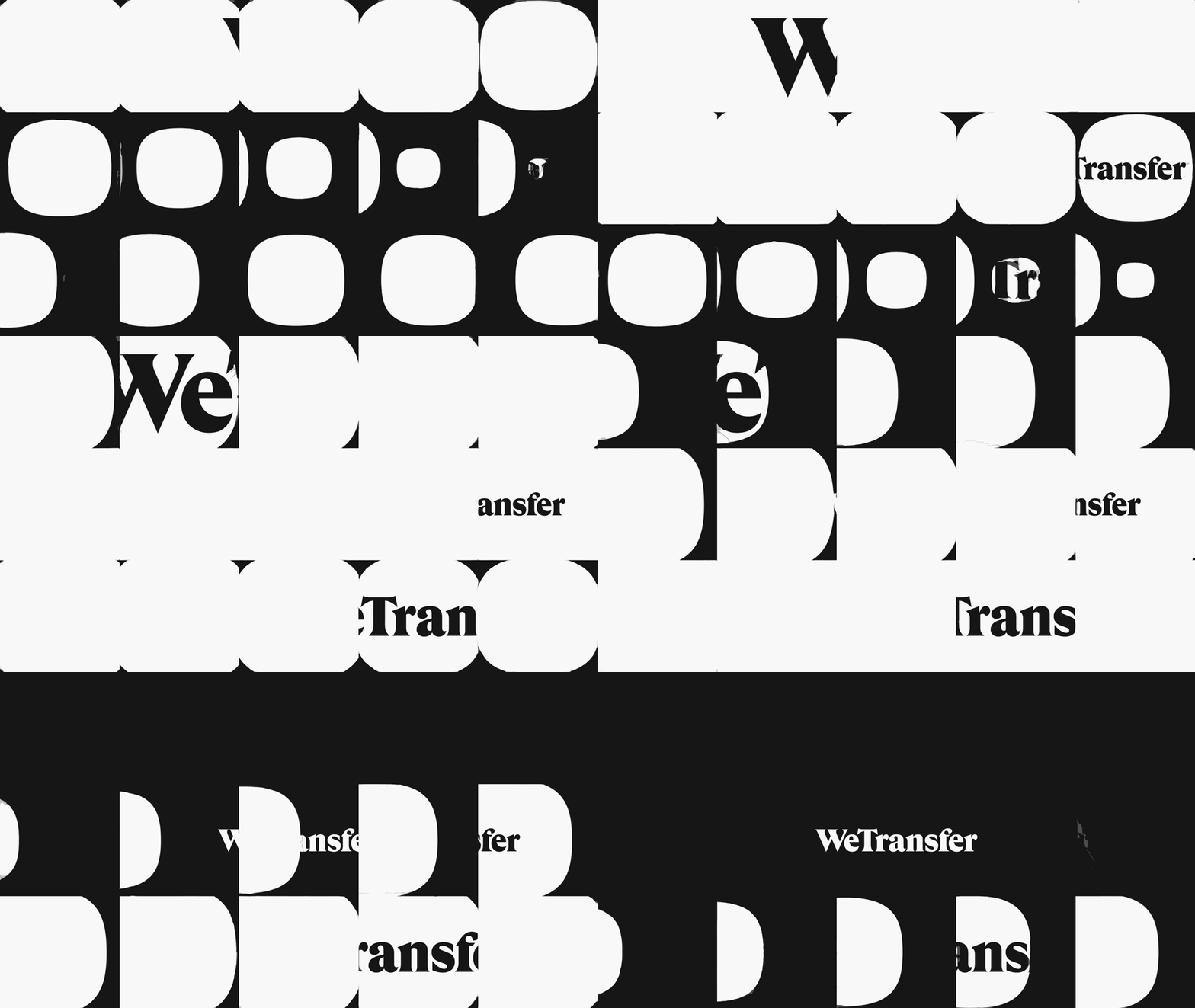
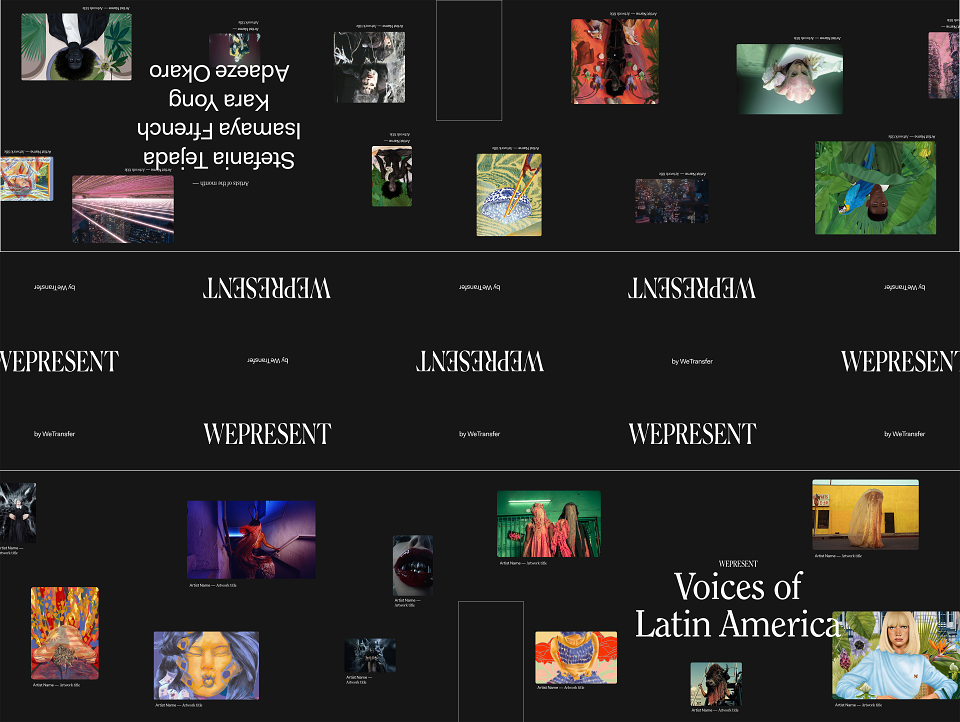
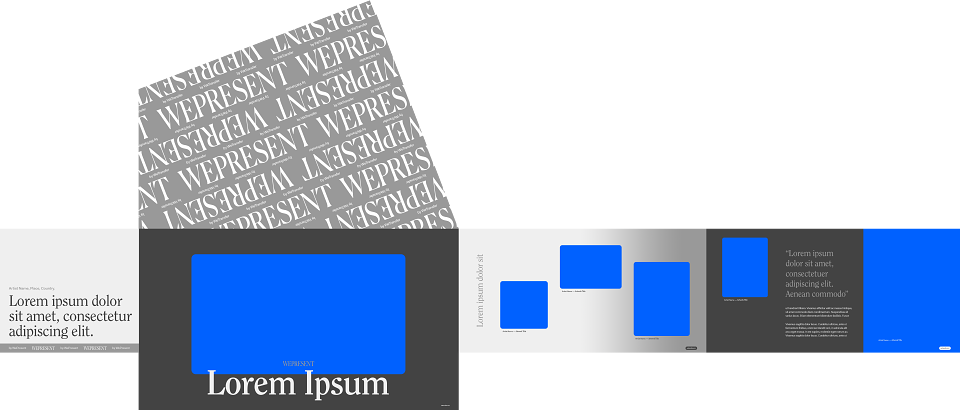
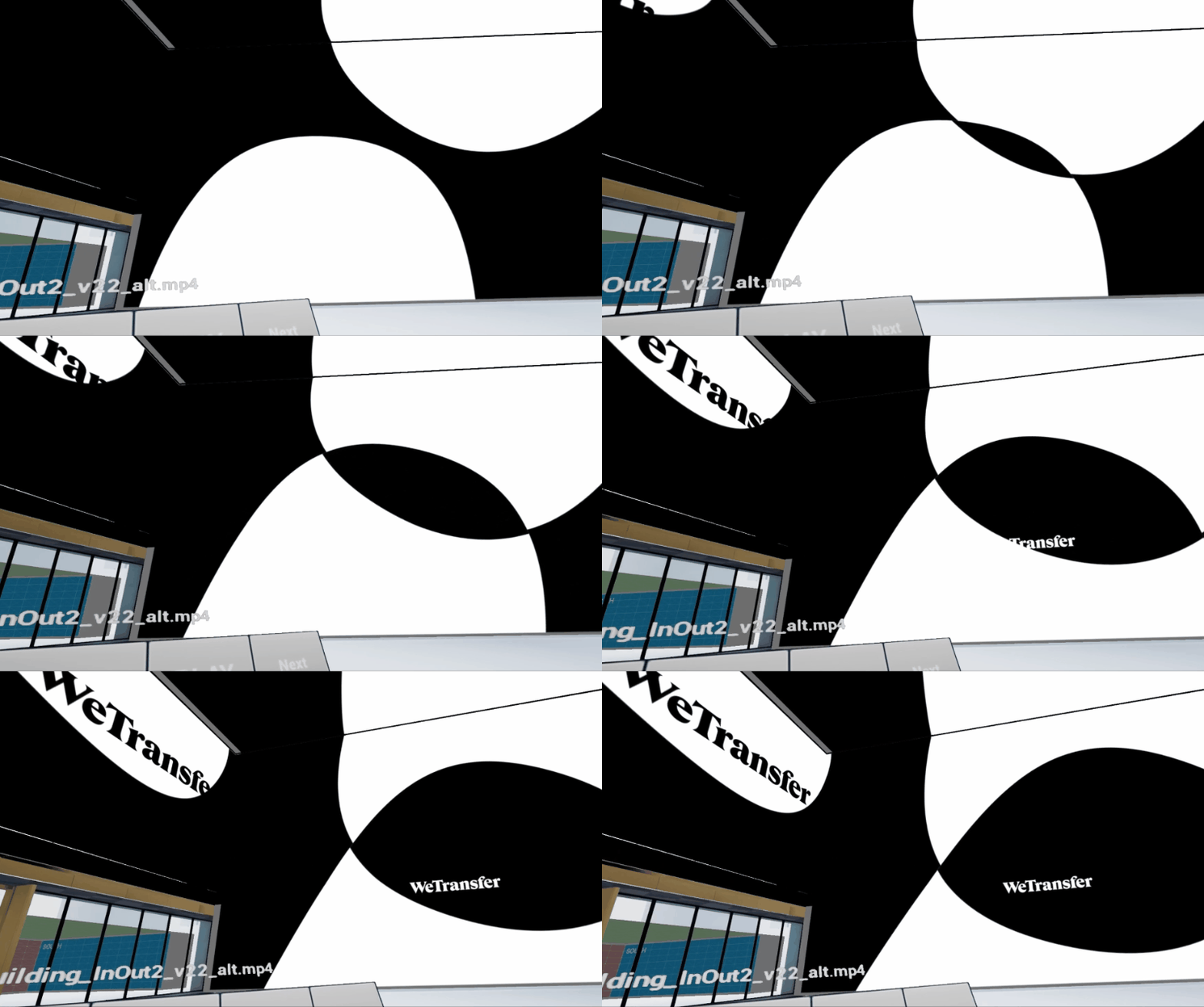
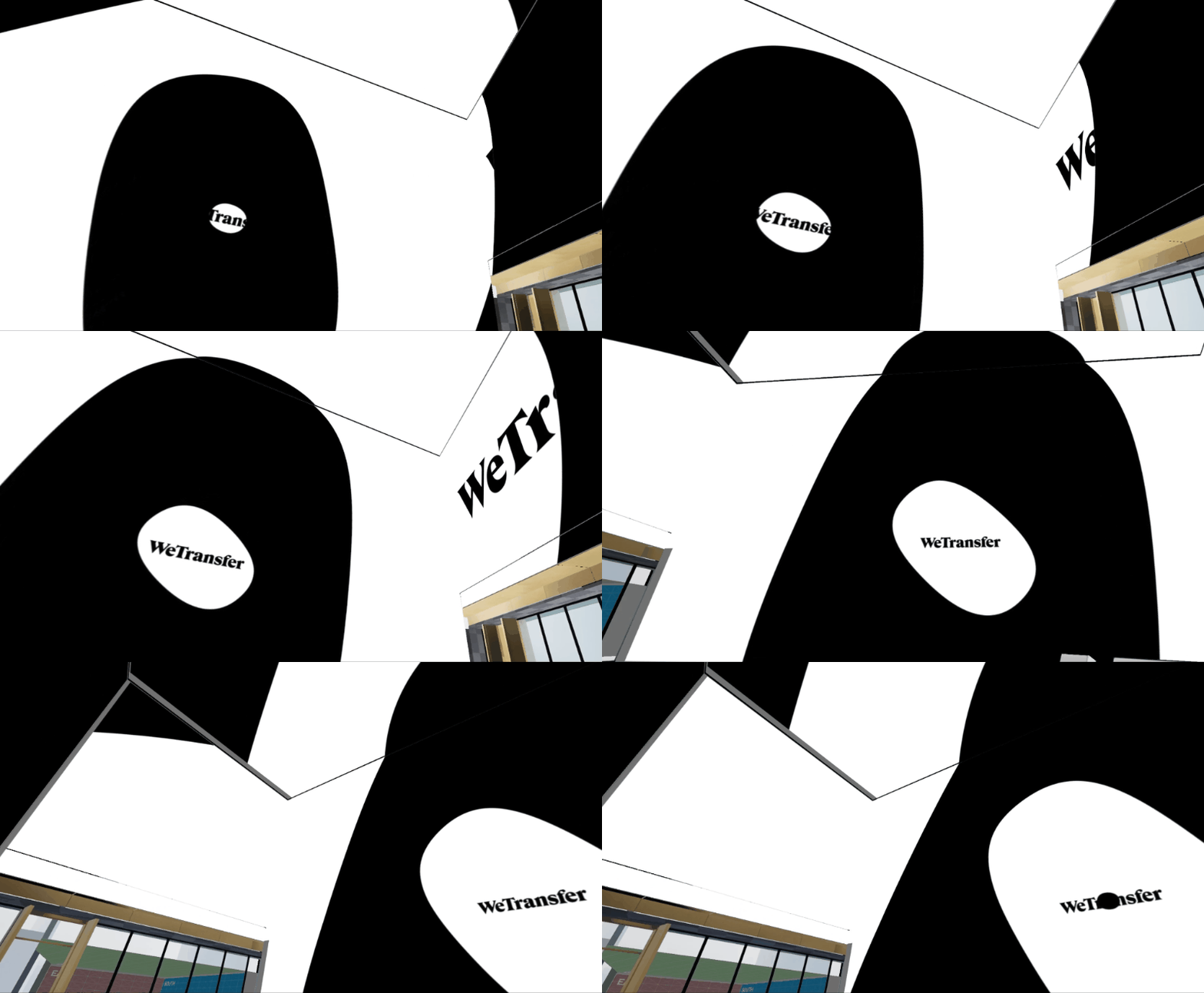
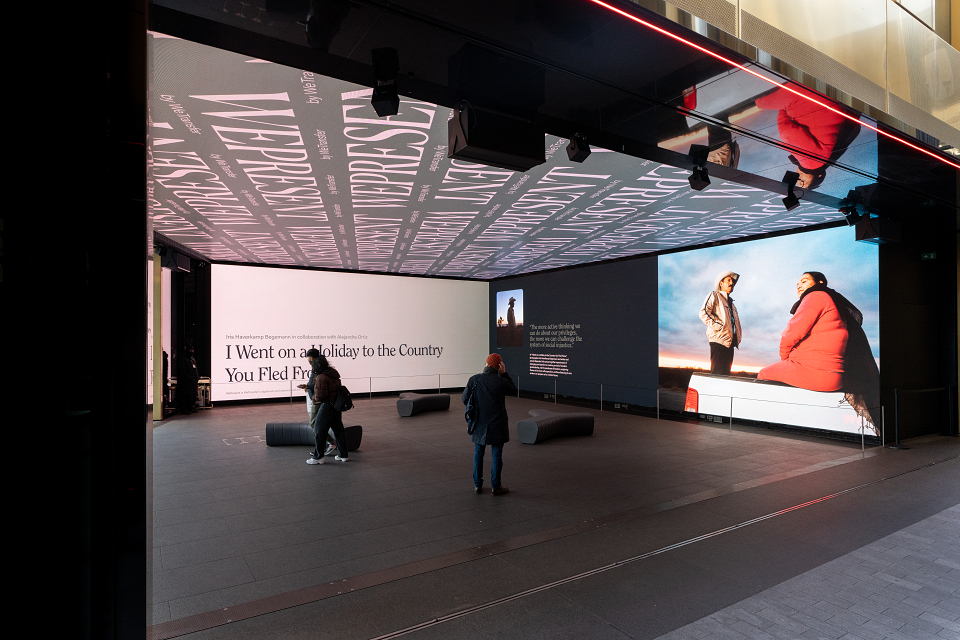
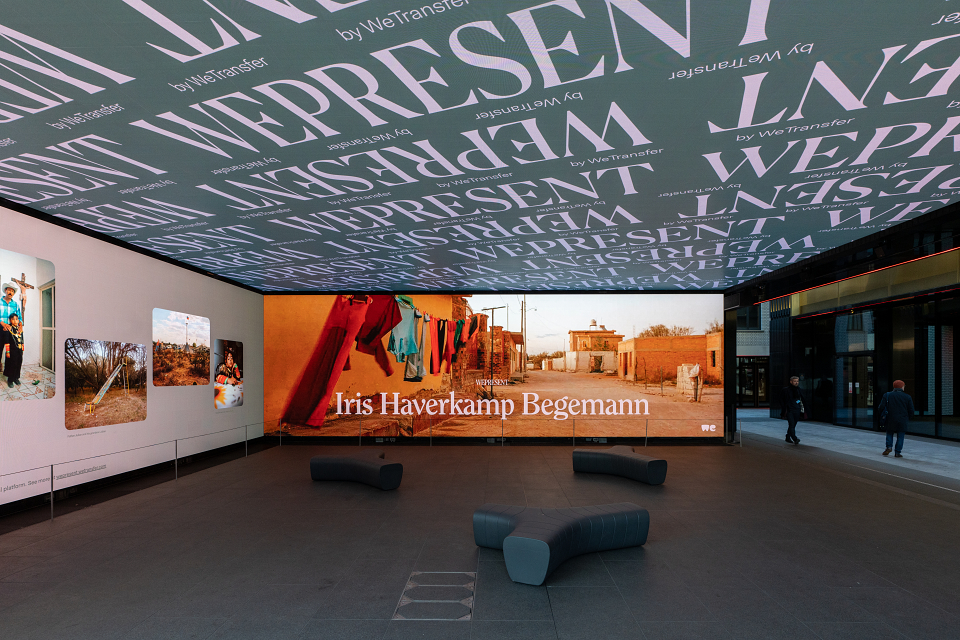
BUCK was asked to help WePresent (WeTransfer’s award-winning digital arts and editorial platform) decide how to best utilize the immersive screens at Outernet London. Besides being an opportunity for us to show off the nifty WeTransfer mnemonic we designed to a live audience, we were able to create and develop a cohesive look to the overall exhibition in the form of modular design templates.
First things first. What is Outernet London?
Outernet is a public arts showcase in the heart of the bustling Tottenham Court transit and entertainment precinct, in West End. Here people eat and drink while taking in live music, immersive experiences, and video art on the world’s largest LED screens.
Space and time
There were three primary spaces within Outernet to design for:
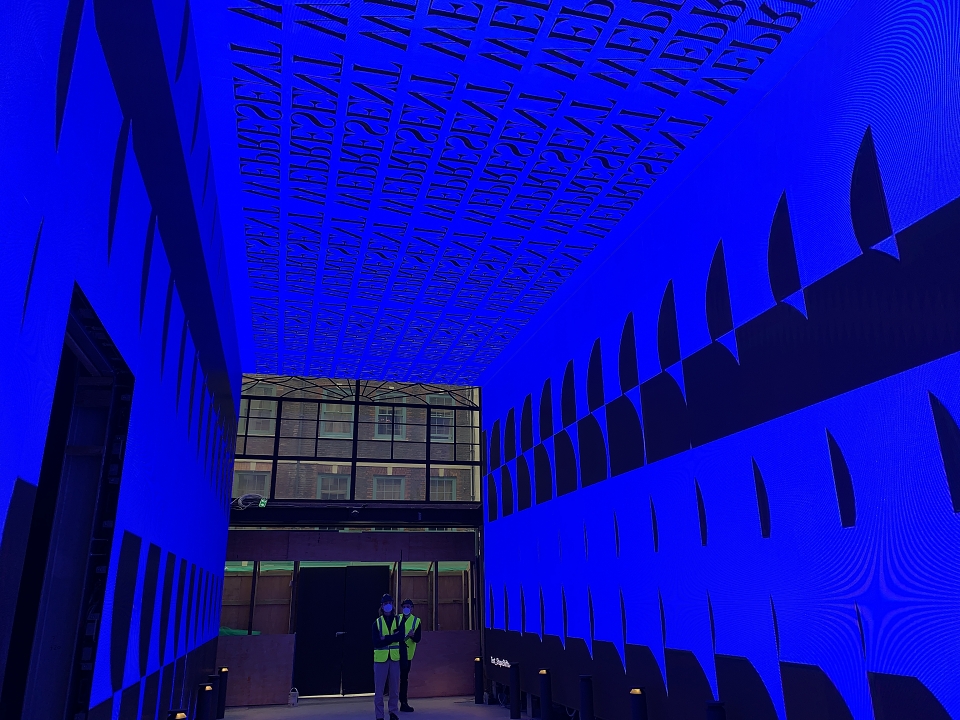
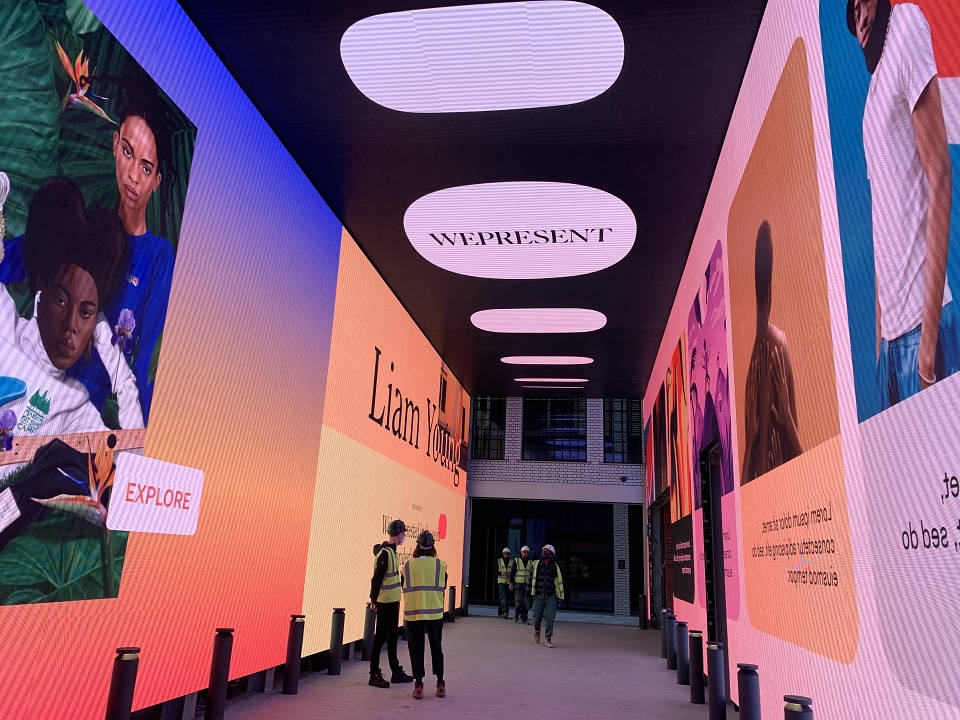
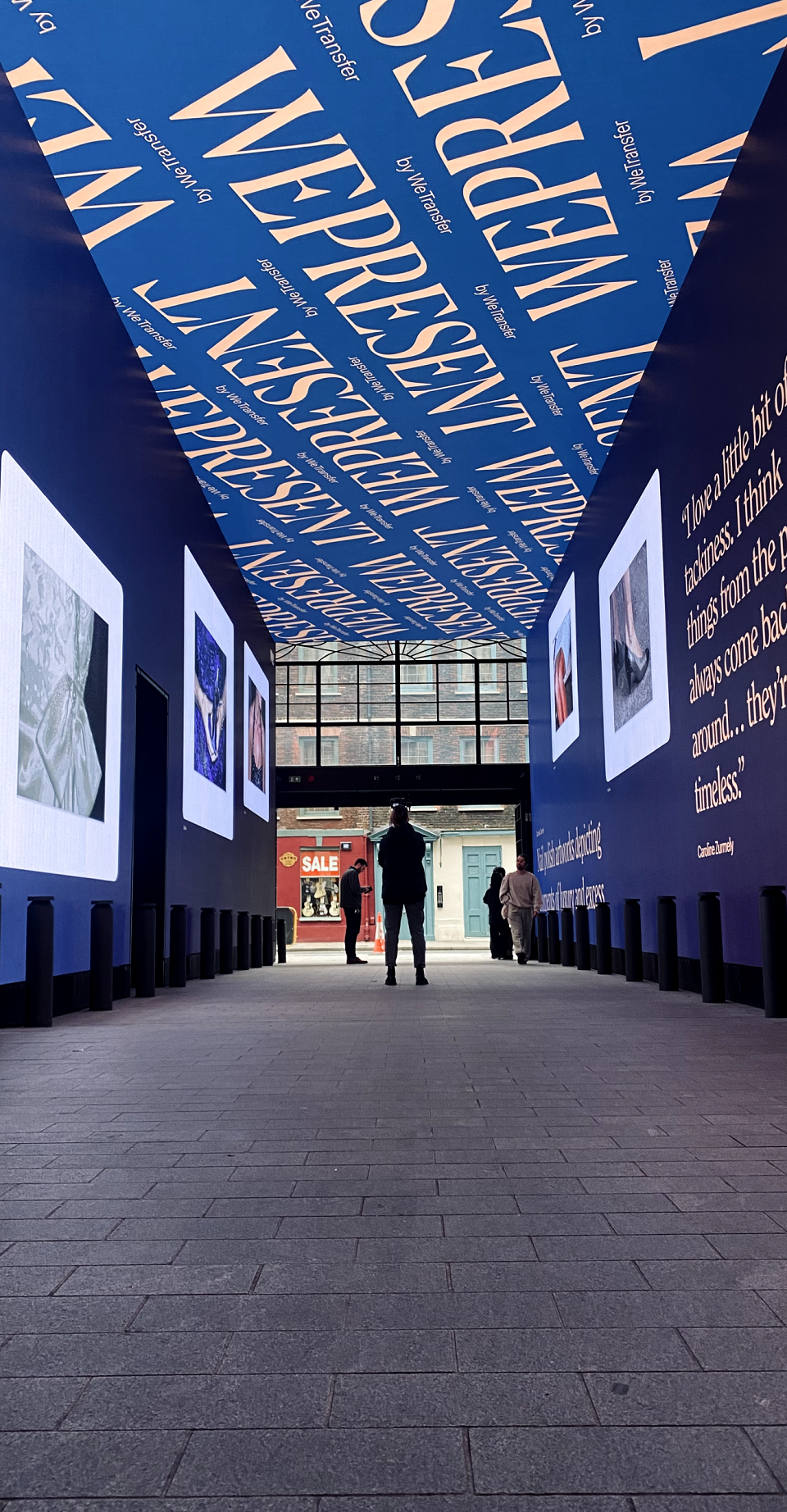
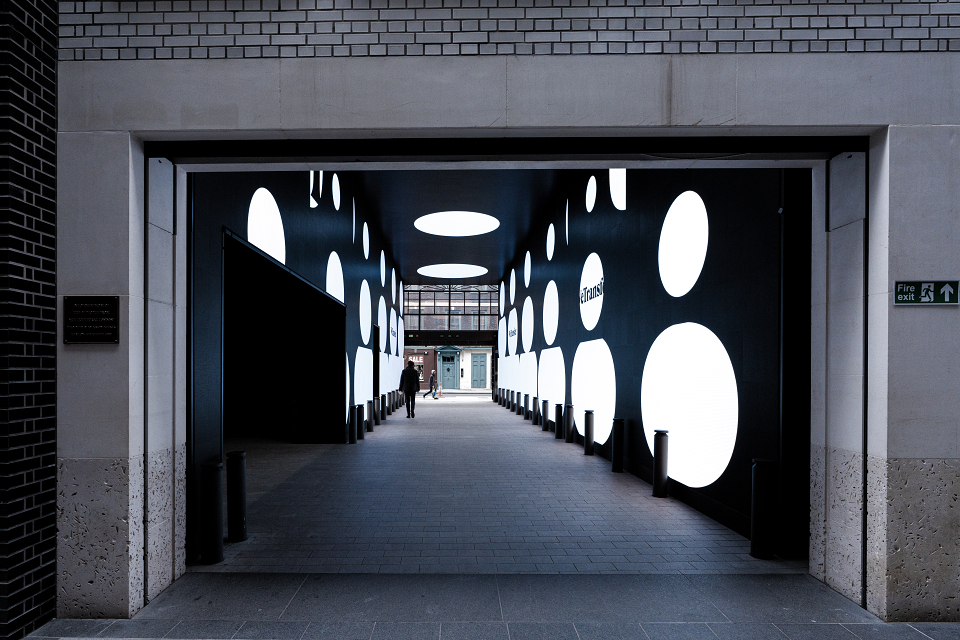
Arcade - a tunnel and walkway between spaces
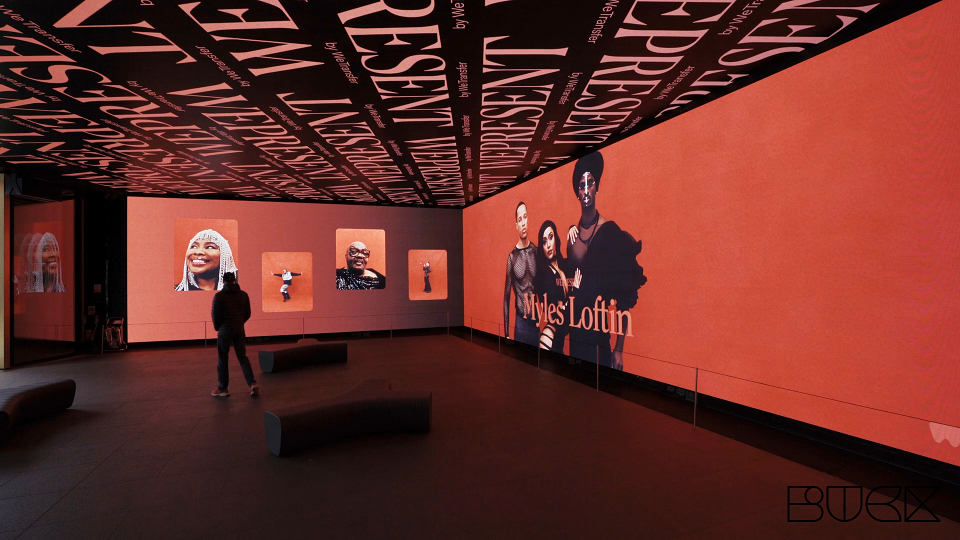
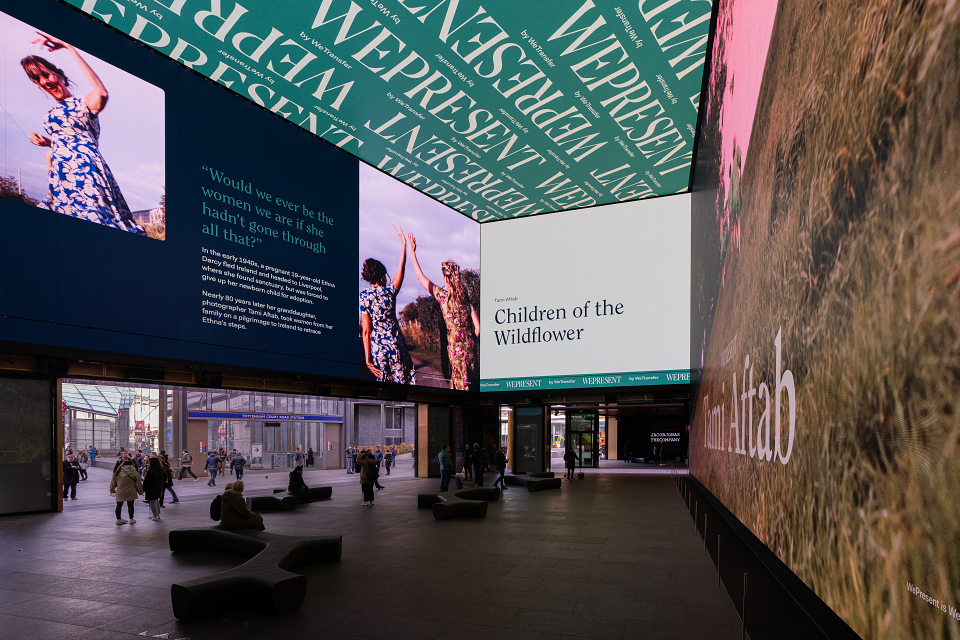
Now Trending - a small gallery space
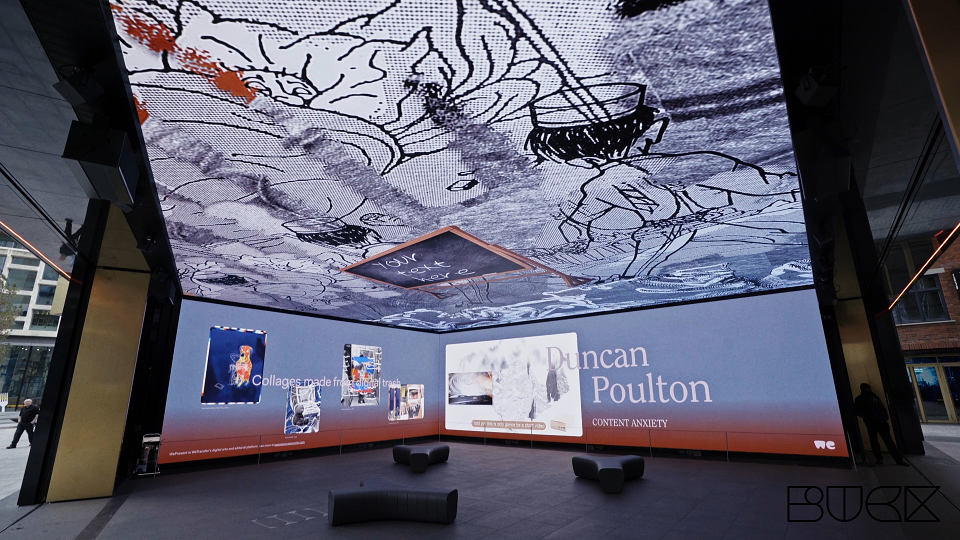
Now Vista - a gigantic space with kinetic panels (Louvre) that both conceal and reveal.
These spaces are all used differently by the public. Some are transient. Others invite people to linger and hang out. Viewing angles were another challenging dimension to this job. How can we create depth and dimension to the space and give it a feeling of movement? But just the right amount of movement – too much, or too fast at this scale (the size of a movie screen) and people could get nauseous. A very real concern (and why only teenagers sit in the first row of movie theaters.)
Considering the use cases for each space was essential. Those use cases would really influence our design. The only problem was the spaces were under construction. So doing on site tests was out of the question. What’s a designer to do?
Necessity is the mother of invention
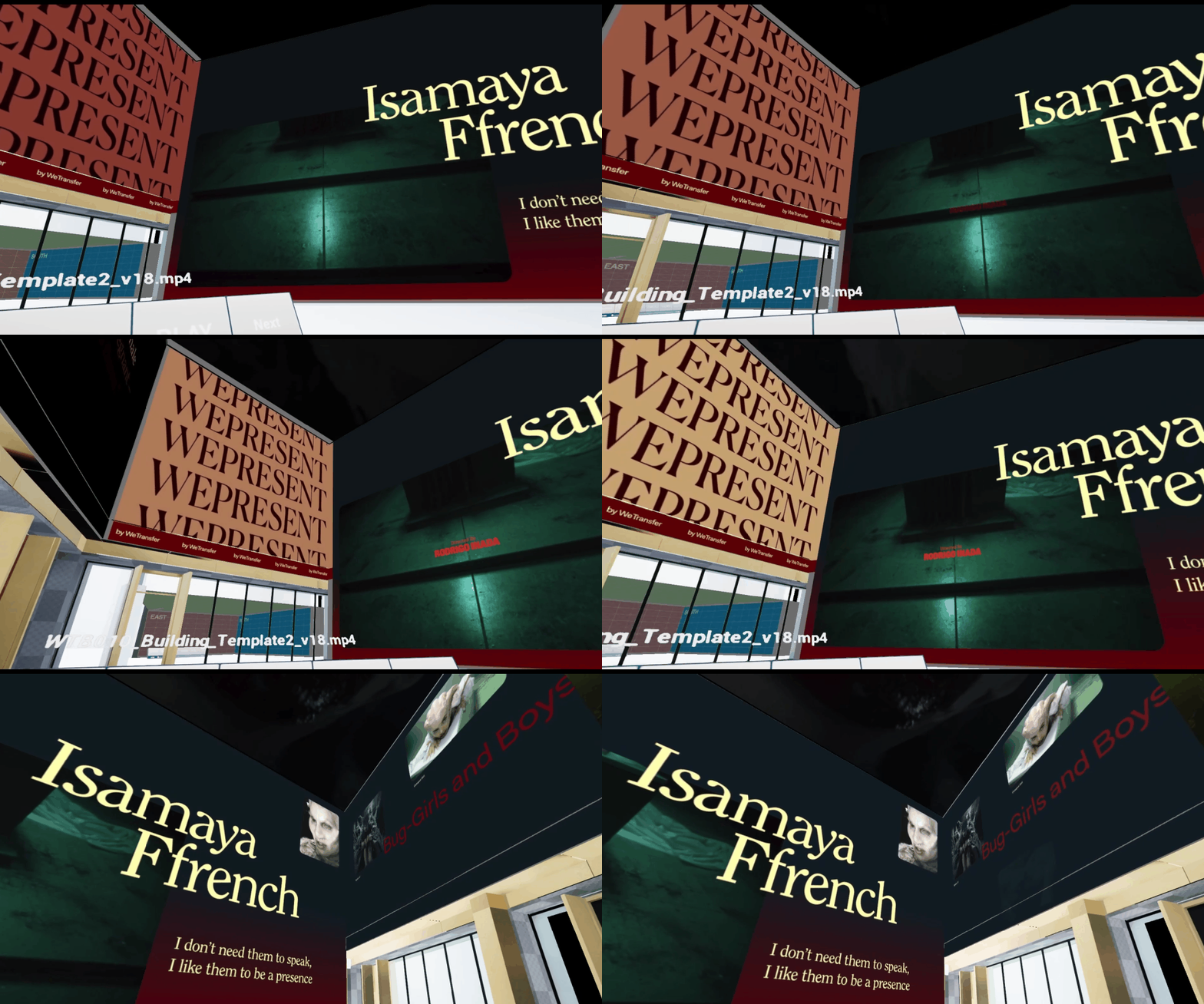
Without the ability to go on-site in the runup to the exhibit, we did the next best thing. Using VR, we could visualize the space and how the content would appear in situ to better understand how the design templates looked and felt in the space.
Modular systems
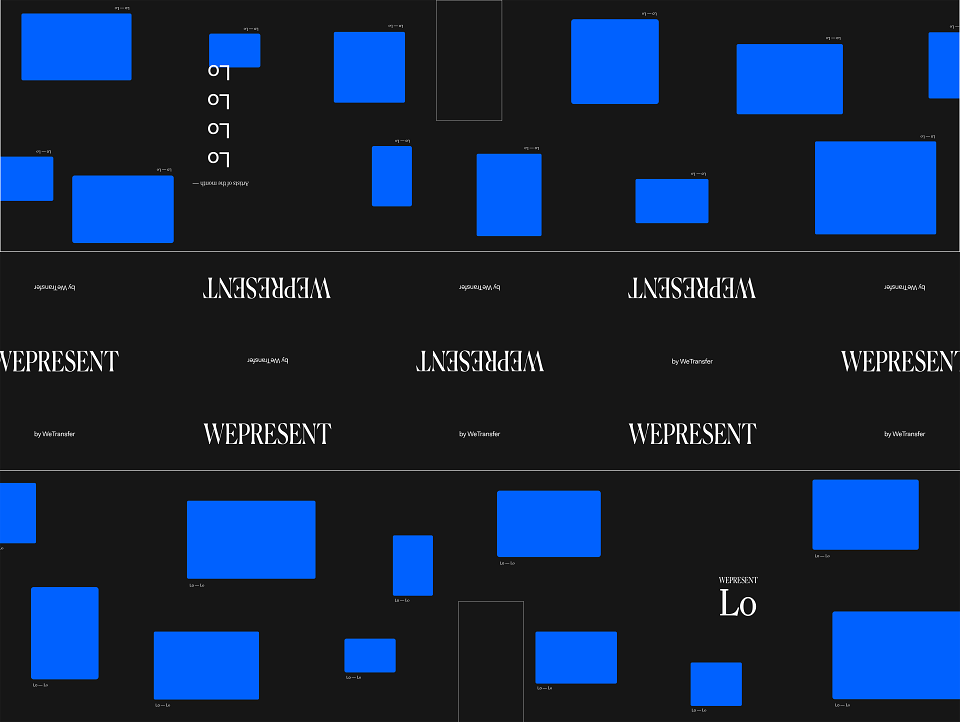
There was no set length of time for the work to run across the screens so we developed a modular vision that would allow WePresent and Outernet the power to be dynamic with what they feature, when they feature it, and for how long it runs. That meant creating design loops that had a similar start and end point so they would flow seamlessly and could be easily edited together.
Con Templates
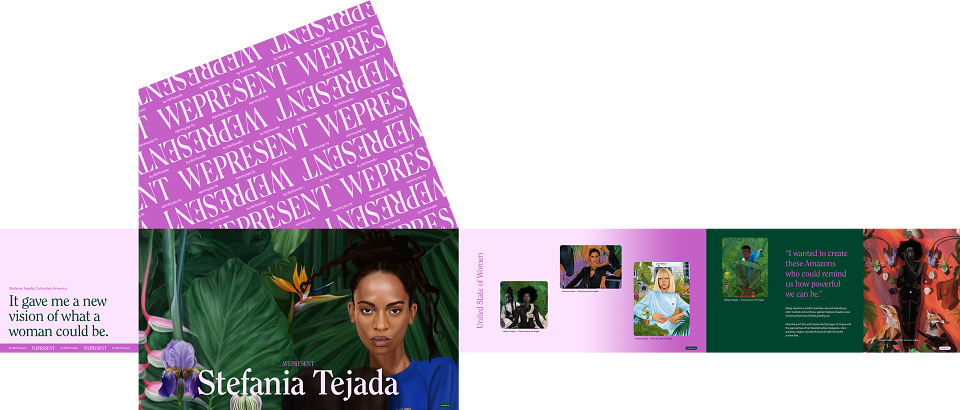
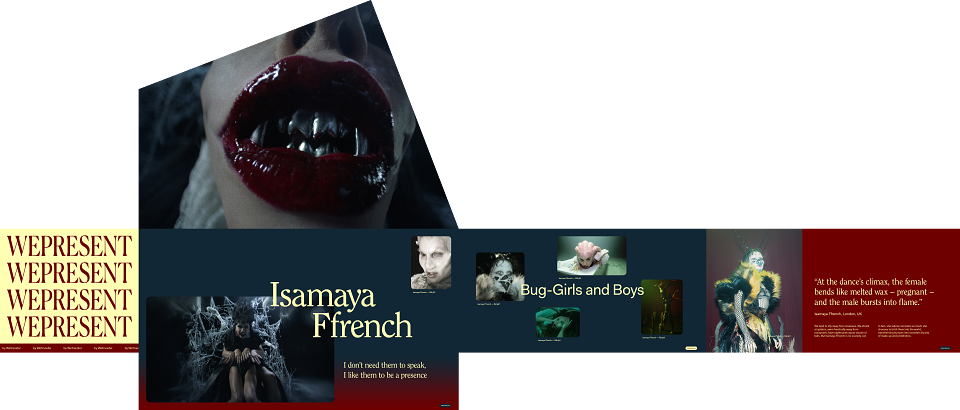
WePresent wanted to celebrate diverse cultures and perspectives so the Outernet spaces became showcases for artists from around the world. Our template designs were the cohesive element that brought it all together and helped bridge all the various styles. We designed eight templates in all: 3 each for the Now Building and Now Trending spaces and 2 for the Now Arcade space.
Our approach
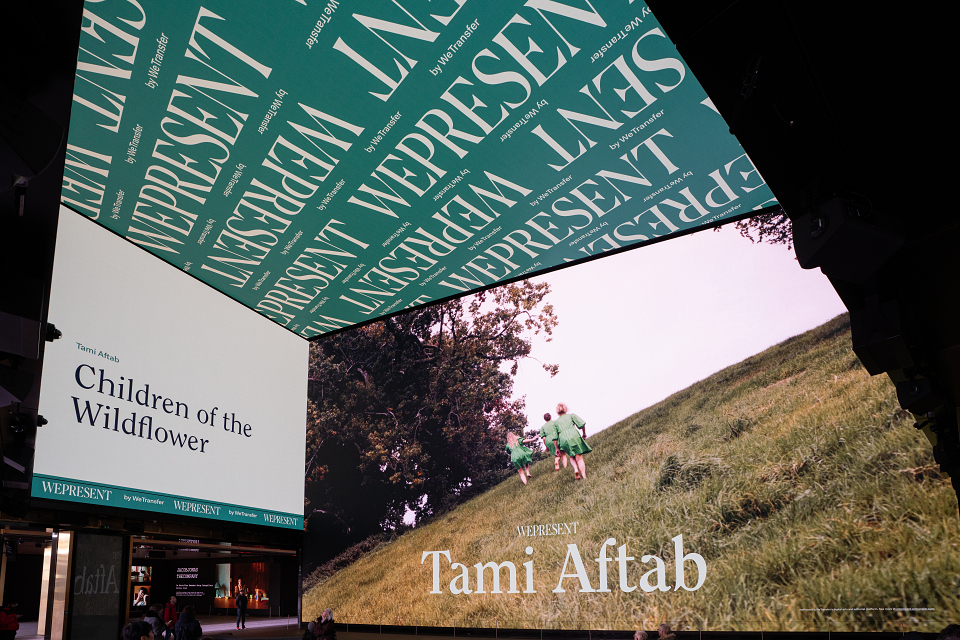
Our approach to this in terms of design was to build on the brand evolution work we’ve already developed with our work on the mnemonic. We use this mnemonic as a device to showcase, inform, and thread content and to make it feel cohesive, ownable, and immersive through spatially-considered design and impactful motion that utilizes the Outernet space.
Testing…testing….1, 2
We built a series of tests to complement Outernet’s pre-existing suite in order to get a feeling for how these would play in the spaces. Speed, color, footage, and scale were all pressure-tested to make sure there wouldn’t be any unforeseen issues for the run of the event.
The final work ran in real-time at a full 8k resolution. With the modular design system we developed, Outernet could combine, mix, and match templates with different looping backgrounds, and use assets across multiple stages of the experience to make each sequence feel as unique as possible.
MADEIT CREDITS
-

Lily DarbyClient
-

BUCK -

Vincent LammersExecutive Creative Director | Partner
Annual 2023 ShortlistWeTransfer OuternetOOH