Blair Barnette
Creative director
ABOUT
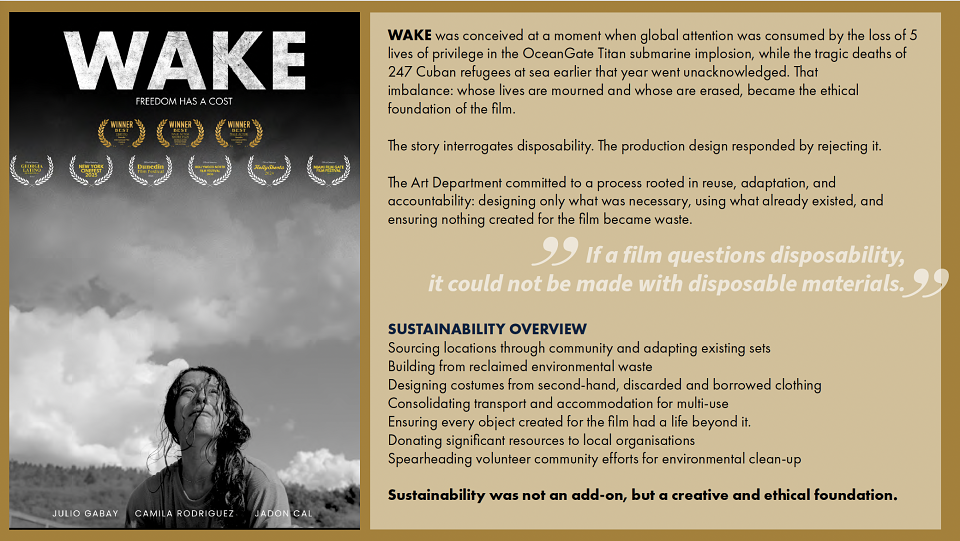
WAKE was conceived at a moment when global attention was consumed by the loss of 5 lives of privilege in the OceanGate Titan submarine implosion, while the tragic deaths of 247 Cuban refugees at sea earlier that year went unacknowledged. That imbalance: whose lives are mourned and whose are erased, became the ethical foundation of the film.
"If a film questions disposability, it could not be made with disposable materials"
The story interrogates disposability. The production design responded by rejecting it. The Art Department committed to a process rooted in reuse, adaptation, and accountability: designing only what was necessary, using what already existed, and ensuring nothing created for the film became waste.
SUSTAINABILITY OVERVIEW
- Sourcing locations through community and adapting existing sets
- Building from reclaimed environmental waste
- Designing costumes from second-hand, discarded and borrowed clothing
- Consolidating transport and accommodation for multi-use
- Ensuring every object created for the film had a life beyond it.
- Donating significant resources to local organisations
- Spearheading volunteer community efforts for environmental clean-up
Sustainability was not an add-on, but a creative and ethical foundation.
Circular Design as Narrative Truth
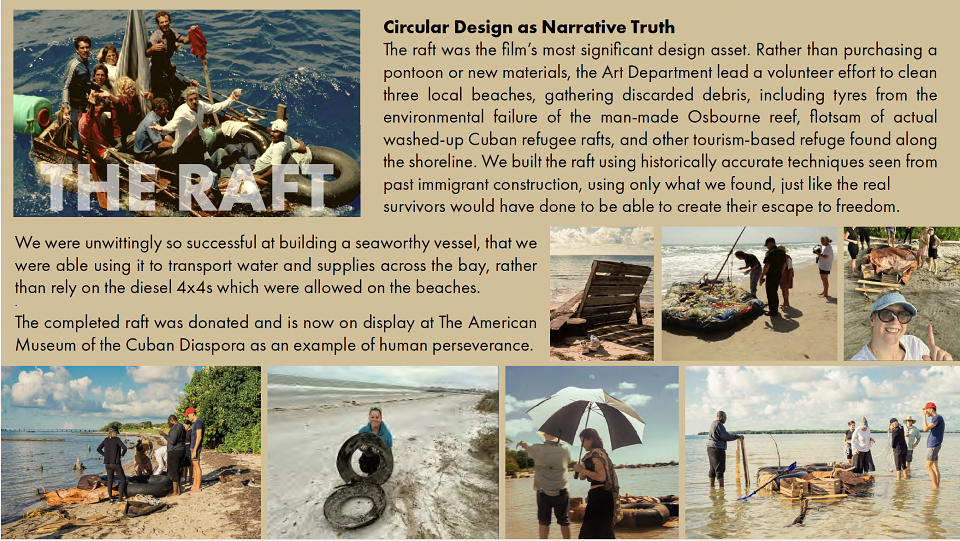
The raft was the film’s most significant design asset. Rather than purchasing a pontoon or new materials, the Art Department lead a volunteer effort to clean three local beaches, gathering discarded debris, including tyres from the environmental failure of the man-made Osbourne reef, flotsam of actual washed-up Cuban refugee rafts, and other tourism-based refuge found along the shoreline. We built the raft using historically accurate techniques seen from past immigrant construction, using only what we found, just like the real survivors would have done to be able to create their escape to freedom.
We were unwittingly so successful at building a seaworthy vessel, that we were able using it to transport water and supplies across the bay, rather than rely on the diesel 4x4s which were allowed on the beaches.
.
The completed raft was donated and is now on display at The American Museum of the Cuban Diaspora as an example of human perseverance.
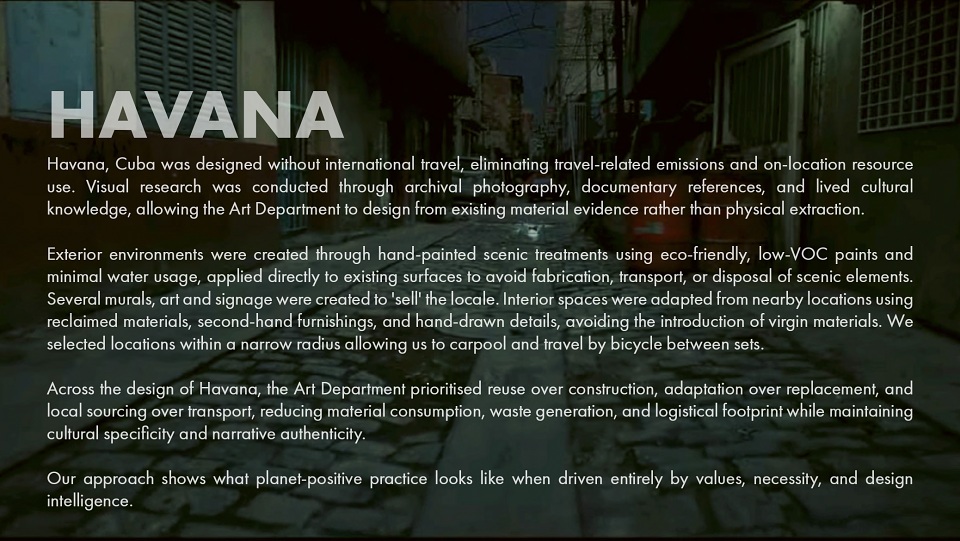
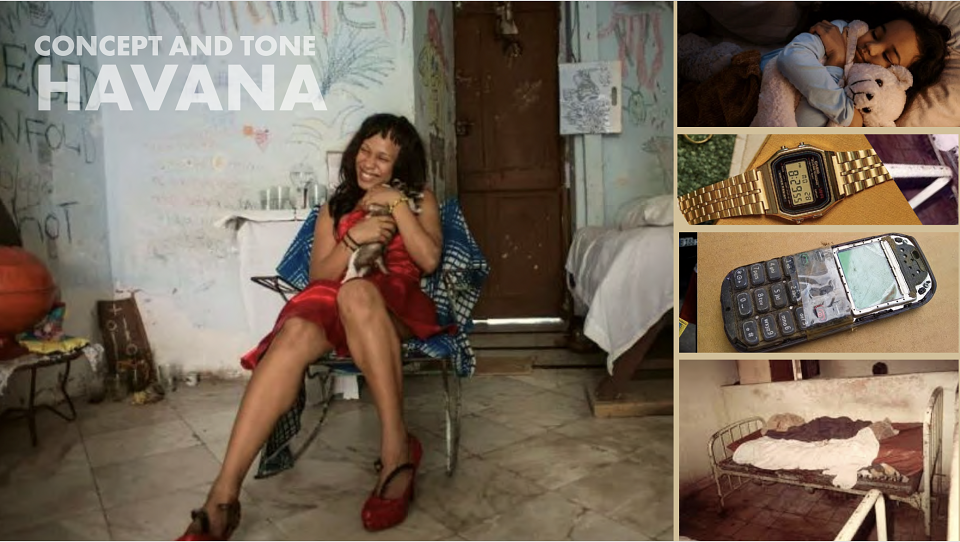
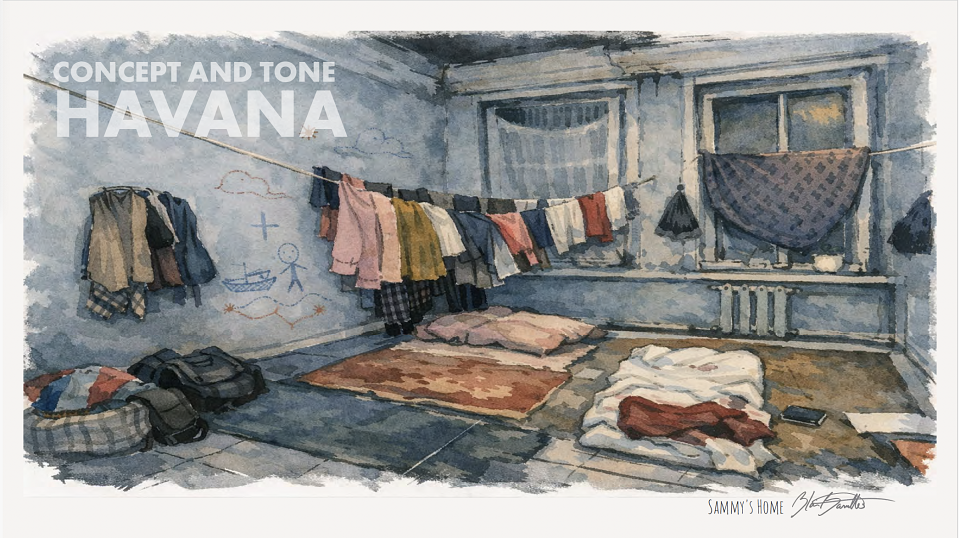
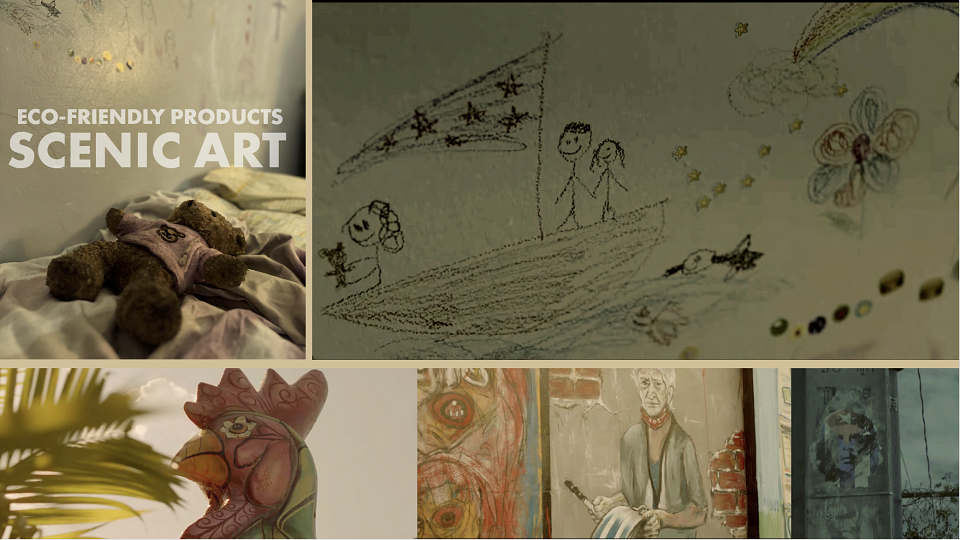
Havana, Cuba was designed without international travel, eliminating travel-related emissions and on-location resource use. Visual research was conducted through archival photography, documentary references, and lived cultural knowledge, allowing the Art Department to design from existing material evidence rather than physical extraction. Exterior environments were created through hand-painted scenic treatments using eco-friendly, low-VOC paints and minimal water usage, applied directly to existing surfaces to avoid fabrication, transport, or disposal of scenic elements. Several murals, art and signage were created to 'sell' the locale. Interior spaces were adapted from nearby locations using reclaimed materials, second-hand furnishings, and hand-drawn details, avoiding the introduction of virgin materials. We selected locations within a narrow radius allowing us to carpool and travel by bicycle between sets. Across the design of Havana, the Art Department prioritised reuse over construction, adaptation over replacement, and local sourcing over transport, reducing material consumption, waste generation, and logistical footprint while maintaining cultural specificity and narrative authenticity.
Our approach shows what planet-positive practice looks like when driven entirely by values, necessity, and design intelligence.
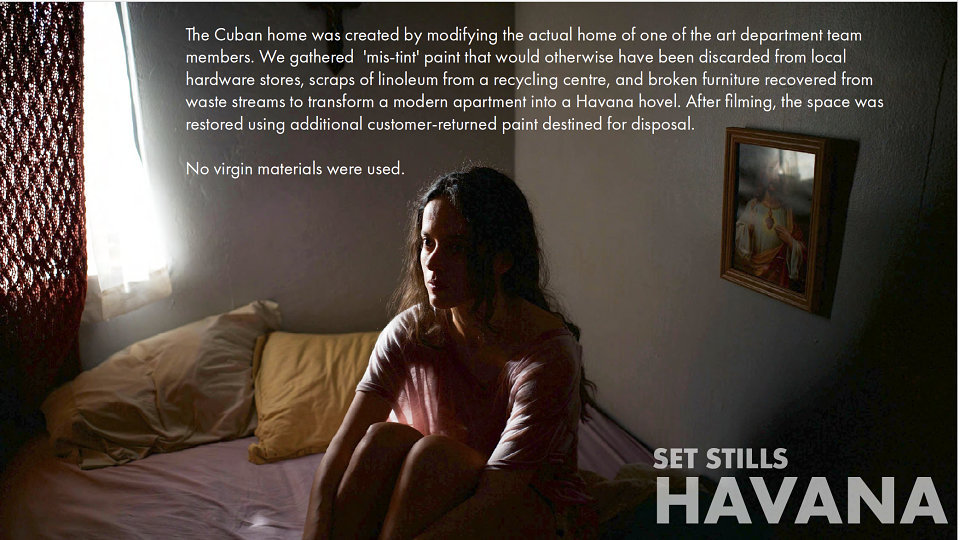
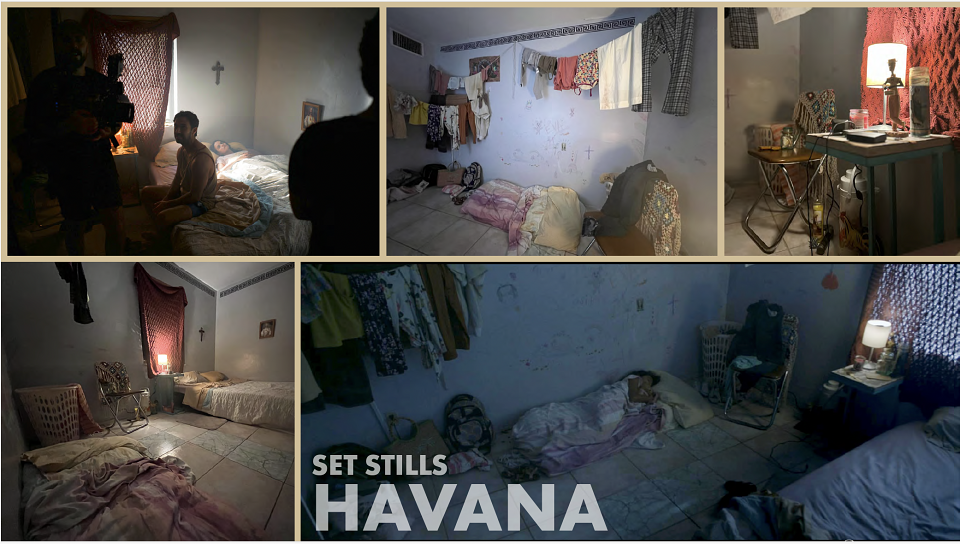
The Cuban home was created by modifying the actual home of one of the art department team members. We gathered 'mis-tint' paint that would otherwise have been discarded from local hardware stores, scraps of linoleum from a recycling centre, and broken furniture recovered from waste streams to transform a modern apartment into a Havana hovel. After filming, the space was restored using additional customer-returned paint destined for disposal.
No virgin materials were used.
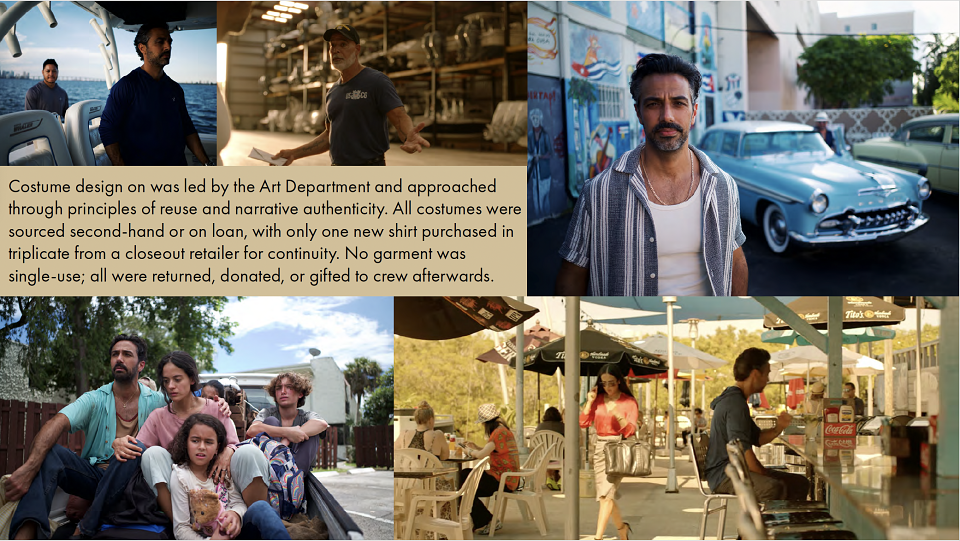
Costume design on was led by the Art Department and approached through principles of reuse and narrative authenticity. All costumes were sourced second-hand or on loan, with only one new shirt purchased in triplicate from a closeout retailer for continuity. No garment was single-use; all were returned, donated, or gifted to crew afterwards.
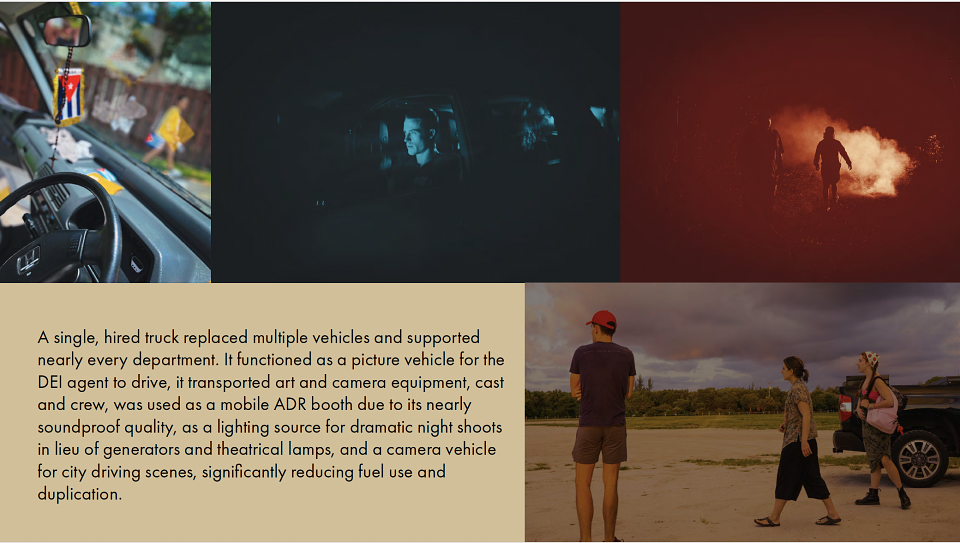
A single, hired truck replaced multiple vehicles and supported nearly every department. It functioned as a picture vehicle for the DEI agent to drive, it transported art and camera equipment, cast and crew, was used as a mobile ADR booth due to its nearly soundproof quality, as a lighting source for dramatic night shoots in lieu of generators and theatrical lamps, and a camera vehicle for city driving scenes, significantly reducing fuel use and duplication.
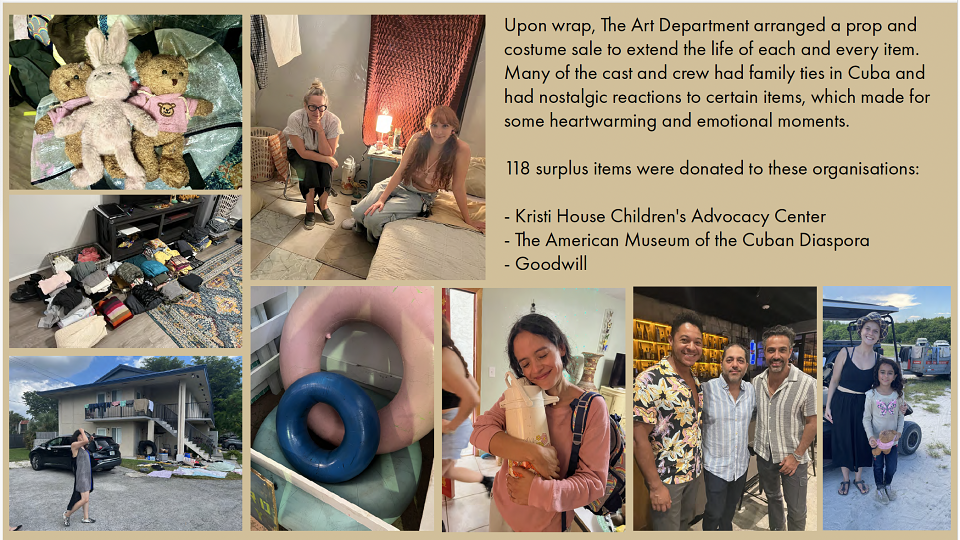
Upon wrap, The Art Department arranged a prop and costume sale to extend the life of each and every item. Many of the cast and crew had family ties in Cuba and had nostalgic reactions to certain items, which made for some heartwarming and emotional moments. 118 surplus items were donated to these organisations:
- Kristi House Children's Advocacy Center
- The American Museum of the Cuban Diaspora
- Goodwill
MADEIT CREDITS
-

Blair BarnetteProduction Designer