

The creative industry has a new invisible co-author. In agencies and studios everywhere, artificial intelligence is quietly aiding every rung of the ladder from idea generation and copywriting to design mockups and more. More importantly, it’s doing so without any fanfare or public credit.
83% of top creatives have already incorporated AI into their process
A recent Fast Company survey found a staggering 83% of top creatives have already incorporated AI into their process, with nearly half relying on it for most projects. But how many of them openly acknowledge the algorithm behind the curtain?
If you look at project credits or client case studies, you’d rarely know AI played a role. This gap between usage and acknowledgement raises a pressing question: should creatives be more transparent about when and how AI is used in their work?
The Hidden Hand
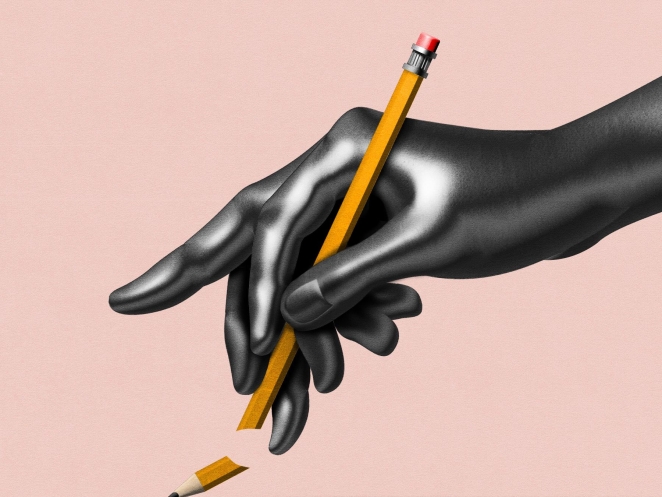
It’s no secret within the industry that AI has become a handy collaborator. Copywriters use GPT models to brainstorm taglines; designers generate moodboard imagery with text-to-image tools; video editors employ AI for rough cuts or color tweaks. The productivity boosts and creative sparks are undeniable. So why the secrecy?
For one, many creatives simply view AI as just another tool in the toolbox, not something that warrants a public disclosure. Does using a dash of Midjourney really require a disclaimer? After all, we don’t credit Photoshop for every image or thank Microsoft Word at the end of an article.
Clients care more about the quality of the outcome than the sausage-making behind the scenes
As some have argued, AI is akin to a calculator: a powerful aid, but ultimately just a tool executing a human-directed vision. By this logic, calling out AI’s involvement might feel like overkill or even an unnecessary distraction. The work should speak for itself, and clients care more about the quality of the outcome than the sausage-making behind the scenes. Or so the thinking goes.
There’s also an unease about perception. The creative field prizes originality and human genius. Admitting that an algorithm had a hand in the work might invite skepticism: Did the agency actually create this, or did they just push a button? Some fear clients might devalue the work if AI was involved, questioning the skill or effort of the humans behind it.
In the absence of established norms, many creatives have erred on the side of “don’t ask, don’t tell” by using AI quietly so as not to rock the boat or invite awkward conversations about copyrights, quality, or fees.
When Secrecy Backfires
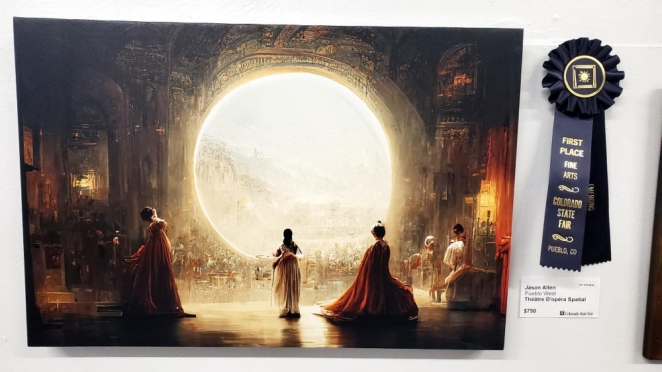
Choosing not to disclose AI assistance isn’t without its pitfalls. We’re already seeing what can happen when hidden AI involvement comes to light. A telling example comes from the world of fine art back in the days before AI was the headline grabber it is today. In 2022, a digital artist famously won a state fair art competition with a piece partially generated by AI and only revealed the AI’s role after taking the top prize.
The revelation sparked heated debate. By the next year, the fair’s organizers had instituted a new rule: artists must disclose if their submission was created using AI. In other words, transparency became mandatory after the fact.
The artist, Jason Allen, complained that the disclosure requirement was essentially a “discriminatory mark”against AI-assisted art, arguing it singled out those works unfairly. His protest underscores a broader sentiment among some creators that flagging AI usage could stigmatize the work – like a scarlet letter on an otherwise beautiful piece.
The incident, however, also highlights the trust issues at play. Judges and audiences felt misled; they thought they were evaluating 100% human-crafted art, only to learn an algorithm played a part. Even if the end result was stunning, the lack of upfront honesty left a bad taste. In creative industries, trust is currency. Whether it’s a fair judge, a client, or the general public, people appreciate knowing what they’re looking at and how it was made. Surprises in this realm tend to cause backlash.
The Colorado case isn’t isolated, Think of the skepticism when a “photograph” turns out to be AI-generated or when a brand’s heartfelt social media post is revealed as auto-written by bots. When audiences find out after the fact, it can feel like a bait-and-switch.
The Case for Transparency

Given how commonplace AI has already become, there’s a growing chorus within the industry that openness is the better policy. Rather than hide AI’s involvement, many argue we should be upfront – wear it as a badge of modern creativity, not a mark of shame. Here’s why transparency is emerging as the smarter play:
Trust and Credibility
In client relationships, honesty is paramount. Far from being spooked, clients increasingly don’t mind if AI is part of the process – they just care about quality, speed and brand safety, as London post-production expert Adrienn Major puts it (more on her perspective below). When an agency proactively explains, “We used AI to generate initial concepts, then refined them with our creative team,” it demystifies the process.
Clients know what they’re paying for and that you’re leveraging every tool responsibly for their benefit. This openness can build trust rather than erode it. In contrast, if a client later discovers AI was used in a deliverable without their knowledge, that trust can evaporate quickly.
Managing Expectations & Ethics
Being upfront also helps set clear expectations around usage rights, originality, and the role of human input, as transparency advocates note. For example, if an image in a campaign was AI-generated, disclosing that allows a frank discussion about copyright considerations (since generative AI can be a grey area for ownership). It also frames how much of the creative work was human-crafted versus machine-assisted. This clarity can protect all parties legally and ethically.
Many agencies are already finding they need to lead these conversations. In one Creativepool feature from earlier this year, digital agency ROAST observed that clients now “want to know AI isn’t just fast – it’s fair,” urging agencies to talk openly about AI content disclosures, data privacy, and brand voice consistency when using such tools. Building trust in how AI is applied is seen as just as crucial as the AI itself.
Authenticity in Branding
Today’s consumers value authenticity deeply – and they can sniff out inauthenticity in an instant. If a brand is using AI (say, an AI chatbot for customer service, or AI-generated social media content), being transparent about it can actually enhance the brand’s authenticity rather than undermine it.
In a recent article, Gianni Tozzi, chief creative officer at Futurebrand, noted that consumers appreciate honesty and want to know when they’re interacting with AI, not a human. For brands that build their image on being genuine and trustworthy, hiding an AI involvement can be counterproductive if (or when) customers find out. On the flip side, transparent use of AI (like labeling an AI-generated video or clearly marking a virtual influencer as virtual) treats the audience with respect. It says, “We respect you enough to tell you what’s real and what’s synthetic.” That honesty can differentiate a brand positively.
Normalising a New Tool
The more we openly talk about AI as part of the creative process, the more we remove the stigma or mystery around it. If everyone casually mentions, “Oh, and we used DALL·E to prototype the visuals,” it starts feeling no different than saying you used a camera or a tablet. Transparency can actually protect the perceived value of creative work – by contextualizing AI as just one component of the craft, guided by human creativity.
This way, clients and the public learn to appreciate the human choices that went into using the tool (from prompt crafting to curation to editing), rather than assuming the AI did all the work. As one industry trend report predicted, transparency about AI’s role is on track to become a standard practice in creative fields – a norm that separates progressive, trustworthy creatives from those clinging to secretive habits.
Transparency doesn’t mean diminishing the human contribution
Importantly, transparency doesn’t mean diminishing the human contribution – it means framing AI as part of the narrative of creation. Some companies have even suggested formal measures, like watermarking or labeling AI-generated media to maintain clarity for audiences.
We’re likely heading toward a world where seeing “(AI-assisted)” in the credits of an ad, or a subtle watermark on an image, will be as unremarkable as seeing “Edited with Adobe Premiere” in a video description. The creative industry could benefit from leading this normalization, rather than having rules imposed on it by regulators later.
Indeed, regulators are indeed circling: a new law recently passed in the US now requires certain AI-generated content like deepfakes to carry disclosures, and the EU is debating AI transparency requirements as part of its AI Act. The writing is on the wall that “AI inside” labels are coming one way or another.
Another Opinion

Adrienn Major, Founder of POD LDN: “Yes, transparency builds trust, especially in an industry where authenticity and originality matter. Clients don’t necessarily mind if AI is part of the process; what they care about is quality, speed, and how their brand is being represented. Being upfront also helps set clearer expectations around usage rights, originality, and the role of human input. At POD, we’re very clear when something is AI-assisted versus human-crafted, and clients appreciate that. The more we normalise the conversation, the less stigma or confusion there’ll be.”
Embracing an Assisted Future
So, should we be more open about our use of AI in creative work? All signs point to yes, at least in my opinion. The creative community is waking up to the fact that secrecy can do more harm than good. When we hide AI’s role, we risk client trust, audience backlash, and ethical quandaries; when we are transparent, we invite collaboration, understanding, and innovation.
This isn’t to say there aren’t nuances. Disclosure shouldn’t become a cumbersome ritual or a guilt trip. It’s about integrating AI transparency in a smart, context-appropriate way. If an AI tool played a minor supporting role, a simple mention in project notes or an informal nod might suffice.
If AI was central to the creation, then a more explicit credit or explanation is wise. There will be edge cases, and the industry will refine best practices as we go. As one Creativepool editorial put it, any policy on AI transparency will need nuance and flexibility to account for different situations.
What’s clear is that the trajectory is toward openness. The stigma around using AI in creative endeavors is fading as these tools become ubiquitous and better understood. Clients and consumers are increasingly savvy. They know AI is out there and can even appreciate when it’s used effectively.
Transparency is not just a lofty ideal; it’s fast becoming an industry standard
Rather than undermining the “magic” of creativity, sharing a bit about AI’s role can showcase a creative’s adaptability and cutting-edge approach. It can start conversations about how the idea was developed, highlighting the human ingenuity in guiding the AI. In short, transparency can turn a potential negative (suspicion or confusion about AI use) into a positive (a story of innovation and trust-building).
The creative industry has always thrived on authenticity and storytelling. In this new chapter where humans and AI create side by side, being honest about that partnership is key to keeping our work credible and our relationships strong. It’s time to shine a light on our AI assistants, not to give them all the credit, but to acknowledge their presence.
By openly embracing AI as part of our toolkit, we demystify it for everyone involved and set the stage for more responsible, imaginative work. After all, when you’re proud of your creative process, there’s no reason to hide who (or what) helped along the way.
Transparency is not just a lofty ideal; it’s fast becoming an industry standard. Those who lead with openness about AI in their workflow are likely to earn greater trust and stay ahead of emerging regulations and client expectations. The question is no longer if we should be more open, but how open we’re willing to be. The sooner we all start sharing, the sooner the conversation shifts from fear of AI to the power of human-AI collaboration – out in the open, where great ideas thrive.