

There was a time, not so long ago, when the creative industry could just about get away with believing in the magic of the finished thing. Make a brilliant film, launch a beautiful campaign, publish a smart report, drop a provocative line into culture, then wait for the audience to arrive. The work, if it was good enough, would supposedly find its people.
That idea now feels almost quaint.
Not because creativity has stopped mattering. If anything, genuinely distinctive creative work matters more than ever. But the world around that work has changed. Attention is fragmented across search, social, video platforms, creator ecosystems, newsletters, podcasts, AI tools, communities, private groups, messaging apps and algorithmic feeds. A campaign doesn’t simply compete with other campaigns anymore. It competes with everything.
That’s why content distribution has moved from the media plan to the centre of the creative conversation. The most elegant idea in the world can still fail if nobody sees it, understands it, shares it or encounters it in the right context. Equally, a fairly modest idea can travel much further than it deserves if it’s built for the channels, behaviours and moments that actually shape attention.
Paul Aitkenhead, Head of PR at Gamma, identifies the shift clearly:
“There is still a tendency in marketing to believe that the hardest part of the process is creating the content itself. Teams focus heavily on producing the report, filming the video, launching the campaign or recording the podcast. But increasingly, the real challenge is ensuring that content is actually discoverable across the modern buyer journey.”
That word, “discoverable,” is doing a lot of work. It suggests something broader than reach, broader than media spend and broader than SEO. It’s about whether a brand can be found, cited, remembered and trusted across the messy set of places where people now form opinions.
That’s the new creative problem. Not just what should be made, but how it will move.
The Era of “Build It and They Will Come” Is Over
Mutatio Creative Ltd
The old model of content marketing was comforting because it was relatively linear. A brand would publish something useful or entertaining. Search would index it. Social channels would share it. Paid media might amplify it. Audiences would click. Traffic would arrive. The website would convert. Everyone would put the numbers in a deck and pretend attribution was cleaner than it really was.
That model hasn’t disappeared, but it’s been badly dented.
Search is becoming more answer-led, with AI summaries increasingly giving users information before they ever click through to a source. One recent study of Google AI Overviews and Wikipedia found that exposure to AI summaries reduced daily traffic to matched English Wikipedia articles by around 15%, with sharper substitution effects for culture articles than for STEM topics.
Another large-scale measurement of Google AI Overviews found that they appeared for 13.7% of trending queries overall and 64.7% of question-form queries during the study period, giving AI-generated answers prominent influence over what users read before they visit a source site.
That matters for every brand that has spent years treating organic traffic as the default reward for useful content. It’s no longer safe to assume that good information will automatically produce a website visit.
At the same time, social platforms have become more video-led, more algorithmic and more crowded. In the UK, adult social media use remains extremely high, but active posting, sharing and commenting has fallen, with more users consuming passively or shifting behaviour towards video-first formats and temporary content.
Globally, YouTube’s average daily viewing time has now overtaken Netflix across multiple international markets, showing how platform entertainment has become a central part of everyday media consumption rather than a side channel.
For marketers, this creates an obvious problem. A campaign doesn’t live in one place anymore. It has to move through feeds, search results, creator ecosystems, AI-generated answers, inboxes, communities, events, sales conversations and cultural moments. The route matters almost as much as the message.
Aitkenhead puts it bluntly:
“We now operate in an environment where every business is publishing constantly. AI has accelerated production even further, creating an overwhelming amount of noise competing for attention every day. That means good content alone is no longer enough. Distribution has become just as strategically important as creativity.”
This is the end of “build it and they will come” because “they” are no longer gathered in one place, and “come” is no longer the only useful behaviour. Sometimes the win isn’t a click. Sometimes it’s a mention in an AI answer. A share in a private Slack group. A clip landing on LinkedIn. A quote being picked up by a trade journalist. A customer sending the report to a colleague. A sales team using a chart in a proposal. A podcast guest turning into a partnership conversation.
The asset is only the beginning. The distribution system is what gives it life.
Creativity Still Matters But Attention Has Become the Scarcer Resource
Luminous Creative Imaging
There’s a danger in arguing for distribution too forcefully. It can start to sound like creativity has become secondary, or that the industry should just optimise its way into relevance. That would be a depressing conclusion and, more importantly, a wrong one.
Creativity still matters. A lot. It’s the difference between being noticed and being ignored, between being remembered and being scrolled past, between being part of culture and simply interrupting it. But creativity now operates in an attention economy where visibility has become more expensive, less predictable and more platform-dependent.
Gavin MacArthur, Senior Creative Director at Pixel Artworks, captures this neatly:
“Distribution is becoming as important as creativity because the value of an idea now depends on whether it is seen, understood and shared in the right way. AI and new tools can help create more content, but that only intensifies the problem of attention. If everyone can make something, then the question shifts from ‘can you make it?’ to ‘can you get it in front of the right people in a way that lands?’”
That’s the point. The creative challenge hasn’t shrunk. It’s expanded. The work has to be good, but it also has to be designed to travel. It needs a behaviour around it. A format that suits the channel. A reason to be shared. A hook that survives compression. A visual or verbal asset that can function in fragments. A clear enough idea that it can move from a film to a thumbnail, from a keynote to a quote card, from a report to a social argument, from a live experience to a searchable transcript.
Attention is now the scarce resource because content is abundant. AI has made that abundance even more extreme. Low-quality AI-generated content has become prominent enough to earn its own ugly cultural shorthand, with “AI slop” used to describe digital clutter produced at speed and scale with little meaning or care. In that environment, audiences don’t simply need more content. They need reasons to care.
That’s where creativity remains essential. Distribution can’t save an empty idea forever. It can put it in front of people, but it can’t make them feel something if there’s nothing there. It can buy attention, but it can’t guarantee memory. It can create impressions, but not necessarily meaning.
Still, the reverse is also true. Great creative thinking can die in silence if the distribution strategy is lazy, underfunded or bolted on too late. That’s the uncomfortable bit for agencies and brands alike. The industry loves the myth of the idea so good it spreads by itself. Those ideas do exist, but they’re rarer than case study culture suggests. Even the campaigns that look effortless usually have serious machinery behind them.
MacArthur is right to call distribution “a creative discipline in its own right”:
“The channel, format, timing and context all shape how work is received, and often determine whether it has any impact at all. A brilliant idea that is poorly distributed can die quietly, while a decent idea with smart distribution can travel far.”
That doesn’t mean decent work should be the ambition. It means the delivery system is part of the work’s meaning. A joke lands differently on TikTok than in a press ad. A report behaves differently as a PDF than as a searchable insight hub. A film feels different as a YouTube pre-roll, an organic social post, an event opener, a cinema spot or a sales tool. A brand experience changes when it becomes a physical space, a livestream, a creator collaboration and a set of social fragments.
The idea is no longer finished when the asset is finished. It’s finished when the audience has had a chance to encounter it properly.
Why Content Distribution Has Moved Up the Marketing Agenda
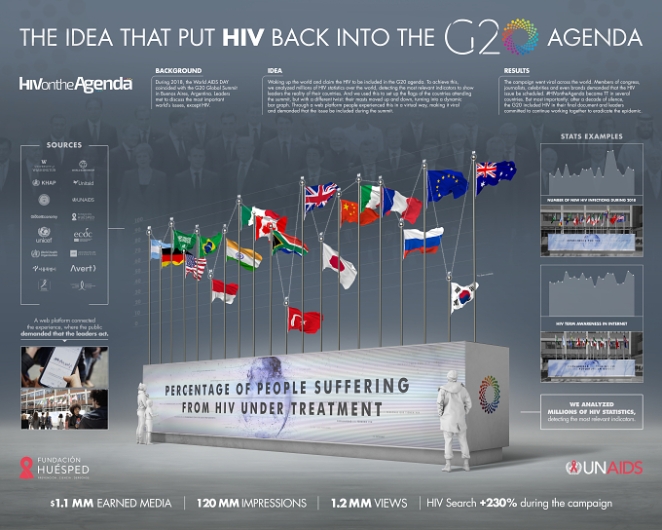
Wunderman Thompson Argentina
For years, content distribution strategy was often treated as the sensible but slightly unglamorous cousin of creative development. Creative teams made the thing. Media teams placed the thing. Social teams chopped up the thing. PR teams tried to earn coverage for the thing. Sales teams might be told the thing existed, if someone remembered.
That separation now looks increasingly dangerous.
Modern marketing doesn’t reward isolated assets as much as connected systems. Buyers don’t move neatly from awareness to consideration to conversion in the way funnel diagrams imply. They encounter fragments. A LinkedIn post here. A podcast clip there. A search result later. A Reddit thread. A comparison article. An analyst quote. A customer story. A creator recommendation. An AI-generated summary. A newsletter mention. A sales conversation. A webinar replay.
Aitkenhead makes the ecosystem point particularly well:
“The smartest organisations now think about content as an ecosystem rather than a single asset. A podcast becomes social clips, articles, transcripts, AI-searchable text and sales enablement material. A media interview becomes LinkedIn content, blog material and citation signals for AI discovery. Every piece of content should reinforce another channel somewhere else in the ecosystem.”
That’s where distribution becomes strategic rather than tactical. It isn’t just “where shall this go?” It’s “how many useful forms can this idea take, and how can each form strengthen the others?”
A report, for example, shouldn’t just be launched and forgotten. It can become a press story, a set of charts, a webinar, a founder post, a newsletter series, a short film, an interactive tool, a sales deck, a podcast discussion, a customer email, a paid social campaign and a source of quotes for future articles. More importantly, all those pieces should point back to the same intellectual territory. They should build memory.
This is especially important in B2B, where decisions are rarely made by one person in one sitting. Buyers research, compare, consult colleagues, listen to peers and build confidence over time. Thought leadership and reputation play a meaningful role in shaping consideration, particularly when a brand is trying to stand out in a crowded or complex category.
Distribution has moved up the agenda because discoverability has become fragmented. Search alone can’t carry the burden. Social alone can’t carry it either. Paid media can generate scale, but not necessarily trust. PR can create authority, but not always continuity. Owned content can carry depth, but it needs pathways into audience behaviour.
The opportunity is to make all of those parts work together.
That requires planning. It also requires creative restraint. Not every idea needs to become everything. The point isn’t to squeeze every asset until it collapses into a sludge of content derivatives. The point is to understand the idea well enough to know which expressions will actually help it travel.
A strong content distribution strategy doesn’t just multiply output. It multiplies relevance.
The Most Successful Campaigns Are Designed for Distribution From Day One
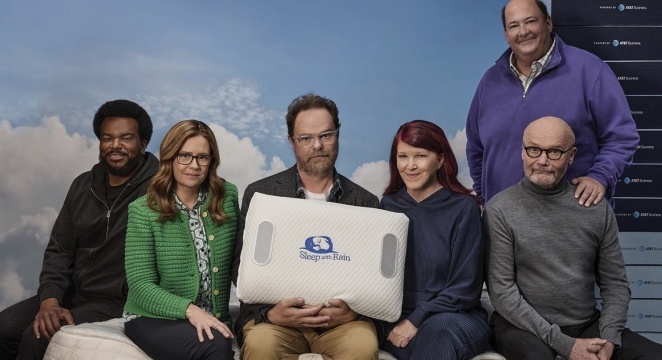
Critical Mass
Distribution planning often starts too late. The campaign is approved. The film is shot. The report is written. The launch date is set. Then someone asks, “What are we doing on social?”
That’s not a distribution strategy. It’s tidying up.
The strongest campaigns are built with distribution baked into the creative architecture from the beginning. That doesn’t mean letting the channel dictate every idea. It means understanding the conditions in which the idea will have to survive.
If the campaign needs to work on TikTok, it needs to understand TikTok’s native behaviours, not just crop a film vertically. If it needs to win on LinkedIn, it needs to offer a point of view people are willing to attach their professional identity to. If it needs to work in AI search, it needs structured, citable, text-rich material that can be understood and referenced by generative systems. If it needs press coverage, it needs a genuine story. If it needs internal sales adoption, it needs to be useful to the people having conversations with prospects.
That is why distribution planning should begin at the same time as creative planning. The two questions belong together: what is the idea, and how will it move?
MacArthur’s point is especially relevant here:
“The future belongs to teams that think about creation and distribution together, rather than treating distribution as an afterthought. In a saturated landscape, reach is no longer just marketing; it is part of the creative outcome.”
The phrase “creative outcome” is important because it reframes reach as something more meaningful than exposure. Reach isn’t just the number of people who technically saw something. It’s whether the right people experienced the idea in a form that made sense to them. Distribution shapes that experience.
This is obvious in experiential work. A live activation doesn’t end when people leave the room. The experience has to be designed for the people in the space and the people who will only ever see it second-hand. That changes how it’s staged, lit, captured, explained and shared. A moment that works brilliantly in person may not travel online. A moment that travels online may feel thin in person. The best work considers both.
It’s also obvious in research-led content. A 60-page report might contain useful thinking, but very few people will read all of it. That doesn’t mean the report is a waste. It means the report has to become infrastructure. It should support earned media, sales conversations, short-form insight, executive commentary, search visibility and future content. The depth is still valuable, but only if the distribution system helps people find the part that matters to them.
AI search makes this more complicated. Traditional search visibility still matters, but AI-generated summaries and conversational search are changing how people encounter information. Studies suggest AI Overviews use source selection mechanisms that don’t simply mirror traditional ranking, and cited pages may not always appear in the co-displayed first-page organic results.
Another study comparing traditional Google Search, AI Overviews and Gemini found substantial differences in retrieved sources, with implications for how websites earn visibility in generative search environments.
For marketers, the implication is straightforward: content has to be built for multiple discovery systems. It needs authority, clarity, structure, shareability and usefulness across machines and humans.
That doesn’t make creativity less important. It makes the craft broader.
Distribution Is No Longer a Marketing Function: It’s a Creative Consideration

Walker Agency
The creative industry still sometimes talks about distribution as if it happens after the interesting bit. That’s a mistake. Distribution now changes the interesting bit.
The channel affects the idea. The format affects the story. The timing affects the tone. The platform affects the visual language. The audience behaviour affects the structure. The intended journey affects what the asset needs to do.
A brand film designed for a captive audience at an event is not the same creative object as a film designed to earn attention in a feed where nobody asked for it. A report written for analysts is not the same as a report designed to be quoted by journalists, surfaced in AI answers and used by sales teams. A campaign built for paid reach is not the same as one built to provoke organic participation. A campaign built for creators is not the same as one built for a brand’s owned channels.
That’s why distribution needs to sit inside creative development, not outside it.
The best creative teams already know this instinctively. They don’t just ask whether an idea is good. They ask whether it has legs. Can it flex? Can it be reduced without losing its soul? Can it expand without becoming repetitive? Can people repeat it? Can it create a behaviour? Can it be found later? Can it be understood without a brand manager standing beside it explaining the deck?
This matters because platforms reward different things. Search rewards usefulness, authority and intent matching. Social platforms reward immediacy, participation, identity and native format. Video platforms reward retention and repeat viewing. Podcasts reward intimacy and habit. News media rewards relevance and story. AI search rewards structured, extractable, cited information, though the mechanics remain volatile and uneven.
A strong campaign doesn’t flatten itself across all of these environments. It understands what each one is for.
That’s why the old language of “assets” can feel insufficient. A modern campaign is less like a package of deliverables and more like a distribution-aware system. It contains hero content, supporting content, social fragments, earned hooks, searchable knowledge, internal enablement, paid amplification and ongoing signals. Some pieces build reach. Some build trust. Some create proof. Some generate leads. Some help sales. Some simply help people remember what the brand stands for.
Aitkenhead describes this as a shift “away from isolated campaigns and towards connected systems of discoverability”:
“The brands that understand how to continuously amplify, repurpose and distribute expertise across multiple environments are the ones most likely to remain visible in an increasingly fragmented digital world.”
That phrase, “systems of discoverability,” should probably be part of every serious marketing conversation now. It’s not enough to publish. It’s not enough to promote. Brands need to become discoverable in the places where trust, memory and preference are actually forming.
That’s why distribution is now a creative consideration. It affects what the idea needs to be.
The Future Belongs to Brands That Master Both Creativity and Distribution

Torpedo
Can strong distribution make up for weak creative work?
For a while, perhaps. Paid media can force attention. Influencer partnerships can borrow credibility. Algorithmic luck can give a mediocre idea momentum. A distribution system can absolutely make weak creative work more visible than it deserves.
But it can’t make it good.
Weak creative eventually reveals itself. People don’t remember it. They don’t share it with conviction. They don’t build identity around it. They don’t quote it in meetings. They don’t feel anything. It becomes another piece of branded noise, delivered efficiently into an already overcrowded world.
The better question is whether strong creative can survive weak distribution. Increasingly, the answer is no.
That’s the more painful lesson for the industry. A great idea without distribution is like a brilliant performance in an empty theatre. It may still be brilliant, but its cultural and commercial value has been wasted.
The future belongs to brands and agencies that can combine both. Distinctive creative thinking and intelligent distribution. Originality and discoverability. Emotional resonance and channel fluency. Big ideas and small formats. Hero moments and long-tail systems.
This has implications for how creative teams are structured. It suggests media, PR, social, search, creator, sales and content specialists need to be involved earlier. Not to water down the idea, but to strengthen its path into the world. It also suggests that agencies need to stop treating distribution expertise as a bolt-on service. If distribution now shapes creative impact, then distribution thinking belongs in the room where the idea is born.
It also changes what success looks like. Traffic still matters, but it can’t be the only measure. Search visibility matters, but AI answers may reduce clicks even when they increase exposure. Social reach matters, but passive consumption may not equal influence. Engagement matters, but not all engagement is meaningful. Brands need to track a wider mix of signals: share of search, branded demand, assisted conversions, qualified traffic, citation in AI answers, sales usage, earned mentions, creator pickup, community discussion, newsletter growth, content reuse, pipeline influence and memory.
This is not about replacing creativity with measurement. It’s about respecting creativity enough to make sure it has a chance to work.
The strongest brands won’t just ask “what’s the campaign?” They’ll ask “what’s the system?” How does the idea travel? Where does it live? Who carries it? How is it found? How is it repeated? How does it build over time? How does each channel reinforce the others?
Aitkenhead’s ecosystem point lands again here because it’s the practical answer to fragmentation. The modern buyer journey is too scattered for one asset to do all the work. The smartest brands use each piece of content as a node in a larger system, with every interview, article, clip, event, report and social post helping the rest of the ecosystem become more visible and more credible.
That’s the real value of a serious content distribution strategy. It doesn’t just push content out. It compounds meaning.
What the Future Looks Like for Service Businesses?
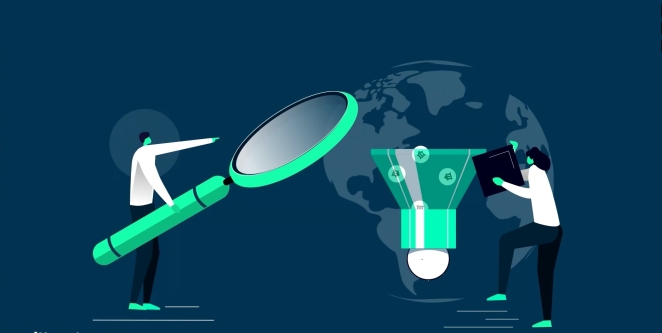
Keyframe Quest
For agencies, studios and creative service businesses, this shift should be treated as both a warning and an opportunity.
The warning is obvious. It’s no longer enough to sell ideas in isolation. Clients are under pressure. Teams are stretched. Channels are fragmented. AI tools are producing more content than audiences can possibly absorb. If an agency can only make the thing, but can’t explain how the thing will travel, its value proposition starts to look incomplete.
The opportunity is more interesting. Agencies can become much more valuable by helping clients connect creativity to distribution from the start. They can design campaign ecosystems rather than isolated assets. They can build repeatable distribution models. They can create content architectures. They can connect PR, social, search, paid, creators, events and sales enablement around one creative idea. They can help brands understand not just what to say, but how to make it visible across a fractured attention landscape.
This is where service businesses can move up the value chain. Distribution strategy shouldn’t be reduced to scheduling posts or resizing assets. It should become a core strategic offer: how to turn creative thinking into discoverable, shareable, reusable, compounding brand value.
That matters especially as AI changes the economics of production. If more clients can generate content internally, agencies need to prove value in the areas AI can’t solve alone: judgement, originality, cultural understanding, channel strategy, narrative architecture and the ability to build connected systems that actually land.
In that sense, distribution may become one of the most important creative skills of the next decade. Not because reach is everything, but because reach without meaning is waste, and meaning without reach is a missed opportunity.
The best agencies will understand both. They’ll help brands make work worth seeing and then make sure it’s seen in the right places, by the right people, in the right form, at the right time.
That’s not the death of creativity. It’s creativity growing up.
For years, the industry has told itself that the idea is king. Maybe it still is. But kings need roads, messengers, translators, maps and armies. In modern marketing, distribution is all of those things.
The brands that win won’t be the ones that simply make the most content. They won’t even be the ones that make the prettiest content. They’ll be the ones that understand how attention moves, how culture travels and how every creative asset can become part of a wider system of visibility.
Creativity gets the work born.
Distribution gives it a life.
Header image by Svetoslav Stoyanov
Temenouzhka Zaharieva June 14th, in the morning
Yes, but you could have said it with two scentences :)