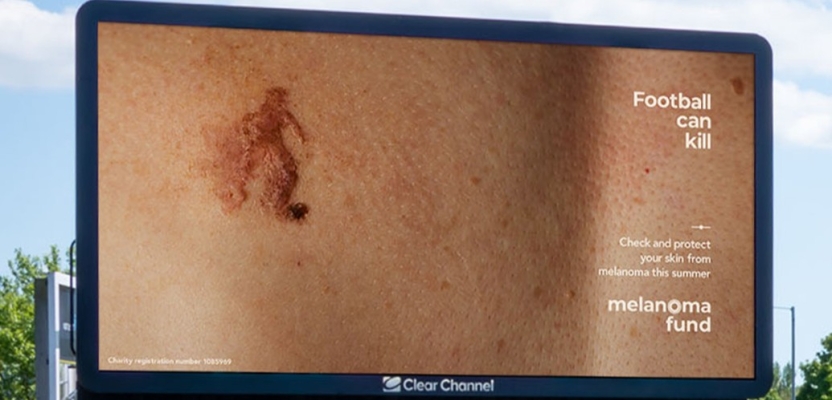

Sun protection is often overlooked by outdoor sports enthusiasts, but Andy Clough, Joint Executive Creative Director at Neverland, set out to change that narrative. He was tasked with creating a campaign for the Melanoma Fund to highlight the real dangers of sun exposure, particularly in the UK.
The result was Silhouettes, a visually striking campaign that combined the seriousness of melanoma prevention with the familiarity of sports. Designed to challenge perceptions, this campaign underscored the life-saving importance of skin protection. In this interview, Andy Clough takes us behind the scenes, from initial research to final execution, focusing on education, creativity, and impact.
What was the brief?
We were asked to create a campaign that emphasized the real dangers of sun exposure, especially for those in the UK, who often overlook sunscreen when participating in outdoor sports. Our goal was to create a powerful message that would challenge perceptions and encourage better sun protection habits.
That’s where Silhouettes was born – the campaign highlighted the risks of playing outdoor sports without adequate protection, which was timely, given the Euros and the Olympics that year.
How did the initial pitch and brainstorming phase go?
The brainstorming phase focused on connecting melanoma prevention with sports. We knew that many athletes disregard sun protection despite the risks. While researching melanoma, I noticed that some moles resembled silhouettes, much like clouds in the sky.
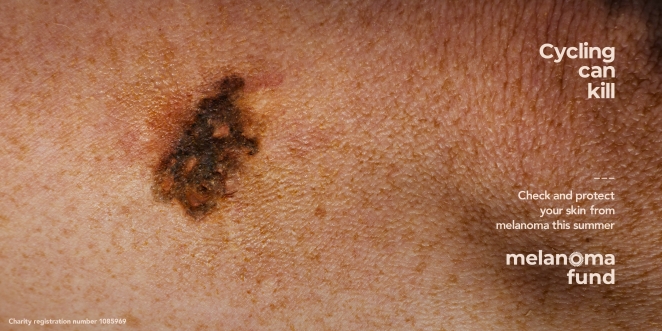
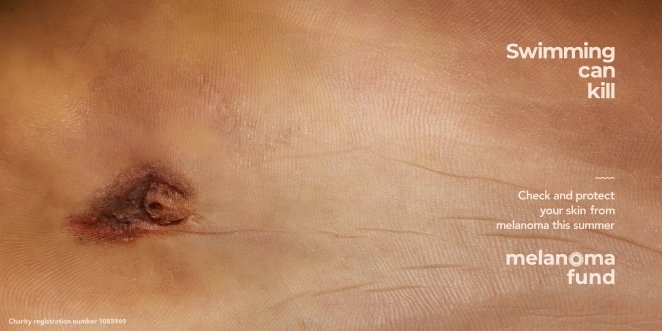
That sparked the idea – combining the visual of a mole with something instantly recognizable, like a footballer or a swimmer. The idea was simple yet impactful, and when we pitched it to the Melanoma Fund, they loved it. Our challenge was to make it more than just a creative visual – we had to raise genuine awareness.
What was the process behind ideating the concept?
The process started with extensive research and consultations with dermatologists and melanoma sufferers to understand how the disease affects people, particularly in a sports context. We explored ways to combine melanoma visuals with sporting imagery, focusing on how moles could resemble athletes' shapes.
Football, swimming, and cycling became our focus because they are popular summer sports. The core concept was to make people pause and think, “What is that? Oh, it’s a mole. Maybe I should get mine checked.” It was all about simplicity, impact, and education.
What was the production process like?
Production was incredibly detailed. We partnered with Dr. Siva Kumar, a renowned dermatologist, to ensure every melanoma was medically accurate in terms of shape, size, and pigment.
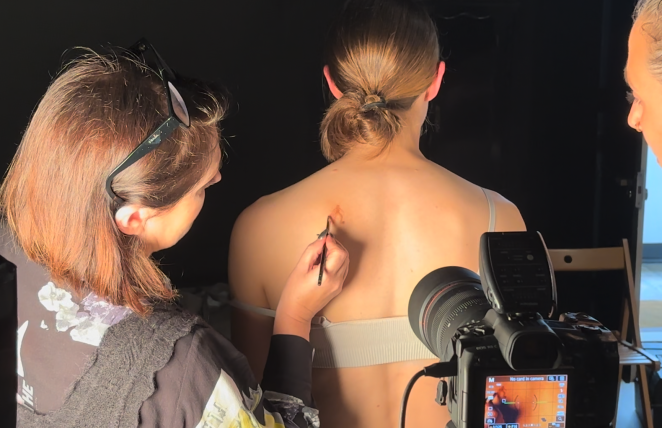
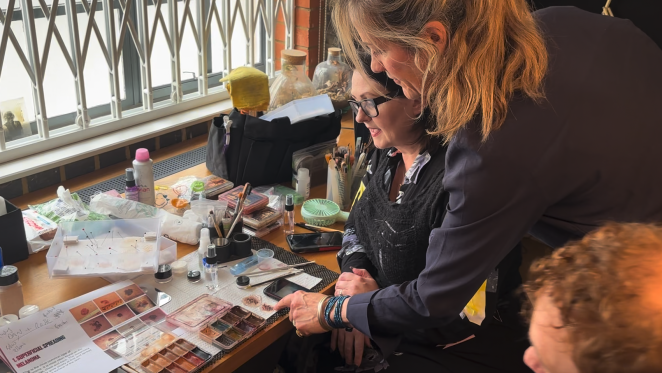
Instead of relying solely on digital retouching, we hired a prosthetics makeup artist to apply the moles directly onto the athletes’ skin for added realism. We also collaborated with melanoma ambassadors who had personal experiences with the disease, which brought authenticity to the campaign.
What was the biggest challenge during production, and how did you overcome it?
The biggest challenge was ensuring the melanomas looked medically accurate across different skin tones. Melanomas can appear in different areas depending on skin type. For example, in people of color, they are often found on the feet or under nails. We had to be very precise to ensure accuracy.
What tools were used to create the project?
We used a combination of practical and digital tools. Our makeup artist created the melanomas on set with prosthetics and makeup. In post-production, we minimized retouching to maintain the rawness and authenticity of the visuals.
We also collaborated with Untold Studios to develop an animated component using stop-motion to show the gradual growth of a melanoma, blending practical effects with digital tools for a striking result.
What was a memorable moment during production?
One funny moment came when our makeup artist applied a melanoma to a triathlete’s foot. The athlete joked that it was the most attention his feet had ever received. It was a lighthearted moment on set but highlighted how melanoma can affect areas like the feet, especially in sports like swimming for people of color.
What’s the main message of this campaign, and why is it important?
The message is simple: unprotected skin can be deadly – check and protect your skin, especially when playing sports. People often don’t associate outdoor sports with melanoma, but sun exposure during these activities can be life-threatening.
The provocative headlines helped stop people in their tracks, and the supporting copy revealed that the risk came from unprotected skin in the sun. By linking melanoma to recognizable sports, we hope to prompt people to think, “Could that be me?”
How long did the project take from inception to delivery?
It took several months from inception to delivery. We were meticulous with research, collaboration, and medical consultation to ensure the message was accurate and impactful. This wasn’t a campaign we wanted to rush – getting it right was paramount.
How did you ensure the concept aligned with the brand's values and target audience?
The Melanoma Fund is all about skin cancer prevention, so we ensured education and impact were central to the campaign.
We targeted active people who might overlook sun protection by connecting melanoma with sports. The provocative headlines and real melanoma visuals grabbed attention, aligning with the brand’s mission to protect lives.
Were there any alternative ideas considered?
We considered creating a typeface using melanomas as the structure to write headlines, but it became too distracting and trivialized the subject. It didn’t have the same double-take effect or medical accuracy as the mole silhouettes.
How did you keep the concept innovative?
We stood out by combining a serious health issue with a creative twist. Instead of a traditional health campaign, we transformed melanoma visuals into recognizable sports icons. Using real-life melanoma cases and minimal retouching gave the campaign a raw, human element, which set it apart from polished public health visuals.
What do you hope the campaign achieves?
Since the campaign’s launch, it has elevated the Melanoma Fund’s profile from a marginal player to a leadership role in the sector.
The work has gone global, with organizations like Beach Soccer Worldwide and the FIFA Beach Soccer World Cup 2025 using the campaign to raise awareness. We hope the message continues to reach people and urges them to protect themselves from melanoma.
Credits
Client: Melanoma Fund
Agency: Neverland
Executive Creative Directors: Andy Clough, Rich McGrann
Head of Design: Simon Dilks
Designers: Chris Jones, Ben McKay
Head of Production: Amy Coomber
Producer: Olivia Hannigan
Account Director: Conor Lloyd
Account Manager: Gilbert Gyambibi
Stills Photography:
Photographer: James Day
Executive Producer: Siobhan Squire
Digital Operator: Harry Sleightholme
Photographic Assistant: Paul Blackshaw
Makeup Artist: Melanie Lenihan
Makeup Assistant: Frederica Adorno
Post Production (Retouching): Dennis Post Production
Catering: N5 Kitchen