
With over two decades of experience in design, Neil Edmundson has carved out a career that spans leading agencies, international collaborations, and his own thriving practice. Starting out as a junior designer in the late 1990s, Neil’s journey took him from in-house roles and major advertising agencies in Newcastle and London to eventually building his own studio, Edmundson Design, back in County Durham.
Today, he works with clients across the UK and beyond, blending his passion for simplicity, clean design, and meaningful visual storytelling with the adaptability that has kept him relevant in a constantly evolving industry. In this conversation, Neil shares the lessons learned along the way, his inspirations, advice for aspiring designers, and what it truly means to build a sustainable creative career.
How did you first get into the industry?
My first job was as a junior Graphic Designer for Cleveland College of Art & Design in the late 1990s. I was offered a one year contract as their Graduate Designer after being awarded a HND Distinction in Graphic Design. From there I worked as an in-house Designer for The Evening Gazette.
After a year or so I decided to move to Newcastle and managed to get a position within Yellow M, one of the city's largest ad agencies at the time. After two years I joined Cravens – the oldest independent ad agency in the UK. I worked there for six years before heading to London in 2008 to work at a branding agency called Social.
Where are you based now and who do you work for?
I'm now back in my native County Durham and have worked for myself, under the name of Edmundson Design since 2012. Here I work directly with individuals, large and small companies mainly in the UK but also in Ireland, Europe and internationally.
What is your personal background and what role did it play in your career?
From an early age I was always more creative than I was academic so my preference was always going to be something in the creative world. I initially thought about Fashion Design then decided to study Graphic Design instead.
I've always been a very shy person and like a lot of creative types, suffered from imposter syndrome, which hampered me greatly when I was younger. I always believed I could forge a career in Graphic Design, although it wasn't an easy ride and took a lot of dedication in what is a very competitive industry, particularly in the North East at the time. Once I got into working within agencies though it gave me the confidence to progress and believe a little more in myself, which in turn led to greater things.
If you weren’t in your current industry, what would you be doing?
Probably something creative like a Chef or a Photographer.
How would you describe your style?
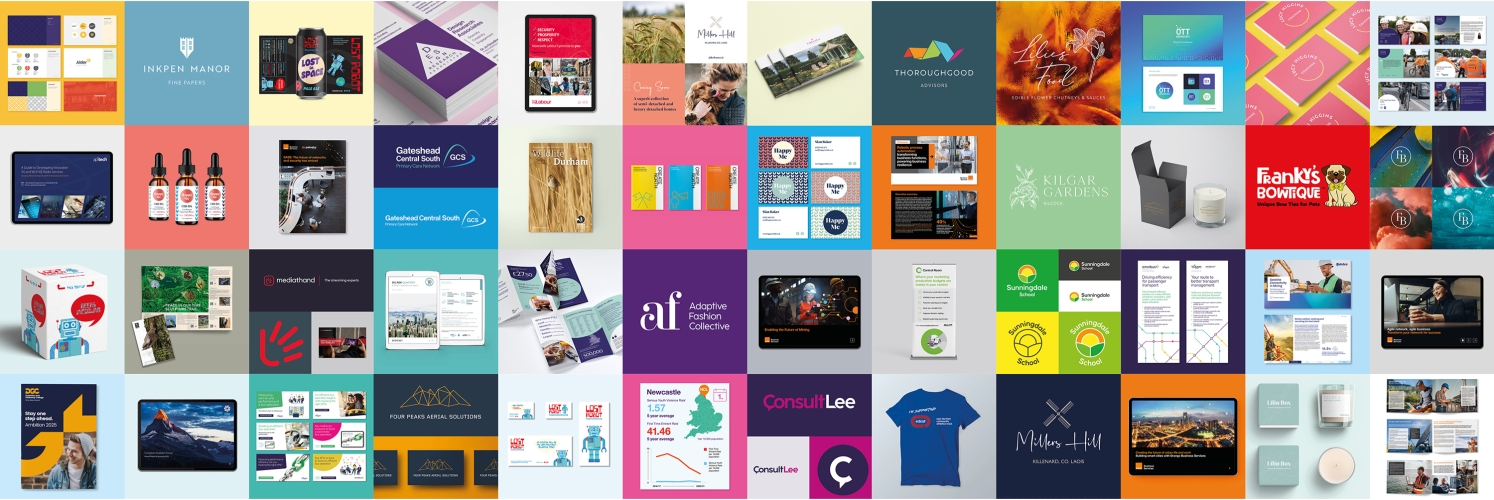
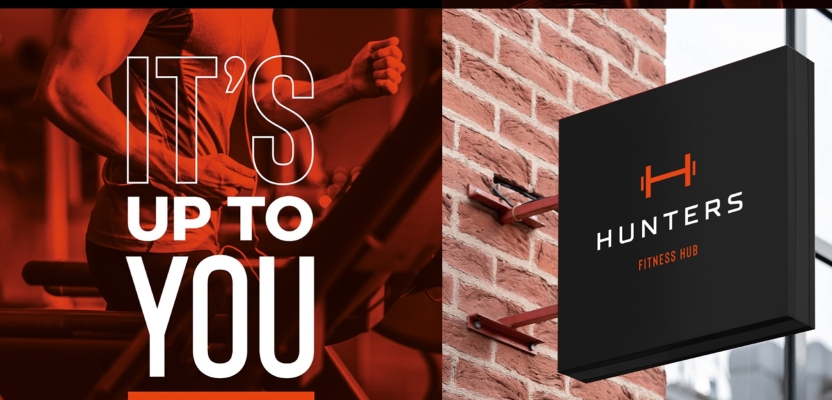
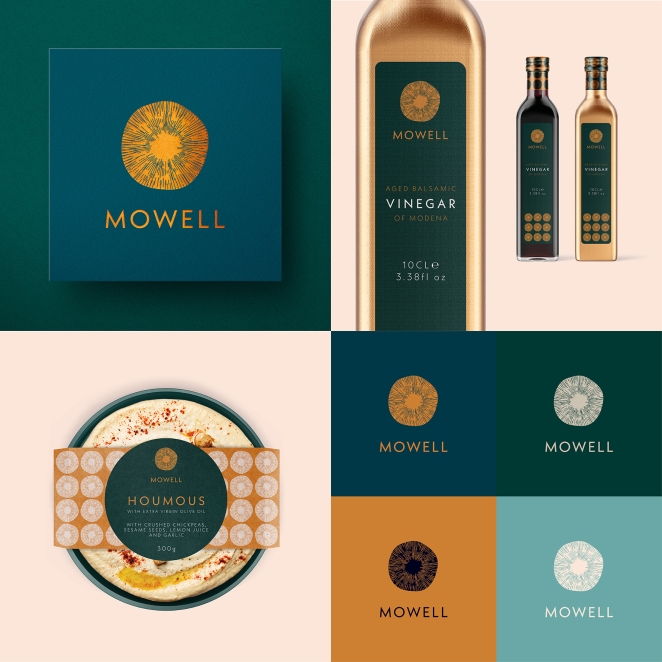
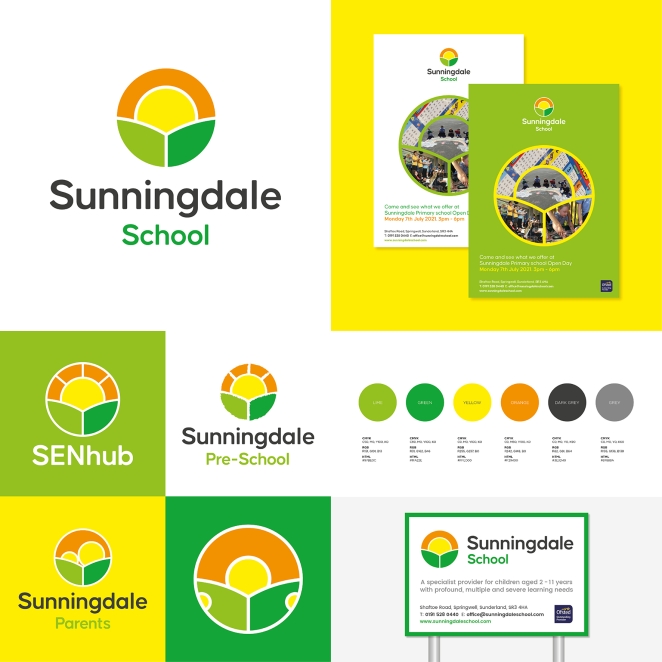
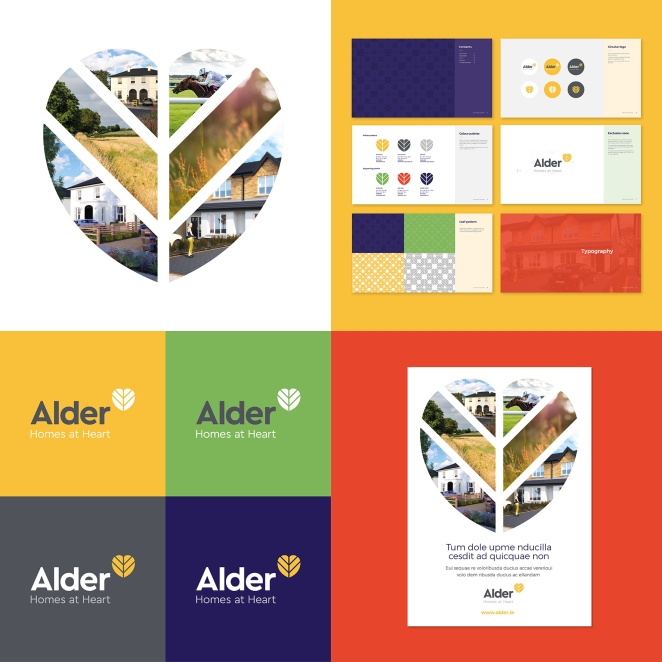
I'm not sure if I have a consciously set style but looking at my logo portfolio there’s a certain aesthetic that people recognise. Maybe I’m too close to it to define it. I try to include a deeper meaning behind my logos and design approach that comes through. It’s about staying true to the brief and creating simple, clean designs that will stand the test of time.
Which individuals do you gain inspiration from? Do you have any heroes in the industry?
Over the years I've worked with some amazing Designers and Creative Directors. I’ve always been inspired by those I've worked with and learned more from them than any particular books or websites. I was especially keen to adapt and learn when I was younger.
In my college days I was a big fan of Vaughan Oliver and Chris Rigg at v23 and also David Carson. I was also influenced by design layouts such as Raygun and Blah, Blah, Blah magazine which was reflected in my work at the time – thankfully short-lived, looking back now.
I've always been a huge music fan and keen record-collector, quite often for the sleeves alone, which I studied religiously, sometimes before even playing the records. My favourite sleeve designers are Brian Cannon at Microdot, Mark Farrow and Peter Saville. I also love American Graphic Designers such as Saul Bass, Milton Glaser and Tibor Kalman.
What tips would you give to aspiring creatives looking for work?
There's a Northern saying 'Shy Bairns Get Nowt!' which roughly translates to 'if you don't ask, you don't get'. That’s stuck with me for as long as I can remember. You simply have to put yourself in people’s faces to get anywhere in the Design industry these days. That’s something which doesn't always sit naturally with creative people I find.
Try and get as much work experience as possible, be it in agencies or for friends' businesses and include the work you have done in your folio. If you’re struggling, create your own briefs and solutions. Build up your folio with as much varied work as possible and also include work you may not like or be particularly proud of. The wider the variety of different sectors and solutions, the better.
What tips would you give to other professionals to get more clients?
Share as much work as you can online. Make sure you have a good folio site and upload work to websites such as Creativepool, Behance and Instagram. Build up your networks on LinkedIn and other social media platforms and in person at networking events, business breakfasts, conferences etc. Add some more creativity with your job or work experience applications. Be persistent and don't be afraid to share work on more than one platform.
Can you share a memorable experience from your career journey that shaped your approach to creativity?
I'm not entirely sure if it has shaped my approach to creativity or not, but I've certainly made a few design and print mistakes in my time which have helped make me a better Designer and also a better Artworker. I have always held integrity in high regard and found it best to own up to any mistakes and try to rectify them as quickly as possible. I've also always been known for my attention to detail. One of my strengths is typography. I learned a lot after a few years of working with some rather pedantic Creative Directors and Art Directors. I’m better for it though.
What kind of tools/kit/software could you not do without?
Even though Adobe CC doesn't support it anymore, I still use my Pantone book daily.
What’s your secret to staying inspired and motivated?
I try to get away from my desk when I can to visit Galleries and Exhibitions as much as I'm able.
I keep up-to-date with the latest design and type trends by visiting different cities, watching films, TV and subscribing to magazines such as Freelancer Magazine. I also try to keep abreast of packaging design trends in retail.
It's very important for me to get away from my desk when time allows, and I have our Cocker Spaniel called Stanley to thank for that. He makes sure I visit the nearby countryside and parkland daily. Being around nature certainly helps take your mind off work and helps your thought processes. It can also help you to refocus if things aren't going so well.
What’s the work achievement you’re most proud of?
Being my own boss. In 2012 I found myself back in my home town, after quitting my job in London to help look after our 6 month old daughter Nancy with my partner, Sue.
It was exciting going it alone after years of working in Design and Ad agencies, but I was also very apprehensive. Without any clients to start with and also a lack of income, I had a very limited amount of time to get going, otherwise it would mean a change of career. Realistically, I only had a few months to make it work.
Thankfully things went really well and looking back, I’m forever grateful to my family and friends who helped me out, and for all the contacts I had available at the time. They all helped me get going pretty quickly.
I realise I’m extremely fortunate to be doing a job I love and genuinely enjoy. But I can honestly say I would never have set up on my own if I hadn’t been presented with the circumstances I faced. I’m pleased I did and am glad I've stuck with it.
As someone with experience in the industry, what trends do you foresee shaping the future of creativity?
A.I. is obviously THE big thing and right now I think there are secretly a lot of worried creatives. I’m getting slightly more relaxed about it now than I was at first and not thinking of changing my career just yet. That said, certain creative industries are being affected more than others, like copywriting for example.
I still think clients will prefer the personal touch: well-crafted ideas and original brands that will stand the test of time. All of these human skills come from passion, experience and care – something which AI is currently unable to do. I hope it remains that way.
What do you think sets apart truly exceptional creatives from the rest of the pack?
The ability to understand a client's needs and opinions, and not their own agenda. I've seen plenty of designers with a slightly narcissistic approach, telling clients what they should have and becoming overzealous about their own ideas. We're all guilty of this sometimes but, first and foremost, you’ve got to remember it’s the clients’ business and their choice. At the end of the day, they pay the invoice.
It's not an easy balancing act and we all get criticism from time to time. You have to accept everyone has a different opinion. Art is subjective after all. One way around this is to offer more solutions or design routes, rather than concentrating on one sole vision or idea. Criticism can be difficult to receive and it's sometimes hard not to take it personally. This is something that only comes from experience and lots of rejection.
How do you think technology has influenced the creative industries and how have you adapted to these changes?
Everything is much more efficient, reliable and faster with design programmes working in harmony. Adobe Indesign in particular has played a massive part in making work more seamless between other programmes and quicker for Graphic Designers, compared to the days of Quark Xpress. We'd be lost without it but unfortunately it’s now threatening a lot of creative professions too.
What is the one thing that you would change about the industry?
Improved salaries for creatives and production staff, but particularly for women who are badly treated and represented as a whole. The industry is more inclusive than it was, but to my mind it’s suffered from classism in the UK. Full time jobs are becoming increasingly scarce and still on a basis of who you know or if you’re willing to work for free first.
Any websites, books or resources you would recommend?
A few of my favourite books I've collected over the last few decades:
Logo: The reference Guide by Michael Evamy
20th Century Type by Lewis Blackwell
Type Directory by Peter Dawson
Just My Type: The original and best book about fonts by Simon Garfield
Stationery Design Now! by Julius Wiedemann
Graphic Design by Milton Glaser
Introducing: Visual Identities for Small Businesses by Robert Klanten and A. Sinofzik
Information is Beautiful by David McCandless
The Lake District in 101 Maps & Infographics by David Felton
The Freelance Introvert by Tom Albrighton (I could certainly relate to this one!)