
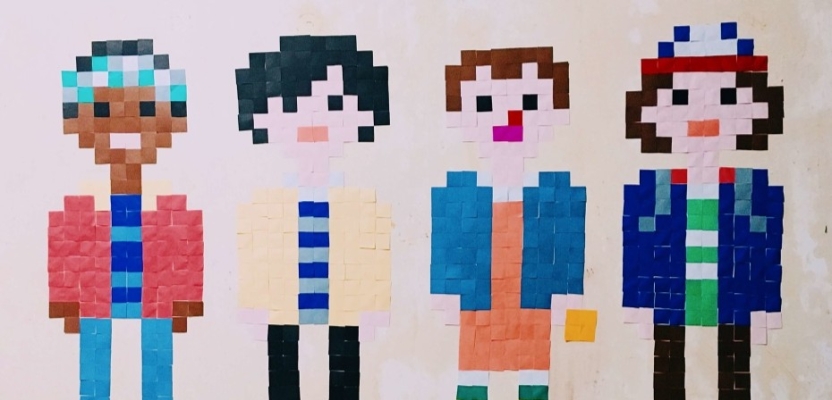

Nostalgia is an increasingly powerful tool in world that seems to be getting darker by the day. For advertisers, it offers a unique and compelling way to forge emotional connections with audiences and today, we’re lucky enough to hear from two agency experts on how brands are tapping into the collective memory of their audience, offering a sense of familiarity and comfort in a rapidly changing world.
Sally Tarbit, Director and Brand Development lead at strategic brand agency The Team
It’s interesting to first think about the type of emotional connection brands want to make with their audiences. I would say that a sense of safety and reassurance is at the top of the pile as a basic human need right now (and always, to be fair!). Psychological safety, cyber safety, personal safety – the list goes on. Nostalgia can help to give us a feeling of safety, reassurance, and comfort. So, it has an inherent value there.
But I’d argue there’s also a need for joy and happiness, to feel good and escape the burden of some of today’s economic challenges. And looking back means that we can cherry-pick moments that do just this. Seemingly free of baggage (even though that probably wasn’t the case), we can use these moments to create the right feeling at the right time – the classic ‘rose-tinted glasses’ effect.
Sarah McGrath
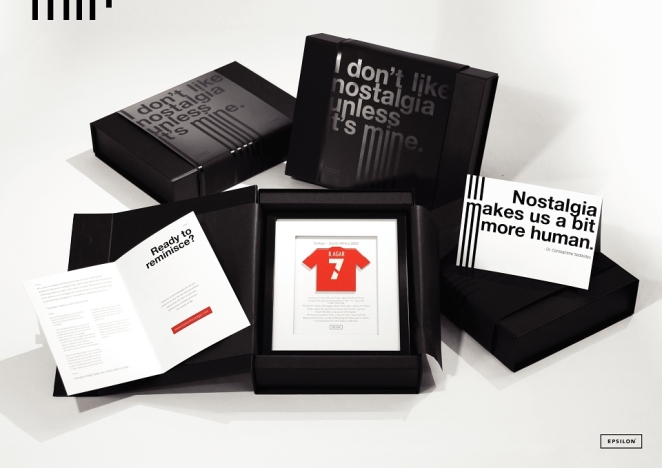
An effective and contemporary way to use nostalgia is to channel the signs, symbols, and feelings of comfort, appeal, or familiarity of things past, and then create something new and relevant for today with that. Not just take something old and tweak it. There’s often nostalgia for the simplicity of things past (when this may not have really been the case). So, I think this is something very resonant for today, when cognitive overload is a very real thing.
Music is often one of the main ways nostalgia surfaces for brands, especially above the line. Music from any era can be very powerful; it’s a form of storytelling, after all, and evokes a range of emotional responses. I think it often tells the story of how, despite what happens around us, life is reassuringly consistent – daily struggles, relationships, loves lived and lost – which evokes a sense of incredible resilience too.
Doug Wilson Executive Creative Director @ Monotype
Recently, there has been a lot of buzz around revamps of nostalgic toys, games, and programs. Big Screen adaptations of Monopoly (with Margot Robbie) and Uno (with Lil Yachty) are both scheduled, as well as a live action version of Hot Wheels. In the consumer tech world, Apple’s app store has recently approved emulators, bringing classic video game experiences to the iPhone. PBS has announced a retro channel with programs from the ’80s and ’90s.
While the content is throw-back inspired, we’ll be consuming it via current technology. Most of us will watch associated videos with closed captions. All of the new branded digital experiences will rely heavily on an unexpected “make it or break it” element - Typography.
One thing many of these projects have in common (Monopoly, Uno, Barbie, Hot Wheels, Gameboy, Playstation, Nintendo) is that their recognizability is tied to a single piece of text, in specific fonts and colours that communicate the entire brand.
Sara Truckel
Monotype is the international leader in type technology, and Doug Wilson, Executive Creative Director, has this to share regarding the emotional impact of nostalgic typography:
“Nostalgia is a powerful thing. All I need to hear are the first few notes of a song that I listened to on-repeat at the age of 16 and I’m instantly transported back in time. In fact, I would venture to say that nostalgia is time travel — however brief.
When consumer packaged goods companies use “throw-back” or nostalgic branding and artwork, they are pulling at more than just your current consumer need — they are saying “Hey! Remember me from your childhood? Remember the soap that your grandparents used? Remember how fun riding a bike was as a kid? Remember when your parents wouldn’t let you buy that sugary cereal? Well, YOU’RE AN ADULT NOW and you can buy whatever you want!”
And these approaches can be extremely tempting. As with fashion, typography is circular. What was once out of fashion now is back because a new generation of designers and consumers are seeing it for the first time. Fonts that were popular in the 1970s and ’80s have been coming back in style and used extremely effectively to pull at your nostalgia and give a sense of what a consumer can expect. “Stranger Things” anyone?”