

The advertising and creative industries are entering 2026 in the wake of unprecedented change. Over the past few years, we’ve witnessed a whirlwind of technological breakthroughs, economic shake-ups, and shifts in consumer behavior that have reshaped what it means to be a creative professional and what kind of creative skill set we should all be prioritizing.
As the founder of Creativepool, I’ve enjoyed a front-row seat to these transformations (from the rise of generative AI tools to the merging of once-separate disciplines) and I often hear one pressing question from both employers and talent:
What Skills Do Creative Agencies Need?
It’s tempting to answer this question with a flurry of buzzwords. After all, terms like “AI-driven,” “metaverse-ready,” “programmatic,” and “Web3” have dominated conferences and headlines. But buzzwords alone don’t build careers or brands. The real in-demand skills of 2026 go deeper – they’re about mindset, adaptability, and actionable expertise that drives creative strategy, innovative channels, and authentic audience engagement.
Today, I’ll explore the big-picture skill trends every creative and marketer should heed, going beyond the hype to focus on what will actually matter on the ground. From the vantage point of someone who’s passionate about connecting our global creative community, I’ll break down the skills required for agencies and brands and why those skills are poised to shape the industry’s future.
From Automation to Imagination: Human Creativity Over Technical Mastery
Grant Barratt
Ironically, as our tools get smarter, it’s the most human skills that are growing in value. The rapid adoption of AI across creative workflows has automated countless technical tasks – from video editing to basic copywriting – but it has also thrown into relief what machines can’t replace. In a world where algorithms can churn out variations at scale, the differentiators for talent are the deeply human abilities: imagination, judgment, emotional intelligence, and adaptability.
Leaders across the board agree that as AI handles more execution, qualities like creative judgment, empathy, and communication become non-negotiables. Technical skills still matter (they always will), but they’re simply the baseline. It’s your uniquely human touch – the fresh concept no algorithm would dream up, the insight into culture and emotion, the ability to inspire a team or persuade a client – that elevates good work to great.
We see this in the push for storytelling and conceptual thinking as core skills. AI can generate content, but it lacks true creativity and insight. Original ideas, compelling narratives, and big-picture thinking are at a premium when so much mediocre, machine-made content floods the channels.
"The generalist”creative isn’t someone who knows every tool, but someone with the ability to know why something should or shouldn’t be done"
Equally vital is judgment – knowing why to deploy a particular idea or not. The key is the discernment to choose the right approach for the right reason. The modern “generalist” creative isn’t someone who knows every tool, but someone with the ability to know why something should or shouldn’t be done, rooted in strong fundamentals and soft skills. That kind of strategic judgment, informed by experience and human intuition, is immensely valuable when automation handles more of the grunt work.
Crucially, communication and collaboration skills round out this human-centric skill set. With teams now often comprising humans and AI working in tandem, being able to articulate ideas clearly, give direction, and rally people is paramount. It’s telling that even highly technical agencies now prioritize creatives who are good communicators and team players. Creativity and adaptability go hand-in-hand with the ability to connect with others. In practical terms, this means skills like active listening, presenting ideas (sometimes to convince skeptical stakeholders), and cross-functional teamwork are in high demand.
The bottom line: imagination, empathy, critical thinking, and communication are not fluffy ideals – they’re hard business assets in 2026. Companies have learned that without these human qualities, all the tech in the world falls flat. As automation takes over more tasks, expect hiring managers to probe candidates for their storytelling prowess, their ability to think strategically and originally, and how well they can lead or gel with a team. In a very real sense, the creative industry is rediscovering that its greatest asset is the creative human being.
The Rise of the Creative Strategist: Merging Data with Insight
Fuselab Creative
Being “creative” in 2026 no longer means operating on intuition alone but pairing creativity with data-driven strategy and sharp business acumen. The industry’s most sought-after professionals are a new breed of hybrid: the creative strategist. These are people who can dream up a brilliant campaign concept in the morning and decode performance metrics in the afternoon, ensuring that idea actually moves the needle for the client.
Why this shift? Simply put, marketing accountability is higher than ever. Marketers face intense pressure to demonstrate real commercial impact. Gone are the days when a catchy tagline or artsy TV spot, judged by awards alone, was enough.
Today, every creative idea must ladder up to metrics – whether that’s brand lift, engagement, leads, or sales. Yet there’s a surprising gap in measurement: a recent survey found only about 39% of marketers actively measure whether their work delivers business outcomes, and less than a third track customer retention as a key metric. This indicates enormous room (and demand) for talent who can bridge the creative–business divide.
Enter the creative strategist. Employers are increasingly hunting for people who can both originate creative ideas and rigorously evaluate their effectiveness. Content strategists, creative planners, and marketing analytics specialists are being empowered like never before. In fact, roles combining content and data expertise are generally commanding higher salaries.
Data literacy has therefore become a core part of the creative skill set. This doesn’t mean every copywriter needs to become a data scientist, but it does mean understanding how to read campaign reports, A/B test results, user research, and more. For example, a social media creative today should be comfortable looking at engagement metrics or attention heatmaps and extracting insight to refine their content.
"The creatives who thrive are those who treat data not as a threat to creativity, but as a source of inspiration"
A creative director should know the basics of marketing KPIs and be able to converse with the analytics team. In 2026, this is baseline expectation. The creatives who thrive are those who treat data not as a threat to creativity, but as a source of inspiration and a feedback loop to make their ideas stronger.
Take marketing effectiveness as a focus area. With budgets under scrutiny, brands want assurance that creative ideas aren’t just flashy but actually effective. Skills in performance analysis, optimization, and media ROI are golden. If you can concept a campaign and set up the framework to test and learn from it (e.g. define success metrics, use attribution models, adjust creative based on what the data shows), you’re incredibly valuable. This is why roles like Marketing Analytics Manager and Digital Project Manager (who coordinates the moving parts of campaigns with an eye on results) have seen above-average salary growth.
The creative strategist mindset helps solve the rift between creative and media. Traditionally, creative teams made the content and media teams distributed it; now those silos are dissolving. We see creative ideas being informed by real-time media performance, and conversely media plans being shaped by creative insight on what resonates. Thus, skills like integrated campaign planning and cross-channel understanding matter. A strategist who knows how a concept will play out on TikTok versus TV versus a retail media network can shape more holistic and effective ideas.
It’s also worth noting the emphasis on customer insight and research. Creatives who can delve into audience data – whether social listening, cultural trends, or user interviews – and extract a human truth will craft more impactful campaigns. In 2026, agencies want strategists who are part-data analyst, part-anthropologist. Knowing how to interpret research or even conduct quick surveys and then pivot creative work accordingly is a prized skill.
Essentially, the industry is looking for left-brain and right-brain fusion. It’s no longer enough to be the artsy idea person, or conversely, the numbers-only analyst. The sweet spot is where creativity meets logic. If you can brainstorm a wild concept and justify it with a solid strategy (if you can wield both a pen and an Excel chart) you’re exactly the kind of talent agencies and brands are competing for in 2026. The creative visionary who can also validate and tune their vision through data is the one who will lead the charge in the years ahead.
AI as Co-Pilot: Tech Fluency and the Adaptive Mindset
Lukasz Sobiech
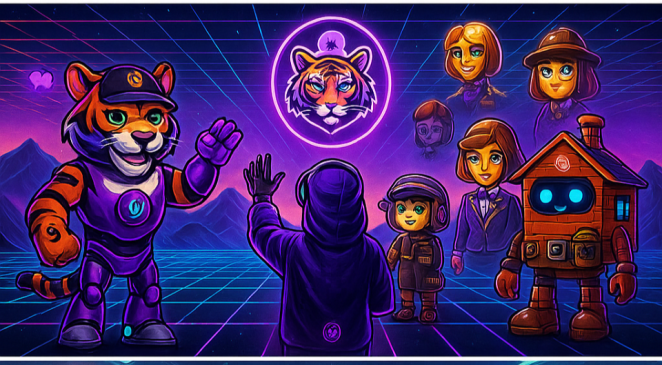
Of course, we can’t talk about 2026 skills without addressing the AI elephant in the room. In the past few years, artificial intelligence and automation tools have moved from intriguing experiments to everyday workhorses in advertising. We’ve reached a point where AI is “no longer a test; it’s becoming part of the industry’s infrastructure”, fundamentally rewiring how campaigns are produced. What does that mean for skills? It means that AI literacy is now as essential to creatives as Photoshop proficiency became a decade ago.
However, simply knowing of AI isn’t enough; it’s about how you use it. There’s a widening gulf between those who use AI to amplify creativity and those who use it to merely automate drudgery. The savviest creatives treat AI as a co-pilot rather than a replacement. They deploy AI to handle time-consuming execution and iteration, freeing up their time to focus on higher-level creative decisions.
For example, a forward-looking copywriter might use generative AI to generate 50 variations of a headline but then apply their own editorial judgment to pick the one with genuine impact. The less savvy might just ship whatever the AI suggests and call it a day – and that’s where work risks becoming cookie-cutter.
So, what specific abilities will employers be looking for in this realm? First, prompting skills – essentially the art of communicating with AI tools. As AI models (from image generators to copy assistants) become ubiquitous, knowing how to write an effective prompt or query to get the desired output is a real skill. That might sound slightly sci-fi, but it’s very practical: if you can co-create with AI tools efficiently, you’ll outpace others.
Beyond prompting, tool fluency is key. By 2026, there’s a growing suite of AI and automation platforms in every niche: AI video editors, design layout generators, code assistants for web design, automated media buying systems, etc. You don’t need to know them all, but you should be quick to learn whatever new tool your company adopts. The most employable creatives show an adaptive mindset – a willingness to continually learn new software, experiment with new tech, and even suggest which tools to try.
As an example, many TV and video ad producers are now expected to be familiar with AI-based editing software. Even small agencies are using AI assistants for tasks like resizing creative assets or transcreating copy for different languages. A candidate who can say, “Yes, I’ve played around with OpenAI’s latest tool and here’s how I’d use it in an ad campaign,” signals that they won’t be left behind as tech evolves.
"Technical confidence paired with creativity makes a powerful combo"
It’s also about integrating AI thoughtfully into workflows. Simply being able to use a tool isn’t enough if you don’t understand its role. Creative teams now value talent who grasp when to automate versus when to add a human touch.
For instance, you might automate the generation of dozens of social media ad variants (dynamic creative optimization), but you’ll apply human creativity to the core message and design template. Or you might use AI to analyze thousands of consumer comments for sentiment (to inspire a campaign angle), but then rely on human insight to craft the storyline. Knowing that balance is a nuanced skill that comes from experience and good judgment.
Crucially, technical confidence paired with creativity makes a powerful combo. We’re not all going to become machine learning engineers overnight, but having a working knowledge of AI’s capabilities (and limitations) in your field is now expected. Whether you’re a designer who can fiddle with AI image generators or a marketer who understands marketing automation tools, you’re showing that you can ride the wave of tech change rather than be drowned by it.
One more angle here is ethics and quality control. As AI becomes embedded, companies also seek talent who are aware of its pitfalls – things like bias in AI outputs, deepfake content, or the lack of originality if over-relied upon.
A skilled creative in 2026 should know how to maintain brand integrity and authenticity even when using AI. This might mean an editor who can spot where an AI-written paragraph sounds off-brand or a designer who ensures an AI-suggested layout still meets accessibility standards. It’s the human as the final check and curator of AI-driven work.
Ultimately, nobody just wants someone who can use AI, they want someone who knows how to use it wisely. If you position yourself as a creative who’s not only unafraid of automation but actually fluent in collaborating with it (while still carrying the torch of original thinking), you’ll be exactly what many forward-looking teams are searching for.
Multi-Channel Storytelling and Experience Design
Camila Lessire
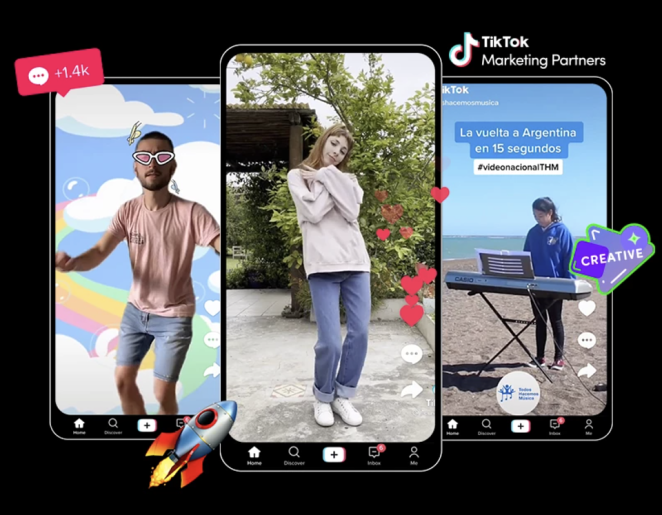
The days when advertising meant a 30-second TV spot or a print campaign are long gone. Today’s creative landscape is a sprawling, always-on, multi-channel experience – and the ability to tell a cohesive story across platforms is a must-have skill. In 2026, the industry is desperately hunting for creatives who can navigate this complexity, crafting ideas that aren’t confined to one medium but rather come alive in many forms, in many places, all at once.
Consider how a single campaign now might need to live on 20 different platforms and formats – from TikTok snippets and Instagram Reels to YouTube pre-rolls, connected TV ads, podcasts, interactive DOOH (digital out-of-home) screens, and beyond. The traditional linear process of Brief → Concept → Single Execution is too slow and too siloed for this reality. Instead, brands are shifting to what has been called a “creative infrastructure” mindset and treating creativity as a continuous, adaptive system rather than one-off campaigns.
What does this mean for skills? It means creatives must be adept at transmedia storytelling – translating a core idea into various formats without losing its essence. It’s a skill to maintain brand and narrative coherence whether the story is told in a 6-second bumper ad or a 3-minute experiential event highlight. If you’re a copywriter, for example, you need to know how to adjust tone and length for each channel (snappy and bold on social, maybe more informative in a blog, more conversational in a podcast script).
If you’re a designer or art director, you need to master design for different screens and environments – understanding that a billboard has different design principles than an app interface or an AR filter. Platform-native design is key; content should feel made for the space it appears in, rather than a one-size-fits-all cut-down.
The industry will favor those who have a holistic view of the user journey. A potential customer might first see a brand message via a social post, then visit a website, then encounter an interactive installation at a physical event. Skills in experience design (thinking through how people interact with a brand across both digital and physical touchpoints) are increasingly prized.
That’s why we see high demand for UX/UI designers and digital project managers who can help ensure consistency and seamlessness in multi-platform campaigns. Even if your role is traditionally “creative,” having some UX sensibility (empathy for user experience, clarity in information flow, etc.) will set you apart.
Another aspect is speed and agility. With so many channels, the creative process has had to speed up dramatically. Campaigns are no longer static; they’re iterative, always optimizing based on feedback and that implies a demand for creatives who are comfortable in a fast-paced, agile workflow.
"The industry needs versatile storytellers who are equal parts creative visionary and pragmatic producer across mediums"
Can you brainstorm and execute a real-time responsive ad when a trend pops up overnight? Can you handle updating creative assets on the fly when data shows version B is outperforming version A? Being flexible and quick without sacrificing quality is a skill that comes with practice – and it’s one employers will test you on. They might ask about times you produced great work under tight turnarounds or adapted an idea last-minute to fit a breaking news moment.
We’re also seeing a resurgence of experiential and integrated marketing, which extends storytelling beyond screens. In 2026, despite digital growth, there’s a notable increase in brands investing in real-world experiences and events (often amplified online). Skills in designing experiential marketing (be it a pop-up activation, an interactive installation, or a live virtual event) are highly attractive.
If you can concept how a campaign lives as an experience (not just an ad), you’re bringing added value. This often requires a mix of skills: spatial design sense, an understanding of event technology (AR/VR, event apps), and plain old creativity to make an experience share-worthy.
Many brands are explicitly pivoting budgets from traditional ads to experiences; for instance, Mastercard has redirected spend towards “immersive experiences that money cannot buy” to engage consumers in memorable ways. The creative teams behind those need to be part storyteller, part event planner, part digital producer.
Let’s not forget content volume management as a skill. Because campaigns now require so many assets, being organized and strategic about content production is crucial. This is sometimes called content operations or modular content design. Creatives who can create systems (templates, style guides, content matrices) that allow a small idea to scale into many pieces efficiently are gold.
Think of it as designing a Lego set of creative elements that can be assembled and reassembled for different channels. If you have experience implementing a DAM (Digital Asset Management) system or working with libraries of reusable content bits, highlight that. It shows you can handle the complexity of modern campaigns.
In essence, the industry needs versatile storytellers who are equal parts creative visionary and pragmatic producer across mediums. A campaign concept isn’t truly great unless it can flex from a Super Bowl ad to a TikTok meme to a live experience while still feeling unified. If you can contribute to that kind of 360-degree ideation and execution, you’ll be immensely valuable. The silo-busting, multi-channel mindset is what separates the 2026-ready creatives from the rest.
Collaboration and the New Creative Generalist
Threefold Films
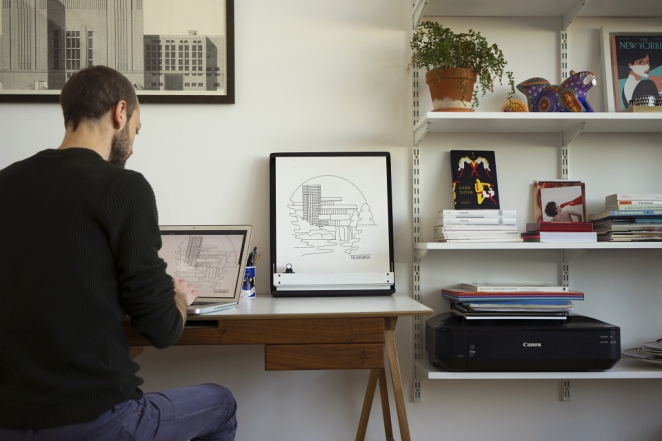
As the creative industries evolve, so do the shapes of the roles within it. One notable trend for 2026 is the rise of the creative generalist and a renewed emphasis on cross-disciplinary collaboration. This might sound counter-intuitive – after all, we just discussed highly specialized areas like data analytics and AI. But the reality is that teams (especially leaner teams in a post-consolidation world) need individuals who wear multiple hats and can connect the dots between specialties.
First, let’s clarify “creative generalist.” We’re not talking about a jack-of-all-trades who dabbles superficially; we’re talking about T-shaped professionals – people with deep expertise in one or two areas (the vertical stroke of the “T”) and a broad curiosity and working knowledge across many areas (the horizontal stroke).
In practical terms, this could be a creative director who started in copywriting but also understands design and coding basics, or a producer who can equally contribute to brainstorming the concept and crunching the budget spreadsheet. These are the folks who can step into different shoes as projects require, making them extremely adaptable in dynamic environments.
Why the push for generalists? Partly because of industry consolidation and smaller teams. In 2025, we saw major agency mergers and some painful layoffs – thousands of roles were shed as big networks streamlined. When the dust settles, agencies and studios in 2026 are running leaner. They’re more likely to hire one person who can do the work of what used to be two distinct roles, if that person can handle it.
We’re in a period of consolidation where both client needs and agency offerings are broadening. A campaign might not have separate teams for social, PR, and activations anymore; it might have one blended team so having talent who themselves are blended in skillset is a huge plus.
The pace of change naturally favors generalists. When new platforms or trends emerge overnight (who had “ChatGPT prompt writer” in their job description a couple years ago?), those who can quickly learn and incorporate something new fare better than those stuck in a single expertise. Being a continuous learner with a broad base is the ultimate adaptive strategy and employers know this.
"2026’s ideal creative professional is a bit of a chameleon"
Collaboration ties heavily into this generalist trend. Creative work has always been a team sport, but now the teams are more diverse than ever. A single project might involve a storyteller, a data analyst, a developer, a media planner, an influencer, and an AI tool – all working together. The silos between “creative department” and “media department” or between “art and copy” and “tech” are dissolving. Collaboration skills are absolutely vital.
For a practical example, think of a campaign involving an interactive AR experience. A generalist-minded art director on that project might not code the AR app themselves, but they understand enough of the tech constraints to ideate realistically with the developers, and they might contribute to UX decisions. Conversely, a developer with a generalist streak might pitch creative ideas rather than waiting to be told exactly what to build. When each team member has some overlap with the others, collaboration becomes more like a dance than a relay race. And the end product tends to be more cohesive.
From the hiring perspective, recruiters often express love for candidates who have “cross-functional experience.” This could mean you did a rotation in strategy before going into design, or you handled client services for a bit as a copywriter. These experiences signal that you can see the bigger picture and work well outside a narrow lane so don’t be shy about highlighting any collaborative, multidisciplinary projects you’ve been a part of.
Finally, let’s talk about soft skills as part of collaboration. It’s not just about knowledge, it’s about attitude: leadership, empathy, reliability, and communication. Agencies are looking for people who can eventually lead teams – and leadership in creative fields often comes down to how well you can bring diverse talents together toward a common vision.
Adaptability is often cited; one could call it a soft skill, but it’s very tangible when you’re in the thick of a project pivoting direction for the fourth time. The ability to keep your cool, keep others motivated, and adapt your role to what’s needed is a skill honed through experience.
2026’s ideal creative professional is a bit of a chameleon. They have a core expertise but aren’t limited to it, they play nicely with almost anyone, and they thrive in the undefined spaces between disciplines. The industry will always need specialists, yes – but even specialists are more valuable when they can plug into a team of other specialists and create something bigger together.
Culture, Community, and Authentic Engagement
Name and Name
In 2026, it’s not only technology and process that are evolving – audience expectations are too. We’re living in an age of empowered, skeptical consumers who can smell inauthenticity a mile away. As such, brands are shifting from a broadcast mentality to a community-building mentality.
This places a premium on skills related to culture, authenticity, and audience engagement. Essentially, companies are looking for creatives who get people and can craft campaigns that genuinely resonate and spark two-way conversations.
One major skill here is cultural intelligence. The world is more interconnected than ever, and many campaigns are global or at least multicultural by nature. Creative professionals who have a pulse on cultural trends and can navigate different cultural contexts will have the edge. This could range from understanding the nuances of Gen Z internet slang, to appreciating how humor or aesthetics vary in Asian markets, to being sensitive to representation and inclusion in casting and storytelling.
In practice, that means if you speak more than one language, if you have international experience, or if you consciously infuse cultural research into your work, you’re offering something highly valuable. The industry has learned the hard way via some tone-deaf campaigns that lacking this skill can be costly.
Inclusive creative practices are also in demand. Brands are more conscious about diversity and inclusion in their messaging – not just for ethics, but because it’s smart business. So knowing how to craft stories that include varied voices and avoid stereotypes is a skill. This might involve casting choices, scriptwriting that respects all identities, or design that’s accessible to people with disabilities. It’s not a “nice-to-have” anymore; many clients require it. If you have knowledge of accessibility standards in design or have worked on campaigns targeting underrepresented groups, make that known – it’s a sought-after expertise.
When it comes to audience engagement and community-building, social media made interaction possible; now brands want true engagement, not passive views. This trend means that skills in social media strategy, content creation, and community management are still very hot, but with an evolved twist. It’s not enough to know how to schedule posts or write a snappy tweet. The skill is in fostering a community. That could mean running an online group or forum, orchestrating user-generated content campaigns, or managing influencer partnerships in a way that feels organic.
"In an era of deepfakes and AI-generated everything, people crave the real"
The rise of the creator economy plays into this: savvy brands are collaborating with independent creators and influencers not just to hawk products, but to co-create content that their communities love. Thus, being able to work with influencers – understanding their world, negotiating those relationships, and blending brand messaging with a creator’s personal style – is a valuable skill set.
Authenticity is the watchword. In an era of deepfakes and AI-generated everything, people crave the real. This means being able to strip away corporate jargon and polished veneer when appropriate and show the human side of a brand. It might be creating a TikTok series that shows your staff at work with a bit of fun and imperfection or writing copy that speaks in a human voice rather than marketing-ese. Brands are increasingly searching for that tone of genuine connection, and they need creatives who can deliver it.
Building on trust, brand trust strategy itself is now a creative priority. The Edelman Trust Barometer has famously shown how trust impacts consumer behavior, and now trust is “as important as price and quality” in purchase decisions. So, creatives are tasked not just with making something cool, but also something trustworthy. Skills in transparent communication, purpose-driven storytelling, and consistency help here. For example, if you’re handling social media, knowing how to respond to a crisis or customer concern honestly and helpfully is a skill (crisis comms meets community management).
If you’re developing a campaign, understanding the company’s purpose and values deeply so that you can align the creative work with it will make the message more credible to audiences. Some companies now even create “trust briefs”, focusing creative efforts on ways to bolster credibility and authority in the eyes of both people and algorithms. As a creative, being able to interpret and execute on such a brief – perhaps by showcasing real customer testimonials, or by visualizing data in truthful, clear ways – is increasingly part of the job.
Understanding people is arguably more important than ever. Technological prowess is great, but if you don’t get the audience, the campaign won’t land. The industry is looking for the empathizers, the culture-curious, the community builders. Whether it’s moderating a lively brand community online, collaborating with a YouTube star, or making sure an ad campaign truly speaks to a minority audience in an authentic way – those tasks require skills that are part art, part sociology.
If you pride yourself on being tuned into the zeitgeist, able to forge genuine connections, and passionate about the human side of advertising, know that those traits are major assets in 2026.
What Creative Skills Are in Demand for 2026?
BUCK
It’s clear that the professional creative skill set in 2026 is broader and more dynamic than ever. If there’s one thread tying it all together, it’s that the ability to keep learning and adapting may be the most critical skill of all. The pace of change in our industry hasn’t slowed, and if anything, the last few years have taught us that unexpected changes (be it a pandemic, a breakthrough AI, or a sudden shift in consumer sentiment) can upend how we work almost overnight.
For industry leaders, this is as exciting as it is challenging. I often tell up-and-coming creatives: embrace being a student for life. The ones who thrive are those who remain curious – who see a new platform or tool not as a threat, but as an opportunity to add another string to their bow. They invest in themselves, whether that’s taking a course on data visualization, experimenting with an AI art generator on the weekend, or simply devouring articles about the latest trends (much like you’re doing right now).
Employers are not just hiring for what you can do, but for your potential to grow. Showing that you can evolve – that you have evolved – is part of demonstrating you have these in-demand skills.
It’s also worth noting that while the laundry list of “must-have” skills can seem daunting, you don’t need to be an expert in absolutely everything. Rather, you need enough literacy across domains to collaborate intelligently, plus depth in a few areas to really add value. If you’re stronger in one area, team up with colleagues who complement you in others – that’s the whole point of the new collaborative, hybrid creative process.
"I believe that the creative industry’s strength has always been its people"
As we head further into 2026, the advertising and creative industries globally are on a fascinating trajectory. The tools and channels will keep shifting, but the heart of what we do – connecting with people through ideas and experiences – remains constant. The skills the industry is hunting for are ultimately those that enable that connection: a blend of art and science, of head and heart, of innovation and intuition.
For creatives and marketers reading this, the takeaway is empowering: if you cultivate your human creativity, stay strategic and data-informed, remain tech curious, work well with others, and truly understand your audience, you’ll be in high demand. These are actionable, learnable patterns of working and thinking, not just buzzwords. And for the industry as a whole, if we fill our teams with people who have these skills, we’ll be well equipped to engage an audience that is smarter, more connected, and more discerning than ever.
The future will undoubtedly throw new buzzwords our way, but now we know to look beyond them. Focus on building the capabilities that make those buzzwords actually work in practice.
I believe that the creative industry’s strength has always been its people – imaginative, adaptable people who can bring ideas to life. It’s those people, armed with these evolving skills, who will shape the campaigns that inspire us, the brands that endure, and the creative community that I’m proud to be a part of every day.