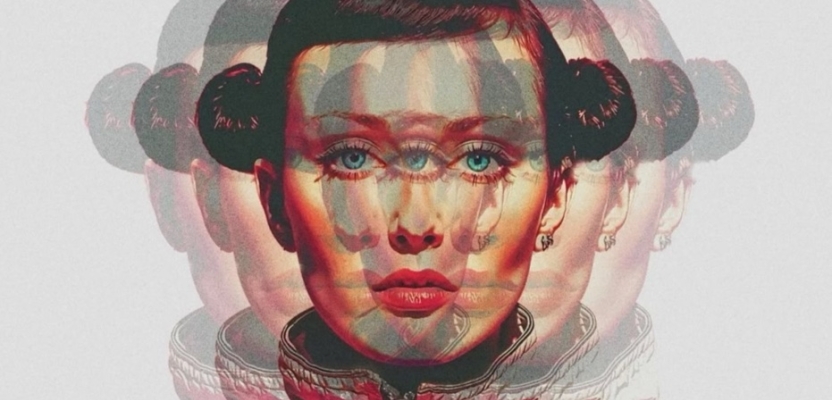

On a chilly spring morning in 2023, Guardian writer Henry Williams sat at his desk and watched ChatGPT, a large language model, compose an article on the same subject he had been hired to write. It took the machine a fraction of the time he usually spent and returned prose that was competently structured and on‑brand. “I charge £500 for a job like that,” he later wrote, “and here it is, done in an instant”.
Williams still found value in his craft, but he could not shake the sense that the economics of writing had shifted beneath his feet. If a client can get a similar result in seconds, why pay him at all? The same question is now echoing across the creative industries.
Artificial intelligence has long promised to automate routine tasks. Recently, generative models capable of producing text, images, video and music from simple prompts have invaded the arts. The technology can now generate a visual storyboard for a film, a layout for a magazine, a melody in the style of Frank Sinatra, or an advertising slogan, all with astonishing speed and accuracy.
For workers who paint, photograph, write or compose, this inevitably starts to feel like the cusp of an existential threat. But is it really all that hopeless? As a copywriter with nearly 20 years in the trade under my belt, I certainly hope not, but there are certainly signs that lend credence to the scaremongers.
The State of Generative AI in 2025
Manaza
The current wave of generative AI is the result of large neural networks trained on huge datasets scraped from the internet.
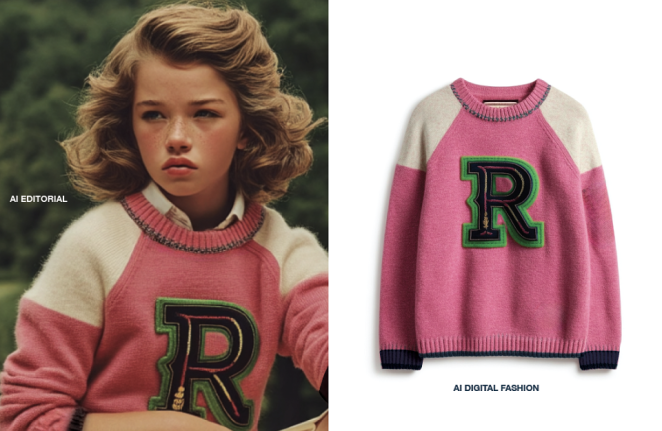
Tools like OpenAI’s DALL‑E and Midjourney can synthesise photorealistic images; Runway and Sora can produce credible video clips from text prompts; ChatGPT and Claude can write coherent essays, generate marketing slogans and translate languages; Adobe Firefly and Canva’s “Magic Design” generate layouts and design elements; and models from Google and Meta can generate voice, music and even 3D environments.
Venture capital money and corporate investment have poured billions into these technologies and the AI story, as a result, no longer revolves around industrial robots or spreadsheets; it has become a debate about creativity itself.
Researchers at Brookings Institution warn that generative AI is already disrupting the creative arts and marketing professions, raising existential questions about copyright, consent and the value of human originality. A University of London (CREAATIF) study, meanwhile, found that generative AI is shaking up every part of cultural production and that freelance creative workers are “especially vulnerable”.
In the UK, only 10% of surveyed creative workers believed AI would have a positive impact on their industry over the next five years. This bleak outlook reflects the speed at which the tools have evolved, and the limited time artists and designers have been given to adapt.
AI’s potential is undeniable. Meta’s advertising platform already offers fully auto‑generated ad copy and images that adjust to audience segments; software can transform rough sketches into polished concept art; and video tools can de‑age actors or lip-sync translations in seconds.
The current generative AI market in music alone is projected to grow from €3 billion to €64 billion by 2028, according to a 2024 study by the International Confederation of Societies of Authors and Composers (CISAC). However, this rapid expansion carries a darker side.
The same CISAC study forecasts that musicians and audio‑visual workers could lose more than 20% of their income within four years if AI companies aren’t properly regulated. An International Monetary Fund (IMF) report cited by The Guardian, meanwhile, estimated that 60% of jobs in advanced economies are exposed to AI, with half potentially negatively affected. But which jobs specifically are on the chopping block?
Who Is Being Replaced? Roles Most at Risk
Lukasz Sobiech
Storyboard Artists and Pre‑visualisation
Hollywood’s adoption of AI may provide the clearest example of a role facing direct displacement. In 2024, Lionsgate announced a deal with Runway AI to develop a proprietary model for video generation.
Vice chairman Michael Burns explained that the tool was intended to produce storyboards and visual effects (VFX), promising to save “millions and millions of dollars” and suggesting that positions traditionally held by artists would be reduced. The company’s message was blunt: if AI can pre‑visualise a scene cheaply and quickly, there is less need to hire human storyboard artists or VFX specialists.
Film-industry insiders confirm this trend. A Guardian investigation into AI and filmmaking reported that dubbing and translation work has already “almost evaporated” and that VFX teams now use generative models to create pre‑production imagery.
While current tools are described as “assistive” rather than fully creative, they drastically lower costs and time. The result is that entry‑level storyboard artists and concept designers, once the apprentices of the film world, see fewer openings. The shift away from hand‑built models to prompt‑driven image generation, as one filmmaker noted, creates a “forced learning curve” for creative workers.
The broader entertainment industry faces similar pressures. A 2024 report by CVL Economics estimates that about 204,000 entertainment industry jobs will experience significant disruption over the next three years because of generative AI.
These jobs are not necessarily vanishing overnight, but the report stresses that entry‑ and mid‑level positions will be squeezed and career pathways narrowed. If studios automate storyboards, pre‑visualisation and translation, there will be fewer apprenticeships for tomorrow’s art directors, cinematographers and writers.
Graphic Designers and Layout Designers
For decades, graphic design was thought to be automation‑proof because it relied on subjective taste. Yet today, AI can not only produce images but also propose complete layouts. In January 2025, Creative Boom reported that the World Economic Forum’s Future of Jobs survey ranked graphic design as the 11th fastest-declining job category, attributing the decline to AI.
At the same time, user‑interface (UI) and user‑experience (UX) design ranked among the fastest-growing categories. This contrast suggests that AI is automating parts of design that involve repeating patterns, templates and page layouts, while roles requiring an understanding of how users interact with a service remain in demand.
Generative design software now offers one‑click mood boards, layouts, colour palettes and typographic pairings. Tools like Adobe Express and Canva’s “Magic Design” propose polished posters or presentation slides from a short brief. Publishers can input an article and receive multiple page layouts instantly.
For newspapers and magazines, a software suggestion might become the final design, reducing the need for junior layout designers. In advertising, Meta’s automated ads combine prompts with real-time performance data to generate countless variations, “disintermediating” jobs that once involved human designers and account managers.
Illustrators, Photographers and Artists
Nothing illustrates the precariousness of human creativity more starkly than the experience of freelance artists and photographers. The Guardian’s 2025 feature on creative workers’ fears recounts how illustrator Jenny Turner’s bespoke portraits, once sold for about £100, were suddenly competing with AI-generated images priced under £10.
Unable to match the low cost and sheer volume of AI art flooding platforms like Etsy, she delisted her shop and looked for other employment. Photographer Oliver Fiegel told the same article that AI tools “undermined and erased the craft” of studio photography; within months, he lost several clients and contemplated leaving the profession.
Translators, too, are feeling the pinch. German translator Karl Kerner saw his work evaporate as customers switched to automated translation tools. He now uses the same tools for convenience and is essentially “out of business,” noting that within two years, he went from a flourishing career to a handful of regular clients.
Because translation and subtitling require linguistic creativity and context awareness, they were once considered safe; but AI’s fluency has proven otherwise.
Junior Copywriters and Content Producers
Copywriting has long been a gateway for budding writers into advertising and marketing. Yet generative text models like GPT‑4 and Llama can now produce press releases, product descriptions and even entire ad campaigns.
Henry Williams, the freelance copywriter whose plight opened our article, fears that the economic argument for AI-generated copy will override sentimental attachment to human writing. He notes that if AI can mimic his style for free, clients will not pay for his services, and he predicts a future where a handful of human writers act as “prompt engineers” and fact-checkers while machines do the bulk of the writing.
Marketing agencies are already experimenting. Park & Battery, a brand consultancy, built an “AI content assistant” that functions like a junior copywriter. The tool automatically drafts subject lines, Facebook ads and website copy, ensuring a consistent tone across campaigns.
While human writers still decide strategy and refine the storytelling, the assistant handles repetitive tasks. For many small businesses, such a tool eliminates the need to hire entry-level copywriters. Over time, the risk is that the pool of human writers will shrink, leaving fewer mentors to train the next generation.
Musicians, Composers and Voice Actors
AI’s reach extends to the realm of sound. Tools can clone voices, generate new melodies and simulate musical styles. CISAC’s economic study warns that music workers stand to lose nearly 25% of their income within four years if generative AI continues to expand unchecked.
The same report suggests that revenue will flow to AI developers rather than artists, undermining unique cultural contributions. Film and video games already rely on AI to compose background music or design soundscapes. Voice actors are anxious as synthetic voices improve. When entry-level musicians and narrators lose commissions to AI, they miss out on the experience needed to progress to more senior roles.
Evidence from Economists and Labour Groups
Quantifying the impact is difficult, but several studies underscore the magnitude of the threat. The CVL Economics report estimates that more than 200,000 entertainment jobs in the U.S. are poised for significant disruption. Brookings argues that generative AI will “weaken demand” for previously sought‑after creative skills because employers can automate “some or all of workers’ assignments”.
Wealth advisory groups like the Tony Blair Institute warn that up to 3 million private-sector jobs in the UK could be displaced. PriceWaterhouseCoopers predicted that while only 3% of jobs were already at risk in 2023, the figure could reach 30% by the mid‑2030s, with low-education workers facing a 44% risk.
Taken together, these numbers suggest that AI’s impact will be uneven but significant. Roles involving repetitive tasks, template-driven design or pattern recognition are most exposed. By 2030, many entry-level positions in advertising, graphic design, photography and copywriting could vanish or be drastically reduced. Without robust pipelines, creative industries risk losing a generation of talent.
Who Is Safe? Roles That Resist Automation
Hasmik Mkhchyan
AI may be impressive, but it is not omnipotent. Its outputs are derivative, based on training data scraped from existing works. It lacks an embodied experience of the world. This limits its ability to grasp cultural context, human emotion and complex social cues—attributes central to many creative disciplines. The following roles appear more resilient.
Creative Directors, Art Directors and Strategic Roles
Jobs that involve setting a vision, guiding teams and interpreting cultural trends are resistant to automation. A 2025 analysis of “AI-proof” jobs notes that roles like art director, creative director and choreographer actually saw 29.7%employment growth because they require original vision, cultural awareness and the ability to motivate people.
AI can propose hundreds of design options but cannot choose the one that resonates with a client’s brand or the zeitgeist. It cannot handle client relationships, negotiate budgets or mediate disagreements among stakeholders. For these reasons, the article concludes that AI-generated work “recombines existing data” but lacks “original creativity”. Human creative leaders orchestrate the creative process; machines generate raw material.
Ultimately, while AI can suggest ideas, only humans can navigate complex interpersonal dynamics, make judgment calls in ambiguous situations and inspire others. In practice, this means senior designers who master AI tools and focus on strategy will be even more valuable.
UX Design, Service Design and Human‑Centred Research
While generative AI encroaches on visual layout design, jobs that involve understanding user behaviour, accessibility and service ecosystems remain in demand. The World Economic Forum’s Future of Jobs report identified UI/UX design as a high-growth field. Designing a user journey requires empathy, cross-disciplinary collaboration and iterative testing with real people. This are skills AI cannot replicate, at least not yet.
Similarly, service designers who map experiences across digital and physical touchpoints must integrate psychological, sociological and business considerations. These roles synthesise research, stakeholder needs and technological constraints into coherent strategies.
Writers and Editors with Voice and Authority
AI can produce grammatically correct text, but it struggles to create original voice, nuance, humour or deep investigative reporting. Media companies have experimented with AI-written content, but human editors still refine tone and factual accuracy.
A 2025 report from HubSpot lists writers and editors among jobs safe from AI when they produce “original, thoughtful and deeply human content”. Emotional resonance, contextual humour and narrative arcs remain uniquely human skills. Moreover, as generative text becomes ubiquitous, audiences may begin to crave authentic voices and personal stories.
Roles Requiring Emotional Intelligence and Ethics
In the 2025 workforce, emotional intelligence, originality, initiative, leadership and complex problem-solving are among the most prized skills. WEF editor Ian Shine notes that the human brain’s greatest advantage is being “attached to a real human body,” capable of interacting with others and understanding nuance.
Jobs involving therapy, counselling, teaching and social work require empathy and moral judgment. Similarly, certain creative roles (choreographers working directly with dancers, set designers collaborating on live theatre, or creative producers managing interdisciplinary teams) are anchored in human relationships. AI cannot replicate the trust and rapport built in these spaces.
Hybrid Roles: AI as Co‑creator
Some creative positions are being redefined rather than eliminated. Park & Battery’s AI assistant demonstrates how a tool can act as a junior copywriter, freeing human writers to focus on big-picture storytelling.
In visual effects, AI can handle rotoscoping or compositing while human artists concentrate on character development and world‑building. AI may also enable new creative forms (interactive narratives, generative art installations) that require human curation and programming. In these hybrid roles, professionals who learn to orchestrate AI will thrive.
The Collapse of Entry‑Level Training

Perhaps the most worrying aspect of AI adoption in the arts is not the total replacement of senior artists but the hollowing out of the career ladder. If machines can perform the repetitive, lower‑value tasks once assigned to apprentices (cleaning up storyboards, formatting layouts, drafting initial copy) then young people may have fewer opportunities to develop their craft.
Generative AI threatens to narrow career development pathways and “diminish diversity and mobility” within the entertainment industry. In other words, AI could entrench a two‑tier system: a small cadre of human creative directors and strategists at the top and a vast sea of algorithmic labour beneath.
This reduction in entry-level jobs also risks eroding mentorship. In a traditional studio, junior designers learn by observing seniors, collaborating on projects and receiving feedback. Without such training grounds, the pipeline of skilled creatives may dry up. This scenario could also exacerbate inequality: those who can afford formal education or unpaid internships may still enter the field, while those without resources will be shut out.
The reality is that freelance artists already feel priced out of platforms by cheap AI imagery. Unless the industry invests in retraining and support, we may witness the disappearance of middle-class creative livelihoods.
Societal and Cultural Implications
AI’s incursion into the arts is not just an employment story. It raises profound questions about culture, identity and ethics. When generative models absorb existing artworks and spit out new combinations, who owns the output? Many generative platforms train on copyrighted images without permission, undermining artists’ rights.
The CREAATIF study calls for legislative reforms, fair remuneration and inclusive governance to protect human originality and ensure that artists receive compensation when their works train AI models. The same report emphasises that human creativity must be “amplified rather than replaced”.
For musicians and voice actors, AI’s ability to clone voices raises ethical issues. Deepfakes and voice synthesis can be used to manipulate public figures or create music with dead artists’ voices. The CISAC report urges policy-makers to protect creators’ rights, particularly indigenous and local cultural rights. Without safeguards, AI companies could exploit cultural heritage without compensating communities.
There is also the question of public trust. In an era when photographs and videos can be generated with a few words, how do we verify authenticity? If clients can buy infinite variations of design or music for pennies, will they come to value any of it?
The more generative AI saturates media, the more hunger there may be for the handmade, the authentic and the human. This could create niche markets for bespoke craftsmanship but may also erode the mass-market value of creative work.
Final Thoughts
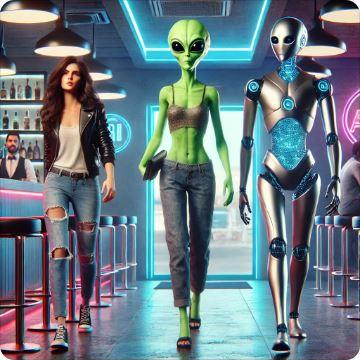
Joe Shumaker
Let’s not beat around the proverbial bush here. The looming threat of AI takeover in creative industries is real. From film studios experimenting with AI storyboards to freelance illustrators priced out of their own markets, the evidence shows that many entry‑level and mid‑level creative jobs are at risk.
Copywriters, layout designers, translators and musicians already face competition from machines capable of generating plausible alternatives in seconds. The numbers (from 204,000 disrupted entertainment jobs to millions of private-sector positions potentially displaced) underline the scale of the challenge.
Yet the story is not purely one of replacement. AI thrives on recombining existing data; it lacks the embodied experience, intuition and ethical awareness that define human creativity. Roles that require vision, strategic thinking, emotional intelligence and leadership remain largely safe. Even in areas where AI encroaches, such as copywriting and visual design, humans who master AI tools can elevate their work and carve out new hybrid roles.
Ultimately, the future of creativity will depend on how societies, industries and individuals respond. If we allow AI to hollow out entry-level jobs without investing in training and ethics, we risk losing a generation of artists and weakening cultural diversity.
If, however, we view AI as an accelerant rather than a replacement, we can harness its power to free humans from drudgery and focus on the uniquely human aspects of art. The challenge for creative professionals is to adapt, learn and advocate for a future in which this technology amplifies rather than eclipses that all-too human spark.