

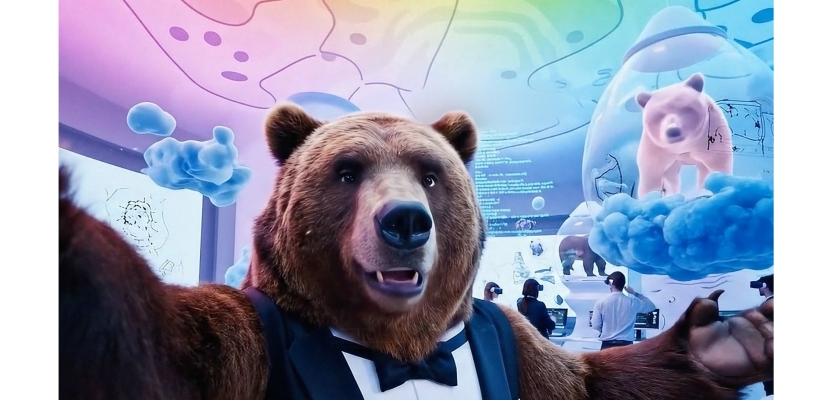

Google’s Veo 3 marks a huge leap in AI‑powered video generation. Introduced at Google I/O on May 20, 2025, and built by DeepMind, this model delivers high‑resolution videos (often up to 4K) complete with synchronized audio, ambient sound effects, and even dialogue . It brings together realistic visuals, physics‑driven motion, and cinematic controls, meaning creators can specify camera angles, framing, and movement to craft polished video stories forward-thinking and with ease.
Playing with Veo 3: Our Weekend Experiment
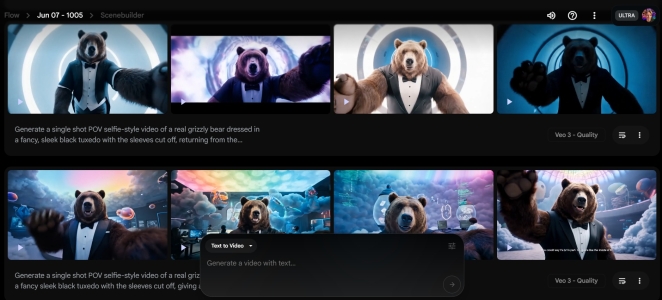
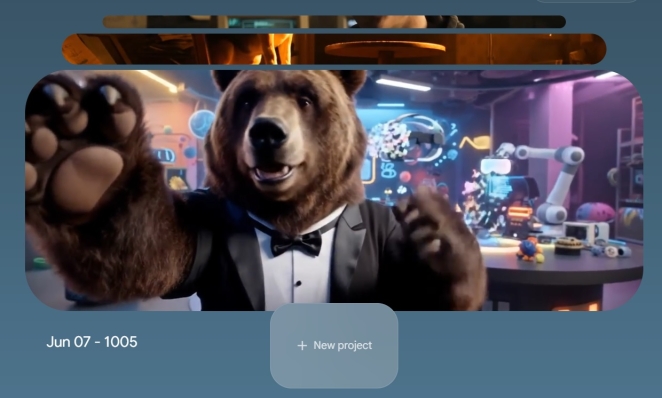
Over a weekend, the Groove Jones team experimented extensively with Veo 3, prompting videos featuring their own mascot. With proper prompt structure and about 5,000 AI credits, the output was surprisingly cinematic and controllable. But creative surprises showed up, too - like a flying bear wearing tuxedo-style cutoff sleeves and motion capture shorts—proof that generating video can unleash both precision and delightful unpredictability.
What Makes Veo 3 Unique
1. Native Audio Integration - Veo 3 is the first Google video tool that natively generates sound—ambient noise, music, and lip‑synced speech—that syncs with visuals .
2. Enhanced Physics and Realism - Motion and lighting respond realistically to environments—water flows, shadows shift accurately, and characters move with believable dynamics.
3. Prompt Fidelity and Control - You can direct framing, movement, angles, and continued character consistency across clips. It’s possible to describe a cinematic shot in text and get a visual that matches closely, whether in Gemini or the Flow interface.
Access and Platform Rollout
-
Launch details: unveiled at Google I/O on May 20, 2025, alongside Flow—Google’s creative video tool that leverages Veo 3 and Imagen.
-
Availability: initially limited to U.S. users via the Gemini app on the AI Ultra subscription, priced at approximately $249.99/month.
-
Enterprise access: now broadly available in public preview on Vertex AI, where both Veo 3 and the faster variant Veo 3 Fast are offered for video tasks ranging from polished production to rapid ad demos.
Why Consider GenAI Videos
People are rapidly adopting Generative AI (GenAI) video tools because they offer unprecedented speed, efficiency, and creative possibilities in content creation. These tools leverage advanced AI models to generate, edit, and customize videos from simple inputs like text prompts, images, or even existing video footage.
How People are Using GenAI Videos
Marketing and Advertising - Businesses are embracing GenAI to create high‑impact, share‑worthy videos for every platform. This includes producing dynamic social media shorts and reels, crafting product demos and explainer videos that feel both polished and personal, and delivering hyper‑targeted ads that respond to consumer data in real time. Marketing teams can now react to cultural moments and market trends almost instantly, launching campaigns in days rather than weeks.
Education and Training - Educators and corporate trainers are using AI video tools to transform complex concepts into visually engaging e‑learning modules. Internal training materials can be automated, making onboarding and skill‑building faster and more consistent. With AI avatars and text‑to‑speech technology, content can be localized into multiple languages, making it accessible to a global audience.
Content Creation and Entertainment - From indie filmmakers to game developers, creatives are experimenting with GenAI to bring visions to life. Short films, animated sequences, and atmospheric concept visuals can be produced at a fraction of the traditional cost. Game designers use AI to quickly populate environments, develop realistic character movements, and refine scene details. Long‑form content like webinars and podcasts can be repackaged into snackable clips, while unique visual effects and styles open the door to fresh storytelling approaches.
Business and Corporate Communications - Organizations are leveraging AI to improve the clarity and reach of their internal and external communications. AI avatars are being used in professional presentations, internal announcements, and customer‑facing FAQ videos. Complex information can be distilled into concise explanations that are both visually appealing and easy to understand.
Video Editing and Post‑Production - GenAI is reshaping post‑production workflows by automating time‑consuming tasks such as scene detection, clip trimming, and transition placement. It enhances footage with improved resolution, reduced noise, and sharper details. Editors can apply advanced effects like rotoscoping, object removal, and stylized overlays without starting from scratch. AI also enables rapid subtitle creation and realistic multilingual dubbing with synchronized lip movements, expanding content reach without sacrificing quality.
Real‑World Examples and Emerging Concerns
Generative content using Veo 3 has already produced stunning videos. One viral example showed scenes of people at a car show that were nearly indistinguishable from footage; that level of realism is turning heads.
Yet the technology also raises ethical alarms. Reports have surfaced of racist AI videos depicting Black women as stereotyped caricatures, created with simple prompts and shared widely on social platforms. Time magazine also highlighted how Veo 3 enables realistic deepfake videos depicting riots or election fraud, which still slip through despite built‑in watermarks and content filters.
Google’s Veo 3 is redefining generative video by combining cinematic visuals, original audio, realistic physics, and prompt-level control. It democratizes video production, opening possibilities for marketers, content creators, educators, and storytellers alike. Still, its power to blur reality and fiction demands careful ethical oversight, stronger moderation, and thoughtful use.
If you’d like to see more examples or explore prompt‑writing techniques, or dive deeper into using Veo 3 via Gemini or Flow, check us out - https://www.groovejones.com/