

There are two types of people who watch the Super Bowl. The first group obsesses about defence, playcalling and whether a coach “lost the locker room.” The second group talks about whether a mayonnaise pun deserves a Cannes Lion. They care more about who won the ad break than who won the game and will spend the next day discussing the best super bowl ads of 2026 over the best super bowl plays of 2026.
This piece is definitively for the second group and for the brands, agencies and creatives who treat the Super Bowl ads as an annual state-of-the-nation mood board with a $8m-per-30-seconds price tag.
This year’s Big Game commercial ecosystem was less “one night of ads” and more “multi-week cultural marathon,” with platforms like YouTube turning the run-up into the main event: teasers, extended cuts, creator collabs, and post-game rewatch culture doing as much heavy lifting as the broadcast spots themselves.
And the creative read on “Super Bowl ads for this year”? Loudly familiar, occasionally brilliant, and increasingly shaped by an awkward truth: the audience is harder to surprise, more cynical by default, and still very willing to cry at a crisps ad if it hits the right nerve.
So, in true Super Bowl ad analysis fashion, here’s what scored, what fumbled, and what the whole thing says about culture in 2026.
What Super Bowl ads in 2026 were really selling
A useful lens (because “rankings” are fun but not always helpful): the best Super Bowl ads 2026 didn’t just chase laughs or celebrity wattage. They were engineered around three currencies that keep showing up in this year’s work:
- Recognition over revelation: The ads assumed the audience doesn’t want to be challenged. Nostalgia, IP, famous faces doing “deliberately unfamiliar things.”
- Comfort over conviction: Overt moral messaging felt “spent,” replaced by escapism, big feelings and “please, just let something be uncomplicated for 60 seconds.”
- Technology as punchline and saviour: AI showed up both as utility (product promise) and as culture-war prop (industry sniping, anxiety, satire).
Keep those in mind as they explain most of the touchdowns and almost all the fumbles.
The YouTube effect: the ads that won the views game
Before getting into the creative winners, it’s worth clocking what people actually watched in volume. In Google’s recap of the YouTube AdBlitz leaderboard, the most-viewed brands on game day (based on views from midnight to end of game) looked like this:
- Expedia – “Going Places with Ken”
- Google – “New Home | Google Gemini SB Commercial 2026”
- e.l.f. Cosmetics – “e.l.f. Presenta: MELISA”
- Michelob ULTRA – “The ULTRA Instructor”
- Artlist – “Official Big Game Commercial 2026”
- Base44 – “It’s App to You”
- Kinder Bueno – “YES BUENO 2026”
- Budweiser – “American Icons”
- Raisin Bran – “Will Shat…”
- Red Bull – “Unleashed Zero”
What this underlines is that the Super Bowl isn’t just a broadcast moment anymore. It’s a distribution war and the work that’s built to live across platforms (interactive extras, creator takeovers, extended storytelling) increasingly has the advantage.
Which Super Bowl ads worked best?
There are different ways to define “best of Super Bowl ads”: funniest, most rewatched, most effective, most talked about, most likely to win awards, most likely to make a group chat do a sudden, involuntary “okay that’s actually good.”
So instead of pretending there’s one scoreboard, here are the creative patterns that genuinely landed with the standout examples.
1) The “IP revival” that actually had a point
Xfinity x Jurassic Park nostalgia, re-engineered as a product demo
The clever move: it didn’t just reference a beloved film because “remember this?” It used the premise to dramatise the promise of seamless connectivity, reframing the whole setting as a luxury resort that finally runs properly. It’s nostalgia as rationale, not nostalgia as wallpaper.
This is the trick most brands miss: the reference has to do work. A cameo isn’t an idea. A cameo that makes the product feel inevitable is.
2) Musical absurdity that’s oddly… crafted?
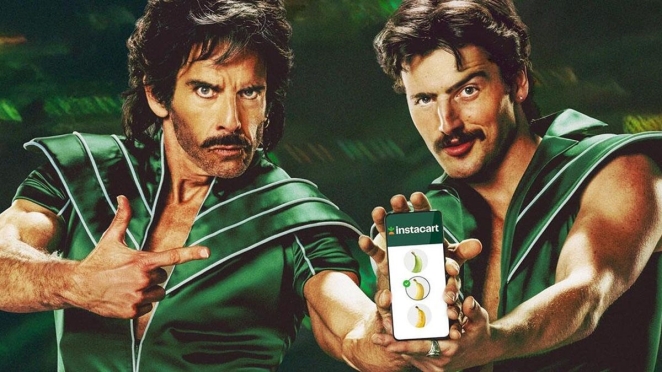
Instacart and the disco banana opera
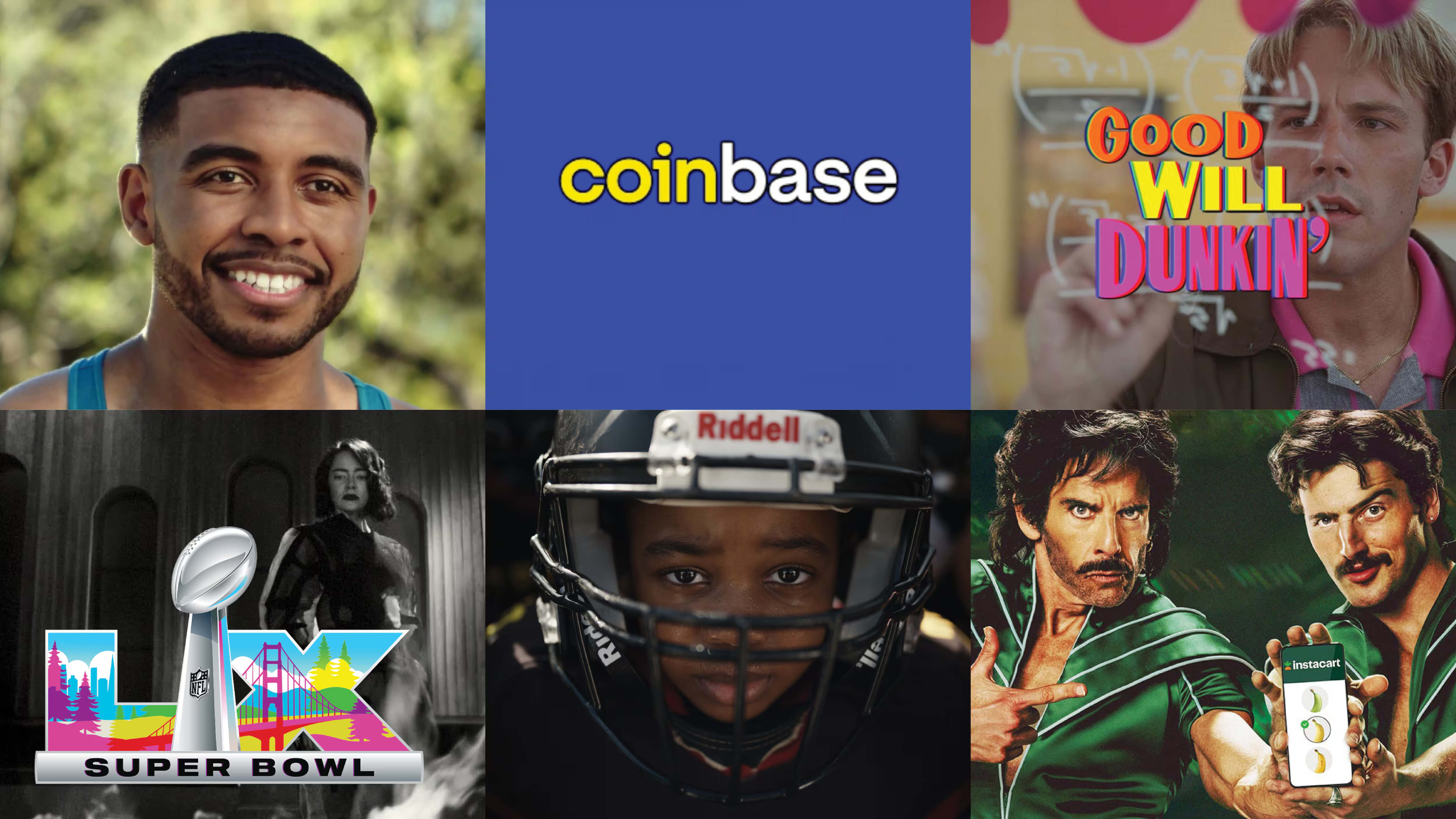
A retro-styled musical showdown (directed by Spike Jonze) turned “banana ripeness” into a full performance set piece. Yes, it’s ridiculous but it’s also tightly produced, choreographed, and committed. The joke is the overkill, and the overkill is the craft.
This is a recurring Super Bowl truth: if an ad is silly, it has to be serious about being silly.
3) Nostalgia done with restraint (yes, it happens)
Volkswagen reworking “Drivers Wanted”
A House of Pain needle-drop is basically a Super Bowl cheat code at this point but here it’s anchored to an older brand platform (“Drivers Wanted”) and reframed as a cultural invitation to say “yes” again. It’s nostalgia with a reason, not a raid of the memory bank.
4) The unexpectedly effective “celebrity shilling” category
Uber Eats doing self-aware star power
When a celebrity ad works, it’s usually because it admits what it is. This one leaned into self-awareness and friction (one star winding another up) rather than trying to pretend it’s “a story.” Route one? Sure. Effective? Also yes.
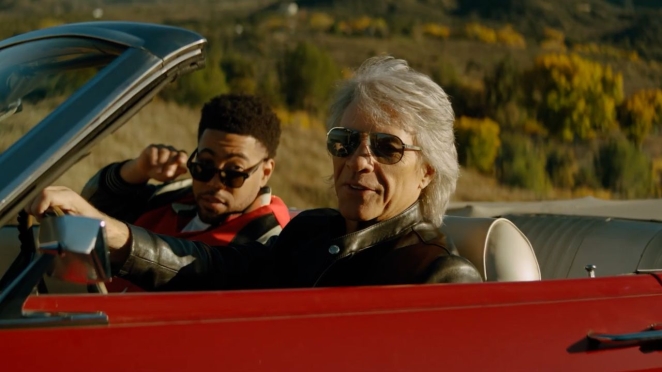
State Farm deploying Jon Bon Jovi as pop culture glue
A knowingly goofy twist on “Livin’ on a Prayer,” with comedy doing the persuasion. It’s not reinventing the form, but it’s clean, recognisable, and built for mass recall.
5) The emotional gut-punch (because of course)
Lay's and the father–daughter farming legacy
Every year, one brand remembers that humans are mostly just feelings in a coat. This one hit the “family, time, legacy” button so hard viewers reported getting emotional in real time.
Notably: this works because it doesn’t wink at the emotion. It commits as, effectively, a crisp ad doing what prestige TV does, but in 60 seconds with better snack placement. True commitment reads as sincerity even when the logo appears at the end like an uninvited guest at a funeral.
6) Wordplay so bad it loops back round to good
Hellmann's and “Meal Diamond”
A Neil Diamond parody, musical performance energy, and a pun that should be illegal all somehow packaged into a spot that’s charming because it’s so confidently committed to its own dad-joke universe.
7) The celebrity-led weirdness that still feels like an idea
Squarespace with Yorgos Lanthimos and Emma Stone
The “my domain is taken” problem becomes an operatic, moody cautionary tale that’s basically art-house anxiety as a product metaphor. High craft, coherent tone, and a rare thing in Super Bowl land: a director’s voice that survives the brand machine.
How is AI being used in Super Bowl ads?
In 2026, AI didn’t appear as a single “trend.” It appeared as three different things, depending on what the brand needed.
1) AI as product promise (and status symbol)
Meta + Oakley: “Performance AI” glasses
This wasn’t “AI will change your life” in abstract terms. It was “AI will make you better at sport,” framed with the kind of energy usually reserved for sports drinks and training montages. Importantly, it also used the language shift that’s happening in culture: less “artificial intelligence” (uncanny, threatening) and more “intelligence as enhancement.”
2) AI as creative infrastructure (the build-anything myth)
OpenAI: “You Can Just Build Things”
The hero film positioned its latest “Codex” model as part of a lineage of major technological breakthroughs. The classic “we’re not selling a feature, we’re selling a future” manoeuvre.
Whether audiences buy that depends on trust (and fatigue). But strategically, it’s telling: AI brands are now trying to shift from “cool tool” to “civilisational layer.”
3) AI as culture-war theatre (and a warning label)
Anthropic vs OpenAI
Anthropic’s campaign leaned into “ad-free” positioning, using wholesome scenarios spoiled by awkward brand plugs essentially saying: this is what your chatbot future looks like if ads get involved.
What makes this moment notable isn’t just the creative. It’s the signal that AI companies are now playing Super Bowl gamesmanship like legacy consumer brands: competitive positioning, public jabs, platform fear, “we’re the safer choice.”
And then, because 2026 is allergic to calm, a supposed “leaked” OpenAI Super Bowl ad was widely circulated and then debunked as a hoax. This is a neat little side plot that perfectly illustrates the new reality: misinformation can be part of the ad ecosystem even when the brand didn’t buy the media.
So yes: AI is being used in Super Bowl ads as product, as platform story, and as cultural anxiety, sometimes all at once.
What do Super Bowl ads say about culture in 2026?
Here’s the uncomfortable truth: Super Bowl ads still function as a compressed snapshot of national mood, not because they’re honest, but because they’re expensive enough to reveal what brands think people need to feel.
This year’s snapshot looked like:
1) Escapism won. Reality lost.
This crop felt “untethered from everyday reality,” leaning hard into maximalism, comfort and recognition. This is a sign that advertisers believe the audience is tired, tense, and not looking to be educated during a football break.
That’s why musical comedy performed so well. It’s frictionless. It’s rewatchable. It asks nothing of you except: “do you want to grin for 60 seconds?”
2) The “shared reference” is now the creative shortcut
The work assumed a fragmented culture still craves moments everyone can recognise at the same time. Hence: dinosaurs, ‘90s energy, classic songs, familiar celebrity faces, big brand comfort.
And to be fair: it works. Shared reference is a form of social glue, and the Super Bowl is still one of the few places brands can buy that glue at scale.
3) Emotional sincerity is back (because irony is tired)
Even with all the cynicism in the system, audiences still respond to sincerity, especially when it’s unexpected (crisps, pet food, family, legacy).
In a year where many ads tried to out-weird each other, the work that simply felt human became the standout. That’s not a coincidence. It’s a craving.
4) The platform era is shaping the form
The pre-game release schedule, the AdBlitz leaderboard and the creator takeover trend is all part of a larger overall shift where the “Super Bowl commercial” is no longer a single artefact. It’s a content ecosystem designed for replay, remix, reaction, and algorithmic distribution.
Which means: a spot can “lose” on broadcast and still win on the internet and vice versa.
The real creative scoreboard: the 2026 patterns worth stealing

If this roundup is being read by agencies and brands (and it is), the most useful thing isn’t “which ad was funniest.” It’s the repeatable craft lessons.
Lesson 1: The best ads had one clear message
- “A grocery delivery service cares about bananas so much it becomes disco theatre.”
- “If your domain is taken, it feels like existential horror.”
- “AI chatbots with ads would ruin everyday life.”
- “A crisps brand can make you cry about family legacy.”
When the core sentence is sharp, the execution can go big without going blurry.
Lesson 2: Nostalgia only works when it earns its keep
The strongest nostalgia wasn’t a reference dump. It was strategic: the past used to make a present-day promise feel more persuasive.
Lesson 3: Celebrity is an amplifier, not a concept
The ads that worked didn’t just borrow fame but cast it. The celebrity was used as a comedic engine, a tonal anchor, or a credible guide through the weirdness.
Lesson 4: AI has entered the “brand personality” era
Once AI companies start buying Super Bowl spots to take swipes at each other, the category has moved from novelty to mainstream identity warfare. The creative implications are huge: tone, trust, differentiation, and “what side are you on?” messaging are now on the table.
So… which Super Bowl ads worked best?
If “worked best” means “did the job Super Bowl ads are meant to do” (grab attention, win the room, earn rewatch, and make the brand feel like it belongs in culture) then 2026’s winners weren’t necessarily the loudest. They were the clearest.
- The IP-driven spot that used nostalgia as product proof.
- The musical absurdities that were crafted like mini music videos.
- The emotional storytelling that cut through cynicism.
- The AI work that acknowledged the cultural tension, rather than pretending it isn’t there.
For me, however, there was one standout winner
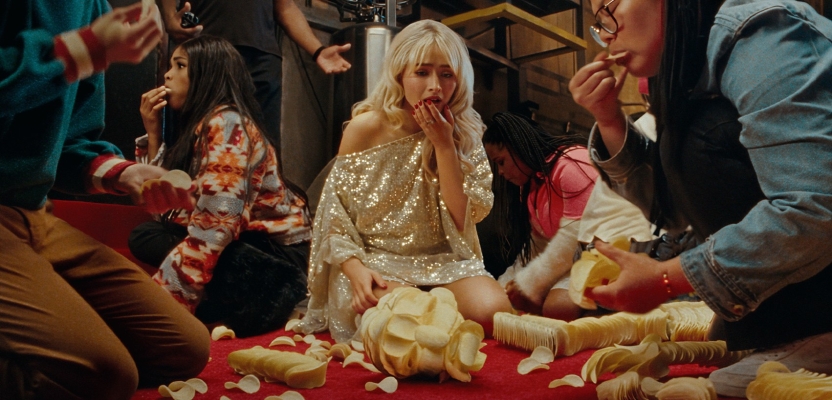
The Sabrina Carpenter x Pringles ad: “Pringleleo” and the return of the snack-romcom
If Super Bowl ads are a yearly referendum on what America thinks is funny right now, then Pringles’ “Pringleleo” is a neat little cultural data point: 2026 humour is still wildly unserious, aggressively self-aware, and oddly romantic about absolute nonsense. The premise is disarmingly simple: Sabrina is “tired of boys” and decides she needs “a man,” so she quite literally builds one out of stacked Pringles (with a little help from Mr. P), before falling for her crispy soulmate like he’s the final boss of snack-based wish fulfilment.
In terms of Super Bowl ad analysis, what makes this one work isn’t just the gag (though “man-shaped stack of Pringles” is the kind of surreal visual that travels fast in group chats). It’s that the product is the idea. No last-second pack shot glued onto a sketch that could’ve been for anything. The “perfect man” is literally the snack and that’s why it feels like a proper Pringles ad, not a celebrity cameo with brand logos taped to it.
It also plays smartly to Sabrina Carpenter’s public persona: slightly bratty, knowingly charming, and very good at delivering a line that sounds like it was written as a meme first and a script second. That matters, because celebrity casting at the Super Bowl can easily fall into the dead zone of “famous person reads joke… next.” Here, the casting is the tone. She’s not the decoration, she’s the rhythm of the comedy.
Craft-wise, it’s a glossy mini romcom with absurdist timing, and it’s clearly been designed for life beyond the broadcast: the extended cut, the repeatable catchphrases, the instantly thumbnail-friendly imagery, all of it is built for the post-game rewatch economy where “best Super Bowl ads 2026” lists are effectively a second premiere.
There’s also a broader cultural subtext hiding under the crisp dust: “manchild” fatigue is basically a mainstream punchline now, and this spot turns that into a silly, snackable fantasy of control. If the dating pool is chaos, simply construct a partner out of uniform, stackable perfection. It’s not deep, but it is very 2026: playful cynicism, romance filtered through irony, and a clean, consumer-friendly way of saying “the world is weird, let’s laugh instead.”
If there’s a knock on it, it’s the same one that follows a lot of “viral-first” work: the joke is so dominant that some viewers will remember the image more than the brand promise. But honestly? With Pringles, that’s rarely fatal — because the brand has spent decades training audiences to accept “nonsense with chips at the centre” as a perfectly coherent strategy. And in a year where plenty of Super Bowl ads for this year mistook randomness for an idea, “Pringleleo” at least knows exactly what it is: stupid, stylish, and completely committed.
A Final Thought
What's the biggest takeaway for creatives wishing to dissect the best super bowl ads of 2026? It's quite simple really. The Super Bowl is still the world’s loudest advertising stage but the audience’s taste is evolving. They’re harder to impress, quicker to roll their eyes, and still absolutely willing to love an ad… if it feels like someone actually meant it.