

Advertising has always been a playground for the human psyche. It’s part science, part art, part pure chaos. But when comedy strikes that perfect chord, the results can be transcendent. The best funny ads aren’t just a cheap gag; they’re an act of cultural telepathy, catching a moment in the collective consciousness and twisting it into something unforgettable.
Here, in no particular order, are twelve campaigns that prove laughter really does sell and that the best creatives know humour is always the sharpest tool in the box.
GEICO – Hump Day
Few water-cooler ads have had people braying with laughter quite like GEICO’s “Hump Day” spot. The premise is delightfully absurd: a wisecracking camel strides through an office, pestering coworkers to guess what day it is (spoiler alert: it’s Wednesday). The comedic approach was simple and contagious: a spot of anthropomorphic silliness that gave everyone permission to joyously annoy their colleagues every midweek.
The Martin Agency’s creative director Sean Riley initially tossed out the random idea of “a camel in an office,” and the team ran with it. They even debated the wording of the punchline (“happier than a camel on Wednesday” versus “hump day”), ultimately embracing the snappier slang. The real camel, Caleb (who apparently has “natural swagger”), was such a star on set that crew members had to hide their houseplants from his nibbling.
The ad’s inspiration was to enliven a dreary office scene with something utterly unexpected – a classic recipe for viral success. And viral it was. Within months, “Hump Day” racked up over 13 million YouTube views and became the most shared ad of the season. GEICO’s lowly camel became a pop icon, spawning parodies from the Dallas Mavericks (they riffed on it with a game-day version) and even a nod from the U.S. Vice President – the White House tweeted a photo of Joe Biden grinning with the caption “Guess what day it is…”
Public response went from chuckles to full-on catchphrase mania, with people gleefully shouting “Hump Daaaay!” across cubicle walls nationwide. The campaign’s cultural impact was so pronounced that Hump Day is now forever associated with a sassy camel rather than just the midpoint of a workweek.
In fact, GEICO’s comedic menagerie of characters (from geckos to cavemen to camels) has paid off handsomely – by 2013 the company was poised to overtake a major competitor in market share, proving that humor (and one hungry camel) can indeed drive business results. Not bad for a midweek joke that got happily out of hand.
Budweiser – Wassup
It began as a low-budget short film called True (just a group of friends on the phone shouting a slurred “Wassup?!” to each other) but it ended up an advertising legend. Budweiser’s “Whassup” campaign exploded onto TV during the 2000 Super Bowl and instantly embedded itself in the cultural lexicon. The comedic approach was brilliantly dumb: capture that one goofy way guys greet their buddies and repeat it, louder each time.
The genius behind it was Vinny Warren at DDB Chicago, who stumbled on director Charles Stone III’s indie short and knew it had the bones of a Budweiser ad about camaraderie. Stone’s film felt authentic (just regular dudes being silly) which fit Bud’s brand of unpretentious male bonding. Budweiser agreed, and they even hired Stone to direct the commercial with his original cast of friends, making the spontaneity feel real.
When the ads aired (initially quietly in late 1999, then in the Super Bowl), the public response was off the charts. Practically overnight, “Wassup?!” became the catchphrase heard ’round the world. People were yelling it in bars, school hallways, even in late-night TV skits. It was an early viral meme in a pre-social-media age – Saturday Night Live parodied it, as did South Park and Scary Movie.
Budweiser wisely embraced the free publicity as the phrase spread like wildfire, recognizing that all the spoofs were only cementing their brand in everyone’s mind. By mid-2000, DDB estimated the campaign had earned Budweiser tens of millions in free media exposure and even a solid bump in beer sales, as Americans evidently decided that saying “Wassup” was thirsty work.
Critically, the campaign swept awards, nabbing the Grand Prix at Cannes and a Grand Clio. More importantly, it secured a permanent place in pop culture. Decades later, shout “Whassup?!” in a crowded room and you’ll probably still get a few echoes back. Not many beer ads can claim they literally changed the way we say hello. In the annals of advertising, Bud’s goofy phone call stands out as a toast to keeping it simple – and ridiculously funny.
Volvo Trucks – Jean-Claude Van Damme “Epic Split”
How do you make a B2B truck ad go viral worldwide? Apparently, by having a 53-year-old action star perform a mind-blowing split between two moving vehicles at sunrise – all set to an Enya soundtrack. Volvo Trucks’ “Epic Split” campaign in 2013 defied every expectation of “boring” industrial ads.
The 75-second spot opens on Jean-Claude Van Damme’s intensely serene face as he intones a Zen-like monologue, then zooms out to reveal he’s doing the splits atop two Volvo semi-trucks driving in reverse. It’s equal parts awe-inspiring and absurd (with a dash of 80s action nostalgia), and that combination proved irresistible. The creative team at Forsman & Bodenfors (a Swedish agency not previously known for glitzy stunts) conceived this as the sixth in a series of “Live Test” ads to dramatize Volvo’s precision steering technology.
Director Andreas Nilsson approached it like a Hollywood set-piece – no CGI trickery, just painstaking rehearsal, hidden safety harnesses, and one chance at a perfect one-take shot on an empty Spanish airfield. The result was visually absurd in the best way: Van Damme literally doing the splits across two steady-moving trucks, demonstrating product stability while making viewers’ jaws drop.
Public reaction was immediate and global. Within a week, the ad had tens of millions of views on YouTube, climbing to over 44 million shortly after – making it the second most-viewed automotive ad ever at the time. It “nearly broke the internet,” as one publication put it, turning a niche truck demo into a water-cooler topic. For a truck aimed at commercial buyers, that mainstream crossover was remarkable. The survey data showed huge positive jumps in Volvo’s brand perception as innovative and cool.
Culturally, “Epic Split” became a touchstone of the viral video era. It spawned parodies almost immediately – from a face-swapped Rob Ford (then Toronto’s mayor) to Channing Tatum spoofing it on a movie set, to the inevitable Chuck Norris over-the-top parody where Norris tops Van Damme by doing a split between flying airplanes with a pyramid of commandos balanced on his head. In advertising circles, the spot swept awards, picking up armfuls of top honours including a coveted Black Pencil and a Cannes Creative Effectiveness Lion for the tangible boost it gave Volvo’s business.
Levi’s – Flat Eric
In 1999, Levi’s Europe introduced the world to an unlikely style icon: a flat-faced, yellow puppet with no voice and buckets of attitude. Flat Eric, as he came to be known, starred in a series of surreally comic ads for Levi’s Sta-Prest jeans and promptly became a cult sensation.
The ads, directed by French electronic musician Quentin Dupieux (a.k.a. Mr. Oizo), followed Flat Eric and his human buddy Angel on offbeat adventures – getting pulled over by baffled cops, head-banging to techno music, and generally causing viewers to ask “What on earth did I just watch?”. The absurd humour was the point. Sir John Hegarty of BBH London pitched Levi’s on this left-field concept – famously saving the crucial detail for last: “Oh, by the way, one of the characters is a fluffy yellow puppet”.
Initial client reactions ranged from enthusiastic to “Wait, what?” – but persistence won out and Flat Eric was born. To avoid any legal issues with Dupieux’s earlier puppet character (named Stéphane), the team even had Jim Henson’s Creature Shop tweak the design – hence Flat Eric’s distinctive triangular nose.
When the ads hit TV, the public went positively bananas for the bizarre little puppet. What started as a one-off European campaign turned into an overnight phenomenon. Viewers built fan websites, kids wanted Flat Eric plush toys (Levi’s eventually sold them by the thousands), and newspapers ran think-pieces analyzing the deeper meaning of a mute puppet riding shotgun in a car.
Most famously, the campaign’s thumping electronic soundtrack (a track called “Flat Beat” by Mr. Oizo) was bootlegged so aggressively that Dupieux decided to officially release it as a single. The song shot to #1 on the UK charts for two weeks, selling millions of copies. Suddenly, Flat Eric wasn’t just an ad prop; he was a legitimate pop culture star.
John West Salmon – Bear Fight
You wouldn’t think a canned salmon company would deliver one of the funniest ads of all time, but in 2000 John West did just that with an epic man-versus-bear kung fu throwdown by a river. The commercial begins like a serene nature documentary, with real bears catching salmon in a picturesque Alaskan stream. Then enters our intrepid fisherman (in bright orange waders), determined to get “the best salmon” for John West.
What ensues is a gleefully ridiculous fight scene: the fisherman karate-kicks a massive grizzly, the bear unleashes a flurry of kicks right back (cue Crouching Tiger-style moves), and finally a cheap groin kick helps our hero snatch the prized fish while the bear doubles over in cartoonish pain. A narrator deadpans, “John West endures the worst to bring you the best.” It was a perfect comedic twist. Monty Python meets Animal Planet.
The spot was the brainchild of creative Paul Silburn at Leo Burnett London, and directed by Daniel Kleinman (known for bold, cinematic ads). Crucially, no actual bears were drop-kicked in the making of the ad – they used a top-of-the-line animatronic bear suit from Jim Henson’s Creature Shop, worn by a stuntman specializing in playing animals. The production team choreographed man and “bear” like a ballet, then replicated the suited stuntman digitally to create the illusion of multiple bears in the background.
The result was so seamless and hilarious that many viewers thought it had to be fake – which, of course, it delightfully was. John West hadn’t advertised on TV in years, so this spot came out of nowhere. In the early days of video sharing, the ad went globally viral – emailed and downloaded millions of times (one tally estimated 300 million online views by 2006!).
It won countless industry awards and became a permanent fixture in advertising lore. Culturally, it set a benchmark for the “unexpected twist” genre of humor in ads, often imitated but rarely equaled.
John Smith’s – No Nonsense (Peter Kay)
In the early 2000s, British beer brand John Smith’s struck gold by teaming up with comedian Peter Kay to inject some much-needed “no nonsense” humor into beer advertising. Kay, a master of down-to-earth Northern wit, became the face of John Smith’s and promptly threw every pretension out the window – literally, in one famous spot where he boots a football sky-high shouting “’Ave it!”.
The campaign’s concept was No Nonsense, and Kay embodied it perfectly as a bloke who says what everyone’s thinking. Over a string of ads from 2002 onwards, he delivered one belly-laugh moment after another. In one ad, posh divers perform graceful somersaults… until Kay’s character does a massive belly flop off the board, proudly dubbing it “Top Bombing!”.
In another, when asked in front of his kids where babies come from, he deadpans: “From the supermarket.” The creative agency TBWA London knew they had something special in Kay’s everyman charm and crafted scenarios that let him shine as the antidote to flashy beer ads.
The public response was an outpouring of affection – and a national bout of catchphrase fever. Soon football crowds across England were yelling “Ave it!” every time a player blasted a long ball, and “Top bombing!” entered pub vernacular for any kind of triumph. From 2002 to 2005, Peter Kay’s John Smith’s ads were the comedy highlight of commercial breaks, spawning lines that people still quote with a grin.
The campaign not only tickled funny bones but also rejuvenated John Smith’s image, modernising the decades-old “No Nonsense” positioning for a new generation. (John Smith’s had used a no-nonsense tagline for 20 years, but it took Kay to really bring it to life. After a brief hiatus, the brand even brought Kay back in 2010 for an encore, so strong was the nostalgia for his irreverent (and incredibly English) gags.
Dollar Shave Club – “Our Blades Are F***ing Great”
When a razor startup launched in 2012 with a raunchily titled YouTube video, nobody expected it to upend a billion-dollar industry. But Dollar Shave Club’s debut ad by Humanaut featuring CEO Michael Dubin striding through a warehouse delivering deadpan one-liners about razors, did exactly that.
The video opens with Dubin casually asking, “Do you like spending $20 a month on brand name razors? $19 go to Roger Federer,” then promises DSC’s blades are “f***ing great” (bleeped out, of course) for a dollar.
The humor was sharp and subversive: poking fun at shaving commercials, the absurdity of high prices, and even throwing in a sight gag of a toddler shaving a man’s head. Dubin, an improv comic turned entrepreneur, wrote the script himself and delivered it with impeccable timing and a straight face.
With its single tracking-shot style and tongue-in-cheek absurdity, the ad felt more like a sketch comedy bit than an advertisement – and that was the genius. The video reportedly cost a grand total of $4,500 to make, filmed in one day – and it paid off in spades. When it went live on YouTube, the response was instantaneous. Within 48 hours, the fledgling company was buried in orders (12,000+ subscriptions in the first two days) and their website crashed from the traffic.
The ad’s profanity-laced catchphrase became a rallying cry for frustrated shavers everywhere. In a market dominated by giants like Gillette, this little brand suddenly had everyone talking. The casual, edgy humor resonated hugely with young consumers who were hungry for something authentic and irreverent. In the ensuing months, the video went viral, accumulating millions of views and loads of media coverage, all on a shoestring marketing budget.
Dumb Ways to Die
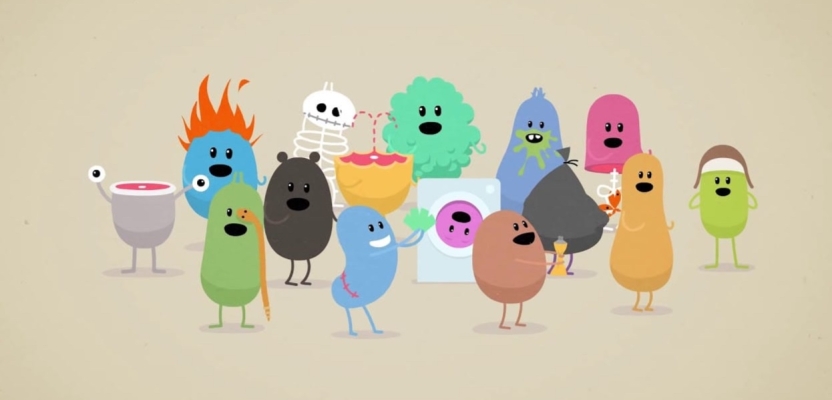
How do you get young people to pay attention to a public service announcement about train safety? If you’re Metro Trains Melbourne, you bypass the usual scare tactics and instead unleash a darkly adorable animated music video that’s equal parts morbid and hilarious. “Dumb Ways to Die” (2012) is a three-minute masterpiece of black humor: cute blob-like characters sing a ridiculously catchy song about doing foolish lethal things (from poking a grizzly bear to selling your kidneys online) before finally warning “be safe around trains” as the dumbest way to die.
The jingle was so infectious and the cartoon carnage so absurd that the message snuck up on viewers in the best possible way. McCann Melbourne’s creative team wanted to make a safety message that people would actually share – so they tapped into the shareable DNA of internet culture: quirky animation, a fun song, and a touch of shock value tempered by sweetness. The result was unlike any PSA before it.
The public reaction was a marketer’s dream. Within days of its release, “Dumb Ways to Die” went massively viral worldwide. The YouTube video amassed over 50 million views in just a few months – rocketing up the charts faster than many pop songs. Speaking of charts, the song itself (sung by Emily Lubitz of the band Tinpan Orange) became a bona fide hit – charting on iTunes in 28 countries and reaching the top 10 in Australia within 24 hours.
Kids were singing “Dumb Ways to Die” on playgrounds; adults were humming it at work. Memes and parodies sprouted like wildflowers (including hundreds of fan-made YouTube spoof videos). The phrase “dumb ways to die” itself entered the lexicon as a pop culture reference to epic fails. Importantly, the campaign didn’t just score eyeballs – it moved the needle on safety. Metro Trains reported a 30% reduction in near-miss accidents after the campaign, crediting it with improving public awareness around trains.
Of course, awards rained down: at the 2013 Cannes Lions, Dumb Ways to Die made history by winning 5 Grand Prix (across Film, Radio, PR, Direct, and Integrated) – the most ever by a single campaign – among a haul of 28 Lions overall. It was officially the most awarded campaign in the festival’s 60-year history. If there’s a smart way to do a dumb PSA, this campaign found it – and saved lives with a song you can’t get out of your head.
Skittles – Touch (The “Skittles Midas” Commercial)
Skittles has a well-earned reputation for weird, wonderful ads, and the 2007 “Touch” commercial might be its crown jewel of oddball humor. Imagine having the Midas touch, except everything you touch turns into Skittles. Sounds awesome? Not so fast – as one miserable office worker, Tim, explains, it’s actually a curse.
It’s a masterclass in dark comedy packed into 30 seconds – blending absurdity (mortal peril by Skittles) with an oddly poignant parody of “grass is always greener” woes. The spot ends, of course, with the long-running tagline “Touch the Rainbow, Taste the Rainbow.”
The creative minds behind this twisted mini-skit were from TBWA ChiatDay New York, with art director Craig Allen and copywriter Eric Kallman – who together crafted a whole series of surreal Skittles ads in that era. Director Tom Kuntz (later famed for Old Spice’s “The Man Your Man Could Smell Like”) brought the same off-kilter tone.
The inspiration was clearly to turn the candy’s rainbow imagery into something humorously wrong, and it struck a chord. The ad became an internet favorite and was widely shared for its comedic writing. In an age when many commercials were forgettable, people actually sought this one out on YouTube to watch again (and quote lines like “I shook a man’s hand on the bus – he’ll never see his family again” while their friends cracked up). It helped cement Skittles’ brand identity as the purveyor of bizarre, comedic advertising.
The campaign won industry accolades for originality, and the “Skittles touch” concept is still fondly remembered in ad-land as a high point of the mid-2000s “weird-is-cool” trend. Culturally, it added to the idea that commercials could be water-cooler content in their own right. Years later, Skittles leaned even further into strangeness (Skittles romance, Skittles disease, you name it), but fans will tell you the guy cursed to live in a world of candy he can’t eat – that was peak Skittles.
If Carlsberg Did… (Probably the Best Campaign in the World)
Carlsberg’s long-running “If Carlsberg did…” campaign is the stuff of advertising legend – a fill-in-the-blank formula that led to some of the wittiest “what if” scenarios ever put on screen. The setup: take an ordinary situation and imagine it at its absolute dream-state best, courtesy of Carlsberg. Why Carlsberg? Because their tagline boasted they were “probably the best lager in the world,” so naturally if Carlsberg did X, it would probably be the best X in the world.
This campaign kicked off in the early 2000s (via Saatchi & Saatchi London) and quickly became part of British pop culture. One famous execution: “If Carlsberg did flatmates” – a hapless guy finds an apartment with roommates who are all Swedish models, and a fridge fully stocked with Carlsberg. In another, “If Carlsberg did supermarkets,” shoppers wander a grocery store where everything is free, staff hand out cash at the checkout, and of course there’s an entire aisle of ice-cold beer. The ads never needed to show the beer being tasted or any of the usual product shots – instead they sold a feeling of perfection, seasoned with a wink.
The comedic approach was to exaggerate wish-fulfillment to a ridiculous degree, always with a deadpan reveal of the tagline. For instance, an earlier spot shows an idyllic construction site where the hard hats are supermodels in bikinis – “If Carlsberg did building sites…” (the implication being it’d be a laborer’s paradise). These scenarios were executed with cinematic flourish and a sharp sense of humor about male fantasies.
The public loved it. “If Carlsberg did…” entered the vernacular as a cheeky meme before memes were a thing – people would joke in everyday conversation, e.g., “If Carlsberg did parties, they’d have free pizza and taxis home.” It was a mark of how deeply the campaign resonated that it became a template for jokes.
The enduring popularity even led Carlsberg to revive the concept years later: in 2015, they ran “If Carlsberg did supermarkets” after a four-year hiatus, showing the format still had legs (that ad went viral too, proving great ideas don’t expire).
Lynx – The Lynx Effect
Ah, the early 2000s – when spraying on some Lynx (Axe, to Americans) was portrayed as the equivalent of casting a magic love spell. The “Lynx Effect” campaign took the age-old promise of fragrance ads (“you’ll become irresistible”) and drove it to absurd extremes, with a big knowing grin. The ads for Lynx deodorant usually featured an average guy who, upon dousing himself in Lynx body spray, suddenly becomes a babe magnet of supernatural proportions.
The most iconic spot of this era was “Billions” (2006): it depicted a lone man on a beach who sprays himself and is immediately charged by an army of hundreds of bikini-clad women, stampeding over hills and through the surf in a passion-crazed frenzy to get to him. It was over-the-top in every way – a hilarious parody of lynx’s own promise. (For the record, those “women” were largely visual effects; the ad used a handful of models and replicated them CGI-wise into a literal horde.)
Other executions were equally cheeky: a man rings a bell on a tropical island and bikini models rain from the sky, or a nerd uses Lynx and finds angels falling to Earth just for him. The tagline proudly coined by BBH was “Spray More. Get More. The Lynx Effect.”
This campaign was spearheaded by Bartle Bogle Hegarty and was a defining example of “lad culture” advertising. The creative inspiration was to exaggerate male daydreams to the point of comedy. It worked like a charm. Young men found the ads self-aware and funny, and Lynx sales skyrocketed (the brand became the #1 male deodorant globally during this run). Culturally, the “Lynx effect” became a catchphrase in its own right – shorthand for any scenario where someone suddenly gets an influx of attention.
The ads did face some critique for being outlandishly objectifying, but even many critics conceded the ads were knowingly tongue-in-cheek. By 2006, the campaign had almost become a parody of itself (they even did a one-off ad of a man literally fighting off billions of bikinis to celebrate the 60th anniversary of the bikini’s invention).
Eventually, as attitudes shifted, Lynx toned down the outright “women chasing men” trope and moved to more subtle humor. But for a solid decade, the Lynx Effect campaign was a cultural phenomenon. It gave teenage boys a wink of confidence, provided endless material for comedians and parodists (even Specsavers spoofed the “Billions” ad in a joke about poor eyesight), and established Lynx as a brand with its cheek firmly planted against its tongue. The phrase “the Lynx effect” still evokes a smirk – a testament to a campaign that, love it or cringe at it, everyone remembers.
Apple – “I’m a Mac” (Get a Mac Campaign)
It’s not often that a tech ad becomes a pop culture touchstone, but Apple’s “Get a Mac” campaign (2006-2009) pulled it off with style. The premise was brilliantly simple: personify a Mac and a PC as two guys and have them engage in witty banter highlighting the differences between Apple and Windows. In the U.S. ads, (which were arguably the most impactful) actor Justin Long played the cool, casual “Mac” while author/comedian John Hodgman played the stuffy, awkward “PC.”
This campaign was created by TBWA Media Arts Lab and overseen by Apple’s marketing guru Lee Clow (with Steve Jobs, naturally, involved in final approvals). Its inspiration lay in using comedy to do what comparison charts couldn’t: emotionally differentiate the Apple experience. The public adored it. The “I’m a Mac” ads became water-cooler fodder, spawning both Saturday Night Live parodies and actual Microsoft counter-ads years later. Lines from the commercials entered the zeitgeist.
Culturally, “I’m a Mac, I’m a PC” turned into a shorthand meme – you could describe any two polar opposites in that format, and people got the joke. Importantly, the ads were also effective. In the years the campaign ran, Apple’s Mac sales notably increased and a cool factor solidified around Macs for a generation of young buyers.
The campaign scooped up a 2007 Grand Effie Award for effectiveness and in 2010, Adweek crowned “Get a Mac” as the Campaign of the Decade for the 2000s. An international fun fact: the concept was so strong, Apple adapted it with local actors in other countries (UK’s version even featured famous comedy duo Mitchell and Webb). By the end of its run, “Get a Mac” had 66 variations in the U.S. alone – each a little tech morality play. Even long after Apple moved on to new themes, the legacy endured.
Years later, when Hodgman reprised his PC character briefly in 2020 (for a cameo at an Apple event), it brought the house down with nostalgia. The “I’m a Mac” campaign showed that humor – if aligned perfectly with brand identity – can be a mighty weapon. It humanized technology, made a positive case by making us laugh, and proved once and for all that in advertising, witty storytelling can trump a spec sheet any day.
Finding Your Next Comedic Genius on Creativepool
Christopher Barlow
If these campaigns prove anything, it’s that a single spark of comic genius can turn a brand into a legend. The right idea, the right timing, and the right creative mind can make the world laugh and sell a lot of beer, razors or salmon while doing it. Which is where Creativepool comes in.
Whether you’re looking to collaborate with a film director who can capture that GEICO-level absurdity, a copywriter with the comic instincts of Peter Kay, or a creative team bold enough to put Jean-Claude Van Damme between two trucks, you’ll find them here. Creativepool is home to thousands of filmmakers, art directors, writers and producers. The people who make humour land and work for your audience.
Lee Stuart Shepherd
There are three simple ways to bring the funniest minds in the business onto your next campaign.
1. Search and Contact
If you know exactly the kind of creative voice you want (maybe a surrealist with a penchant for puppets à la Flat Eric, or a deadpan scriptwriter in the Dollar Shave Club mould) you can search Creativepool’s talent database directly.
Use filters to browse portfolios, reels, and CVs until you find that perfect mix of wit and craft. Creativepool’s ranking indicators make it easy to discover top talent in every role from the top 25 directors to the highest-rated multimedia designers. Once you’ve found someone who feels right, message them directly through their profile to start the conversation.
Searching directly is ideal for those who like to handpick collaborators and curate every detail of their creative process.
2. Post a Studiogig
Need a freelancer fast? Post a studiogig. Think of it as your creative Bat-Signal. Your brief goes out to the most relevant freelancers in our community, and you can sit back while the best talent comes to you.
Whether you’re commissioning a short-form comedy spot, an animated explainer, or an all-out viral campaign, posting a studiogig ensures your project gets in front of filmmakers, editors, and copywriters who know how to make audiences laugh for the right reasons.
The process takes just minutes, and once your brief is live, our behind-the-scenes matchmaking algorithm gets busy sending it to the right creative inboxes.
3. Post a Job
If you’re looking for a long-term comedy partner (say, a full-time creative director) posting a job listing is the way to go. The setup mirrors that of a studiogig, but it’s geared towards permanent hires.
Once your job goes live, Creativepool’s team checks and approves it, sends out targeted job alerts to relevant members, and lists it on the main Jobs Board, where thousands of creatives browse daily. Applicants apply directly to you, and from there you take the lead. No middlemen, no fuss and no agency mark-ups.
Hiring an Ad Agency Through Creativepool

Oli Walsh
When your campaign needs more than one creative (when you’re thinking full-service team, multi-channel rollout, and leaving nothing to chance) it’s time to hire an advertising agency. On Creativepool you’ll find hundreds of firms with portfolios, case studies and specialist teams ready to turn big ideas into culture-shaping work.
Start by deciding whether you want to search for an agency or post a brief.
Find an Agency
If you already have a strong idea of the kind of partner you want, use the search option: browse agency profiles, review work samples, team bios and client lists, and identify those whose tone, size and skill match your ambition.
Post a Brief
Alternatively, if you’d rather let the agencies come to you, simply post a brief on Creativepool. Define your goals, budget, timeline and required deliverables and agencies will respond with proposals tailored to your project.
Need Help?
If you’d like a hand navigating your talent hunt or finding an agency, Creativepool has a team of dedicated ex-industry staff that can help you to find the prefect partner. Whether you’re searching for that freelancer, agency or employee, we can help clarify your brief, suggest filtering strategies and ensure you post it in just the right way.
Chat with us live on where you post your job and gig or reach out on our Contact Us page.