


At a time when artificial intelligence can generate content in seconds and imitation floods every feed, the role of human creativity is under pressure. Convenience has crept into the creative process, threatening to flatten originality into sameness.
But as Geoffrey Chang, Creative Lead at eight&four, argues in this sharp and timely piece, what creativity needs now isn’t more optimisation — it’s more ego. Not the arrogant kind, but the kind rooted in conviction, individuality, and instinct. Because in a world full of shortcuts, true creative value still comes from the long way around — from thinking for yourself.

Shortcuts are undoubtedly beneficial in the physical world. Wheels over walking. Great. Automatic over revolving doors. Game-changer. Washing machines. Utter brilliance.
But what happens when we apply that same shortcut attitude to mental aptitude? If we delegate creativity to AI, what do we end up with?
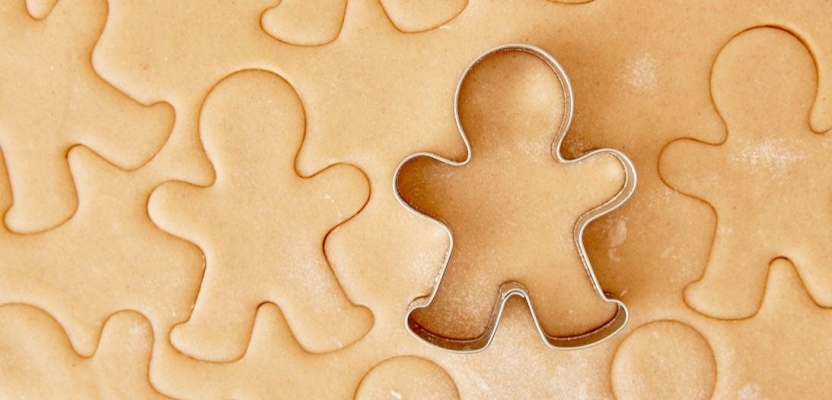
We’ve all seen the dystopian cookie cutter content that comes off the back of an AI fad. They trend as long as Blue Origin’s space flight, before ultimately becoming feed fodder.
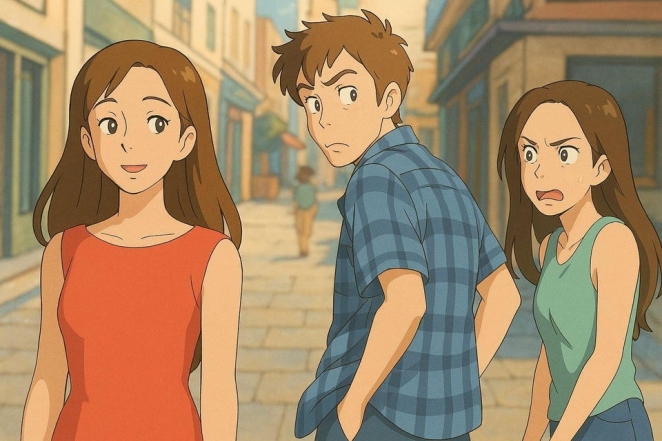
From starter pack figurines to imitating Studio Ghibli’s trademark style, what used to be artistically inimitable is now at the mercy of machine-enabled mimicry.
You’d be hard-pressed to find someone who is proud of such output. We’re not precious about it, unsurprisingly.
It turns out imitation is the greatest form of flattery. As well as a shortcut to value dilution.
Some would say being creative is to strive for originality. To create something ‘new’ and nuanced. That very act is value creation. It’s what clients pay for.
So, what now? Do we give up trying to be original because there’s an AI for every creative process? Do we sacrifice what makes our ideas look and sound like our own? How do we stay connected to our instincts in a world of instant creative gratification?
Rather than undermine our own skills, maybe the answer lies with ego.
Cogito, ego sum
I think, therefore, I am.
Thinking for ourselves is now a radical act.
We’re often told to leave our ego at the door. But if we do that now with the omnipresent influence of AI, we risk losing the human quality that extends beyond pattern recognition. When we out-source our thinking to AI, we’re actually eroding our own creative conviction.
Creativity needs conviction. AI won’t give us that.
Remove your sense of self from the creative process, and you remove the one thing that’s uniquely you. Think of this as the positive type of ‘ego’. The ego which enables you to think for yourself. The fulcrum for progressing our own ideas. To believe that our creative philosophy matters.
Marketers can be scientific.
But creatives? We should call on our lived experience. Our undeniable aspect of individuality. Instinct, gut feels and human hunch. Discernment. All of that which makes us unique should be poured into and felt through our work. Our output is a sum of what we put in. And that starts with an original thought. AI can refine, but don’t allow it to replace your first-hand human insight.
Your voice, your perspective needs to shine through. In fact, once the machines can copy you convincingly – like Hayao Miyazaki – you know you’ve mastered your craft, so singular is your identity that AI can’t mistake it for anyone but you. Ironic.
Proof is in the BTS
We’re already seeing creative productions stand out by doing things that only humans can. For real. Shooting in ways that champion some kind of awesome human feat. Like single-shot Adolescence, whose creative filming method added a heightened level of interest in the Netflix series. It took ego to believe that this unorthodox technique would pay off.
Behind-the-scenes content carries ever more cultural value, to prove how something was made. To display the awesome efforts it took to create something special. From running around never-ending corridors in Severance, to spending seven months filming the latest White Lotus season. BTS or it didn’t happen.
Agencies are declaring proudly that their ads are entirely shot in camera. Pulling off something magical – without any cheat codes – becomes a differential badge of honour.
Put the practice in creative practice
Every time we commodify convenience there’s always a cerebral bandwidth trade-off. Take Google Maps. We’re getting worse at directions. We’re losing the skill of orienteering. Arguably a basic survival skill, as our predecessors can probably attest.
Whether it’s storyboarding or copywriting, when we use AI, we lose the belief in our sharpness. We become a passive passenger in our own work, sacrificing our handiwork in favour of efficiency. We take one giant leap towards the flat median of creativity.
Soulless soup is the enemy.
Of course, we can be creative with AI. Don’t get me wrong. Embracing ego doesn’t mean throwing collaboration out the door. It’s a reminder to retain that human essence unique to each of us. It is care and courage combined.
Alan MacDonald May 2nd, 2025, in the small hours
Hello, totally agree with you! But as a metaphysical artist, I cover this topic using different terms. Ego is local reptilian, mammalian memory. REACTIVE. But CREATIVE Comes from non-local field of consciousness, the prime field of existence. Even physicists are saying this now. Light bulb moments. Hence adepts have halos around their heads. Streaming solutions from source field. Keep up the good work. A.I....lights on, nobody home. :-) No subject in the object.