
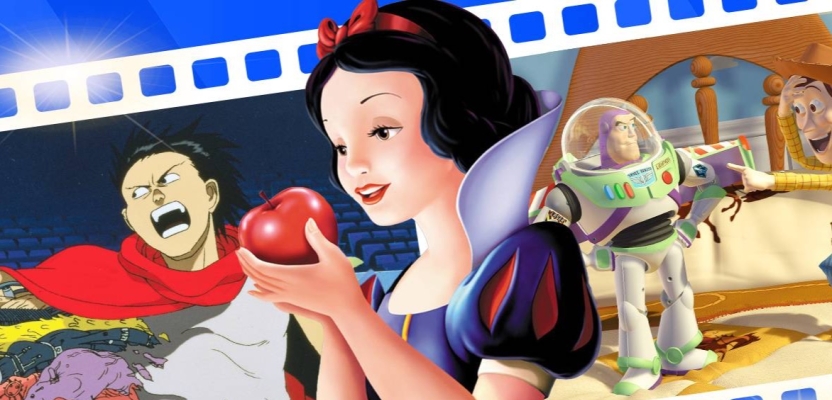

Animation has come a long way from the days of a whistling mouse piloting a steamboat. What began as a novelty for cute characters making mischief has evolved into a cornerstone of modern storytelling and a cash cow that often out-grosses its live-action counterparts (much to the eternal chagrin of some more seriousfilmmakers).
To celebrate just how far the artform has come over the last 100 years, I’ve decided to take some time this “Best of Month” to explore ten groundbreaking animated films that truly shaped the creative landscape far beyond the glittery confines of Hollywood.
These films are the game-changers that inspired generations of artists, filmmakers, and tech wizards. From early experiments in sound and color to digital spectacles that had us all wearing ghastly 3D glasses, each film on this list pushed the medium’s creative boundaries in its own way.
Steamboat Willie (1928)
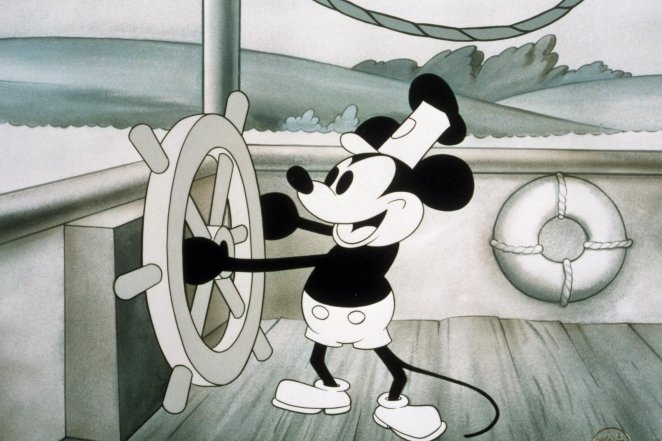
It all started with a mouse – specifically, a cheeky cartoon rodent whistling his way into cinema history. Walt Disney’s “Steamboat Willie” introduced the world to Mickey Mouse and, more importantly, to the wonders of synchronized sound in animation. Audiences in 1928 had never seen (or heard) anything like it: a cartoon character perfectly timed to music and sound effects, essentially heralding a new era in animated filmmaking.
The short’s creative use of sound – from Mickey’s jaunty whistling to the rhythmic “Turkey in the Straw” tune – was so convincing that critics at the time praised it as “a peach of a synchronization job”. Beyond the technical novelty, Steamboat Willie gave us animation’s first mega-star.
Mickey’s mischievous charm captured hearts globally, kick-starting a cartoon mascot empire (and an endless merchandising bonanza). Not bad for a 7-minute black-and-white short – it’s the cartoon that launched a thousand characters, and one gargantuan entertainment company. Talk about a mouse that roared.
Snow White and the Seven Dwarves (1937)
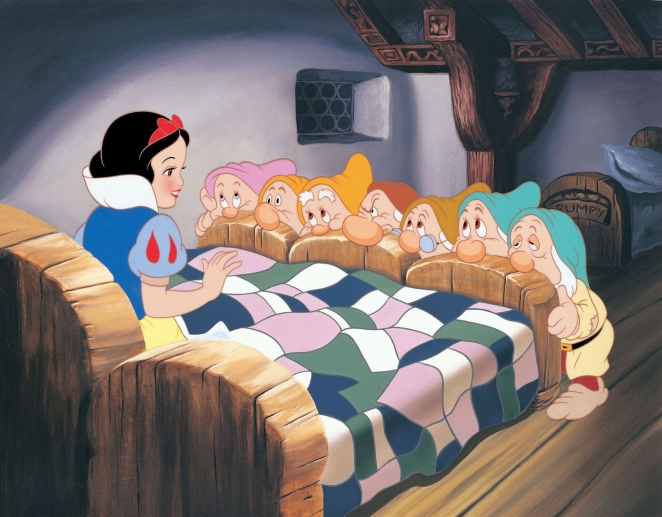
Nearly a decade later, Walt Disney bet the farm on a feature-length cartoon – a gamble Hollywood dubbed “Disney’s Folly” until it wasn’t. “Snow White and the Seven Dwarfs” was the first-ever feature-length animated film, proving that audiences would indeed sit still for 83 minutes of drawn fairy-tale magic.
Disney’s team pulled out all the creative stops: the lush hand-painted backgrounds, the use of the multiplane camera to create depth in the forest and cottage scenes, and a lovable ensemble of seven distinct dwarf personalities (each mined from the rich vein of human quirks). The result? A groundbreaking artistic and commercial triumph that silenced the naysayers and paved the way for animation as a viable feature film medium. In fact, Snow White’s success led other studios to scramble and start their own animation departments – imitation being the sincerest form of flattery (or at least a path to profit).
The film earned Walt Disney an honorary Academy Award (complete with one full-size Oscar and seven pint-sized ones for each dwarf, presented by Shirley Temple, no less). More importantly, it taught Hollywood a valuable lesson: audiences will embrace animated storytelling with the same fervor as live action, as long as the creativity and heart are there. “Disney’s Folly” turned out to be Disney’s Brilliantly Creative Blueprint – one that the industry still follows to this day.
Fantasia (1940)
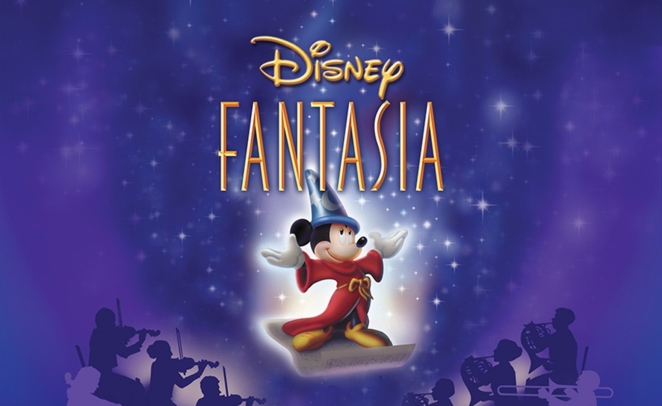
How do you follow up a mega-hit like Snow White? If you’re Walt Disney, you throw commercial caution to the wind and unleash an experimental animated art film set to classical music. “Fantasia” boldly blended gorgeous hand-drawn imagery with Western classical masterpieces, effectively transforming movie theaters into concert halls for the imagination.
With no dialogue and no linear plot, Fantasia was a creative gamble that gave us dancing hippos in tutus, frolicking centaurs, and an apprentice sorcerer Mickey who apparently never learned the phrase “don’t flood the boss’s lair.” Technically, it was ahead of its time – Disney’s team developed “Fantasound,” an early stereophonic sound system, to immerse audiences in the music. This innovative use of surround sound and abstract animation pushed the boundaries of what animation could do, treating the medium as a high art form rather than kiddie fare.
Critics were initially baffled (and the box office receipts were underwhelming in 1940), but Fantasia aged like fine wine. It eventually won two Honorary Oscars for its innovation in sound and visuals, and its influence is seen whenever the best animators take a risk on artsy, non-narrative projects. Today, whether you view Fantasia as a pretentious fever dream or a masterpiece, there’s no denying its impact: it proved that animation can be abstract, ambitious, and artistically profound, not just slapstick and sing-alongs. (Plus, it provided future generations of animators a classy excuse: “It’s not a cartoon, Mum, it’s culture.”)
Tron (1982)

Cue the neon lights and synthesizers: in 1982, Disney took animation into the digital frontier with “Tron,” a film that zapped live actors inside a computer-generated world. This sci-fi adventure was the first movie to incorporate lengthy sequences of entirely computer-generated imagery – a then unheard-of 15 minutes of CGI graphics that left early ‘80s audiences gobsmacked. Critics and viewers didn’t quite know what to make of Tron’s techno-babble and glowing cyberspace (truth be told, Disney didn’t either – the film wasn’t a huge box-office hit).
But hindsight is 20/20: Tron turned out to be freakishly ahead of its time, foreshadowing everything from modern VR “metaverse” worlds to debates about AI and digital identity decades before these were trendy buzzwords. The film’s stark black-and-neon aesthetics and concept of a “user” getting digitized into a computer system were visionary – The Matrix, Ready Player One, and plenty of tech-thriller tropes owe a silent debt to Tron. Creatively, Tron bridged the gap between analog and digital filmmaking, with director Steven Lisberger literally inventing techniques as he went.
Its influence on the industry was enormous: Tron paved the way for today’s era of CGI spectacle, inspiring the likes of John Lasseter (Pixar’s co-founder), who admitted “without Tron there would be no Toy Story”. Talk about a glowing endorsement! So while Tron may not have wowed everyone in ’82, it’s now recognized as a cult classic that changed the game for digital animation and visual effects – essentially the granddaddy of every computer-animated blockbuster that followed. Not bad for a film once considered an “electronic oddity.”
Akira (1988)
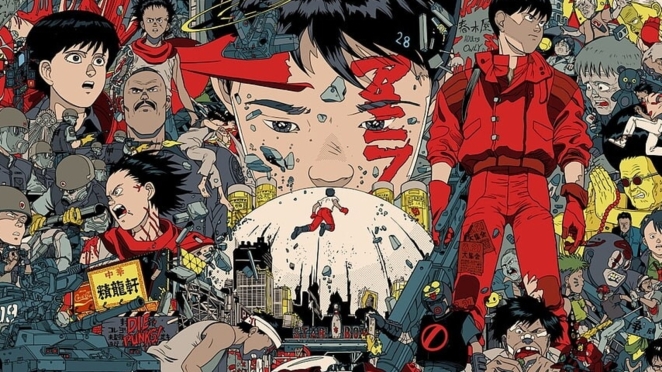
In 1988, a film from Japan was busy blowing people’s minds (and, occasionally, their lunch) with its visceral animated imagery. “Akira”, directed by Katsuhiro Otomo, was a neon-drenched cyberpunk epicthat redefined anime and forced the world to take animation seriously as a medium for adults. Set in a dystopian Neo-Tokyo teetering on the edge of psychic apocalypse, Akira served up visuals so detailed and fluid that even today’s animators quietly weep into their storyboards in admiration.
Here was an animated film with motorcycle gangs, political corruption, body horror mutations – and no cute sidekicks in sight. The creative ambition was matched by technical prowess: Otomo’s team famously used a then-unusual number of animation frames and a rich color palette to achieve unprecedented smoothness and cinematic scope. The film’s complex, mature themes and brutal violence shattered the Western stereotype of “cartoons = kiddie stuff,” proving that animation could explore dark, intellectually challenging content head-on.
Akira didn’t just influence a generation of anime creators; it escaped Japan and infiltrated global pop culture. From Hollywood directors to comic artists and game designers, countless creators cite Akira as a stylistic touchstone. Its impact on the science fiction genre is similarly massive – you see echoes of Akira in everything from The Matrix to Stranger Things. The legacy of Akira can be summed up in one word: liberation. It liberated anime to be bold and uncompromising, and it liberated Western audiences’ minds to the possibilities of animation as art. In short, Akira rode in on a futuristic bike, blew up the rules (along with a few telekinetic teens), and left animation forever changed.
Who Framed Roger Rabbit? (1988)
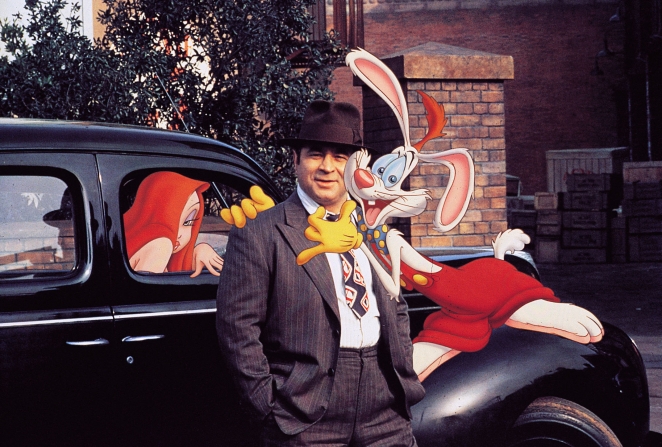
Now imagine it’s 1988 and you walk into a cinema to see a hard-boiled film noir – only half the characters on screen are zany cartoon figures. “Who Framed Roger Rabbit” should have been a recipe for disaster, but instead it became a revolutionary triumph of hybrid filmmaking. Director Robert Zemeckis seamlessly blended live-action actors with animated characters in a way Hollywood had never seen – so convincing that Disney executives initially couldn’t tell they were watching a cartoon in early test footage.
The film’s creative mojo came from treating the cartoon figures as real “actors” in the scene: interactive lighting, physical props, and meticulous hand-drawn shading made Roger Rabbit and his toon pals feel palpably present in the live world. Technically and artistically, it was a tour de force. But Roger Rabbit’s influence didn’t stop at making one goofy rabbit almost upstage Bob Hoskins. The movie’s massive success helped spark the modern animation renaissance at Disney – historians credit it with renewing the public’s interest in animation and leading to the Disney hit parade of the late ’80s and ’90s. It also opened the floodgates for crossovers and cameos, uniting characters from Disney, Warner Bros., and beyond in one wild universe (thus pioneering the concept of a “shared cinematic universe” long before Marvel made it cool).
In retrospect, Roger Rabbit might be one of the most influential films of its era, period. Its techniques of inserting lifelike animated characters into live-action worlds laid the groundwork for countless blockbusters to come – from Gollum in Lord of the Rings to the digital apes of Planet of the Apes, and every time you see a CG character bantering with a human on screen. Simply put, Who Framed Roger Rabbit changed the way filmmakers and audiences thought about blending animation with reality, all while delivering a rollicking comedic mystery. Not bad for a gumshoe noir where the femme fatale is literally drawn that way.
Wallace & Gromit: The Wrong Trousers (1993)
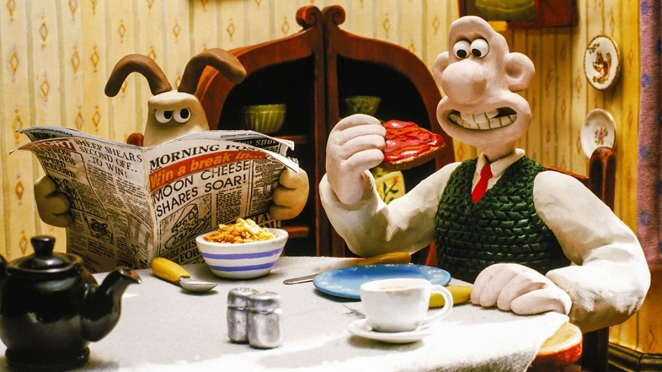
In the 1990s, while Disney and Pixar were embracing high-tech, a small British studio called Aardman Animations made a global splash using clay, wire, and an awful lot of elbow grease. Enter “The Wrong Trousers,” a 30-minute stop-motion masterpiece of charm, wit, and meticulous craftsmanship. This Wallace & Gromit short film features a mild-mannered inventor, his long-suffering dog, and a villainous penguin (with a rubber glove “hat” as a disguise – because why not?).
The plot – involving a pair of automated techno-trousers and a diamond heist – is as delightfully absurd as it sounds, but what truly cements The Wrong Trousers in the animation hall of fame is its legendary train chase sequence. For two glorious, dialogue-free minutes, Gromit the dog frantically lays track in front of a speeding toy train he’s riding, in a scene of comic suspense so perfectly timed and ingeniously shot that many critics and fans call it one of the greatest chase sequences ever put to film[19]. (Eat your heart out, Fast & Furious – this was done in miniature with clay figures, at roughly two seconds of footage per day of filming!)
Creative director Nick Park and his team showed how stop-motion animation can deliver action and humor as explosively as any live-action blockbuster, all with a handmade touch. The short won the 1994 Academy Award for Best Animated Short Film, cementing Aardman’s reputation as a global animation powerhouse despite their modest resources. Its influence is seen in the continued popularity of stop-motion films (Coraline, Fantastic Mr. Fox, and Aardman’s own features) that carry on that tradition of tactile, detailed artistry. In an era where computer graphics were on the rise, The Wrong Trousers gave the world a gentle reminder: sometimes the most creative thrills come from good old-fashioned craftsmanship – and perhaps a nice cup of tea after. It’s a cracking film, lad, and an influential one at that.
Toy Story (1995)
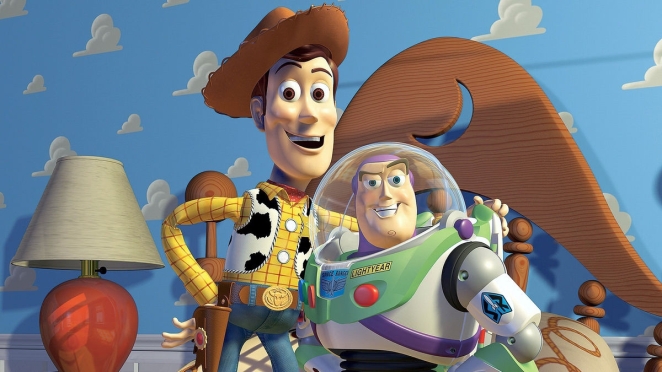
“To infinity and beyond!” It wasn’t just Buzz Lightyear’s catchphrase – it was Pixar’s mission statement in the mid-90s. “Toy Story” made history as the first feature film animated entirely with CGI, and it revolutionized the animation industry overnight[21]. Imagine a world with no hand-painted cels, where your protagonists are a cowboy doll and a plastic spaceman rendered by a room full of cutting-edge computers (with less computing power than your phone has now). That was Toy Story, and in 1995 it looked like nothing we’d ever seen.
Beyond the technical feat, Pixar’s team (led by director John Lasseter) delivered a masterclass in storytelling and character design. Woody and Buzz weren’t just merchandising fodder; they were fully realized characters with humor, flaws, and heart – a fact that helped convince skeptical audiences that digital animation could have a soul. Creatively, Toy Story ushered in a new era where animation studios shifted focus from traditional 2D to shiny 3D – the film showcased the power of computers to create vibrant, 3D worlds and characters, effectively setting the stage for the future of animated movies. The result? An avalanche of CGI features in the years that followed (some brilliant, some… less so), as every studio raced to have its own Pixar-style hit.
Toy Story also proved that an animated film could be a four-quadrant blockbuster for kids and adults alike, with sharp writing (thank you, Joss Whedon and team), in-jokes, and genuine emotional resonance. It snagged Special Achievement Oscars for Lasseter for “bringing the first computer-animated feature to the screen”, but perhaps more importantly, it cemented Pixar and Disney’s partnership as the new reigning duo of animation. Decades later, the buddy-duo template and the CGI techniques pioneered in Toy Story are standard practice. Next time you find yourself tearing up over animated toys, cars, or feelings (thanks, Inside Out), remember to thank Toy Story – the little film that proved digital animation could reach magical new heights without losing the warmth of the human touch.
Spirited Away (2001)
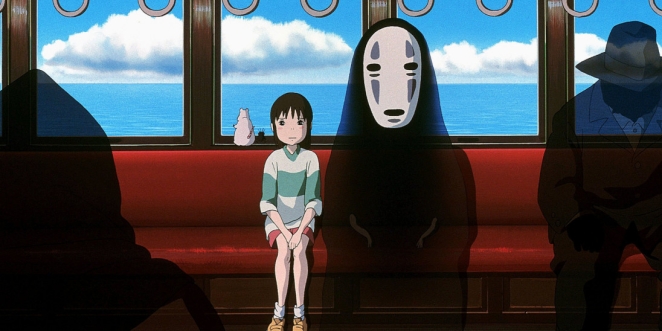
By the turn of the millennium, the animation world was thoroughly global, and perhaps no film illustrates this better than Hayao Miyazaki’s “Spirited Away.” This 2001 Japanese gem about a young girl trapped in a surreal spirit realm didn’t just win an Oscar – it won the hearts of audiences worldwide and announced loudly that Japanese animation (anime) could rival Disney at the storytelling game. Spirited Away is a cornucopia of creativity: hand-drawn animation of breathtaking detail, imaginative characters ranging from a stink spirit and soot sprites to a No-Face spirit with questionable eating habits, and themes that resonate across cultures. At a time when many animated films were playing it safe, Miyazaki delivered a film brimming with ambiguity, emotional depth, and cultural specificity – and somehow it all clicked globally.
The film’s creative aspects are legion: rich environmental themes, a strong young heroine who grows through adversity, and a refusal to spoon-feed the audience easy answers. Instead of princesses and villains, Spirited Away gave us a bathhouse for spirits as the central locale and blurred the line between good and evil in its characters. In doing so, it showcased the staggering potential of animation to convey deeply emotional and complex narratives that aren’t just kid-friendly fables. When it clinched the Academy Award for Best Animated Feature in 2003 (the first non-English animated film to do so), it validated the importance of cultural diversity in animation and encouraged wider distribution of international animated films. In other words, it threw open the doors for anime on the world stage and we probably wouldn’t have global success stories of today like K-Pop Demon Hunters without it.
Today, you’ll find Spirited Away atop many “greatest films” lists (animated or otherwise), and its influence is evident in the Western animation industry’s increasing boldness in theme and artistry. It’s almost ironic – a movie so unabashedly steeped in Japanese Shinto folklore became a universal tale of growing up. And it did so by being uncompromisingly imaginative. Chalk one up for creativity without borders.
Avatar (2009)
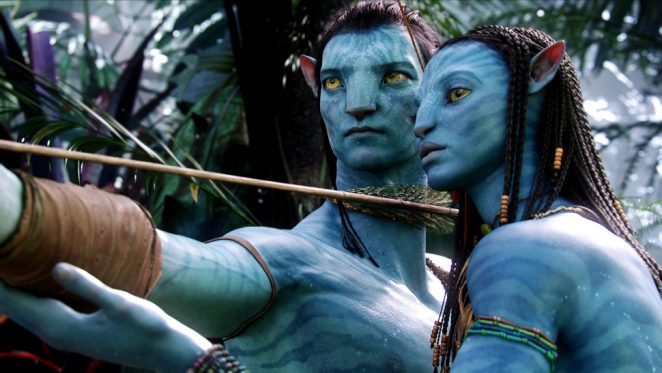
Is Avatar even an animated film? Debatable – but with roughly 70% of its imagery created in computers and a cast of 10-foot tall blue aliens brought to life via performance capture, James Cameron’s 2009 mega-blockbuster certainly blurred the line between live-action and animation. What isn’t up for debate is Avatar’s immense influence on film technology and the creative ambitions of Hollywood. This was the film that had us all donning 3D glasses like it was 1953 again, eagerly ducking flying arrows and floating jellyfish seeds. Avatar revolutionized motion-capture and 3D filmmaking in Hollywood, showing that with the right tools (and an obsessive visionary at the helm) you could create a photorealistic, immersive fantasy world that audiences would flock to in droves.
The film’s visual achievements were staggering: Cameron’s team at Weta Digital developed new cameras, perfected a facial performance capture system, and basically reinvented the VFX playbook to make Pandora and the Na’vi people believable. Creatively, Avatar took the age-old “stranger in a strange land” storyline and dressed it up in groundbreaking visuals – a reminder that sometimes technology can open up new creative frontiers (even if the narrative treads familiar ground). Its impact was immediate: Avatar became (and remains) one of the highest-grossing films of all time, triggering a boom in 3D filmmaking as studios rushed to release everything in stereoscopic glory (for a few years, every big release seemed to sprout a 3D version overnight). It also pushed filmmakers to embrace performance capture as a legitimate tool for crafting characters – without Avatar, would we have the likes of Caesar from Planet of the Apes or the refined motion-capture in today’s blockbusters?
Beyond the tech, Avatar demonstrated the audience’s appetite for bold world-building; it was like an animated film in how completely it fabricated a universe, yet it attracted adult viewers in droves. In many respects, Avatar is the culmination of trends that films like Tron and Toy Story set in motion – a film where human actors, animation, and cutting-edge tech fuse into a single cinematic experience. Love it or snark about it, Avatar opened the floodgates for a new era of ambitious visual storytelling. And with its long-awaited sequels pushing even more tech boundaries (did someone say underwater motion-capture?), Cameron continues to one-up himself, ensuring that the animation and VFX industries keep reaching for that next frontier.
Closing Thoughts
These ten films represent pivotal stepping stones in the evolution of animation – each one a creative milestone that influenced countless others. From the hand-drawn innocence of Steamboat Willie and Snow White, to the boundary-pushing experiments of Fantasia and Tron, to the genre-blending and tech-fusing triumphs of Roger Rabbit and Avatar, they show how animation has continually reinvented itself. Notably, many of these works didn’t just advance technique; they changed perceptions. They proved that animation can be sophisticated, risky, adult, and profoundly artful – all while entertaining the kid in all of us.
In today’s era of rapid-fire creative trends and emerging technologies (VR theaters? AI-generated mini-movies? The mind boggles), it’s worth tipping our hat to these influential films from the world's most respected animation companies. They remind us that behind every new tool or trend, it’s the creative spark that truly matters. After all, what use is the metaverse if there’s no Mickey Mouse magic or Miyazaki heart to fill it? The animation industry, and the broader creative world, continues to be shaped by the bold visions of these trailblazers. And if history is any guide, some future influential “animated” film might be incubating right now – ready to upend our expectations once again.
As the credits roll on our animated hall of fame, however, one thing’s clear: none of those groundbreaking films materialized without a crack team of animators (and perhaps a sprinkle of pixie dust). If you’re a studio, agency or indie creator itching to craft the next great visual story, spoiler alert: you’re going to need some top animation talent to pull it off.
Luckily, recruiting your own dream team of animators is far easier than embarking on an epic quest – just post a job for an animator on Creativepool. It’s fast, simple, and gets your brief in front of a global pool of creative professionals. Let’s face it: it beats waiting around for a cartoon fairy godmother to drop an animator on your doorstep.
So go ahead and give it a whirl – posting a job is quick, painless, and who knows? The next entry on the most influential animated films list might just be the one your team brings to life.