

No matter a brand’s mission statement, its marketing teams will all have the same holy grail: becoming a part of someone’s everyday life.
Our lives are increasingly busy with many marketing campaigns often swiped past, flicked away or deleted, because of digital overwhelm or burnout. For marketers, achieving consumer connection can feel like trying to catch sand as it slips through our fingers.
To find real connection in an overstimulating world, brands need to incentivise customers to see and engage with their product and their story regularly. By using diverse media strategies, we can continually catch customers’ eye and bring together the best of digital offerings, harnessing click-throughs, intelligent discount codes and longer-form storytelling to build that relationship.
Creating a physical presence as part of this marketing mix can also be very powerful. I started my career in media as a print buyer and have always been an advocate of putting marketing messages directly into their customers' hands. But with increasing noise, how can we elevate the creativity of our work so that it earns a place in our audiences’ home, and in turn deliver impact to drive action?
The art of good branding
Think of the FMCG brands we reach for when making a sandwich or hopping in the shower, or the home brands we rely on to clean the stairs or the bathroom. It’s a lot easier to be front of mind when consumers walk past your logo every day.
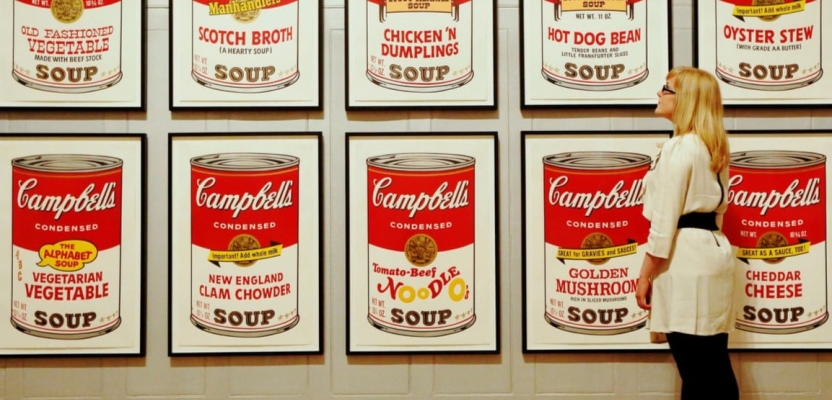
When I try to think about household name brands, plenty spring to mind, but none have more impact than the humble Campbell’s Soup. In the mid-20th century, it was a staple of the American home, and it’s this universal familiarity that inspired Andy Warhol to create one of his most famous works.
Whether the iconic can was on a canvas or in a cupboard, the Campbell brand’s impact on viewers is the same - classic, familiar, reliable, and well worth a place in the home. But Warhol’s work saw the brand cemented as an icon.
So, what’s the lesson? The Campbell Soup story is really a one-off. But that doesn’t mean we can’t be inspired by the way that a piece of art can enhance a brand. We all have the potential to catch customers' eyes and hearts, if not through a movement-defining artist, at least through a beautiful piece of marketing, delivered straight to their door.
An example of this is a campaign by Cunard Cruises, to celebrate the launch of its newest ship, Queen Anne. In a bid to capture the attention of loyal guests, the brand chose to send gorgeous, opulent mailer packs direct to their homes. In an ornately gilded presentation box, customers received artistic renditions of some of the Queen Anne’s most impressive architectural features on rich, teal and gold patterned cards, alongside a high-quality brochure.
Cunard could have sent the brochure by itself, relying on customers’ good relationship with the brand to convert into new sales. But instead, by making this new moment as glamorous an experience as possible, the marketing team was able to immerse readers in the feeling of stepping on board, dare them to imagine life on the new ship. And with this level of thoughtful care and intention, Cunard saw the ships’ maiden voyage sell out in under a day.
Delivering real value
As marketers, we need to realise that even our most loyal customers are being generous with their time when they engage with a piece of branding. To uphold our side of the bargain, we need to make sure that the communications we send out to consumers are as relevant and valuable as possible.
Doing this well not only means you will hold your audience’s attention, but you’ll be front of mind when your product’s offering becomes relevant. Whether it’s a screenshot of an ad, flagging an email for later, or popping a letter on the mantlepiece, customers are willing to keep brand communications around. Mail is well positioned to do this. Data shows that 58% of mail is retained for future reference, giving brands a chance to be a real presence in the home, but earning that spot requires a thoughtful approach.
Any good piece of marketing should reward engagement and maximise the amount of time a customer can spend interacting with the brand story. I’m reminded of a brilliant direct mail campaign from Lexus, which used a simple piece of string to create a physically engaging demonstration of its new model, the Lexus GX, and hit a record 500% sales increase year-on-year.
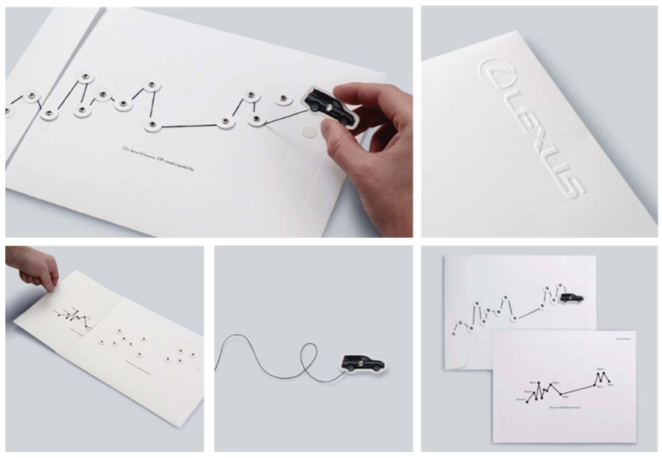
Recipients of this campaign received a crisp manila envelope with a tiny replica of the all-terrain vehicle, credited for its hill-climbing abilities, attached to a piece of string. To open the mail, they had to move the car along a dot-to-dot, unravelling a journey that echoed the elevation of a drive between Vancouver and Banff. Once inside, the moment of play was rewarded with the chance to win a trip along that exact route, and more information about the new model. It hits all the right moments: intrigue, playfulness, a strong narrative, and a gamified reward.
And when thinking about seductive, useful mail, who can resist a good takeaway menu? A new restaurant can target local customers with a tantalising menu that tells a story about the business - perhaps it’s family-run or offers particularly authentic dishes - and sells customers the promise of delicious food.
They may seem small, but in the process of picking up and flicking through a menu, potential customers truly engage, picturing the food, connecting with your brand. Deliver the message well, and that menu goes on the fridge, or onto a side table, to be pulled out again when hunger strikes. So be on that fridge, stick around the house, be something that constantly reminds them the brand exists.
Final Thoughts
Ultimately mail is a personal format. The experience is one-to-one, and it’s important to take that moment seriously. There's a trade-off for consumers, online and in real life: people want brands to deliver relevant ads, they want high-value communication. Thoughtful, creative, useful mail is regarded more highly, it stands out against all kinds of digital ads and spam leaflets. It earns you, and your brand, a place in the home.