
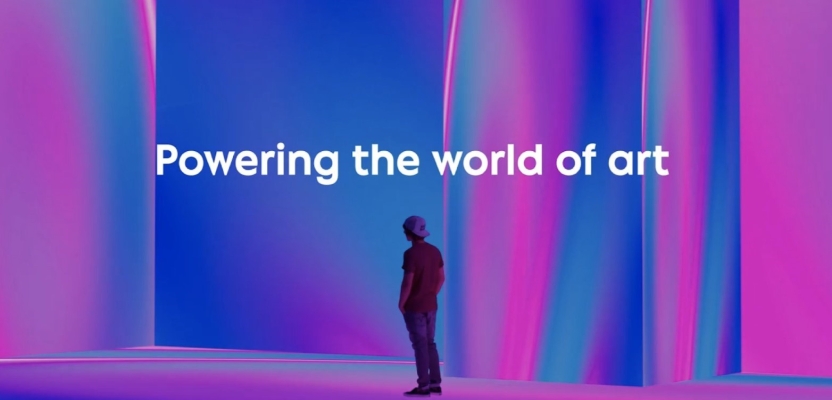

Art Basel is an international art fair staged annually in Basel, Miami, Paris and Hong Kong. To support the transition from a physical gathering to a multi-faceted global platform within the art industry, Art Basel employed the services of Saffron Brand Consultants to help reimagine its strategy. In the ever-changing sphere of art consumption and digitalisation, it is believed to be necessary for platforms such as Art Basel to fit a role that connects with the modern art community. Therefore, the global brand consultancy made the brand system simple and resemblant of the platform’s future ambitions: ‘To Power the World of Art’, which is echoed across all new assets.
We caught up with Fernando Ortiz Ehmann, Global Principal Strategy Officer at Saffron Brand Consultants, to explore the collaborative process behind Art Basel’s transformation, uncover the thinking that drove the new brand direction, and learn how the consultancy brought clarity to one of the art world’s most influential stages.
What was the brief for the rebrand?
The contemporary art scene is undergoing major shifts. Cultural institutions are catering to a more discerning audience, traditional museums are competing globally for immersive experiences, and a new wave of younger, diverse collectors is challenging the exclusivity of the commercial art world. These transformations have redefined how art is experienced, collected, and traded.
Art Basel (AB) recognized the need to adapt to these changes. Relying solely on being a physical hub for galleries and collectors no longer aligned with their evolving business model. In response, our collaboration repositioned Art Basel to meet the expectations of a more interconnected art community, reflecting both its growth and future aspirations. We created a strategy that would help them navigate industry disruption, reduce complexity, and align all their efforts towards a unified objective.
How did the initial pitch/brainstorming phase go?
In addition to conducting a thorough analysis of the contemporary art market and its key players, we embarked on extensive research both internally and externally. This included engaging in in-depth conversations with Art Basel employees across the globe, as well as with collectors, gallerists, and leading industry experts.
We also delved into AB’s rich history, tracing key milestones to uncover the core essence of the brand. This exploration allowed us to identify which aspects of its legacy could be preserved and carried forward to shape its future direction.
Describe the purpose of the brand and its target audience
The key outcome of the project was the development of a new brand north star for Art Basel that would amalgamate all its brand efforts: “Powering the world of art”.
What was your thinking behind the rebranding solution?
Art Basel has long been a hub where diverse ideas, disciplines, and cultures come together, fostering meaningful connections within the global art community. However, the nature and context of these convergences have evolved in recent years, expanding beyond traditional boundaries.
Our goal was to redefine Art Basel's purpose, enabling them to grow beyond the confines of physical events and fairs, and to serve as a dynamic platform for a broader ecosystem of art experiences. With this shift, a new guiding vision—or 'north star'—for Art Basel began to emerge, one that reflects its expanded role in an increasingly interconnected world.
Did you learn anything new during the project?
Always! Apart from getting under the skin of such a fascinating world as the contemporary art trade, we were reminded of how important it is to align and take into consideration all key client stakeholders for a better overall final solution.
What was the biggest challenge? How did you overcome it?
There was a risk of overcomplicating the project deliverables. Given Art Basel’s intricate and sophisticated ecosystem, it was easy to be drawn into convoluted, overly dense language.
While such phrasing might seem appropriate, it would lack clarity and practicality for the intended audiences. We addressed this challenge by staying mindful of it and consistently pushing back against the temptation to overcomplicate, ensuring our messaging remained clear and actionable.
What kit/tools/software were used to create it?
Apart from the ‘usual suspects’ we used Figma to organise, segment and structure our research and insights. As for the research itself, we used solid DIY research platforms to develop the questionnaire and perform the data analysis.
What details are you most proud of and why?
We are very proud of having encapsulated Art Basel’s holistic brand essence into such a powerful and authentic statement that has been so naturally adopted by the entire organisation.
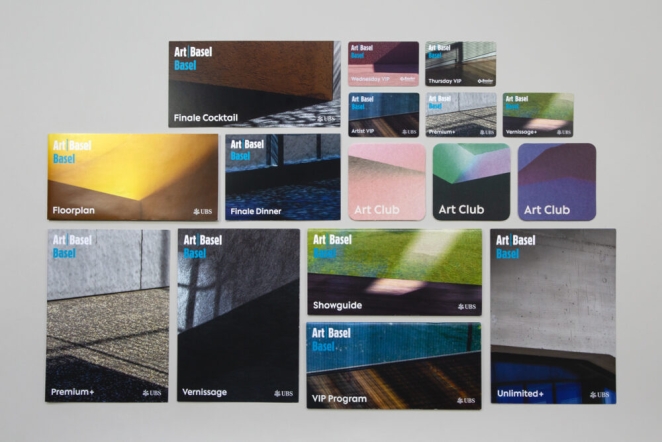
On a personal note, we have also very much cherished the extremely friendly, professional and value-added relationship we have developed with Art Basel’s Senior Management team. We are always so grateful to be exposed to and learn from such extraordinary, inspiring, yet humble individuals.
What role did consumer research or market analysis play in shaping the direction of the rebrand?
A lot. As mentioned earlier on, we conducted extensive internal and external research to understand market dynamics, perceptual gaps and opportunities. Our work is always strongly based on a solid strategic foundation and research is an essential tool to ensure this.
Can you discuss any innovative or unconventional approaches you took in developing the rebranding solution?
Perhaps not quite reinventing the wheel but we found that the use of mind maps was an original and helpful approach in the brand strategy development. Also, we developed a ‘choice wheel’ that was extremely helpful to visually convey the different directions the brand could take.
Can you share any behind-the-scenes anecdotes or memorable moments from the rebranding project?
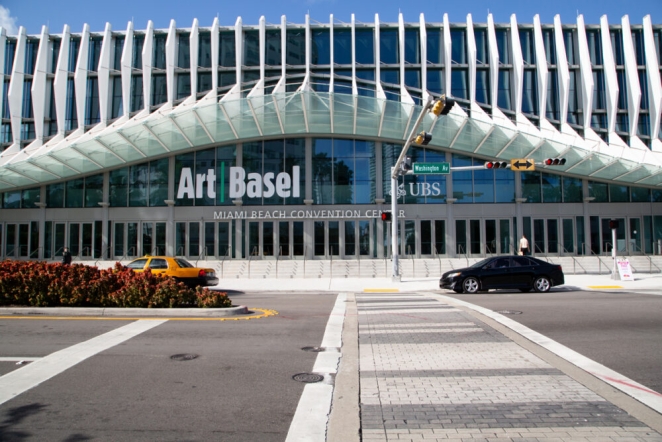
This might sound naive, but for art lovers like us, attending Art Basel Miami Beach under the hospices and special care from the organisers themselves gave us an insider view into the fascinating world of art that not many people have access to. It was an absolute luxury!
Credit list for the work?
Luz Erhardt - Chief Client Services Officer
Fernando Ortiz Ehmann - Global Principal
Drew Coughlan - Creative Director
Alejandro Salerno - Associate Creative Director
Efekan Dundar - Senior Strategist
Carmen Rodriguez Lo - Senior Strategist
James Riley - Senior Client Manager