

For nearly two decades, Istanbul-based Karbon has been transforming spaces into stories, uniting architecture, branding, and visual communication to craft cohesive, memorable experiences.
Selen Ozuekren, Founding Partner at Karbon, shares the agency’s journey from navigating economic uncertainties in Turkey to setting benchmarks in gastronomy branding and beyond. With an eye toward global expansion, Ozuekren discusses the philosophy of cross-disciplinary collaboration that defines Karbon's uniquely holistic creative process.
How was your company born and where are you based?
Karbon was born in 2005 in Istanbul, out of a shared vision to bring together architecture, interior design, visual communication, and branding under one cohesive roof.
Our aim has always been to create holistic brand experiences where space and identity come alive as one. Over the past 20 years, we have stayed true to this vision, crafting immersive and meaningful designs that go beyond aesthetics to tell compelling stories.
What was the biggest challenge to the growth of your company?
Operating in Turkey has always presented economic challenges due to fluctuating market conditions and unpredictable financial climates.
However, over the past 20 years, there has been a remarkable shift in Turkey’s business landscape, with brands increasingly recognizing the strategic value of design. This evolving awareness has allowed us to carve a unique space where design is not just an aesthetic add-on but a critical component of business growth.
At the same time, Turkey has witnessed an incredible transformation in the hospitality and gastronomy, where local and global culinary trends have merged to create a dynamic and competitive environment. Karbon has been at the forefront of this evolution, becoming one of the few design studios in Turkey with extensive expertise in creating gastronomy brands and designing immersive food retail environments.
We have shaped the identities and spaces of numerous brands, ensuring that every touchpoint — from logo to interior — reflects a cohesive and memorable experience. This deep-rooted expertise in food retail has not only differentiated us in the market but also positioned Karbon as a leader in crafting brand ecosystems that seamlessly merge taste, space, and storytelling.
Which was the first huge success that you can remember?
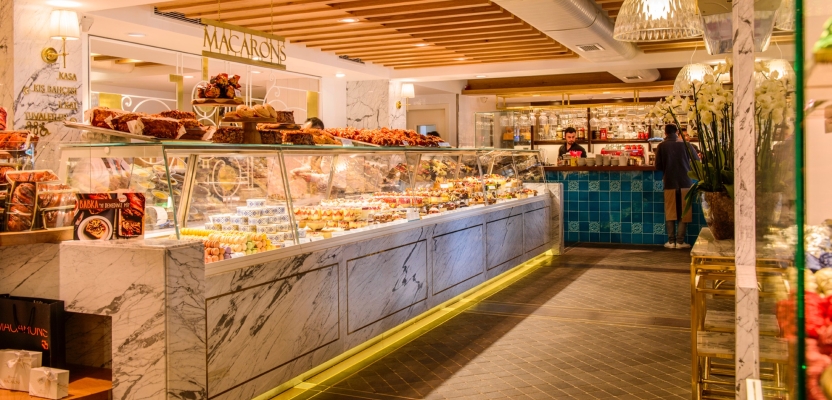
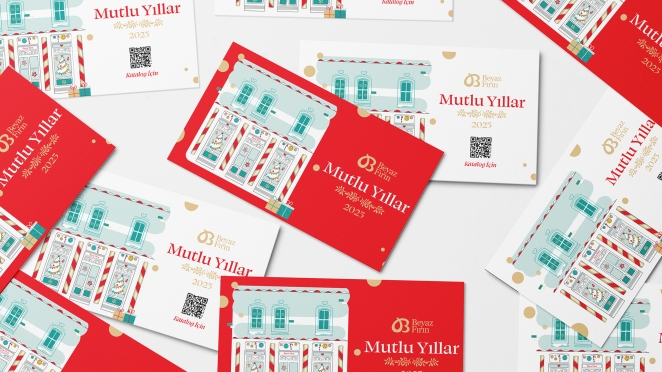
Our first defining success was a transformative journey with Beyaz Fırın, one of the oldest and most beloved bakery brands in Turkey. When we first started working with Beyaz Fırın, it was a heritage brand that had a strong legacy but was struggling with positioning and relevance. Our initial task was to revitalize the brand’s identity, but soon after, we were entrusted with designing their architectural concepts as well.
We have always believed that true collaboration between disciplines leads to results far greater than the sum of their parts. This philosophy became the foundation of Karbon — a small, highly skilled team where architects and visual communication designers work together seamlessly, speaking the same design language.
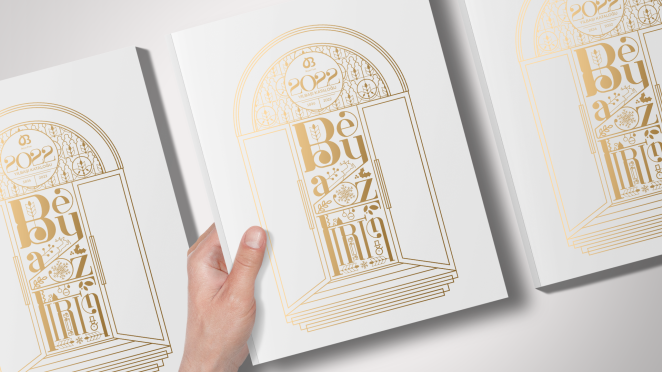
With Beyaz Fırın, we saw the opportunity to integrate this philosophy into practice. While rebuilding the brand’s identity, we designed an architectural concept that spoke the same visual language, reinforcing the brand’s newfound positioning. There was no ego clash between agency and architect — just a unified vision to create a cohesive and powerful brand experience. The results exceeded expectations. What started as a project for a neighborhood bakery with 4 branches turned into a 17-year partnership that helped Beyaz Fırın grow into one of the most iconic food retail brands in Turkey.
This project not only established Karbon as a pioneer in delivering A-to-Z creative solutions where architecture, branding, and storytelling merge, but it also became a case study that inspired many others in Turkey’s evolving food and hospitality sector. Witnessing the ripple effect of this success, where Beyaz Fırın’s transformation set a benchmark and inspired countless brands, remains one of the proudest milestones in Karbon’s journey.
What’s the biggest opportunity for you and your company in the next year?
Our biggest opportunity lies in expanding Karbon’s impact globally, particularly in markets where the intersection of architecture and branding is still underexplored. From the ground up, we build brands with soul. Our strength lies in creating concepts from scratch — shaping not just visuals, but complete brand worlds.
With a strong foundation in Istanbul and a growing network of international clients, we are now focused on establishing a presence in key creative hubs like London, Berlin, and Amsterdam. This global expansion will allow us to showcase Karbon’s unique ability to create meaningful brand stories across many layers as architecture, branding, and marketing come together in a single, cohesive narrative.
Can you explain your team’s creative process? What makes it unique?
Our creative process is deeply collaborative and built upon the organic synergy between architects and visual communication designers. Unlike traditional studios where disciplines operate in silos, Karbon thrives on a “cross-disciplinary dialogue” where design thinking, spatial understanding, and storytelling converge.
We begin by exploring the brand’s personality, culture, and audience. Defining the brand persona is where insight meets creativity — aligning what people are looking for with what the brand uniquely offers.
At Karbon, inspiration flows freely across disciplines. Moodboards are built collectively, with every team member — regardless of their specialty — contributing to branding, graphics, or architectural ideas. We see moodboarding not as a task, but as a shared visual exploration that energizes the entire studio.
From there, we move into sketching, modeling, and prototyping — refining ideas until form and function speak the same language. Whether we're designing a physical space or a digital identity, the outcome always feels like one unified story — consistent, compelling, and deeply rooted in the brand’s essence.
How does your team remain inspired and motivated?
Inspiration at Karbon comes from within — our team is made up of creatives from diverse disciplines: interior architects, visual & graphic designers, digital designers, industrial designers, even a painter and a toy designer. This variety creates a natural exchange of ideas and constant mutual inspiration.
Being based in Istanbul, a city that creatively challenges and energizes us, while staying connected to global trends and conversations, gives us a broad and dynamic perspective.
We also value flexibility and balance — our working structure allows for remote or in-studio work, supports individual pursuits, and encourages a respectful, collaborative atmosphere. All of this keeps us motivated, curious, and creatively alive.
How has COVID-19 affected your company?
For us, the COVID-19 period wasn’t as disruptive as it was for many others — in fact, it became a time of strategic thinking and creative growth. Since we work heavily within the food and hospitality sectors, our first instinct was to support our clients who suddenly lost their physical customer flow. We focused on how they could stay visible, keep their communication active, and shift parts of their business online. These efforts led to meaningful results and long-term digital improvements for many of them.
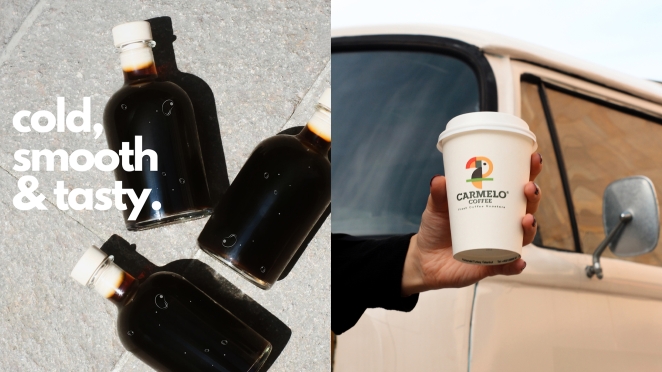
On a creative level, it was also an incredibly thought-provoking time. We spent a lot of energy exploring how design could respond to new behavioral patterns shaped by restricted movement and uncertainty. Looking at daily habits as a design problem opened up new ways of thinking and expanded our perspective on space, interaction, and brand experience.
Which agencies do you gain inspiration from? Do you have any heroes in the industry?
We draw inspiration from studios that effortlessly merge design, strategy, and storytelling — such as Pentagram, for its timeless approach to branding; Snøhetta, for its seamless integration of architecture and experience; and IDEO, for pioneering human-centered design thinking. We also admire Bjarke Ingels Group (BIG) for its bold, playful, and future-oriented architectural vision, and OMA, for its intellectual rigor and ability to challenge conventional narratives in spatial design.
What is one tip that you would give to other agencies looking to grow?
Growth, for us, has never been about headcount or revenue alone — it’s about expanding the scope of what we dare to imagine and deliver. We define growth as the ability to take on more complex, layered, and meaningful design challenges — and to rise to meet them with clarity and creativity.
We believe the world needs design more than ever, and design challenges are evolving at the pace of technology and social change. At the same time, we’re living in an era where design transcends national borders. Talented creatives all over the world now have the freedom to collaborate, share, and build without geographic limits.
So our advice is this: stay brave, stay curious, and stay open. Growth can come not only from building a large team, but also from forming deep collaborations, testing new geographies, and expanding your perspective through shared vision. That kind of growth is just as valuable — and often, even more transformative.
How do you go about finding new clients/business?
Most of our new clients come through referrals and word-of-mouth. We don’t actively promote ourselves, instead, we let our work speak for us. Since many of our projects involve physical spaces, they naturally become living showcases of what we do. When people experience a brand environment we’ve designed, they often want to know who’s behind it.
We also occasionally share selected projects on platforms, but our most powerful marketing tool has always been the experience of the work itself.
What’s your one big hope for the future of the industry?
We believe design should be recognized not only for its aesthetic value but for its capacity to address real-world problems and lead meaningful change. Our hope is to see the design industry continue evolving as a space where innovation, critical thinking, and social relevance come together.
It's encouraging to witness more independent designers and small studios gaining visibility in recent years. This shift creates room for more diverse voices, more authentic approaches, and ultimately, a more liberated and thoughtful design culture. We believe the future of design lies in its ability to remain intellectually grounded, socially responsive, and creatively independent.
Can you share a defining moment in your company’s journey that shaped its identity or direction? A key turning point in Karbon’s journey was the shift from being a multidisciplinary design studio to becoming a fully integrated partner for brand and spatial design. We realized our true strength lies in creating coherent experiences by aligning architecture, identity, and storytelling from the start.
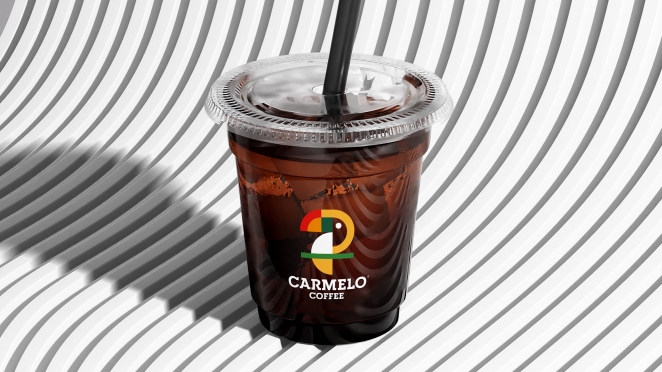
In the early years, we occasionally joined projects where we were only responsible for either architectural or visual work. Over time, we saw that this limited our impact. So we made a deliberate choice: for selected projects, we would either take on both aspects or not participate at all.
This decision allowed us to focus our energy where we could truly make a difference — shaping brands as a whole and delivering their full potential across every touchpoint.
How do you foster a culture of innovation and experimentation within your team?
At Karbon, we support and nurture creative ideas no matter where they come from. Innovation isn’t limited to roles or titles — a great idea can emerge from anyone on the team, and we make sure it’s heard.
While working within the real-world constraints of client needs and project realities, we actively explore how to stay creative within those boundaries — and often, push them as far as possible. We believe that true innovation comes not from unlimited freedom, but from reimagining what's possible within a set framework.
Although we operate mostly as a remote-first studio, we place strong emphasis on staying socially connected. We regularly come together to share inspiration, discuss personal interests, and simply spend time as a team. These informal exchanges, driven by each person's curiosity and passions, are where many of our boldest ideas begin to take shape.
What measures do you take to ensure diversity and inclusion are prioritised within your company?
We live and work in Istanbul, a city shaped by centuries of layered cultures, and that diversity is naturally reflected in who we are as a team. At Karbon, diversity isn’t something we construct — it’s something we live.
We’re a group of people with different backgrounds, life paths, and ways of thinking. Some of us didn’t follow the “traditional” career track or tailor our résumés to fit into corporate molds — and that’s exactly what makes our team rich and original. We’re not white-collar professionals in glass towers; we’re hands-on creatives who each bring a different flavor to the table.
This openness to difference — in culture, voice, experience, and personality — makes our process more honest, our ideas more layered, and our work more human.
Can you describe a project that challenged your team creatively and how you overcame any obstacles?
One of our most creatively demanding projects was Doyuyo, a fast-casual food brand for which we developed everything from the name and brand identity to the architectural concept and execution. The initial challenge was clear: create a food court restaurant experience that could stand out visually in busy shopping malls, while remaining accessible and budget-friendly for a wide demographic.
The design needed to be striking enough to draw attention in a crowded environment, yet warm and welcoming — turning an everyday, low-cost meal into an enjoyable and memorable experience for all. Balancing affordability with a strong, distinctive spatial identity was no small task.
Over time, Doyuyo grew rapidly, expanding to over 45 locations across Turkey. With each new location, we were responsible for the architectural design, project management, and marketing communication, constantly adapting our tone and visuals to resonate with diverse local communities. It was an intense and complex process — but one that taught us a great deal about scaling a brand without losing its character, and about keeping creativity sharp even within tight constraints.
How do you balance maintaining your company’s unique creative voice while meeting the diverse needs of clients?
For us, design is first and foremost about problem-solving. Every client, every project, and every context presents a different set of challenges — so we never rely on predefined formulas. Instead, we develop tailor-made solutions that respond directly to each client’s specific needs.
This approach not only ensures that our work is always unique, but also that each project carries the distinct imprint of Karbon’s way of thinking. Our creative voice shows through not in repeated visual signatures, but in the way we analyze, interpret, and resolve problems with depth, clarity, and purpose.
What strategies do you employ to adapt to changes and trends in the industry while staying true to your company’s values?
At Karbon, we don’t chase trends — we observe, question, and only embrace what truly aligns with our way of thinking. We aim to stay relevant without being reactive, filtering cultural and industry shifts through our perspective.
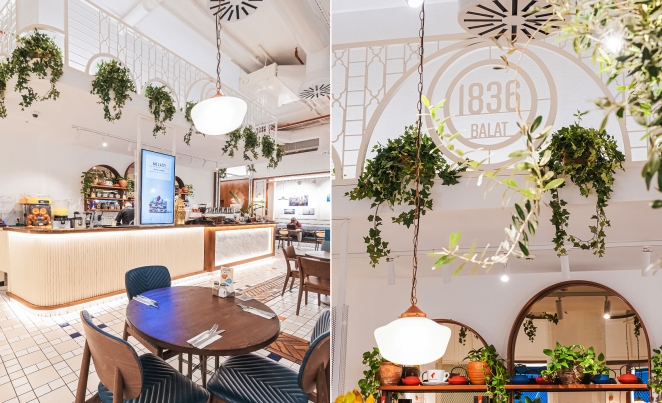
A key part of this process is our team itself. We are a diverse group across ages, disciplines, and perspectives, and we regularly share insights, reflections, and observations with one another. This internal dialogue helps us respond to change in a way that feels thoughtful and grounded — never superficial.
Can you share a memorable client success story that exemplifies your company’s approach and impact?
One of our most memorable and distinctive projects was the design of a technology museum dedicated to the Osmangazi Bridge, which was, at the time of its opening in 2016, the longest suspension bridge in Turkey and one of the longest in the world.
This project was unique in scope — not only because it was outside the commercial brand work we’re often known for, but also because it required us to take on both interior architecture and exhibition design. Our challenge was to create an engaging, informative, and immersive experience that communicated the scale, engineering, and innovation behind the bridge to a wide and international audience.
The result was a permanent museum space that continues to attract visitors from around the world. It was a highly ambitious project with a tight 7-month timeline, but by combining architectural thinking with narrative design, we were able to deliver a cohesive and impactful environment that educates and inspires. It was a defining moment for us — proving that Karbon’s methodology could adapt beyond retail or hospitality into the realm of cultural and educational spaces, without losing its clarity of storytelling or spatial sensitivity.
Do you have any websites, books, or resources that you would recommend?
We’re inspired by resources that challenge the conventional boundaries of design — those that blend theory with practice, and aesthetics with ethics. Some of the books we keep returning to include:
“The Design of Everyday Things” by Don Norman
A foundational book that shifts your perspective on design — showing how usability, intuition, and human behavior should guide even the simplest objects. It's a must-read for anyone who believes good design starts with understanding people.
“Design for the Real World” by Victor Papanek
A true classic that reminds us of the social responsibility of design. Papanek’s call for meaningful, inclusive, and sustainable solutions remains as relevant today as when it was first published.
“Design as Art” by Bruno Munari for embracing the intersection of function and beauty.
“The Brand Gap” by Marty Neumeier for understanding the bridge between strategy and design.
We also actively follow online platforms to stay connected to global conversations and trends. Some of our go-to digital resources include:
ArchDaily and Dezeen for staying inspired by global design trends.
It's Nice That – for discovering emerging talent and cross-disciplinary creativity.
Design Observer – for thoughtful essays and critique on the role of design in society.