

In this edition of Creativepool’s Company Spotlight, we’re shining a light on SomeOne, the London branding agency founded by Simon Manchipp, David Law and Gary Holt. Known for creating distinctive, strategically sharp brand worlds for clients ranging from Eurostar to Cancer Research UK, SomeOne has built a reputation for branding that doesn’t just look good but works hard in the real world.
Based in Hoxton, London, the agency has spent years helping organisations find clarity, character and commercial edge in crowded markets. From Olympic pictograms to category-defining rebrands, SomeOne’s work is rooted in the belief that brands should feel like somebody, not just something.
We caught up with Simon Manchipp to talk about how the company began, what makes a brand truly memorable, and why the creative industries need to get much better at valuing their own thinking.
How was your company born and where are you based?
Blame David Law.
We were sitting around in that particular fog that descends on designers somewhere between their third and fourth decade: excited by the sector, but restless, and increasingly irritated by working for people who understood neither passion nor restlessness. David was at CPB. One late night I asked him who he wanted to work for next. He said, “Honestly? No one.”
Which gave us our first agency name.
NoOne ran brilliantly with new hire Laura Hussey for six years, incubated inside HHCL, the Ad Agency of the Decade, no less. When we closed NoOne’s chapter, we convinced Laura to join David and I, alongside Gary Holt, who we had recently met, to form SomeOne.
The name felt right. It was a quiet statement of intent: we wanted to make brands feel like somebody, not just something. Plus it was a neat way of asking clients to come with us. Why work with no one if you can join SomeOne?
We’re based in Hoxton, London, which, frankly, makes inspiration unavoidable. You can’t walk to the coffee shop without seeing something worth remembering.
What was the biggest challenge to the growth of your company?
Ourselves, mostly.
The creative industries are catastrophically bad at running businesses. We’re trained to solve other people’s problems with extraordinary rigour and then apply almost none of that thinking to our own. Early on, we had to learn, sometimes painfully, that a brilliant portfolio doesn’t automatically generate a brilliant pipeline.
You have to build the machine that builds the machine.
That took time, humility, and a few expensive lessons we probably could’ve avoided if we’d listened more carefully to our own advice.
Which was the first huge success that you can remember?
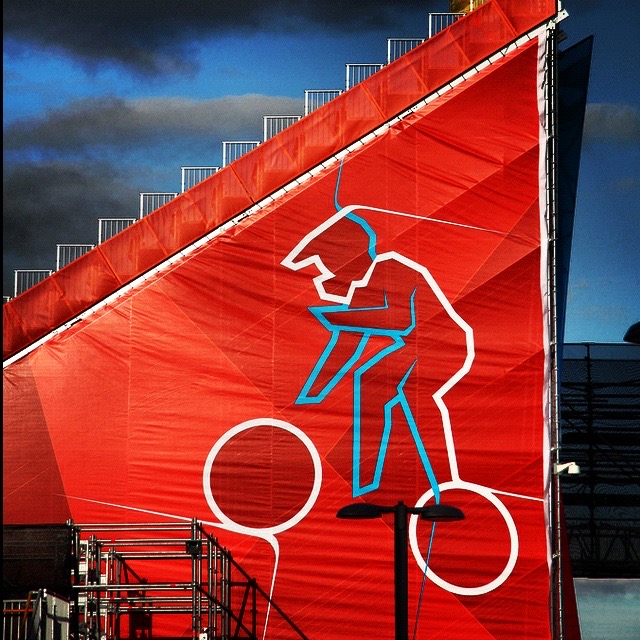
The sports pictograms for the London 2012 Olympic Games were a significant moment. Not just commercially, though that helped, but symbolically. When your work is reproduced on every ticket, every venue sign, every piece of merchandise for the biggest sporting event on earth, and it works, you feel something shift.
It validated the idea that great branding isn’t decoration. It’s communication at scale.
But if I’m honest, the first time I really felt it was much earlier: a record sleeve I designed on a creaky old Mac SE at a studio in Surrey. It got to number seven in the UK charts. I took the train to London and stood in Tower Records in Piccadilly just staring at it in the racks. Nobody knew it was me.
That anonymity combined with that pride, that’s the feeling you spend the rest of your career chasing in every project.
Can you share a defining moment in your company’s journey that shaped its identity or direction?
The IAAF World Para Athletics Championships in London in 2017.
We’d developed the full BrandWorld for the event, not just a logo, but an entire visual and verbal language. It sold more tickets than any IAAF World Championships in history. A Guinness World Record. When branding demonstrably moves the needle in that way, with 705,000 tickets sold, it stops being a conversation about aesthetics and becomes a conversation about outcomes.
That project crystallised something for us: we’re not in the business of making things look nice. We’re in the business of making things work.
Can you explain your team’s creative process? What makes it unique?
We talk about BrandWorlds rather than logos. That distinction is everything.
A logo is a badge. A BrandWorld is an ecosystem: the strategy, the story, the voice, the colour, the typography, the motion, the spaces, the language. All of it working as one coherent, proprietary thing that makes you immediately recognisable and genuinely preferred over your competitors.
Our process starts with obsessive listening, followed by obsessive questioning. We push clients to articulate not just what they do, but why anyone should care. Then we translate that into something people can feel, not just read about in a PDF no one will ever open again.
What makes it unique? We insist on strategic rigour and creative ambition at the same time. Most agencies are brilliant at one. We refuse to sacrifice either.
Can you describe a project that challenged your team creatively and how you overcame the obstacles?
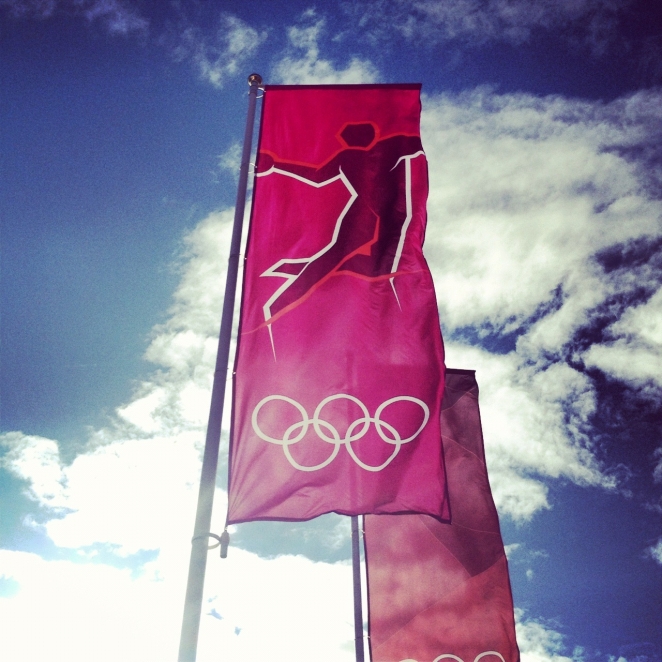
Eurostar.
Relaunching a brand that connects countries, carries enormous national and cultural weight, and is experienced by millions of people across every touchpoint imaginable, from the ticket to the train to the platform to the TV spot, is not a small thing.
The challenge was to create something that felt European in the broadest, most civilised sense, without becoming either flag-wavingly British or cartoonishly continental. The solution had to work everywhere. It had to scale from a business card to a hundred-metre train.
The obstacle was ambition meeting reality.
The answer, as ever, was rigour. Relentless, obsessive, strategic rigour, followed by the courage to present ideas that felt genuinely new rather than safely familiar.
Can you share a memorable client success story that exemplifies your company’s approach and impact?
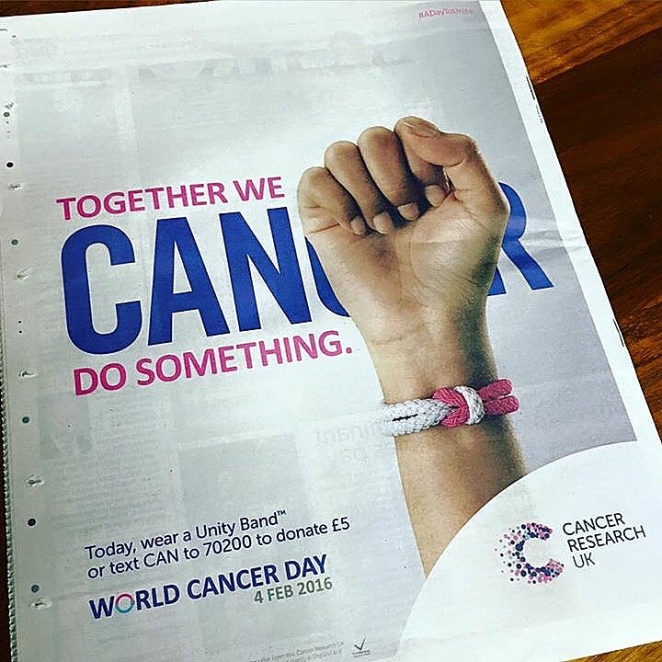
Cancer Research UK.
Rebranding one of the UK’s most beloved and most scrutinised charities is an exercise in serving an idea much larger than yourself. Every decision carries weight: the language of hope, of science, of human experience. The rebrand had to respect what people already felt about the organisation while making it bolder, clearer, and more fit for a future defined by digital channels and scientific breakthroughs.
It won the awards. But the moment that meant more was when people told us it felt true.
That’s the hardest thing to achieve. And the only thing worth achieving.
How do you balance maintaining your company’s unique creative voice while meeting the diverse needs of clients?
We don’t think of it as a tension.
Our creative voice is a strategic instinct, not an aesthetic preference. It shows up as a way of thinking, the questions we ask, the frameworks we apply, the standard we hold work to, not as a visual style we impose. That means it’s compatible with an enormous range of briefs, sectors and clients.
A hospice rebrand and a fintech rebrand require completely different visual outcomes but identical intellectual rigour.
That’s the constant.
What’s the biggest opportunity for you and your company in the next year?
The sector is in genuine flux, and flux is where the interesting work lives.
Brands that spent a decade hiding behind minimalism are realising that looking like everyone else is a strategy for being chosen by losers. There’s a huge appetite right now for brands that actually have character: warmth, specificity, a genuine point of view.
That’s always been what SomeOne does. So in a sense, the market is catching up with us, which is a lovely position to be in.
How does your team remain inspired and motivated?
I tell everyone at SomeOne to read weird things. Look in places that designers don’t normally look. The moment you’re drawing from the same well as everyone else, you start making work that looks like everyone else’s, and that is professionally catastrophic in branding, where differentiation is literally the point.
We’re in East London. The city does a lot of the heavy lifting. But curiosity is a muscle. You have to train it.
We hire people who are genuinely, almost inconveniently, obsessed with something. Whatever it is, typography, architecture, particle physics, 1970s food packaging, that obsession becomes fuel.
How do you foster a culture of innovation and experimentation within your team?
By giving people the jobs they actually want to do.
It sounds obvious. It isn’t, in practice. When someone who is obsessed with a particular subject is given a project in that territory, they don’t just deliver, they astonish. We try to match people to problems in a way that makes the work feel like play. Not frivolous play. High-stakes play. The kind where you genuinely care about the outcome.
We also protect people from the tyranny of guidelines. Guidelines are the end point of creative work, not the beginning. The beginning should feel a little uncomfortable.
That discomfort is where the good stuff lives.
What measures do you take to ensure diversity and inclusion are prioritised within your company?
The most honest answer is this: we hire for curiosity and obsession, not for a particular type of CV or a particular type of background.
Curiosity is not class-specific or geography-specific. Some of the most interesting thinkers I’ve worked with came from places and backgrounds that conventional creative industry hiring would have screened out. That’s a systemic failure of the sector, not a natural law.
We try to be alert to it.
In what ways do you invest in the professional development and growth of your team members?
By treating them as the interesting, multidimensional people they are, rather than as pairs of hands attached to software licences.
We encourage external speaking, writing and judging. We connect people to the D&AD community. We support lateral moves within projects, someone who is primarily a typographer being given responsibility for brand strategy, because that tension produces growth.
How do you go about finding new clients and business?
Reputation, largely. And reputation is built through work.
So the primary business development strategy is to do extraordinary work and then ensure the right people know about it. Awards help signal quality to the industry. But referrals, clients talking to other clients, are worth infinitely more than any pitch process.
We do pitch. Selectively. But we don’t chase every brief that lands in our inbox. Fit matters enormously. The best client relationships are the ones where mutual respect exists from day one.
You can usually tell by how the brief is written whether that’s possible.
What is one tip that you would give to other agencies looking to grow?
Be memorable.
Not in a stunt-y, desperate way, but genuinely, distinctively yourselves. Every design agency offers roughly the same services. The differentiation isn’t in the capabilities deck. It’s in the people, the culture, the specific way you see the world.
Clients hire humans. Make sure the humans they meet are worth hiring.
And stop competing on price. It is a race to the bottom, and the bottom is a terrible place to be.
What strategies do you employ to adapt to changes and trends in the industry while staying true to your company’s values?
We watch trends with interest and act on them with caution.
Trends in design are created when everyone looks in the same place, and by definition, if you follow a trend, you look like the people who set it, only slightly later and slightly worse. Our job is to make brands that are chosen over their competitors. Looking like them, only delayed, achieves precisely the opposite.
What we do adapt, constantly, is our understanding of the cultural landscape. What people value. What they distrust. What moves them. That informs strategy, which informs creative.
It’s a living process, not a fixed methodology.
How has COVID-19 affected your company?
It accelerated certain things we were already thinking about.
It proved, definitively, that presence and proximity are not the same as productivity or creativity. It also reminded us, and our clients, that brands built on genuine meaning hold up better under pressure than brands built on trend. The ones who panicked and went generic suffered. The ones who leaned into their actual identity found their footing faster.
We adapted. We kept working. And we emerged with a clearer sense of what SomeOne is for, and what it isn’t.
How do you approach sustainability and ethical practices within your company’s operations and projects?
With the understanding that brands that stand for nothing eventually fall for everything.
The briefs that interest us most are the ones where the organisation has a genuine reason for existing beyond the extraction of profit, or is at least actively working toward one. Brands with genuine purpose outperform brands without it, over time. We try to make that case to clients.
And we try to live it internally.
Can you discuss a time when your company had to pivot or innovate in response to unforeseen challenges, and what lessons you learned?
The closure of NoOne and the founding of SomeOne is the defining pivot.
It wasn’t forced upon us by failure. NoOne was successful. It was a conscious choice to do something cleaner, sharper, more singularly focused on brand identity.
The lesson was that knowing when to end something is as important as knowing how to begin it. The courage to close something and start something better is underrated.
Which agencies do you gain inspiration from? Do you have any heroes in the industry?
I admire anyone who has the courage of their convictions, who builds a point of view and defends it under commercial pressure.
John Hegarty built BBH on a contrarian instinct, the black sheep, and never stopped believing in it. That kind of clarity is rare and worth studying. Wally Olins was a giant. He understood that identity was strategy long before most people were comfortable with that idea.
Beyond individuals, I’m more inspired by work that surprises me than by agencies themselves. Surprise is increasingly hard to manufacture. When someone achieves it, regardless of who made it, I pay attention.
What’s your one big hope for the future of the industry?
That we stop apologising for charging what great thinking is actually worth.
The creative industries routinely undersell their strategic and economic value and then wonder why they’re not taken seriously in the boardroom. Design changes behaviour. It builds preference. It generates revenue.
When we can articulate that confidently, and charge accordingly, the whole sector benefits.
Do you have any websites, books or resources that you would recommend?
Read things that have nothing to do with design.
The more you understand human psychology, the better you understand brands, because brands are, at their core, a human behaviour problem.
And genuinely: get out of the studio. Walk around. Look at things that weren’t made for you. The world is the best brief you’ll ever receive.