
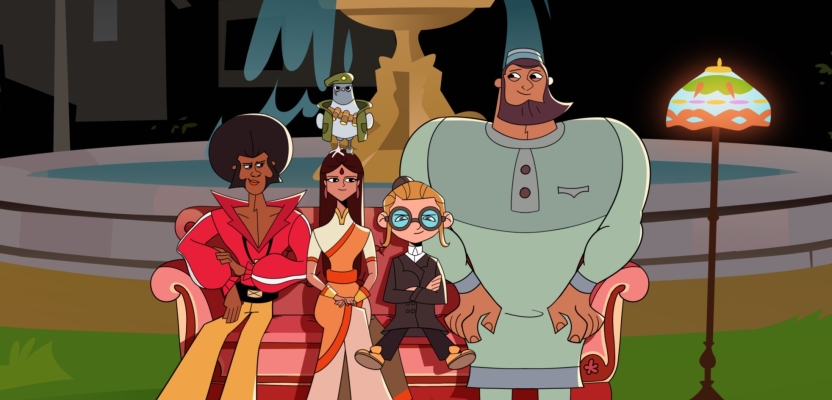

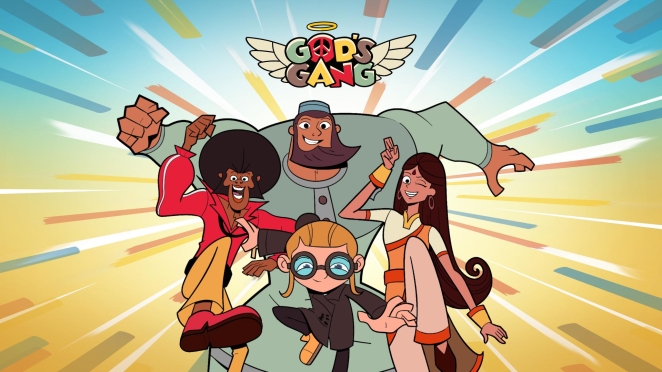
Following the announcement that the hit YouTube animated series God’s Gang has cast Atticus Baldwin in the next set of episodes, the actor has taken the time to share his thoughts on joining the series and what it means to be an autistic actor in the entertainment industry.
We also hear from the founder and creator of God’s Gang, Nimrod Avraham-May, on his passion for making a series where inclusivity and love are at the heart of the series.
There aren’t many neurodiverse characters represented on screen. With that in mind, could you explain how the opportunity to be in God’s Gang came about, and the role Autism in Entertainment played in it?
Atticus Baldwin (AB): I really appreciate what Autism in Entertainment is doing. After I attended the first AIE conference, I felt happy and excited to be an autistic artist. I knew this was an organization that would help those artists like myself who are looking to find their place in the entertainment industry. And I was VERY happy when I received a request to audition for God’s Gang. I’m not sure I would have gotten the audition if it weren’t for AIE. And I’m really happy that I did.
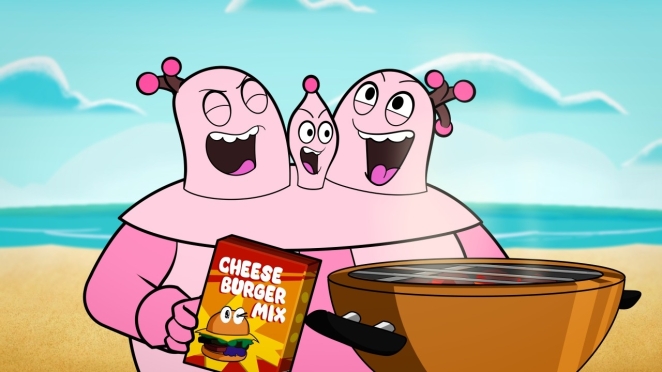
Nimrod Avraham-May (NAM): We are storytellers, we deliver the narrative that we believe that the world needs right now, and that's the narrative of We Are All One – Which is why we need to let Love Rule! Leading this narrative are qualities of compassion, kindness, truth and hope, qualities the world needs right now more than ever. To us, embracing the world as one means celebrating all its richness, including different cultures, faiths, neurodivergence, and more. It’s so fundamental to our perspective that it feels almost unnecessary to debate it. It’s simply the way the world should be. Autism in Entertainment is a brilliant organization with these values at its core, too.
With inclusion and tolerance at the heart of God’s Gang, could you expand a bit more on why the entertainment industry has a responsibility to hire more neurodiverse people?
AB: Well, first of all, there are a lot of us out there. The world is full of neurodiverse people and it’s important to include our voices and our acting and our perspective in stage, film, and television. We can share a point of view that unique as well as honest. It’s great to see ALL actors performing roles that go FAR beyond who they really are, but when there are so many capable neurodiverse artists who could do the same if given the opportunity, why not give them the chance to prove themselves?
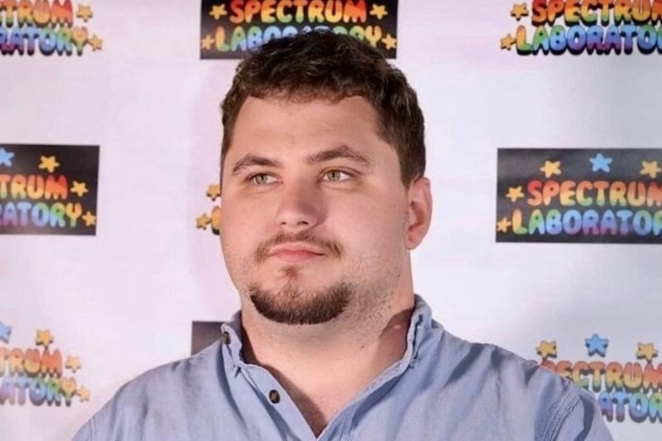
Atticus Baldwin
NAM: I cannot speak for the entire entertainment industry, but I can share how I approach entertaining an audience. For me, it’s about seeing everyone for their hearts and souls, not just their “covers.” Atticus is a beautiful soul and an incredible talent, and that’s how we view every member of our cast. They’re not just collaborators; they’re part of our team and our family.
It seems like the animation industry is slightly ahead of the curve when it comes to working with neurodiverse people. Why does animation as a format hold so much potential for representation and inclusion with regard to both neurodiversity and religious tolerance?
AB: Animation really appeals to children (It did to me). And let’s face it, children tend to be more open minded than many adults. In animation, you can create any world you want, and it’s accepted. If we show how people who have major differences can still be friends, and we learn about those differences, those differences aren’t scary anymore. You’re creating a path to peace and understanding.

Nimrod Avraham-May
NAM: Whatever you can dream, you can draw. Animation is a super vibrant, limitless medium that lets you fill every canvas with colors of the rainbow or whatever your soul envisions. Through animation, we can create a beautiful, boundless world where anything is possible, just like the redemption days prophecies - ”The wolf shall dwell with the lamb, and the leopard shall lie down with the young goat, and the calf and the lion and the fattened calf together;” :) Isaiah 11:6-9. Animation also allows for remote recording, our cast are providing voice overs. This can be more accessible, less daunting and demanding than a live action set, for example.
Atticus, what motivates you to be an ambassador for greater inclusivity for neurodiverse people?
AB: Right now there is still a humongous gap between neuro-typical and neuro-diverse people being able to understand each other. And one of the ways that we can better understand one another is if we have a “presence” in the entertainment industry. Film and television are powerful teachers.
The way I see it, a lot of neurodiverse people are really capable of being part of the entertainment industry. They are talented, authentic, and honest. We could use more of them.
Nimrod, could you explain your motivations behind the plans to hire more neurodiverse and disabled people, and the intentions behind creating superheroes based on major religions?
NAM: Our commitment is to build a beautiful world which we call LuvLand, a place where everyone is welcome, as long as their heart and soul come from a place of love.
Do you have any closing remarks on why we need more content like God’s Gang which promotes compassion, kindness and love?
AB: There is so much fear in the world right now. And people fear what they don’t understand. God’s Gang shows the love and respect that these friends have for one another and gives us a greater understanding about this diverse group, and how they deal with their own differences with one another—with compassion, kindness, and love.

NAM: The world is currently overwhelmed by fear frequencies and dense vibrations, driving many to operate in survival mode, fueled by fight-or-flight instincts. Our goal is to shift this narrative by introducing stories that inspire hope and remind people of the shared values that unite us. Through these narratives, we aim to show that coexistence is not only possible but essential for a brighter, better future.