

Founded in 2003, Richard Chapman Studio has grown from a one-person desk in Fulham to a thriving design agency based in the heart of Chelsea, London. Over the past two decades, the studio has built a reputation for delivering bold, original, and client-focused creative work. From early projects with Oddbins to international collaborations in the Middle East, the agency has consistently demonstrated resilience and adaptability in the face of industry changes and global challenges.
At its core, Richard Chapman Studio stands out for its strong creative process, collaborative culture, and commitment to originality in a world increasingly shaped by AI-driven content. With a focus on design that balances innovation with client needs, the studio continues to evolve while staying true to its values. In this interview, founder Richard Chapman shares the journey, challenges, and defining moments that have shaped the studio’s identity and vision for the future.
How was your company born and where are you based?
Richard Chapman Studio started as just me, at a desk at an old printers on Munster Road in Fulham, back in 2003. I’d left my job at Conran Design Group after four years and decided to take some of the work I’d been doing in evenings and weekends and try my luck at going solo for a while. I think the idea was to get another job but I wasn’t sure where and what I wanted to do, so the variety and excitement of going solo felt like an adventure I couldn’t resist.
Today we’re based at our studio space at the corner of King’s Road and Lots Road where we’ve been happily working for 11 years. It remains fantastic to have an actual studio where we can spend time collaborating and a great base to make everything happen from.
What was the biggest challenge to the growth of your company?
I’d say that I’d call this ‘business uncertainty’ and ‘events’. There’s always been some drama we’ve just been through as a country or an industry that people pin on not making big decisions about the future. The first was the financial crisis. Then came the 2010 UK election. Then Brexit. Then recessions, interest rates, more elections, the pandemic, and now tariffs. There’s always something you have to ride out.
Which was the first huge success that you can remember?
Oddbins, definitely. Back in 2009 I got a phone call from the marketing director of Oddbins which had just been bought out, asking for shop-window posters and point of sale materials. It was at the height of the financial crisis nightmare and suddenly we had this golden opportunity. I took it and ran with it. The project turned into a complete redesign of all the store graphics, and around two years of nonstop work, with our first ever retainer.
What’s the biggest opportunity for you and your company in the next year?
There are three. To retain our creativity and originality and present that as a real positive in a world awash with AI content. Concurrently to embrace AI to improve our processes and research. To really make a go for it in the new marketplaces we’re targeting.
Can you explain your team’s creative process? What makes it unique?
To really invest time and effort in a deep initial well of research and working to define a vision for each client as we begin work. To begin with we work on figuring out the ‘pillars’ of a project, usually defined by our response to the brief and core creative responses, then returning to them throughout our work. Staying true to this has always served us well. Usually if we’re working on something and it seems like it’s not going well, it’s probably because it’s tangential or we’ve lost focus on where we began the work. I also love to wrap in our client as we work, often showing sketches and doodles as well as the end result. One client told me only last week how much they loved this part because they could see the genesis of what we were doing and that it was hand-made.
How does your team remain inspired and motivated?
Hopefully by being given a diversity of work both in terms of topic and genre. That’s the starting point. I also think spending time doing work during a design process on type foundries, or illustrators, seeing exhibitions or cinema, gives you the oxygen you need to think beyond the confines of a brief and come up with something really interesting. And travel. The eye has to travel!
How has COVID-19 affected your company?
A sense of flexibility and working from the best place for each of us. For some of my team that’s the studio, others work from home and we chat with Slack as if we’re in the same space. For me, it’s finding space to work remotely for extended periods and seeing freedom in that. I’d never have done that before the pandemic.
Which agencies do you gain inspiration from? Do you have any heroes in the industry?
He’s not in the graphic design industry but I’d say Ben Pentreath, the architect and interior designer. He has a singleminded sense of purpose and always thinks about the end user of his homes in a completely modern way, through the lens of history and his own vision. He also loves strange and wonderful side projects that are inspired by the day job, like his shop or street fair on Rugby Street.
What is one tip that you would give to other agencies looking to grow?
Make sure the work you have coming in, or the financial backing you have, covers the cost of the nice office or new hires. Employing people in particular, taking responsibility for their hopes and dreams is daunting; ensuring the cashflow is covering your costs ensures a good night’s sleep.
How do you go about finding new clients/business? (Pitching, work with retainers, etc.)
I think really by embracing the opportunities of today – trying to answer every quote and enquiry that comes through the door as swiftly as time allows. By staying with great long-term collaborators as they move through their career. By understanding where we are today and having a really clear sense of where we’d like to be next. Having a focus on the industries that we really understand, networking there and ultimately trying to serve them well.
What’s your one big hope for the future of the industry?
To hold on to a sense of self belief. The last years, especially 2023 and 2024, have been challenging as costs have risen exponentially and budgets shrunk. People fight so hard, sometimes ruthlessly, for easy wins. I believe that staying true to what you believe in and ideally respectful to people who work in other firms is a good start. I believe that originality and good ideas, human ingenuity and an understanding of people and what they want next, will always beat anything a computer can come up with.
Can you share a defining moment in your company's journey that shaped its identity or direction?
Renting the studio space in 2014. Every day I walk in the door I am excited about being here, even when I am tired, or there’s been bad news. Somehow the ability to define and work in our own space, and welcome clients here too, for a company with ‘studio’ in the name toa actually have one, really makes everything work.
How do you foster a culture of innovation and experimentation within your team?
By remembering one simple question: who is the end user? It sounds really simple but this varies every single time, in every single project we work on. Even when our clients want a side project or new look it’s because they’ve got a new target audience. The change and subtlety in who these people are and the different nuance in what they want means we have to start working for them. Renewal and innovation inevitably results.
For me, from a cultural perspective, it’s in particular about encouragement and trying to avoid saying ‘no’ to bad ideas in the development and experimentation stages. Not everything you do is great first time out, and the process begets the good answers. I find letting my team explore with all their impulses and avoiding negativity helps everything.
What measures do you take to ensure diversity and inclusion are prioritised within your company?
By keeping an open mind and always ensuring you consider the right people from wherever they apply from. Having a team of four means that showcasing true diversity on the workforce, all at once, is actually quite difficult. When it comes to hiring, placing listings openly and fairly is key: I put it all out there, and try and avoid shoo-ins and talk to as many suitable people as possible. Within a small business, encouragement, training and trying to always offer a listening ear and open door is fundamental.
Can you describe a project that challenged your team creatively and how you overcame any obstacles?
The one that really stands out is Skyral. In the summer of 2023 we had the opportunity to work on this tech industry carve-out: gaming company divesting a ‘digital twins’ segment to become a completely new business. They needed a completely different visual identity which was a tough transition for the team who had to rethink their approach to who they were. Our ideas kept being rejected, less because they weren’t right and more because they were so different to what they were used to. We resolved it with collaboration and experimentation, trying out ideas suggested by our initial designs but exploring new directions they suggested. The end result was a really striking design that everyone felt connected to.
How do you balance maintaining your company's unique creative voice while meeting the diverse needs of clients?
By getting excited about new sectors and new people. Invariably, our clients require very different end products even when they are within the same profession. A starting point of a can-do attitude and listening to what the client is asking for means we meet the needs; applying our creative process and remembering who the project is aimed at means we stay true to our process.
What strategies do you employ to adapt to changes and trends in the industry while staying true to your company's values?
I think the main one is a willingness to adopt new technology. It is always discomfiting. Sometimes you back the wrong horse, in terms of a product. But finding new answers using evolving or radically new tech has always served me well. Rejecting or sneering at a change in the tools we use is always bad news.
Can you share a memorable client success story that exemplifies your company's approach and impact?
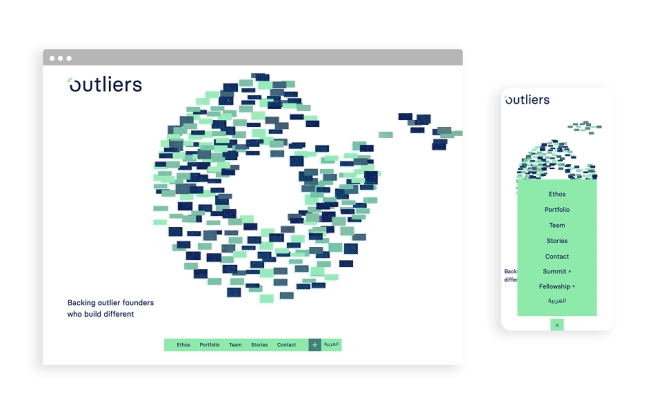
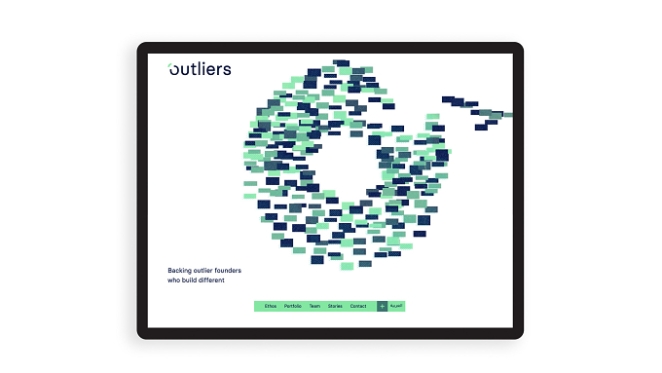
Most recently the work for Outliers, our client in Dubai and Riyadh. So much of it should have been difficult and none of it ever was. I met the team on a trip to the Middle East last November, and right away there was an interest in working together which we never lost. They challenged us to be creative and come up with a genuinely experimental and original set of ideas and when we did that, they embraced those. We worked remotely throughout the entire process, all of which worked seamlessly. We embraced the idea of English and Arabic on a single website which gelled really nicely with our creative process. Most of all it was completely new creative work, delivering a new, exciting product via a process that we had honed for years. Best of all: we love the end result, which is live and out in the world and ceding new work already.
In what ways do you invest in the professional development and growth of your team members?
A lot of this is driven by the individual team member and the technology we need to use and its evolution. These things come in fits and starts. I’d always be keen to listen and offer training to my team, whether that’s online or in person, as needed. The big thing in recent years has been the adoption of Figma, and right now it’s more me that needs backup on that one than them…!