

At IndiArt Visual Studios, creativity isn't just a buzzword; it's the lifeblood of everything we do. Born from the combined vision and dedication of Co-Founder and 3D Artist Jay Parekh and his partner, IndiArt emerged from humble freelance beginnings into a dynamic virtual studio, registered in Ahmedabad, India, and operating on a global scale.
Fuelled by passion, resilience, and relentless innovation, IndiArt tackles the complexities of diverse industries (from game design and cinematic storytelling to architectural visualization) with precision, versatility, and creative ingenuity.
In this exclusive Creativepool Spotlight, Jay Parekh takes us behind the scenes, revealing how embracing creative diversity, championing structured experimentation, and prioritizing human skill amidst rapid technological change has positioned IndiArt Visual Studios as an inspiring force in the global creative community.
How was your company born and where are you based?
IndiArt Visual Studios was born out of a shared passion between two partners for crafting high-quality 3D content and immersive visual experiences. We began our journey as freelancers, taking on early-stage projects and gradually building strong relationships with clients. As we started securing long-term collaborations, we realized the need to formalize our operations - establishing a proper company structure, handling legal paperwork, and setting up a registered business to support growth.
While we function as a virtual studio with both clients and artists operating globally, our company is officially registered in Ahmedabad, Gujarat, India.
What was the biggest challenge to the growth of your company?
One of the biggest challenges we faced in growing IndiArt Visual Studios was managing the diversity of our services across multiple industries - gaming, ArchViz, animated content, and interactive experiences.
Each type of project comes with its own set of requirements, tools, and creative talent. For instance, a cinematic project might need character animators, rigging artists, and VFX specialists, whereas an ArchViz project requires artists skilled in 3ds Max with Corona or V-Ray. Game design, on the other hand, often calls for asset modelers, texturing artists, and Unreal Engine specialists.

Coordinating the right team at the right time while maintaining high-quality output across such varied domains was especially difficult during our early stages. Hiring full-time specialists for every role wasn’t always sustainable, given the shifting demands of incoming work.
We also considered focusing on a single industry to streamline our operations. But ultimately, we chose to embrace the diversity because we genuinely enjoy the creative challenges and variety that different types of projects bring. While this multidisciplinary approach presented its difficulties, we believe it’s a long-term strength. It has allowed us to be more versatile, adaptable, and creatively fulfilled and we’re confident it will benefit our overall growth in the years to come.
Which was the first huge success that you can remember?
In the early days of our company, we had the opportunity to collaborate with an agency working with a well-known creator of children’s rhyming videos for YouTube. The agency had secured a test project consisting of four animated videos, with the potential for a long-term partnership if things went well. They were responsible for storyboarding, rendering, and quality control, while we were in charge of character animation, asset animation, and camera work.
Ironically, due to a miscommunication between the agency and the client, the initial project’s budget was significantly lower than expected. The agency explained the situation to us and asked if we could still proceed, assuring us that they would adjust the compensation in future projects if the client approved the work.
Despite the tight budget and risk involved, we decided to take the leap, driven by our belief in the quality we could deliver. Thankfully, our efforts paid off. The client loved the final results, and we were soon brought on for additional projects. True to their word, the agency adjusted the budget going forward, and we ended up working on 15–20 animated videos with them over the next two years.
It was a turning point for us not just as a portfolio milestone, but also as a foundational lesson in trust, perseverance, and long-term vision.
What’s the biggest opportunity for you and your company in the next year?
Over the next year, we’re focusing on three key projects that represent exciting growth opportunities for us: an F1 car racing game, a sci-fi animated series, and a product visualization learning content for our community.
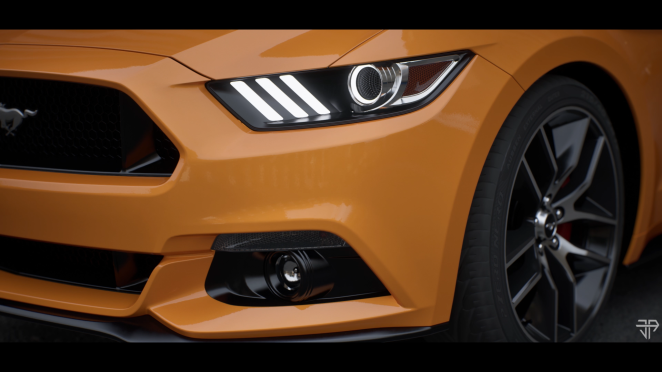
For the F1 racing game, we’re working with a Europe-based company developing a cross-platform experience for PC, mobile, and simulation setups. We’re responsible for modeling and texturing high-quality F1 cars and recreating real-world racetracks inside Unreal Engine. In the first phase alone, we developed around 25 car models and 10 racetracks. The project is currently in testing, and once approved, we’ll be scaling it further with many more vehicles and tracks.
The second project is a sci-fi animated series for a U.S. based client. It consists of multiple episodes across several seasons. We are leading the production of environments, lighting, and cinematic sequences. This project has been especially exciting as it allows us to push our world-building and storytelling capabilities on a much larger scale.
Lastly, we’re launching a learning-focused initiative, creating educational content for our YouTube channel and creative community. With our experience across multiple tools and pipelines, we’ve noticed a gap in project-based learning resources that integrate software like Unreal Engine, Nuke, DaVinci Resolve, etc. While there’s plenty of isolated content on topics like colour grading or compositing, very few resources focus on how to use these tools together in CGI workflow. Our aim is to create tutorials that emphasize production-level integration and workflows, not just isolated skills.
Can you explain your team’s creative process? What makes it unique?
At IndiArt Visual Studios, our creative process is built on clear communication, detailed planning, and a deep commitment to quality - whether we’re working on ArchViz, cinematics, VR experiences, or virtual environments.
We begin every project by understanding the client’s vision through collaborative calls. This stage is all about listening - grasping their goals, visual expectations, and project constraints. We then gather detailed visual references for each aspect of the production: environments, hero assets, lighting, composition, and colour grading. For cinematic projects, we go a step further by creating a reference-based rough cut to plan camera movements, transitions, and character or product animations.
Once the creative direction is locked, we enter production. Our modelling and animation workflow is primarily done in Maya, though we also use Blender or 3Ds Max depending on the client’s preferences. Texturing is handled in Substance Painter and Designer, and Unreal Engine is our core platform for environment setup, lighting, rendering, and interactive features. We finalize everything in DaVinci Resolve for editing, colour grading, and motion design.
What makes our process unique is the structured-yet-adaptive nature of our workflow. Alongside client projects, we consistently create internal portfolio projects every few months. These projects allow our team to experiment with new workflows and technologies so when we’re working with clients, we’re always equipped with cutting-edge solutions grounded in practical experience.
It’s this blend of creative planning, technical execution, and continuous experimentation that defines our process and sets us apart.
How does your team remain inspired and motivated?
We focus on two key aspects: continuous learning and internal portfolio projects.
Whenever there's downtime between client work, we encourage our artists to enhance their skills through structured learning. We've invested in several high-value online courses covering a wide range of tools and disciplines. This not only keeps our team updated with the latest industry practices but also empowers them to grow individually and contribute more effectively to diverse projects.
In addition, we commit to producing at least one internal portfolio project every three months. These projects serve two major purposes: first, they’re shared on our social media platforms, helping promote our capabilities and attract new clients. Second, and just as importantly, they give our team full creative freedom.
Client projects often come with specific requirements and constraints, but our portfolio projects allow us to experiment, test new workflows, and explore emerging tools. In many ways, they double as R&D efforts that keep our pipeline fresh and innovative.
How has COVID-19 affected your company?
At the time COVID-19 hit, we had not yet officially formed IndiArt Visual Studios, we were still operating in our early freelancing stage. Fortunately, since we were already working remotely and collaborating online, the pandemic didn’t disrupt our operations in a significant way
If anything, that period reinforced our belief in the virtual studio model. It showed us that high-quality creative work can be done efficiently without being tied to a physical location, which later became a core part of how we structured our company post-COVID.
Which agencies do you gain inspiration from? Do you have any heroes in the industry?
Absolutely, we have many heroes in the industry. There are so many incredibly talented artists and studios out there whose work constantly pushes boundaries and inspires us. If I had to name a few that stand out, three come to mind immediately: Mondlicht Studios, Curve Digital, and The Scope.
Mondlicht Studios and Curve Digital are true masters of high-end advertising content, particularly in the automotive sector. Even their still images carry immense visual depth and storytelling power. One of the things I deeply admire is how they apply the classic composition principle of foreground, midground, and background - not in a basic or mechanical way, but with a level of finesse that elevates the entire image. Their attention to detail, lighting, and atmosphere is just next-level. I often find myself browsing their Behance profiles or websites just to study and absorb their work.

The Scope is another agency we greatly admire. While they also produce amazing visual content in the automotive space, what really impressed us was their procedural city environment pipeline built in Houdini. It’s an incredibly smart system that can be adapted across platforms like Unreal Engine and NVIDIA Omniverse, allowing them to simulate entire cities with astonishing speed, precision, and realism. Creating procedural environments is already a complex task but building procedural cities, with all their layered components, is a massive challenge. The Scope’s team really cracked something special with their workflow.
These studios continually inspire us not just in terms of visuals, but also in how they approach problem-solving and innovation in production.
What is one tip that you would give to other agencies looking to grow?
We’re still in the early stages of our journey, so we don’t claim to have all the answers but if there’s one thing that’s made a real difference for us, it’s consistency. Whether it’s delivering client work on time, sharing portfolio projects regularly, or committing to ongoing learning, we’ve found that showing up consistently builds momentum over time.
How do you go about finding new clients/business? (Pitching, work with retainers, etc.)
We follow a mix of proactive outreach and organic growth strategies. We actively reach out to potential clients, join relevant online communities, and attend industry conferences to build meaningful connections.
At the same time, we focus on consistently creating high-quality portfolio projects every few months. These not only help us refine our skills but also serve as a form of organic promotion across platforms like LinkedIn, Behance, and ArtStation.
Our approach is less about hard selling and more about showcasing what we can do, letting the work speak for itself while staying present and engaged in the creative community.
What’s your one big hope for the future of the industry?
Our hope is that the current chaos and uncertainty in the creative industry - driven by rapid automation, AI tools, and ever-changing market demands - will eventually settle into a more balanced environment. One where human effort, skill, and creativity are truly valued again.
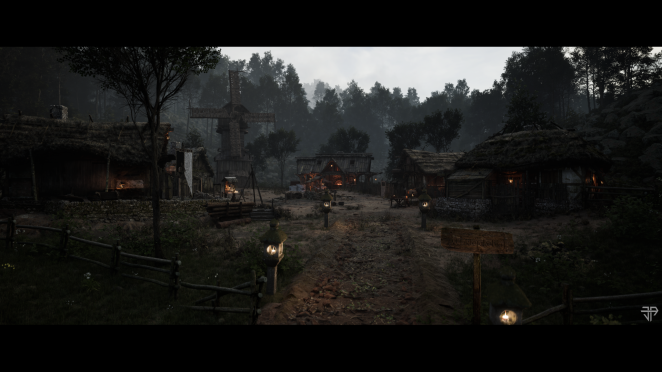
Technology is an incredible enabler, but it should enhance creativity, not replace it. We hope the industry continues to evolve in a way that celebrates original ideas, craftsmanship, and the emotional depth that only human creators can bring to the table.
What measures do you take to ensure diversity and inclusion are prioritised within your company?
In the early stages of our company, we focused on hiring generalist artists who could adapt to different client needs and wear multiple hats. As we’ve grown, we’ve started shifting toward a more balanced team structure, bringing in specialists for key areas. This ensures we always have at least one senior expert guiding each department or skill set, creating a collaborative learning environment where everyone can grow.
Being a virtual studio has also played a big role in promoting diversity. It opens the door to collaboration across geographies and gives us access to a broader range of perspectives, styles, and problem-solving approaches.
For us, diversity is about building a team with complementary strengths, fostering mentorship, and creating a space where creativity can flourish.
Can you describe a project that challenged your team creatively and how you overcame any obstacles?
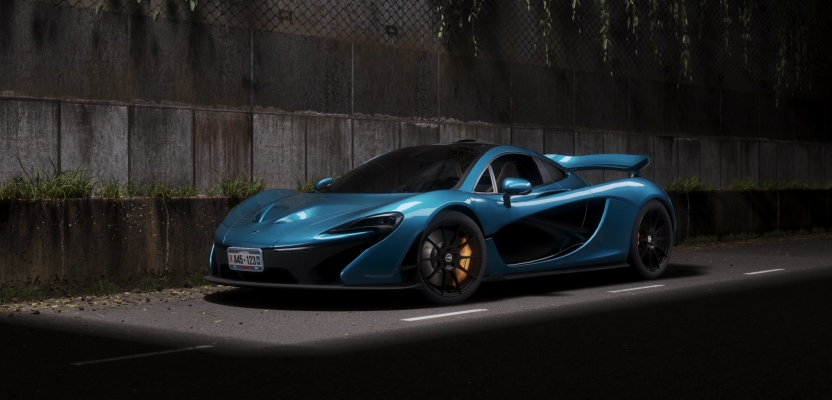
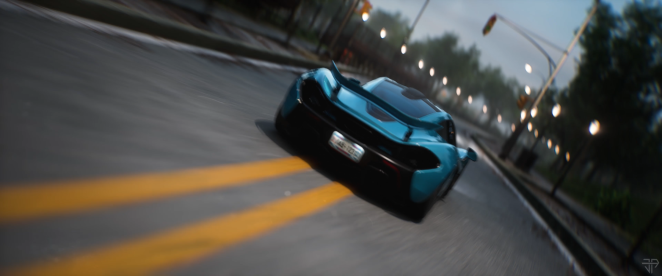
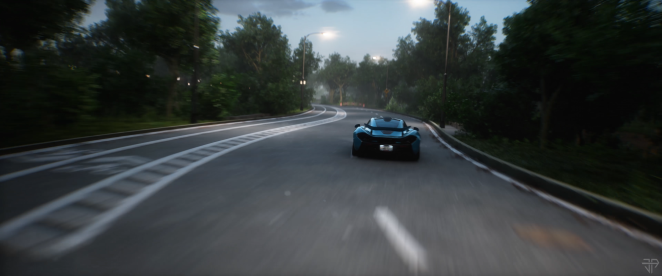
One of the most creatively challenging, and ultimately rewarding, projects we’ve worked on was the McLaren P1 Drone Cinematic (below).
Previously, we had created a few automotive cinematics, but they were mostly calm, slow-paced, and focused on beauty shots, more like B-roll. This time, we wanted to do something completely different: a high-energy, fast-paced, adrenaline-filled cinematic that would stop viewers mid-scroll and make them say, “Whoa, what is this?”
To get inspired, we studied various reference videos - F1 races, rally races, and especially drone-shot rally footage. That’s what really clicked. We decided to create a 37-second high-impact cinematic entirely in Unreal Engine, complete with a hero car rig (the McLaren P1), dynamic lighting, colour grading and sound effects.
The biggest creative challenge was replicating that feeling of speed and intensity in a fully CGI environment. It wasn’t just about animating a fast-moving car, it was about capturing realistic drifts, braking, turns, and matching those with fast, shaky drone-style camera movements. Creating believable inertia, camera jerks, and dynamic transitions took a lot of iteration. Some shots were really tough to get right, but once we found our rhythm, the process became incredibly fun and the results started coming together beautifully.
The cinematic ended up being one of our most successful pieces. It generated significant traction on social media and brought in new client inquiries. More importantly, it raised our internal creative bar - after working on something that fast-paced and technical, every project since has felt smoother and more manageable by comparison.
What strategies do you employ to adapt to changes and trends in the industry while staying true to your company's values?
As a team, we regularly follow new feature releases, attend major software conferences virtually, and even watch keynote events together. It is become part of our internal culture to discuss our favourite new features, evaluate how they might benefit our workflow, and share insights across departments.
When we come across promising tools or updates, we run internal tests and create mini-R&D projects to explore their real-world application. This hands-on experimentation helps us integrate new trends thoughtfully, only adopting what truly aligns with our quality standards and creative values.
Ultimately, we believe in adapting with purpose. We don’t chase trends for the sake of it, we carefully evaluate what will actually enhance our storytelling, efficiency, or visual quality. That balance helps us remain true to our core mission while staying agile in an ever-evolving industry.
Can you share a memorable client success story that exemplifies your company's approach and impact?
Just a few weeks ago, we had the opportunity to support a client who was producing a 2-minute mythological short film for one of their clients. The project combined live-action green screen footage with CG environments. Initially, due to budget constraints, they attempted to use AI-generated backgrounds for the environment. However, they quickly ran into major issues - lack of consistency across shots, limited control for creative feedback, and no real room for iterations.
While the live-action shoot and Nuke compositing on their end were well-executed, the background integration simply wasn’t meeting the required quality standards. By the time they decided to shift from AI-generated content to traditional 3D environments, they were already short on both time and budget.

We stepped in quickly and took over the environment design, lighting, composition, and camera animation - ensuring everything synced perfectly with the live-action plates. Within just two weeks, we delivered high-quality 4K multi-pass EXR renders that integrated seamlessly into their compositing pipeline.
The final result was extremely well-received by their client, and our client was genuinely grateful, not just for the quality of work, but also for the speed, flexibility, and support we provided in a very tight timeframe. It was a powerful example of how human creativity, technical precision, and real-time collaboration can outperform quick-fix solutions when it truly matters.
In what ways do you invest in the professional development and growth of your team members?
We believe that continuous learning is essential for staying competitive and creatively fulfilled in this industry. That’s why we actively invest in high-quality professional courses across different disciplines, from compositing and lighting to colour grading and environment design.
We carefully select learning resources that go beyond surface-level tutorials and focus on both theory and practical application. For example, Hugo’s Desk offers an excellent Nuke compositing course that clearly explains the core concepts in a way that’s easy to grasp. Once our artists are comfortable with the basics, we recommend the Nuke course from Rebelway, which is project-based and provides real-world application of those skills.
For colour grading, Waqar Qazi’s DaVinci Resolve course is one of the best we’ve found, he provides high-quality footage and covers grading techniques in depth. While the course focuses on live-action footage, our artists take that knowledge and adapt the techniques for CGI workflows, which leads to some very creative experimentation.
Beyond courses, we also encourage internal knowledge sharing, team reviews, and project-based learning.
How do you approach sustainability and ethical practices within your company's operations and projects?
For us, sustainability isn’t just about environmental responsibility, it also means building a healthy, ethical, and people-first work culture. At the heart of this is our commitment to fair compensation and timely payments. We respect our artists’ time, talent, and dedication, and we make sure they are treated with the professionalism they deserve.
We’re also very mindful of work pressure and mental well-being. Our goal is to act as a buffer between clients and artists - filtering and managing pressure so that our team can focus on creating without feeling overwhelmed. Internally, we’ve developed structured workflows and systems that help streamline communication, reduce confusion, and allow artists to focus more on the creative process.
Do you have any websites, books or resources that you would recommend?
Absolutely! Here are a few resources we often recommend and personally benefit from across different areas of our work, from CGI and compositing to colour grading and storytelling:
Visual Effects and Compositing
Hugo's Desk: https://hugosdesk.myshopify.com/?srsltid=AfmBOopty1rLv_rj9GXpcYz7cwETkRI_6Xk4GB9X2PtfCL0ZxBgXSs1J
Excellent for deep-dives into Nuke compositing. Hugo explains core concepts in a very accessible and professional way.
Rebelway: https://www.rebelway.net/
High-quality, project-driven courses focused on VFX and compositing. Their structured approach really helps in applying learning directly to real-world projects.
Colour Grading
Waqar Qazi: https://courses.waqasqazi.com/freelance-colorist
Great for learning the fundamentals and professional-level color grading. His course focuses more on live-action, but the techniques can be adapted for CGI work as well.
Unreal Engine
Basic learning: https://www.youtube.com/@UnrealSensei
Lighting: https://www.youtube.com/@lynkoLight and https://www.youtube.com/@KarimYasser
Automotive: https://www.youtube.com/@postprocessed
Concepts on Cinematics: https://www.youtube.com/@StudioBinder
Books
“The Visual Story” by Bruce Block – A must-read for understanding visual composition, colour, and movement.
“Steal Like an Artist” by Austin Kleon – Great for creative mindset and inspiration.