

Paulo Pampolin’s journey into photography was anything but ordinary. Starting at 26, unemployed and searching for direction in São Paulo, a chance encounter with legendary Brazilian photographer Clóvis Ferreira changed his life forever. What began as a simple offer to drive Ferreira to a shoot quickly turned into a lifelong mentorship. Over nine years of working side by side, Paulo discovered not just a profession but a way of seeing and telling stories through images, a craft that became his true calling.
Now based in London, Paulo has built a versatile career spanning corporate, editorial, and personal projects for clients such as LinkedIn, Foster DeNovo, and the University of the West of Scotland, while also contributing to Getty Images and Adobe Stock. His background in journalism and film, combined with his deep love for storytelling and painting, has shaped a unique visual language that blends authenticity, emotion, and versatility. In this interview, Paulo reflects on his creative process, inspirations, and the evolving role of photography in an AI-driven world.
How did you first get into the industry?
I got into photography almost by accident. I started late, at 26, when I was living in São Paulo and unemployed. In my building, there was a photography studio, and I kept bumping into the photographer in the elevator.
One day, he invited me into the studio and asked if I had a driver’s license. I said yes. Then he asked if I could drive him from São Paulo to Rio de Janeiro to photograph some highway construction.
That photographer was Clóvis Ferreira, one of the most important photographers in Brazil. By the end of that trip, we had become friends. After that, he asked if I wanted to learn photography. I needed a job and some income, and he told me, 'I can pay you something if you’re interested in learning.'
I believe we should always listen to what the universe is telling us. And that morning, the universe was loud and clear: one of the greatest photographers in my country was inviting me to learn a craft that would become my life — and he would even pay me for it. How could I say no?
I started as an assistant, then he gave me a camera, and little by little, I grew. I worked with him for nine years before setting out on my own. To this day, we’re great friends.
He changed the course of my life and made me believe I had something special. Photography wasn’t just a job — it became my way of seeing and sharing the world.
Where are you based now and who do you work for?
I’ve been living and working in London since 2020, producing photos and videos for clients such as the University of the West of Scotland, The Education Group London, LinkedIn, Foster DeNovo, Aquinas, Bodega Bay, Tom Savano, Tindli Restaurant, Holborn 42 Restaurant, among many others.
In addition to my commissioned work, I also provide images to Getty Images and Adobe Stock, and I dedicate time to my personal photography projects, which are a big part of my creative journey.
What is your personal background and what role did it play in your career?
I’m a journalist, and later on, I studied film. I’ve always been deeply fascinated by storytelling.
When I was a child, my mother used to say that whenever someone asked me what I wanted to be when I grew up, I would always answer that I wanted to be a 'book writer.' But over time, I discovered that my true gift was telling stories through images.
I started my journey in photography through the world of photojournalism. Working with Clóvis, we had clients in the newspaper industry, so news, the raw and real moments of everyday life, were part of my routine. My mission was to turn stories into images, a challenge that completely captivated me.
As time went on, I began to develop a deep understanding of light and learned how to direct people, which opened doors for me to work with companies.
When video started to boom in the corporate world, I felt a strong urge to study film so I could create even better more meaningful videos.
I love to study. I love to dive deeply into everything I do. I never wanted to be superficial in my craft. I truly believe that journalism and film gave me the foundation, the soul, and the tools to build the creative repertoire I have today.
If you weren’t in your current industry, what would you be doing?
That’s a good question. If I had to say what fascinates me, I’d mention two things: one that has nothing to do with what I do, and another that’s more connected.
I love music, and I would love to know how to play an instrument. But my rockstar career always ends the moment I start hurting my fingers trying to learn guitar. I’ve come to understand that my place in music is as a listener. And that’s it.
On the other hand, I love the arts, especially painting. I’m the kind of person who can spend a long time standing in front of a painting. I love trying to understand how the shadows were created, how the colours were combined, the framing of the scene, the positioning of the characters. That truly fascinates me, and in many ways, I feel it inspires my photography.
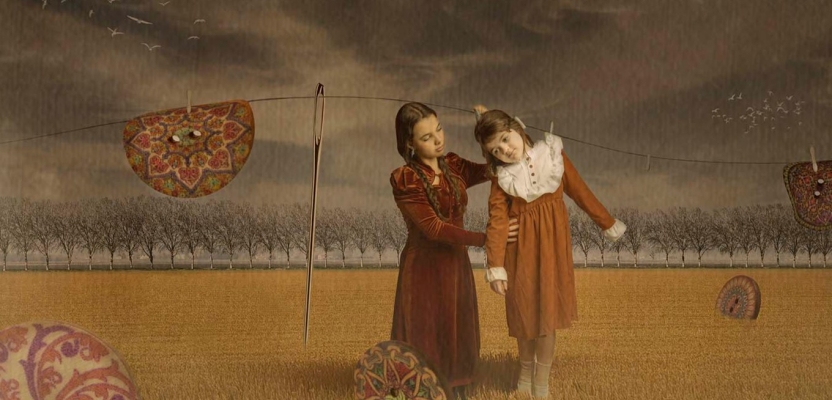
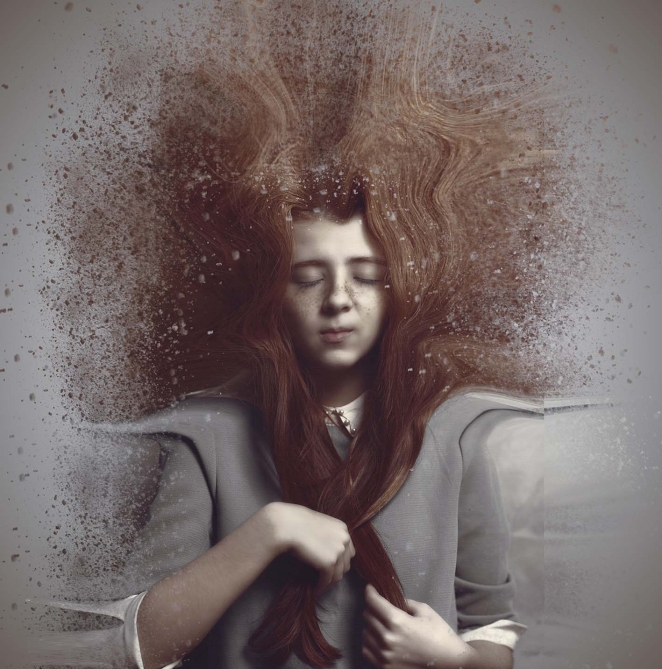
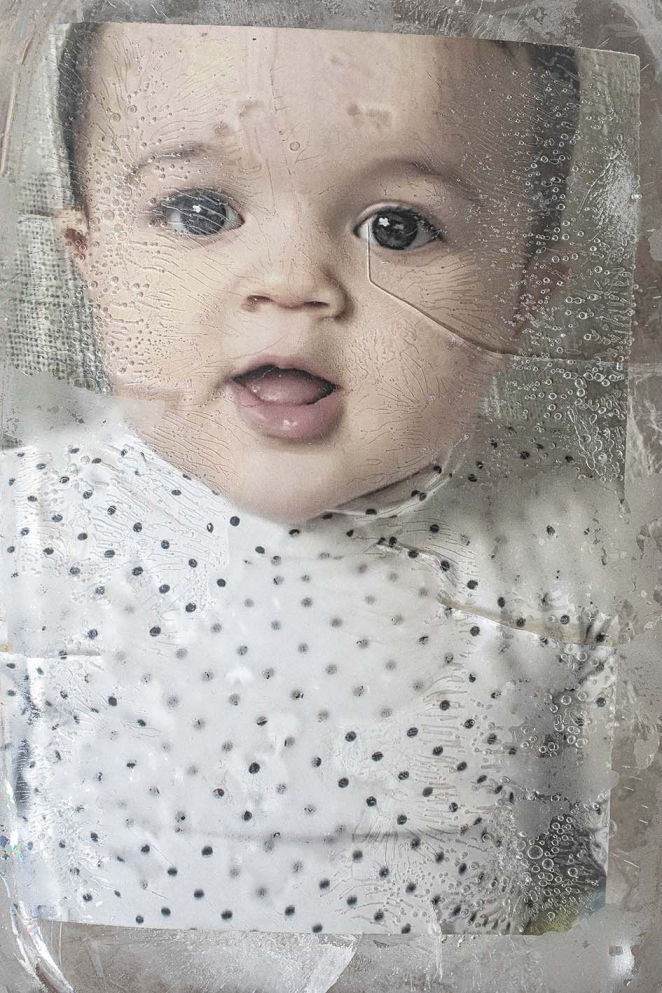
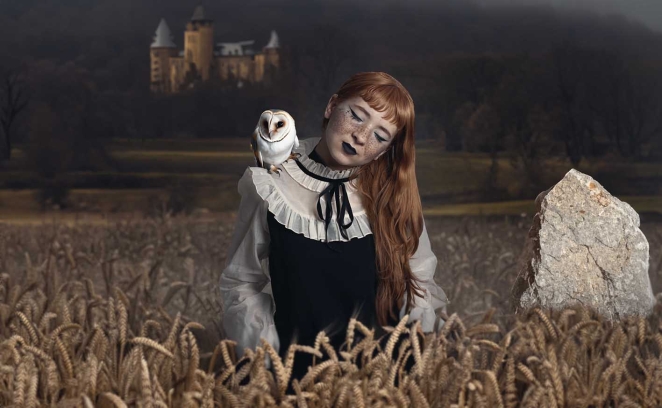
Especially in my personal projects The Owner of Time, Timeless Tales, and Motherhood, where I work freely without briefs or constraints, I always notice, almost involuntarily, how painting influences the images I create.
Can you explain your creative process? What makes it unique?
I think the fact that I started in photojournalism, then worked for communication agencies, magazines in various fields, and in the corporate world gave me a flexibility that makes me feel comfortable working in any area of photography.
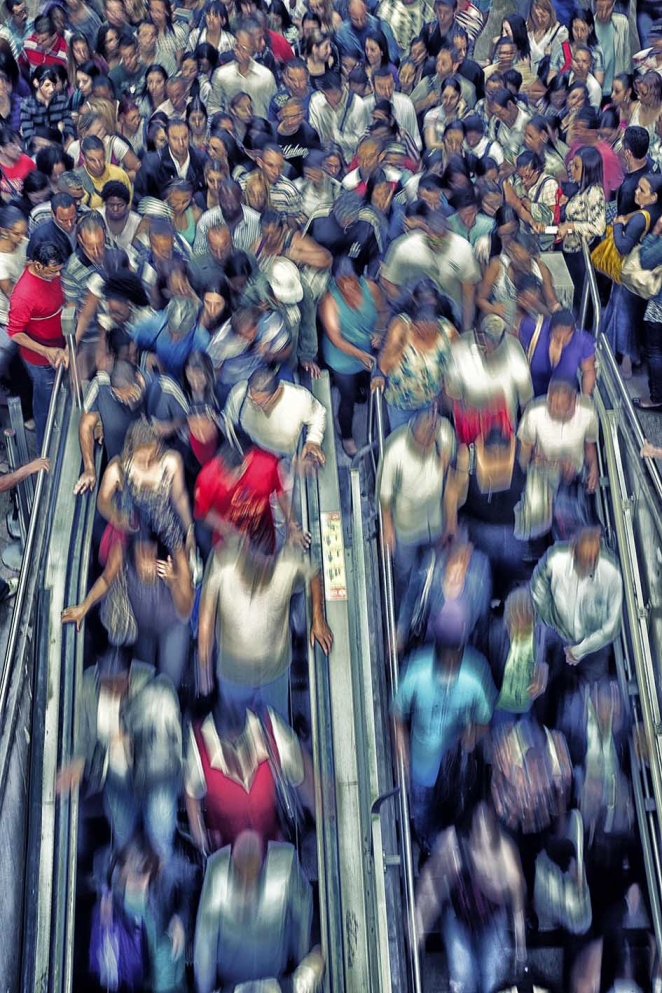
If you look at my portfolio or website, you’ll see corporate portraits, artistic portraits, photojournalism, product photography, food, street, drone, fashion, architecture, and more.
This is probably my main characteristic: versatility. And maybe that’s what makes my work unique. My references come from many different sources.
I notice a difference between professionals in Brazil and in the UK. Here in the UK, photographers tend to focus on niches. So someone who does portrait only does portrait, someone who shoots products only does products. In Brazil, we have this characteristic of working across multiple areas.
And for those who believe that ‘someone who does everything can’t be good at anything,’ I invite you to check out my website.
My creative process is something I don’t usually control. I see a brief, and ideas start to flow automatically. References appear in my mind like drawers opening one after another.
Reading a lot, listening to music, visiting museums, seeing other artists’ work I think I absorb all of that, and somehow, my subconscious gives it back to me in the form of inspiration.
How would you describe your style?
I’d say my style is versatile and real. Because I started in photojournalism, I learned to capture honest, raw moments and that stuck with me.
Over the years, I moved into different areas like corporate, editorial, and personal projects, so I feel comfortable adapting my style to each story. But no matter what I’m shooting, I always try to bring a sense of authenticity and emotion.
I love light, I love observing people, and I love that moment when an image makes you feel something you can’t quite explain.
I believe images should breathe.
In the end, I don’t like to put my style in a box. I see it more to connect with people and tell stories that feel true and timeless.
Which individuals do you gain inspiration from? Do you have any heroes in the industry?
I have a few professionals in the photography world whom I consider truly inspiring Clóvis Ferreira, Sebastião Salgado, and Julia Fullerton-Batten. But interestingly, I believe my greatest inspirations don’t come directly from photography, they come from painting.
There’s something powerful about how Jacques-Louis David composes his works, especially The Intervention of the Sabine Women, a monumental painting with unforgettable characters. The colour palette is phenomenal. Caravaggio and Botticelli also move me deeply, especially in the way they master light and shadow. It’s simply magnificent.
I’m fascinated by the perfect compositions of Georges Seurat, the strange and intriguing atmosphere of The Arnolfini Portrait by Jan van Eyck, or even the enigmatic works of Escher. These are absolutely inspiring pieces, whether in terms of creativity, colour mastery, composition, or storytelling.
That’s the well I drink from.
What tips would you give to aspiring creatives looking for work?
Explore other types of work, not just photography. That’s the obvious path. Inspiration can come from music, books, travel, the street, even a coffee shop. Keep your radar always on. Sometimes, in a simple conversation where someone is telling a story, a photo idea can suddenly emerge.
Can you share a memorable experience from your career journey that shaped your approach to creativity?
Without a doubt, working for over 20 years as a photojournalist shaped not only my work but also the way I see life, especially in a country as unique as Brazil, and in a city as complex and immense as São Paulo.
Many times, I’d spend the morning in a five-star hotel photographing politicians, and later that same afternoon, I’d be in a favela photographing children who had no access to basic sanitation and often not even a bed to sleep in. It was in those moments that I truly saw how unequal and cruel capitalism can be. That experience shaped my thinking and taught me how to adapt and feel grounded in any environment.
Aside from the social inequalities, working in photojournalism gave me the creativity to work with whatever is available, right there, in the moment. There’s no such thing as fully planning when covering news. While you’re in the car on the way to a story, you have no idea what you’ll find or whether the conditions will be favourable. Most of the time, they’re not. And yet, you still need to come back to the newsroom with a strong image, one that tells the story.
Photojournalism isn’t just about illustrating a news article. The image is the news. It holds the same weight and responsibility as the written piece. That background definitely shaped my versatility, the ability to create even in situations where there’s no script, no plan, no preparation.
What kind of tools/kit/software could you not do without?
For photography, I can’t live without an 85mm lens for portraits and a 35mm for everyday shooting. I use Lightroom and Photoshop for photo editing. I’m not a purist who avoids post-production software. I believe that when it’s not photojournalism, where reality shouldn’t be altered, post-production becomes part of the creative process. It’s an extension of what you do with the camera, especially in personal or commercial projects.
I enjoy editing videos with CapCut. I don’t usually add a lot of effects, because I believe storytelling doesn’t need to rely on flashy tricks. Some videos have great plots, but I often see the story competing for attention with special effects. To me, story always comes first.
What’s your secret to staying inspired and motivated?
At 54, with almost 30 years of experience, I still feel like I’m just getting started. My motivation comes from the fact that I love to create, to invent, to break the rules, to jump into the unknown and see what comes out on the other side. That’s how I approach my work, and honestly, it’s how I travel too. I rarely visit the same place twice. I have this constant need to be learning something new. I think that’s what keeps me moving forward in this profession.
As someone with experience in the industry, what trends do you foresee shaping the future of creativity?
There’s no way to ignore AI anymore. Like it or not, it’s now part of our lives. The truth is, since we’re just stepping into this, no one really knows what’s going to happen. Any answer right now is pure guesswork.
I see AI in a positive light. I’ve always welcomed new technologies with curiosity and openness. I don’t believe AI will completely replace professionals. Some tasks, yes, especially the simpler ones. AI will handle easily. But more complex projects, the ones that require something real, something organic, will still need a human, someone with vision and sensitivity.
Maybe we need to look back to understand what’s ahead. Older photographer friends have told me that when colour photography first appeared, everyone was sure black and white would disappear. Yet it’s still here and in some areas, it even reigns. Sebastião Salgado, the greatest photographer of all time, worked only in black and white.
Then came digital cameras, and many photographers turned their noses up, saying, “It doesn’t have the quality of film.” Of course not! We were looking at 4-megapixel cameras. Later, smartphones started to have better cameras, and that shook the market too. Many marketing departments stopped hiring photographers because assistants could shoot with a phone. But once the dust settled, they realized that holding a camera doesn’t mean making good images. The companies with a more professional approach to communication kept hiring photographers.
Now we’re in the AI boom. A lot of people think prompts can solve everything. But that will calm down. In time, there will be space for both: for AI and for photographers. And in many cases, they’ll work together.
I’ve been diving into it. I’m experimenting. I want to see how AI can help my work and whatever makes sense, I’ll bring it in.
What do you think sets apart truly exceptional creatives from the rest of the pack?
We’re living in the age of images. So much is being produced in both photography and video. Spend an hour scrolling through Instagram, and you’ll see all kinds of content, in every possible visual language.
But after that hour, you turn it off… and try to remember something you saw and you can’t. Why? Because everything starts to feel the same.
It’s a monumental flood of images, yet very few are truly memorable, truly different.
Maybe that’s the difference between art and everything else.
How do you think technology has influenced the creative industries and how have you adapted to these changes?
As I mentioned above, whenever new technologies emerge, I move toward them. I’m not afraid, I’m drawn to them. I always want to see how they can help improve my work.
What is the one thing that you would change about the industry?
When you go to the supermarket, you pick up a product, go to the checkout, and pay. You never ask for a discount at the register, the price is what it is, and you either pay it or don’t buy it.
But in the service industry, many companies still treat professionals differently, always asking for discounts or trying to start a bidding war: “Look, there’s another professional who charges less…”
That’s honestly quite unpleasant.
Another issue is stock image platforms. They sell images for hundreds of dollars but pay the creators just a few cents. It’s a complete lack of respect.
Any websites, books or resources you would recommend?
At the moment, my favorite books are The Magic Mirror of M.C. Escher. A masterclass in illusion and three-dimensionality.
And Leonardo: The Complete Paintings and Drawings.